
St. John's Wort
Written By Arthur Simitian
QUICK FACTS
Common Name
St. John's Wort, Common St. John's Wort, Perforate St. John's Wort
Scientific Name
Hypericum perforatum
Plant Type
Hardy perennial
Hardiness Zones
3 to 9
Sun Requirements
Full sun to light partial shade
Soil Type
Well-drained, average to poor; tolerates dry and rocky soils
Plant Height
18 to 36 inches
Spacing
18 to 24 inches
Uses
Medicinal antidepressant and nervine, infused oil for wound and nerve pain, tincture, pollinator plant, natural dye
St. John's Wort is the most clinically studied herbal antidepressant in the world. The evidence base for its effectiveness in mild to moderate depression is larger and more consistent than for any other plant-based mood support preparation, and multiple meta-analyses of randomized controlled trials have found it comparable in efficacy to standard pharmaceutical antidepressants for mild to moderate depression with a more favorable short-term side effect profile. That clinical record, combined with a four hundred year documented history of use as a wound herb, nerve pain treatment, and emotional tonic, and the practical simplicity of making a vivid red infused oil from the fresh flowers at the peak of summer, makes it one of the most complete and most rewarding medicinal herbs in the temperate garden.
Introduction
Hypericum perforatum is native to Europe, western Asia, and North Africa, growing naturally on dry meadows, open woodland edges, roadsides, and disturbed ground across a range that extends into naturalized populations throughout the Americas, Australia, and New Zealand, where it arrived with European settlement and established itself readily in the dry, disturbed conditions it prefers. The species name perforatum refers to the tiny translucent oil glands visible as clear dots when a leaf is held to the light, appearing as small perforations in the leaf surface. These are secretory structures containing the volatile oils and resinous compounds that give the plant its characteristic turpentine-like aroma when the foliage is bruised.
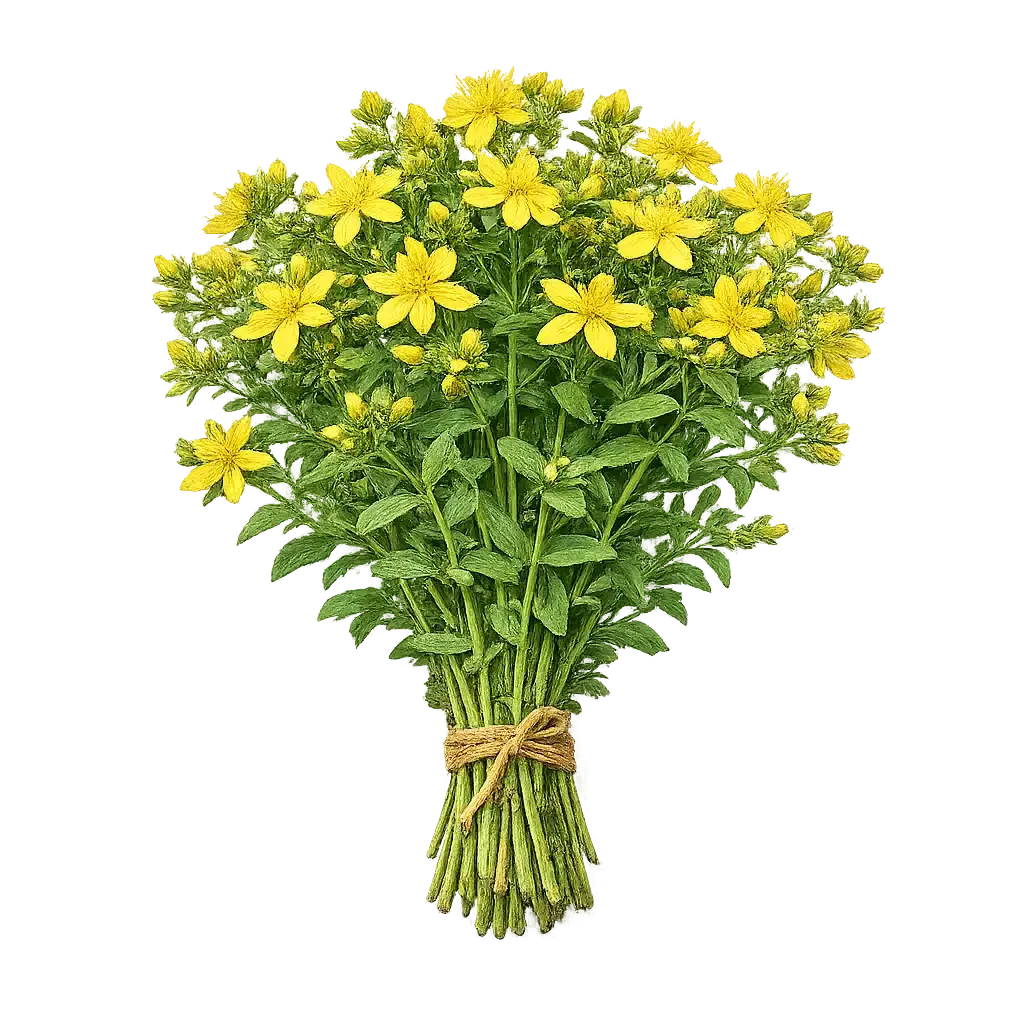
The bright yellow, five-petaled flowers with their dense brush of golden stamens bloom from June through August, traditionally said to be at their peak around the feast of St. John the Baptist on June 24th, which is the origin of the plant's common name. The flowers and the upper buds contain the highest concentrations of the medicinally active compounds: hypericin and pseudohypericin, which produce the characteristic red-purple pigment that stains the fingers when flowers are crushed, and hyperforin, now considered the primary compound responsible for the antidepressant effects documented in clinical research.
On the homestead, St. John's Wort earns its place as a genuinely effective medicinal plant with one of the stronger evidence bases of any herb in this series, as a beautiful mid-summer flowering perennial that provides excellent pollinator habitat, as the basis for one of the most useful and most satisfying homestead herbal preparations in the form of the vivid red infused oil, and as a low-maintenance, drought-tolerant perennial that establishes on lean soils and asks for very little management in return for consistent annual harvests.
How to Grow
Sun Requirements
St. John's Wort grows best in full sun, where the most abundant flowering, highest active compound concentration, and most compact growth habit are produced. Its meadow and open woodland edge habitat reflects a genuine preference for exposed, sunny positions, and the flowering performance that makes the plant both most ornamentally attractive and most medicinally productive is significantly reduced in less than five to six hours of direct daily sun.
Light partial shade of four to five hours of direct sun is tolerated, and in the hottest climates of zones 8 and 9, afternoon shade reduces the heat stress that can cause premature browning of the foliage in intense summer sun. In temperate zones 5 through 7, maximizing sun exposure is the most important positioning consideration, and the sunniest available well-drained site should be prioritized.
Soil Requirements
St. John's Wort shares the lean-soil preference of many of the medicinal herbs in this series and performs at its best on dry to moderately moist, well-drained, average to poor soils. Rich, heavily amended soils produce lush vegetative growth with reduced flower production and lower concentrations of the hypericin and hyperforin compounds that represent the plant's medicinal value. The dry meadow and roadside habitat the plant colonizes naturally translates directly to a preference for the kinds of lean, freely draining soils that challenge more demanding garden plants.
Good drainage is the most important soil requirement. St. John's Wort does not tolerate persistently waterlogged soil and declines reliably in heavy clay that holds winter moisture around the roots. Well-drained clay loam is suitable if compaction is not severe; heavy, poorly aerated clay is not. Raised beds and naturally sloped or gravelly sites are the most appropriate positions on difficult soils.
pH tolerance is wide, from 5.5 to 7.5, and the plant adapts to both mildly acidic and near-neutral garden soils without amendment. The characteristically disturbance-adapted, poor-soil colonizing habit of the plant in the wild reflects its ability to establish and thrive in conditions that exclude more fertility-demanding species.
Water Needs
Established St. John's Wort is highly drought tolerant and one of the most water-independent medicinal perennials available for the temperate garden. The deep root system that develops in established plants accesses subsoil moisture through dry periods, and supplemental irrigation is rarely needed in climates with occasional summer rainfall once the plant is in its second year.
During the first growing season, moderate watering supports root establishment without the consistent moisture management that more demanding herbs require. From the second year, the plant essentially manages its own moisture requirements in most temperate climates, and irrigation is only needed during extended drought in dry summer climates.
Planting
St. John's Wort establishes readily from seed, from nursery transplants, or from division of established plants. Seed germinates reliably without pretreatment at soil temperatures above 60 degrees Fahrenheit, typically within two to three weeks, and can be sown directly outdoors in early spring or started indoors six weeks before the last frost date. The seeds are very small and are surface-sown without covering, pressed lightly into the soil surface and kept consistently moist until germination.
Nursery transplants and divisions of established plants establish quickly and flower in their first season, while seed-started plants typically do not flower until their second year. Division of established clumps in early spring is the fastest multiplication method and is also the appropriate management response to older plants that have become overly dense at the center.
Self-seeding is reliable and productive on appropriate sites, and once a St. John's Wort planting is established it typically maintains itself and gradually expands by self-seeding without intervention. Managing the self-seeding by removing unwanted seedlings when small, before the root system is established, is easier than preventing the seeding entirely.
Plant Spacing
Plants should be spaced 18 to 24 inches apart to allow the upright, branching stems to develop without overcrowding and to ensure adequate air circulation that reduces fungal disease pressure on the foliage. The self-seeding habit of established plants means that gaps between initial plantings typically fill within one to two seasons without supplemental planting.
Companion Planting
St. John's Wort is a valuable companion plant primarily through its exceptional pollinator support during the peak summer flowering period, when the bright yellow flowers attract a wide range of bees, butterflies, and beneficial insects that service adjacent crops.
Fruit trees and berry bushes, where the mid-summer pollinator activity around St. John's Wort flowering supports adjacent fruit set in late-fruiting varieties
Yarrow, vervain, and other mid-border pollinator plants that together with St. John's Wort create a continuous pollinator resource from early summer through autumn
Echinacea, which blooms in the same summer period and shares the open, sunny, well-drained site preference, creating complementary visual and ecological interest alongside the yellow of St. John's Wort
Valerian and angelica at the back of the border, where St. John's Wort provides mid-height structure and pollinator support between the tall background perennials and lower foreground plantings
Harvesting
Harvest Time
The flowers and upper buds are the primary harvest for all medicinal preparations, and timing is the single most important factor in harvest quality. St. John's Wort is harvested at the peak of bloom when flowers are fully open and when the buds just below the open flowers, pinched between the fingers, produce a vivid deep red-purple pigment stain. This pigment, produced by hypericin and pseudohypericin, is the most reliable field indicator of harvest readiness, and buds that produce a clear or only faintly colored stain when crushed indicate immature plant material with lower active compound concentration.
The traditional harvest date of June 24th, St. John's Day in the Christian calendar, is a reasonably accurate indication of peak bloom in most temperate European climates, though the actual optimal harvest date varies by climate, elevation, and year, and the bud stain test is more reliable than any calendar date for confirming readiness.
Harvesting in the morning after the dew has dried and before the heat of the day preserves the volatile oil content of the flowers and produces the most complete extraction of active compounds in subsequent preparations. A harvest over several mornings through the two to three week peak bloom period, rather than a single large cut, distributes the harvest effort and ensures that flowers at different stages of opening are captured.
Harvest Method
Cut flowering stems four to six inches below the uppermost flower clusters with sharp scissors or shears, collecting the flowers, buds, and uppermost leaves in a single harvest. The loose flowers and buds can be stripped from the stems by hand immediately after cutting or processed in the field by running fingers down the stems to collect the flowers into a harvest basket.
Wear gloves or be aware that the hypericin in fresh flowers stains skin and clothing a deep red-purple that is slow to wash out. This same staining quality is the most immediate demonstration of the plant's chemical potency and is a useful reminder that you are handling a medicinally active material rather than a merely decorative one.
Making St. John's Wort infused oil: Pack fresh flowers and buds loosely into a clean glass jar immediately after harvest, fill completely with good olive oil or another carrier oil such as jojoba or almond oil, seal tightly, and place in a warm sunny window for four to six weeks. The oil will turn a vivid, deep red as the hypericin and other oil-soluble compounds infuse into it over this period. Strain through cheesecloth, press the plant material firmly to recover all the infused oil, and bottle in dark glass for storage. This red oil, applied topically to bruises, nerve pain, muscle aches, and minor wounds, is one of the most visually striking and most practically useful homestead herbal preparations available.
How to Use
Medicinal Uses: Internal
St. John's Wort's most extensively studied and most clinically supported medicinal application is for mild to moderate depression, where multiple randomized controlled trials and several comprehensive meta-analyses have found standardized extracts of Hypericum perforatum comparable in efficacy to standard pharmaceutical antidepressants including selective serotonin reuptake inhibitors, with a significantly more favorable short-term side effect profile in head-to-head comparisons. The primary active compound responsible for this effect is now understood to be hyperforin, which inhibits the reuptake of several neurotransmitters including serotonin, dopamine, and norepinephrine through a mechanism distinct from pharmaceutical antidepressants.
The evidence for mild to moderate depression is strong enough that St. John's Wort is licensed as a conventional medicine for this indication in Germany and several other European countries, where it is the most prescribed antidepressant. For severe depression, the evidence is less convincing and pharmaceutical treatment should be the priority. The herb is specifically and appropriately indicated for mild to moderate depression and for the seasonal mood variations associated with reduced light exposure in autumn and winter.
As a nervine herb for anxiety, nervous tension, and the emotional exhaustion associated with chronic stress, St. John's Wort has a consistent traditional use record alongside the clinical evidence for its mood effects. It is often used in combination with other nervine herbs such as valerian, lemon balm, and passionflower in preparations targeting the combination of low mood and anxious tension that commonly presents together.
For menopausal symptoms including hot flashes, mood changes, and sleep disturbance, several clinical trials have found St. John's Wort preparations beneficial, and it is one of the more evidence-supported herbal options for this indication when pharmaceutical hormone therapy is declined or contraindicated.
Medicinal Uses: Topical
The red infused oil is the primary topical preparation and one of the most genuinely useful medicinal preparations the homestead herb garden produces. Applied topically to bruises, sprains, muscle aches, and the nerve pain of conditions including sciatica, neuralgia, and shingles, St. John's Wort infused oil provides genuine anti-inflammatory and analgesic activity through the hypericin and hyperforin that dissolve into the oil during the infusion process.
For wound healing, the same infused oil applied to minor cuts, burns, and abrasions supports tissue healing through its documented anti-inflammatory and mild antimicrobial properties. The traditional use of St. John's Wort oil for wound healing that predates the discovery of its antidepressant properties by several centuries is well aligned with the plant's actual chemistry, and the vivid red oil massaged into a bruise or a sore muscle is one of the more satisfying practical applications of a home-produced herbal preparation.
Topically prepared St. John's Wort does not carry the drug interaction risks of internal preparations, making the infused oil appropriate for essentially all users regardless of medication status, with only the photosensitization caution for very fair or sun-sensitive skin warranting consideration.
Tea Uses
St. John's Wort tea prepared from dried flowers and upper leaves is a pleasant, mildly bitter infusion with a faintly resinous, warm character. One teaspoon of dried herb per cup of boiling water, steeped covered for ten minutes, produces a tea with the full spectrum of water-soluble compounds though with lower hyperforin content than alcoholic preparations, as hyperforin is more readily extracted in alcohol than in water.
For the mood-supporting applications where consistent hyperforin delivery is the goal, tincture or standardized extract is more effective than tea. For the milder nervine and digestive tonic applications, tea is a practical and pleasant preparation. The flavor improves with the addition of lemon balm, chamomile, or lemon verbena, and these combinations are both more palatable and more broadly effective nervine blends than St. John's Wort alone.
Tincture Uses
Fresh flower tincture made in 60 percent alcohol is the most concentrated and most complete preparation for internal medicinal use, capturing both the water-soluble and oil-soluble active compounds including hyperforin in proportions that closely resemble the standardized extracts used in clinical trials. Fresh flowers packed into a jar and covered immediately with alcohol preserves the hypericin and hyperforin at their freshly harvested concentrations without the degradation that occurs during drying.
The standard tincture dose of two to four milliliters three times daily is the typical recommendation for mood support applications, with therapeutic benefit typically becoming apparent after two to four weeks of consistent use, consistent with the gradual mechanism of action shared with pharmaceutical antidepressants acting on the same neurotransmitter systems.
Natural Dye Uses
The hypericin pigment that stains fingers red during harvest produces a range of yellow to gold natural dye colors on mordanted natural fibers. With an alum mordant on wool, St. John's Wort flowers and leaves produce clear, warm gold tones. With iron mordant the color shifts to olive green. The dye is more accessible than the strongly pigmented red of the raw plant material suggests, as the water-soluble yellow flavonoids rather than the oil-soluble hypericin are primarily responsible for the textile dye color, but it is a pleasant and reasonably lightfast natural yellow available from a plant that is already grown for its medicinal value.
Storage
Dried St. John's Wort flowers and upper leaves store for one to two years in airtight glass containers kept cool, dark, and dry. The hypericin and pseudohypericin that are partially responsible for the medicinal activity are sensitive to light degradation, and dark storage conditions that minimize light exposure preserve potency more effectively than transparent containers in bright locations.
Fresh flower tincture stores for three to five years in sealed dark glass without significant loss of potency. The infused oil stores for one to two years when made with fresh, completely dry flowers in a good quality carrier oil kept in dark glass away from heat. Using flowers that are entirely free of surface moisture before packing into the oil jar prevents the mold that can develop when water is introduced into oil preparations.
Lifespan of the Plant
St. John's Wort is a reliably long-lived perennial that returns each spring from its woody base and spreading rhizome network in zones 3 through 9. Individual plants persist for many years on appropriate well-drained sites, and the combination of reliable self-seeding and gradual rhizome spread means that established plantings are essentially self-perpetuating over time.
Cutting plants back to six to eight inches above the ground in late autumn or early spring removes the old woody stems, encourages vigorous new growth from the base, and maintains the compact, productive habit that provides the most accessible harvest surface. Without this annual cut-back, older plants become progressively more woody and open in habit and less productive in both flower yield and active compound concentration.
Division every three to four years maintains vigor in older, spreading clumps and provides divisions for expanding the planting. The vigorous self-seeding means that many gardens accumulate more St. John's Wort than initially planned within a few seasons, and editing the planting to the desired size by removing self-sown seedlings before they establish is the most practical ongoing management task.
Pros and Cons
Advantages
The most clinically studied herbal antidepressant available, with multiple randomized trials supporting efficacy for mild to moderate depression
Fresh flower infused oil is one of the most visually striking and most practically useful topical herbal preparations for nerve pain, bruising, and wound healing
Bright yellow flowers provide exceptional mid-summer pollinator habitat over a long flowering season
Thrives on lean, dry, well-drained soils where other perennials struggle
Hardy to zone 3, suitable for cold-climate homestead herb gardens
Self-seeds freely, maintaining and expanding itself without intervention
Both the fresh flower oil and the tincture can be made at home with no equipment beyond jars and patience
Useful natural yellow-gold dye from the same harvest used for medicinal preparations
Limitations
Significant drug interactions with a wide range of pharmaceutical medications through CYP3A4 enzyme induction
Causes photosensitization in fair-skinned individuals and in livestock consuming large quantities of the fresh plant
Not appropriate for severe depression, bipolar disorder, or use alongside pharmaceutical antidepressants without medical guidance
Self-seeds freely and can spread beyond intended areas without management
Listed as a noxious weed in some jurisdictions due to its toxicity to livestock in pastures
Therapeutic effects for mood applications take two to four weeks of consistent use to become apparent
Hypericin pigment stains skin and clothing persistently during harvest and processing
Common Problems
St. John's Wort on appropriate well-drained soil in adequate sun is a robust, largely trouble-free perennial. Root rot from waterlogged soils and the foliage problems associated with poor drainage are the most consistently preventable issues, resolved entirely by appropriate siting. Plants on correctly drained soil rarely experience the fungal or bacterial root problems that affect the same species on heavy, wet ground.
Rust fungus occasionally affects the foliage, producing the characteristic orange-yellow powdery spore masses on leaf undersides. It is most common in humid climates and on plants in still-air positions without adequate air circulation. Appropriate spacing, full sun positioning, and the annual cut-back that removes overwintered spore-bearing material manage it adequately in most situations. Heavy rust infestations that significantly reduce the harvestable material warrant consideration of site improvement for better air circulation.
The self-seeding habit, while generally an asset, can produce more plants than desired in productive garden settings. Managing this proactively by deadheading spent flowers before seed is fully set, or by removing unwanted seedlings when small before they establish a deep root system, is the most practical approach. Established self-sown plants are more difficult to remove than seedlings and become increasingly hard to distinguish from deliberately planted specimens as the planting matures.
In pasture settings where livestock have access to large quantities of the fresh plant, photosensitization from hypericin accumulation in the skin of light-colored or white animals causes sunburn-like skin reactions on exposed areas. This is a legitimate concern for free-range livestock management but not for homestead herb garden use where the planting is contained and livestock access is managed.
Varieties
Hypericum perforatum in the straight species form is the medicinal standard and the plant with the documented clinical evidence base for all the applications described in this guide. It is widely available from herb nurseries, perennial plant suppliers, and through seed, and is the appropriate choice for all medicinal applications.
Hypericum calycinum, rose of Sharon or creeping St. John's Wort, is a low-growing, spreading ground cover species with large, showy yellow flowers and evergreen foliage in mild climates. It is primarily an ornamental species without the same medicinal profile as Hypericum perforatum and should not be substituted for it in medicinal preparations.
Hypericum androsaemum, tutsan, is a shrubby species native to western Europe with red and black berries following the yellow flowers. It has some traditional medicinal use but a different chemistry from Hypericum perforatum and is not interchangeable with it for the antidepressant and hypericin-dependent applications. It is worth knowing as a related ornamental species rather than as a medicinal equivalent.
Drug interactions: St. John's Wort is one of the most significant herbal drug interaction risks in clinical use. It induces the CYP3A4 liver enzyme system, which accelerates the metabolism and reduces the blood levels of a large number of pharmaceutical medications including antiretrovirals, immunosuppressants, oral contraceptives, warfarin, digoxin, cyclosporine, and several antidepressants. Anyone taking prescription medication should consult their prescribing physician before using St. John's Wort internally. Topical use as infused oil does not carry this interaction risk. Additionally, it causes photosensitization at high internal doses, particularly in fair-skinned individuals, and is contraindicated in pregnancy and severe depression.
Final Thoughts
The red oil sitting on a sunny windowsill in July, infusing for six weeks from the flowers picked at peak bloom, is one of the more satisfying objects a homestead medicine cabinet produces. It is vivid. It is genuinely useful for the nerve pain and bruising that come with physical work. It costs nothing beyond the time to harvest and the price of the carrier oil. And the plant that produced it will come back next year, reliably, from the same spot, and offer the same harvest to anyone who shows up on the right morning with a jar.
The antidepressant and mood-supporting applications are real and clinically supported at a level that very few herbal medicines can claim, and they are appropriately used within their indicated range of mild to moderate depression and mood support, alongside awareness of the drug interactions that make medical consultation important for anyone on pharmaceutical medications.
What St. John's Wort asks for is a sunny, lean, well-drained position and an annual cut-back. What it returns is one of the most medicinally complete and most practically productive perennial herbs available in the temperate garden.