
Stevia
Written By Arthur Simitian
QUICK FACTS
Common Name
Stevia, Sweet Leaf, Sugar Leaf, Candy Leaf
Scientific Name
Stevia rebaudiana
Plant Type
Tender perennial; grown as annual in zones below 8
Hardiness Zones
9 to 11 as perennial; zones 3 to 8 as annual or container plant
Sun Requirements
Full sun to light partial shade
Soil Type
Well-drained, sandy loam to loam; moderately fertile
Plant Height
18 to 36 inches
Spacing
18 to 24 inches
Uses
Natural zero-calorie sweetener, tea, dried leaf sweetener, tincture, diabetic-friendly sugar substitute, culinary, medicinal
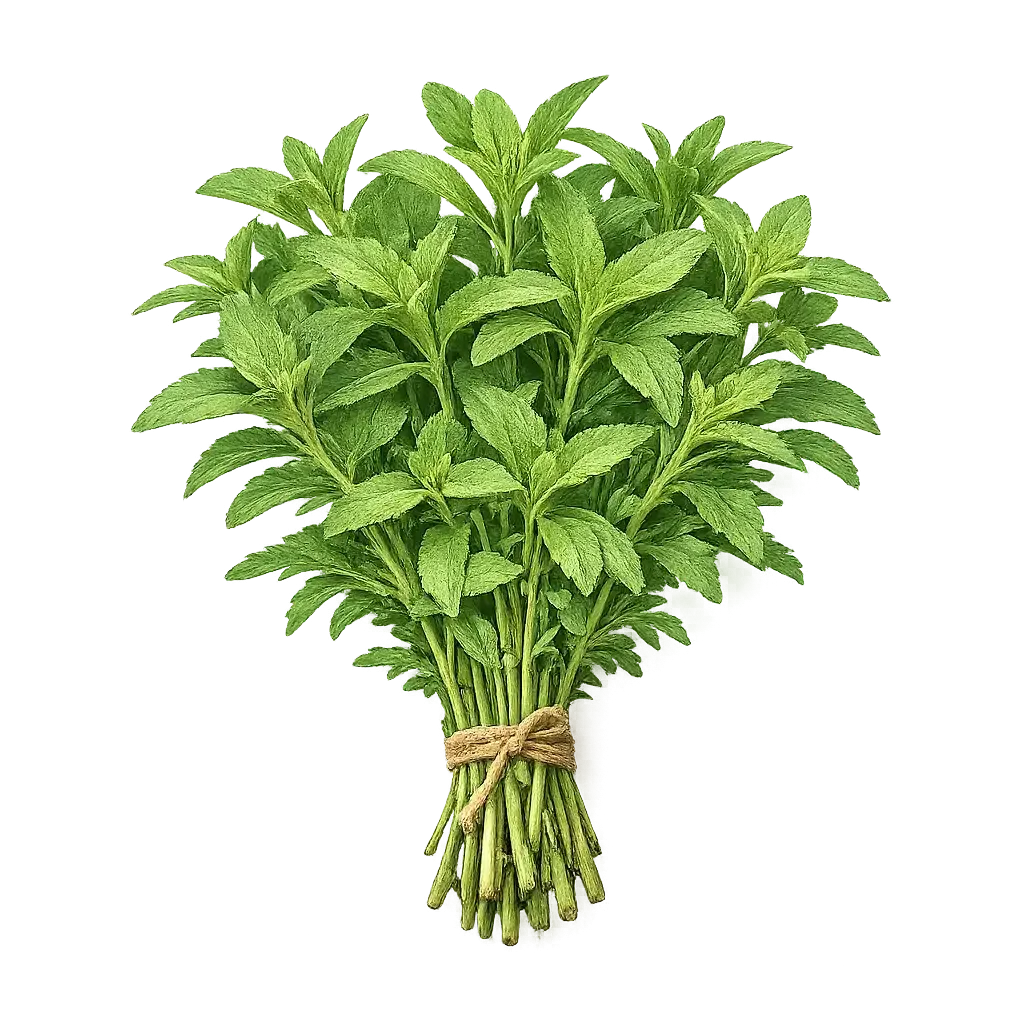
Stevia is the herb that produces sweetness without sugar, and it does so from a single small leaf that tastes, unmistakably and intensely, sweet. The steviol glycosides in the foliage are two hundred to three hundred times sweeter than sucrose by weight, are not metabolized for energy by the human body, do not raise blood glucose, and are stable at cooking temperatures. These are not modest virtues. They represent a genuinely useful tool for anyone reducing sugar intake, managing blood glucose, or simply wanting to sweeten tea and food from a plant growing in the garden rather than from a packet. Growing your own stevia produces fresh and dried leaf that is more complex in flavor and considerably less processed than any commercial stevia product, and the plant itself is a neat, productive, and straightforward annual crop that most temperate gardeners can grow successfully with a reliable supply of warmth and light.
Introduction
Stevia rebaudiana is native to the subtropical highlands of Paraguay and Brazil, where the Guarani people have used the leaves as a sweetener and medicinal herb for several centuries before the plant came to wider botanical attention. It is a member of the Asteraceae family, related to sunflowers and chrysanthemums rather than to the mint family of most culinary herbs, and it grows as a shrubby perennial subshrub in its native subtropical range, reaching two to three feet in height with small, oval, serrated leaves on branching stems and clusters of tiny white flowers in late summer.
The sweetness of stevia is produced by a group of diterpenoid glycosides, primarily stevioside and rebaudioside A, that bind to the sweet taste receptors on the human tongue but are not absorbed and metabolized in the same way as sugars. Rebaudioside A is the most highly refined compound extracted for commercial stevia sweetener products and is considered to have the cleanest, most sugar-like sweetness with the least of the faintly bitter, licorice-adjacent aftertaste that characterizes whole-leaf stevia. The whole dried leaf, by contrast, contains the full spectrum of glycosides alongside chlorophyll and other compounds that add complexity and a slightly herbal character to the sweetness, making it more interesting and more nuanced than the purified extracts while requiring some adjustment for people accustomed to the cleaner commercial product.
On the homestead, stevia earns its place as the only sweetener crop that can be grown in a temperate garden from seed or transplant, harvested through the summer, dried and stored for year-round use, and used in tea, cooking, and food preparation without any processing beyond drying and grinding. For households managing diabetes, insulin resistance, or caloric intake, having a self-produced sweetener that does not affect blood glucose is a practical homestead asset with a value that commercial stevia products, while functional, do not fully replicate in terms of quality and connection to the food system.
How to Grow
Sun Requirements
Stevia requires full sun to produce the most vigorous growth and highest steviol glycoside concentration in the foliage. Six or more hours of direct daily sunlight is the practical minimum for productive cultivation, and eight to ten hours produces the most compact, most sweetly concentrated plants. In partial shade the plant grows taller and less branching, with lower leaf glycoside content and reduced harvest productivity.
In the hottest climates of zones 9 and 10, light afternoon shade prevents heat stress and leaf scorch during the peak summer weeks, while still providing adequate light for productive glycoside synthesis. In temperate zones 5 through 7 where the growing season is limited, maximizing sun exposure is more important than any temperature protection consideration, and the sunniest available position should be prioritized for stevia.
Soil Requirements
Stevia grows best in well-drained, sandy loam to loam soil with moderate fertility. It shares the preference for good drainage common to many subtropical herbs, and consistently waterlogged or poorly drained soils cause the root rot that is the most common cause of stevia loss in cultivation. Unlike the lean-soil Mediterranean herbs earlier in this series, stevia benefits from some soil fertility and does not perform as well on truly impoverished, nutrient-depleted soils.
Incorporating finished compost into the planting area before establishment improves both the moisture retention on sandy soils and the drainage on heavier soils, making it the single most broadly applicable soil amendment for stevia in diverse garden conditions. On heavy clay soils, raising the bed or incorporating coarse organic matter improves drainage enough to allow successful cultivation in climates where the growing season provides adequate warmth.
Soil pH of 6.5 to 7.5 is appropriate. Stevia is not highly tolerant of acidic soils below pH 6.0, and in strongly acidic garden soils, liming to bring the pH into the acceptable range before planting improves growth and productivity.
Water Needs
Stevia requires consistent, moderate moisture through the growing season and is less drought tolerant than the dry-site Mediterranean herbs in this series. The small leaves do not store significant moisture reserves, and plants under drought stress reduce their leaf production and glycoside concentration while becoming more susceptible to the early flowering that terminates the vegetative harvest season.
Consistent soil moisture without waterlogging is the goal. In practice, this means deep watering two to three times per week during dry weather on well-drained soils, adjusted based on rainfall. A mulch of straw or wood chips around the base of plants significantly reduces the irrigation requirement by moderating soil temperature and reducing evaporation from the soil surface between waterings, and is strongly recommended for stevia in all but the most reliably moist climates.
Planting
Stevia is most reliably established from nursery transplants or from rooted cuttings. Starting from seed is possible but challenging: stevia seed has variable germination rates even when fresh, and older seed germinates poorly. Seeds require light for germination, are surface-sown without covering, and need consistent warmth of 68 to 75 degrees Fahrenheit and maintained soil moisture to germinate, typically within ten to twenty days under good conditions. The variable germination rate means starting significantly more seeds than needed and thinning to the strongest seedlings.
For most growers, purchasing transplants from a reputable herb nursery or starting from cuttings taken from a known plant eliminates the germination variability and produces more uniform, more vigorous plants more reliably than seed starting. Cuttings taken from stem tips in summer root readily in a moist, well-drained medium and produce transplant-ready plants within three to four weeks.
In temperate climates, stevia is started indoors six to eight weeks before the last frost date and transplanted outdoors after all frost risk has passed and soil temperatures have warmed to at least 60 degrees Fahrenheit. Stevia is sensitive to cold and should not be planted out early; a late transplanting into warm soil produces faster establishment and better ultimate growth than an early transplanting into cold, wet spring soil.
Plant Spacing
Plants should be spaced 18 to 24 inches apart to allow the bushy, branching habit to develop fully and to ensure good air circulation that reduces the powdery mildew pressure that can affect stevia in humid, crowded conditions. The generous spacing also facilitates the regular pinching and harvesting that maintains the compact, productive vegetative habit and prevents premature flowering.
Companion Planting
Stevia is a modest companion planting herb without the strongly documented pest deterrent properties of the aromatic Mediterranean herbs. Its small white flowers provide some late-season pollinator support for beneficial insects, and it grows well alongside other moisture-requiring annual and tender perennial herbs.
Basil, which shares the warm, moisture-requiring, full-sun growing requirements and together with stevia creates a productive annual herb bed that covers both savory and sweetening needs from the same growing conditions
Mint, which shares the moisture requirement and can be grown nearby where their contrasting flavors are both useful in teas and fresh preparations
Lemon balm and lemon verbena, which share the warm season tender herb character and together with stevia provide all the components needed for a highly productive herbal tea garden in a single well-tended bed
Harvesting
Harvest Time
Stevia leaves are harvested for sweetness from the time the plant is well established in early summer through the onset of flowering in late summer or early autumn. The steviol glycoside concentration in the foliage is highest just before flowering, and the window between when the plant is large enough for productive harvest and when it begins flowering represents the peak quality harvest period.
Regular pinching of stem tips through the season delays flowering, extends the vegetative harvest window, and encourages the lateral branching that increases the number of productive stems and the total harvestable leaf area. A plant that is never allowed to flower produces more harvestable leaf over a longer season than an unpinched plant that flowers and winds down by midsummer.
The main harvest for dried leaf production is taken in late summer just as the first flower buds begin to form, when glycoside concentration is at its seasonal peak. A whole-plant harvest at this point, cutting the stems back to six inches above the ground, produces the largest single harvest of the season. In zones 9 and warmer where the plant overwinters, this cut-back is followed by regrowth that allows a second harvest before dormancy.
Harvest Method
For fresh leaf use, individual leaves and stem tips are pinched as needed throughout the growing season. The leaves are used immediately in teas and fresh preparations, chewed directly for their sweetness, or added to herb blends and fruit preparations where a natural sweetness without sugar is desired.
For dried leaf production, cut stems six to eight inches below the top growth and strip the leaves from the stems after cutting, or hang entire stems and strip the dried leaves after drying is complete. Spread stripped leaves in a single layer on drying racks or on clean mesh screens in a warm, well-ventilated location out of direct sunlight. Stevia leaves dry quickly, typically within two to four days at room temperature, and are done when they crumble cleanly between the fingers without bending.
Making stevia powder: Fully dried stevia leaves can be ground to a fine powder in a spice grinder, coffee grinder, or high-powered blender. The resulting green powder is approximately thirty times sweeter than sugar by volume as a whole-leaf product, meaning a very small pinch is equivalent in sweetening power to a teaspoon of sugar. Start with small quantities when substituting in recipes until the right ratio for the specific preparation is established, as the intensity varies with the specific batch and variety.
How to Use
Sweetener Uses
The fresh stevia leaf chewed directly delivers an immediate, intense sweetness that is one of the more surprising sensory experiences in the herb garden for anyone encountering it for the first time. The sweetness is real, strong, and followed by the slight bitterness and herbal character of the whole leaf that distinguishes it from refined sugar. This direct use is the simplest way to experience the plant and the most immediate confirmation that the plant growing in the garden is genuinely extraordinary in its chemical character.
Dried whole leaves dropped into tea as it steeps provide gentle, natural sweetness without the processing associated with commercial stevia products. One or two dried leaves per cup of tea is typically sufficient for mild sweetness, and the quantity can be adjusted to taste. The flavor contribution of the whole leaf is somewhat more complex than that of refined stevia extracts, with a faint herbal note that integrates well with chamomile, mint, lemon balm, and other herbal teas and is less harmonious with some strongly flavored black or green teas where the herbal character of the stevia leaf competes with the tea.
Stevia simple syrup prepared by simmering a generous handful of fresh or dried leaves in two cups of water for fifteen to twenty minutes, straining, and cooling, provides a liquid sweetener that stores refrigerated for one to two weeks and can be used in cold drinks, dressings, and preparations where a liquid sweetener is more practical than a leaf or powder. The syrup is not as concentrated as commercial liquid stevia but is considerably more flavorful and entirely whole-leaf in character.
In baking, stevia presents the characteristic challenge of all high-intensity sweeteners: it provides sweetness but does not contribute the bulk, browning, moisture retention, or texture that sugar provides in baked goods, and recipes developed for sugar cannot simply have the sugar replaced with stevia without other adjustments. Recipes specifically developed for stevia or for high-intensity sweeteners generally perform better than modified conventional recipes, and whole-leaf stevia powder in baking works best in applications where sweetness is the primary requirement and sugar's structural role is minimal, such as beverages, dressings, sauces, and some custard-based preparations.
Tea Uses
Stevia tea, made from fresh or dried leaves steeped in hot water, is both a pleasant beverage in its own right and a practical way to sample the flavor before incorporating the herb into food preparation. The tea has a clean, sweet, faintly herbal flavor that is best appreciated on its own or in simple combinations, and it demonstrates the difference between whole-leaf stevia's complexity and the cleaner but simpler flavor of commercial refined steviol glycoside products.
Stevia blended into herbal tea mixes serves as a sweetening component that eliminates the need for added sugar or honey in the final cup. A base blend of dried chamomile, lemon balm, and stevia leaf in roughly equal proportions produces a self-sweetened, calming tea that requires no additional sweetener and stores well for months as a pre-blended dry mix.
Medicinal Uses
Stevia's primary medicinal relevance in contemporary use is its practical value as a zero-glycemic sweetener for people managing diabetes, prediabetes, and insulin resistance, where access to a genuinely sweet flavoring that does not contribute to blood glucose elevation is a meaningful quality of life and health management tool. The steviol glycosides are not metabolized for energy and do not trigger insulin secretion at normal consumption levels, and the evidence base for their safety in people with diabetes is well established.
Traditional Guarani medicinal use of stevia extends beyond sweetening to include applications for hypertension and as a general tonic, and some modern research has investigated potential antihypertensive effects of stevioside at supplemental doses with modest supporting results. These applications are beyond the scope of everyday culinary use and require consultation with a healthcare provider for anyone actively managing cardiovascular conditions.
Stevia has a favorable safety profile at culinary use levels, with extensive regulatory review by the FDA, EFSA, and WHO concluding that steviol glycosides are safe for general use including use during pregnancy, for children, and for people with diabetes. The whole dried leaf has a slightly different regulatory status from purified glycoside extracts in some jurisdictions, but culinary use of home-grown dried leaf as a food ingredient falls well within the normal boundaries of herb use in all major regulatory frameworks.
Storage
Fresh stevia leaves store for five to seven days refrigerated in a sealed bag or container. For longer storage, drying is by far the most practical and most flavor-preserving method, producing a shelf-stable product that retains sweetening potency for one to two years in airtight glass containers kept cool and dark.
Dried whole leaves retain more of their sweet intensity over storage than pre-ground powder, as grinding increases surface area and accelerates the loss of the volatile compounds that contribute to flavor complexity alongside the stable glycosides. Grinding small batches as needed from stored whole dried leaves is the most efficient approach for maintaining quality through a full year of stored harvest.
Stevia simple syrup stores refrigerated for one to two weeks and does not freeze well due to the concentration changes that occur during freezing and thawing. Ice cube portions of fresh stevia puree or strong stevia tea freeze adequately for three to four months and provide convenient single-use sweetening additions to smoothies and cold beverages.
Lifespan of the Plant
In its native subtropical climate and in zones 9 through 11, stevia is a perennial that returns from its root system each spring and lives for several years with appropriate management. In temperate climates from zones 3 through 8, it is grown as an annual, with new plants established each spring from transplants, cuttings, or seed.
Container-grown stevia can be overwintered indoors in zones 5 through 8 by bringing the plants inside before the first frost, cutting them back to six to eight inches, reducing watering to the minimum needed to prevent complete desiccation, and keeping them in a bright, cool indoor location at 50 to 60 degrees Fahrenheit through winter. They typically re-sprout in late winter or early spring as light levels increase and can be transitioned back outdoors after the last frost date. This overwintering approach is more reliable with well-established second and third year plants than with small first-year transplants.
For most temperate gardeners, treating stevia as an annual and purchasing new transplants or starting from cuttings each spring is simpler and more consistently productive than overwintering management, particularly given the relatively modest cost and wide availability of stevia transplants from herb nurseries in spring.
Pros and Cons
Advantages
Provides a zero-calorie, zero-glycemic natural sweetener grown directly in the garden without any processing beyond drying
Two hundred to three hundred times sweeter than sugar by weight, meaning a small harvest produces significant sweetening capacity
Safe for people with diabetes, insulin resistance, and those managing caloric intake
Excellent self-sweetening tea herb that eliminates the need for added sugar or honey in herbal tea blends
Heat-stable steviol glycosides are suitable for cooking and baking applications
Well-established safety profile reviewed and approved by major food safety authorities worldwide
Grows productively as an annual across all temperate zones with adequate warmth and sun
Can be overwintered as a container plant in zones 5 through 8, reducing annual replanting requirements
Limitations
Tender perennial requiring annual replanting in zones below 9, adding seasonal effort and cost
Seed germination is variable and unreliable; transplants or cuttings are more dependable
Whole-leaf stevia has a faint herbal bitterness alongside its sweetness that not all palates find as clean as refined commercial stevia
Does not replicate sugar's structural, browning, and moisture-retaining roles in baking without recipe modification
Requires consistent moisture and is less drought tolerant than most herbs in this series
Sensitive to cold; requires warm soil and frost-free conditions to thrive
Flowers quickly in long days without regular pinching, shortening the productive harvest season
Common Problems
Root rot from poorly drained or waterlogged soil is the most consistent disease problem and the most common cause of plant loss. Stevia's subtropical origin does not make it tolerant of the cold, wet soil conditions that waterlogging creates in temperate climates, and the combination of cool temperatures and excess moisture is particularly damaging. Well-drained soil and avoidance of overwatering in cool weather prevent it reliably.
Powdery mildew affects the foliage in humid, still-air conditions and in overcrowded plantings where air circulation is poor. It is most common in late summer as temperatures begin to cool and humidity rises, and on plants that have been allowed to become dense without pruning. Regular harvesting and pinching that maintains an open plant structure, combined with appropriate spacing, prevents most powdery mildew problems before they develop.
Aphids colonize the new growth reliably and are particularly problematic on young transplants in spring before natural predator populations are established. Natural control through beneficial insects becomes more effective as the season progresses. For severe early-season infestations on newly transplanted seedlings, a strong water spray or diluted insecticidal soap application manages the population without affecting the sweetening properties of the leaves.
Premature flowering, triggered by the long days of midsummer, is a management challenge rather than a disease. The flowering response is photoperiodic, and plants grown in day lengths above fourteen to sixteen hours will initiate flowering regardless of other growing conditions. Regular pinching of the flower buds as they form delays the transition and extends the vegetative harvest season by several weeks in most temperate climates.
Varieties
Stevia rebaudiana in the standard cultivated form is the plant available from most herb nurseries and the appropriate choice for all the applications described in this guide. Within this species, commercial breeding programs have developed several selections with improved rebaudioside A to stevioside ratios that produce a sweeter, cleaner flavor with less of the bitter aftertaste of unselected wild-type plants, and these improved selections are increasingly available from specialist herb suppliers.
Stevia rebaudiana Candy is a compact selection specifically developed for container culture and small herb gardens, reaching twelve to eighteen inches rather than the thirty to thirty-six inches of standard varieties. It is appropriate for window boxes, patio containers, and limited-space herb gardens while retaining the sweetening properties of the full-sized species.
For growers interested in perennial sweet-leaf alternatives in zones where stevia is not reliably perennial, Lippia dulcis, also known as Mexican sweet herb or sweet lippia, is a tender perennial in the verbena family with similar sweetening properties from a different class of compounds. It is worth noting as an alternative or complement for warm-climate growers seeking diversity in their sweetener herb collection.
Final Thoughts
Stevia occupies a unique position in the homestead herb garden as the only plant that produces genuine sweetness as its primary harvestable product. Everything else in this series produces flavor, medicine, aroma, or structure. Stevia produces sweetness, which is one of the most fundamental human sensory satisfactions and one that the conventional food system delivers primarily through heavily processed, often nutritionally problematic sources.
Growing stevia does not replace sugar in cooking entirely, and pretending otherwise sets unrealistic expectations. What it does, reliably and from a modest planting, is provide a self-produced, naturally zero-calorie sweetener for tea, light cooking, and everyday use that comes from a plant in the garden rather than from an industrial supply chain. For households managing blood glucose, reducing sugar consumption, or simply preferring to know where their food components come from, that is a meaningful and practical asset worth the annual investment of a transplant and a summer's worth of attention.