
Tansy
Written By Arthur Simitian
QUICK FACTS
Common Name
Tansy, Common Tansy, Golden Buttons, Bitter Buttons
Scientific Name
Tanacetum vulgare
Plant Type
Hardy perennial
Hardiness Zones
3 to 9
Sun Requirements
Full sun to partial shade
Soil Type
Well-drained, average to poor; highly tolerant of difficult soils
Plant Height
2 to 4 feet
Spacing
18 to 24 inches
Uses
Pest deterrent, companion plant, natural insecticide, dye plant, pollinator support, cut flower, historical medicinal
Tansy is a plant that demands honesty from the start. It is a potent, strongly aromatic perennial with genuine and well-documented usefulness as an insect deterrent and companion plant in the homestead garden. It is also, in sufficient quantity, genuinely toxic, and any serious treatment of the plant has to hold both of these facts simultaneously. What tansy is not is mysterious or ambiguous: the thujone-containing volatile oil that makes it effective against insects is the same compound that makes it dangerous for internal use, and understanding this clearly is what allows the plant to be used safely and productively in the roles it actually excels at.
Introduction
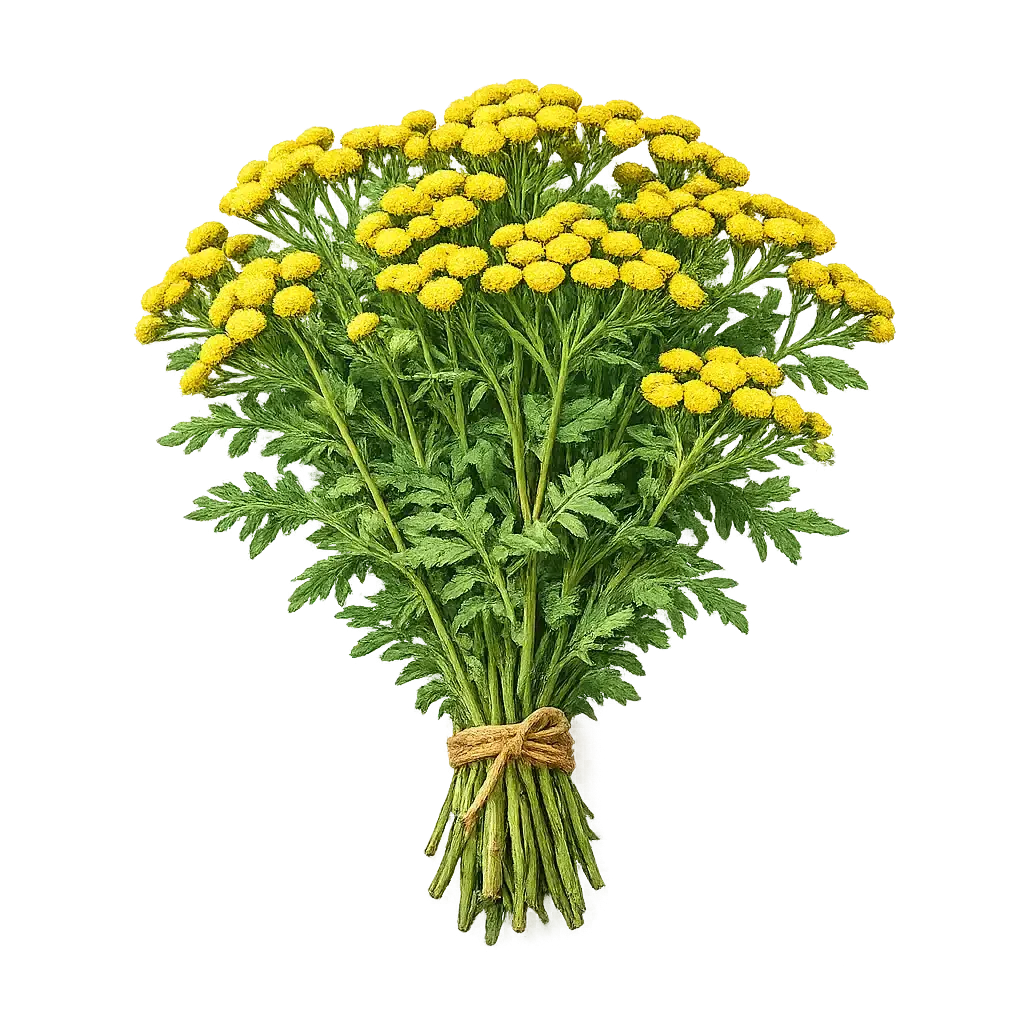
Tanacetum vulgare is native to the temperate regions of Europe and Asia, growing naturally on roadsides, disturbed ground, field margins, and the edges of woodland across a wide range that extends into naturalized populations throughout North America, where it was introduced by early European settlers who carried it for the medicinal, culinary, and pest control purposes it served in the old world. It is a robust, spreading, strongly aromatic perennial with deeply divided, fernlike, dark green leaves and upright stems reaching two to four feet that terminate in late summer in the flat-topped clusters of bright yellow button flowers that give rise to the common names golden buttons and bitter buttons.
The aromatic intensity of tansy is striking even by the standards of a strongly scented plant family. The crushed foliage releases a sharp, camphor-like smell dominated by thujone, the same volatile compound present in wormwood and in lesser concentrations in other Artemisia relatives, alongside bitter sesquiterpene lactones that give the foliage its markedly unpleasant taste to herbivores. This combination of strong smell and bitter taste is precisely what makes tansy effective as an insect deterrent, a livestock-avoiding plant, and historically as a preservative and strewing herb.
On the homestead, tansy earns its place most clearly as a companion plant and pest deterrent, and as a structurally dramatic, easily grown perennial that provides excellent late-summer pollinator habitat for certain beneficial insect species despite its pest deterrent properties toward others. It spreads aggressively by both rhizome and self-seeding, and the management of this spreading habit is the primary practical challenge of growing it, resolved most effectively by positioning it where spreading is acceptable or by containing it in a defined area with physical barriers.
How to Grow
Sun Requirements
Tansy is tolerant of a wide light range and performs productively from full sun to partial shade of four to five hours of direct sun daily. In full sun it produces the most compact, most strongly aromatic plants with the most abundant flowering. In partial shade it grows somewhat taller and more open but remains vigorous, flowers reliably, and retains the aromatic intensity that makes it useful as a companion plant and pest deterrent.
The vigorous spreading habit of tansy is somewhat moderated in partial shade positions compared to full sun, which can be a practical advantage in garden settings where containment is a concern. Full sun with rich soil produces the most aggressive spreading, and the combination of poor soil and partial shade slows the plant's territorial expansion most effectively without eliminating its usefulness.
Soil Requirements
Tansy is one of the most soil-tolerant plants in this series, growing productively on soils ranging from lean and gravelly through moderately rich and loamy, on both acidic and alkaline ground, and in conditions that many more demanding herbs would refuse. This tolerance reflects its origin as a disturbance-adapted, roadside colonizer that naturally occupies the marginal, variable soils of disturbed ground.
Well-drained soil is preferred but tansy is more tolerant of occasional moisture than many of the Mediterranean herbs in this series. It does not perform well in persistently waterlogged or swampy conditions, but it handles the periodically moist soils of temperate climates without the root rot susceptibility that affects thyme, rosemary, and the Artemisia relatives.
Lean, poor soils actually produce the most appropriate plants for most homestead uses, keeping the spreading habit somewhat more contained and producing the strongly aromatic growth that is most effective as a pest deterrent. Rich, heavily amended soils produce lush, fast-spreading growth that can become a management problem more quickly than the same plant on leaner ground.
Water Needs
Established tansy is moderately drought tolerant and manages well in most temperate climates without supplemental irrigation once the root system is established. Its spreading rhizome network provides access to soil moisture across a wider area than its above-ground footprint would suggest, and drought stress that would slow more restricted-root plants is handled well by the extensive underground root system of an established clump.
In the first growing season, moderate watering supports establishment. From the second year onward, tansy is essentially self-sufficient in all but the driest climates and requires no irrigation management beyond awareness that prolonged drought will reduce the flowering season.
Planting
Tansy is most easily established from nursery transplants, from divisions of established plants, or from seed. Seed germinates readily at room temperature without pretreatment, typically within ten to fourteen days, and can be sown directly outdoors in spring or autumn. The plant self-seeds freely once established, and in many garden settings a single initial planting produces all the subsequent plants needed without any deliberate replanting effort.
Division of established clumps in early spring is the fastest establishment method and the most practical way to multiply the planting for border plantings or to establish containment strips around vegetable beds. The clumps divide easily into sections that transplant readily and begin vigorous growth almost immediately.
Before planting, the spreading habit deserves serious consideration. Tansy planted in open garden beds without physical containment will spread by rhizome and by seed into surrounding areas within two to three growing seasons, and repositioning an established colony is considerably more work than planning the initial site to account for this habit. Positions where spreading is either acceptable or physically contained by paving, walls, or mowing boundaries are the most practical sites for open-ground planting.
Plant Spacing
Plants should be spaced 18 to 24 inches apart, though the spreading habit of tansy makes initial spacing less critical than for non-spreading plants since the gaps will close regardless. At the 18 inch spacing, plants typically merge into a continuous colony within one to two growing seasons, creating the dense aromatic border that is most effective for pest deterrence applications.
Companion Planting
Tansy's companion planting reputation in the traditional kitchen garden is substantial and reasonably well supported, centered on the deterrent effect of its strong volatile oils on several significant insect pests.
Fruit trees, where tansy planted beneath or near the drip line has documented traditional use for deterring codling moth, aphids, and Japanese beetles, and where the physical exclusion of ants climbing the trunk, which tend and protect aphid colonies, may reduce aphid pressure on the tree
Potatoes, where tansy is one of the most consistently recommended traditional companions for deterring Colorado potato beetle, with some supporting evidence from field observation though controlled studies are limited
Roses, where tansy is used as a border planting to deter aphids, Japanese beetles, and the soil-dwelling larvae of several pests that attack rose roots
Cucurbits including squash, cucumber, and melon, where the volatile oil released from crushed tansy foliage may deter squash vine borers and cucumber beetles in proximity
Brassicas, where tansy in the border is traditionally used to deter cabbage white butterfly and cabbage moth similarly to other strongly aromatic herbs
The perimeter of the vegetable garden as a whole, where a continuous tansy border provides aromatic deterrence across the full perimeter and simultaneously provides late-season pollinator habitat and a cut flower harvest
Tansy as a pest deterrent spray: A strong tea made from fresh or dried tansy foliage, simmered for twenty minutes, strained, and diluted to a pale color before application as a foliar spray, provides topical insect deterrence on aphid-affected plants and as a soil drench around pest-susceptible crops. The preparation should be handled with gloves, kept away from food crops within two weeks of harvest, and not used near water features where runoff could affect aquatic organisms.
Harvesting
Harvest Time
Foliage for pest deterrent and companion planting applications can be harvested through the entire growing season, with the strongest aromatic oil concentration occurring from late spring through the early flowering period in August and September. For dried bundles used as indoor insect deterrents in larders, grain stores, and livestock housing, harvesting at full bloom when flower and foliage aromatic oil content is simultaneously high produces the most effective dried material.
The yellow button flowers are harvested for dried flower arrangements and wreaths at the peak of bloom, when the flat-topped clusters are fully open but before individual florets begin to fade. They dry beautifully, retaining their vivid yellow color for a year or more, and are one of the most useful and long-lasting dried flower materials available from the herb garden.
Harvest Method
Cut stems six to eight inches below the flower clusters or as needed for foliage harvest, wearing gloves as the volatile oils in the foliage can cause skin irritation in sensitive individuals with prolonged contact. Take no more than one third of any individual stem cluster in a single harvest to maintain plant vigor and appearance through the season.
For drying, bundle stems loosely and hang upside down in a well-ventilated space out of direct light. Tansy dries readily within one to two weeks at room temperature. The dried foliage retains strong aromatic activity for six to twelve months and remains effective as an insect deterrent through this period. Dried flower heads can be stored in airtight containers or displayed in open bowls or woven into dried wreaths where the aromatic quality itself contributes deterrence in the immediate area.
How to Use
Pest Deterrent Uses
The most immediate and most practically useful application of tansy on the homestead is as an insect deterrent in and around livestock housing, grain storage, and food preservation areas. Dried tansy bundles hung in barns, granaries, chicken coops, and root cellars release the volatile thujone and camphor compounds from the dried foliage slowly over several months, deterring flies, ants, fleas, lice, moths, and several other insect pest species in the immediate area.
Fresh tansy rubbed on wooden surfaces, draped near doorways and windows, or placed in mesh bags near food storage areas provides immediate-release deterrence from the highest-concentration fresh volatile oils. This is one of the oldest recorded uses of the plant in European folk practice and one that the chemistry of the plant entirely supports.
Dried tansy incorporated into bedding materials for small livestock and poultry provides ongoing deterrence against fleas, lice, and mites that affect these animals, and the practice of strewing tansy on the floors of living spaces to deter insects and mask odors persisted in European practice from the medieval period through the nineteenth century. The same mechanism that made it valuable historically remains valid in contemporary livestock management.
The companion planting applications described in the growing section above are the most garden-specific uses, and the concentrated spray preparation described in the info box above is the most flexible application tool for targeted pest management on specific crops.
Natural Dye Uses
Tansy is one of the most reliable and most accessible natural yellow dye plants available for the homestead fiber dyer. The leaves and flowers boiled with mordanted wool or other natural fibers produce clear, warm yellow tones ranging from pale gold with alum mordant to stronger greenish-gold with iron mordant. The dye exhausts well from a single bath and does not require the specialized mordant chemistry that some natural dye plants demand, making it an accessible entry point into natural fiber dyeing with results that are both attractive and reasonably lightfast.
Cut Flower Uses
Fresh tansy in bloom makes a striking cut flower, with the flat-topped clusters of bright yellow button flowers providing bold structural interest in mixed arrangements. The strong aromatic character of the cut stems discourages the fruit flies and fungus gnats that affect more conventional cut flowers, and arrangements incorporating tansy typically require less frequent water changes than purely culinary cut flower bundles. Dried tansy flowers are perennially useful in wreaths, dried bouquets, and decorative dried arrangements where their color persistence and natural aromatic deterrence make them more functional than purely ornamental.
Historical Culinary Uses
Tansy was used in European cooking from the medieval period through the eighteenth century, most notably in tansy cakes and tansy pudding prepared for Easter celebrations, where the bitter, strongly flavored herb was used in the context of the spring purge traditions that used bitter herbs as symbolic and practical cleansing preparations. These culinary uses are historical rather than current recommendations. The thujone content that makes tansy medicinally active is present in sufficient concentration to be genuinely toxic in the quantities that would be consumed in food preparations, and tansy is not appropriate for internal use in any form. This historical record is worth noting as context for understanding the plant's place in the herbal tradition, not as guidance for contemporary use.
Storage
Dried tansy foliage and flower bundles store effectively for six to twelve months in a cool, dry location. Bundles hung in livestock housing, root cellars, or grain stores do not require any special containment, as the purpose of their use is to release volatile compounds into the surrounding air. For stored dried material intended for later use, keeping bundles in paper bags or loosely sealed in paper reduces the rate of volatile oil loss from the dried foliage without creating the humid conditions that would allow mold to develop.
Fresh foliage for spray preparations can be used immediately after harvest or refrigerated in a sealed bag for up to one week before use without significant loss of the aromatic oil content that carries the active deterrent compounds.
Lifespan of the Plant
Tansy is a vigorously long-lived perennial that persists indefinitely in appropriate conditions in zones 3 through 9. Individual plants are essentially permanent features of the garden once established, spreading each year by both rhizome and self-seeding unless actively managed. The management question is therefore not how to keep tansy alive, which requires no effort at all, but how to prevent it from occupying more space than intended while maintaining sufficient planting for its intended uses.
Cutting the plant to the ground in late autumn after the seeds have been allowed to ripen, or before seed set if self-seeding is to be prevented, controls above-ground growth without affecting the rhizome network that will re-emerge the following spring. Mowing the perimeter of tansy plantings regularly during the growing season prevents rhizome spread beyond the intended boundary. Removing self-sown seedlings when small, before they establish the deep rhizome system of mature plants, is considerably easier than removing established plants.
Pros and Cons
Advantages
Genuine and well-supported insect deterrent effectiveness for flies, ants, fleas, moths, and several garden pest species
Bold, structurally dramatic foliage and vivid yellow button flowers providing late-summer visual interest and cut flower material
Dried flowers retain vivid yellow color for a year or more, excellent for dried arrangements and wreaths
Outstanding natural yellow dye plant, accessible and reliable without complex mordant chemistry
Hardy to zone 3, one of the most cold-tolerant herbs available
Virtually no pest or disease problems; thrives on neglect
Provides late-season pollinator habitat for beneficial hoverflies and certain parasitic wasp species that prey on garden pests
Establishes quickly and requires no maintenance beyond containment management
Limitations
Toxic if consumed internally; not appropriate for any food, tea, or medicinal preparation
Spreads aggressively by both rhizome and self-seeding, requiring active management to prevent invasion of surrounding areas
Thujone in the volatile oils can cause skin and mucous membrane irritation with prolonged handling; gloves recommended
Naturalized as an invasive species in some regions of North America; check local regulations before planting
Not appropriate around food crops within two weeks of harvest when used as a spray deterrent
Strong odor is pleasant to some, unpleasant to others, and persistent in areas where the plant grows densely
Not appropriate in gardens with unsupervised children or free-range poultry with unlimited access to the foliage
Common Problems
Tansy has almost no significant pest or disease problems. It is too strongly aromatic to be attractive to most insect herbivores, too bitter for most mammalian browsers to consume willingly, and too vigorous on a wide range of soils for most pathogens to establish before the plant outgrows any damage. The problems associated with growing tansy are almost entirely management problems rather than health problems.
Invasive spread is the most consistent challenge and the one that requires the most active ongoing management. On fertile, moist soils in full sun, tansy can spread by rhizome several feet in a single growing season and simultaneously produce thousands of viable seeds that are distributed by wind and passing animals. Managing this requires either physical containment through buried root barriers, regular perimeter mowing, or deliberate siting in positions where spreading into surrounding areas is not a problem.
In some jurisdictions in North America, tansy is listed as a noxious weed or regulated invasive species due to its naturalization in disturbed habitats and its competitive displacement of native vegetation in some ecosystems. Checking local regulations before establishing tansy is prudent, and in regions where it is actively invasive, alternative pest deterrent herbs with less aggressive spreading habits may be more appropriate choices.
Powdery mildew occasionally affects the foliage in hot, humid, still-air conditions in late summer. It is cosmetic in impact and the late-season timing means it rarely affects the usefulness of the plant for its primary applications. The natural senescence and cut-back of autumn removes affected growth cleanly for the following season.
Varieties
Tanacetum vulgare in the straight species form is the standard plant available from most nurseries and is the appropriate choice for all the applications described in this guide. It is the most vigorous and most strongly aromatic form and produces the best results for pest deterrence and companion planting applications.
Tanacetum vulgare var. crispum, fernleaf tansy or curly tansy, is an ornamental selection with more finely divided, curled, and ruffled foliage that is considerably more attractive as a garden plant than the straight species. It retains the aromatic character and pest deterrent properties of the species while offering a more refined visual presence appropriate for formal herb garden settings. It is somewhat less vigorous than the straight species, which can be an advantage from a management perspective.
Tanacetum parthenium, feverfew, is a closely related species in the same genus with similar bright yellow and white button flowers, a similar aromatic character, and an entirely distinct medicinal profile centered on its documented effectiveness for migraine prevention. The two plants are different in application despite their botanical proximity, and feverfew is covered separately in this series.
Safety summary: Tansy is not safe for internal use in any form, including teas, tinctures, food preparations, or medicinal preparations. The thujone content is sufficient to cause seizures, liver damage, and fatality at doses that might seem moderate relative to other strongly flavored herbs. External use as a dried bundle, spray preparation, or companion plant does not carry these risks when handled with gloves to prevent skin irritation. It is not appropriate for use around unsupervised young children or animals with unrestricted access to the foliage. In regions where it is listed as a noxious weed, local regulations should be consulted before planting.
Final Thoughts
Tansy rewards the grower who approaches it clearly: not as a medicinal herb, not as a culinary herb, but as a potent aromatic perennial with genuine practical value in specific applications that are well matched to the homestead context. The dried bundles in the grain store work. The perimeter planting around the vegetable garden works. The companion planting near the fruit trees has traditional and observational support. The cut flowers are beautiful. The dye is reliable and accessible.
The requirement in return is honest management of the spreading habit and a clear understanding of where the plant belongs in the homestead and where it does not. Plant it where spreading is acceptable or where it can be contained. Use it externally. Appreciate what it genuinely offers and leave the internal applications in the historical record where they belong.
A homestead herb garden that includes tansy, used correctly and sited thoughtfully, has access to one of the most effective natural pest deterrents available in the temperate flora. That is worth a position along the fence line, where the yellow buttons will catch the late August sun and the aphids will find somewhere else to be.