
Thyme
Written By Arthur Simitian
QUICK FACTS
Common Name
Thyme, Common Thyme, Garden Thyme, English Thyme
Scientific Name
Thymus vulgaris
Plant Type
Hardy perennial subshrub
Hardiness Zones
4 to 9
Sun Requirements
Full sun
Soil Type
Well-drained, dry to average, poor to moderately fertile
Plant Height
6 to 12 inches
Spacing
12 to 18 inches
Uses
Culinary, medicinal antimicrobial, cough and respiratory herb, pollinator plant, companion plant, poultry and livestock supplement, natural preservative
Thyme is the herb that does everything quietly and without complaint. It asks for the worst soil in the garden, full sun, and almost no water, and in return it provides one of the most versatile culinary herbs available, one of the most potent natural antimicrobials in the temperate herb collection, several weeks of exceptional small-bee pollinator habitat, effective companion planting support for a wide range of vegetables, and a tidy, woody, evergreen presence in the garden through every month of the year. It has been grown in kitchen gardens continuously since at least the ancient Greeks, and the reason is simply that it earns its space so reliably and so completely that no serious herb grower leaves it out.
Introduction
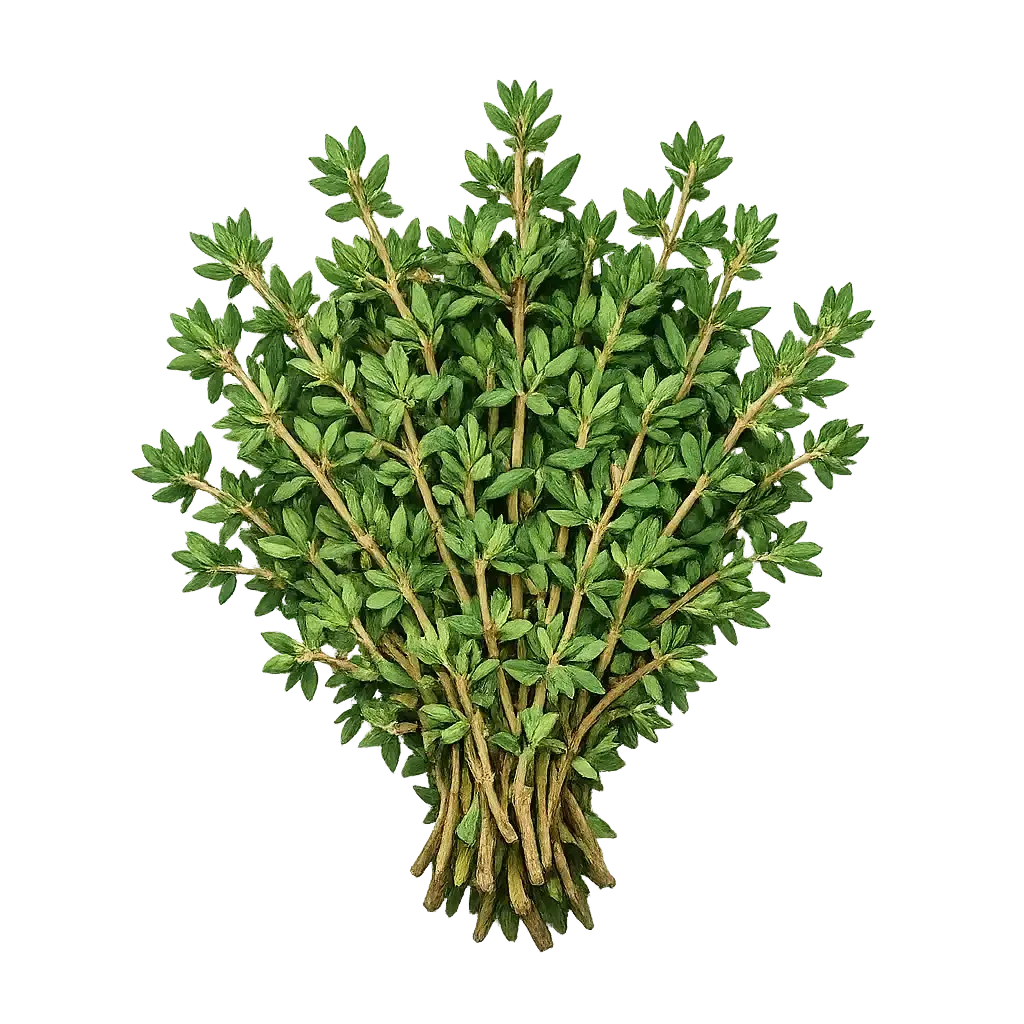
Thymus vulgaris is native to the western Mediterranean, growing naturally on rocky, calcareous hillsides and dry open ground from southern France through Spain, Italy, and the Balkans. It is a low-growing, woody subshrub forming dense mounds of tiny, aromatic, dark green leaves on wiry stems that reach six to twelve inches in height, covered in late spring and early summer with a profusion of small pale pink to lavender tubular flowers that are among the most intensely visited by bumblebees and smaller native bees of any herb in the temperate garden.
The aromatic character of thyme is produced primarily by thymol and carvacrol, phenolic compounds that are among the most potent naturally occurring antimicrobials identified in plant essential oils. Thymol in particular has extensive documentation as an antibacterial, antifungal, and antiviral compound effective against a broad spectrum of human pathogens, and the same chemistry that makes thyme so effective as a medicinal herb and natural preservative is what makes it taste the way it does and what makes bees collect its nectar so enthusiastically to produce the distinctively flavored thyme honey prized across the Mediterranean.
On the homestead, thyme is one of the five or six herbs whose presence is essentially non-negotiable. It grows on the leanest, most freely draining soil the garden offers, requires no fertilizing, tolerates drought, produces harvestable material through most of the year in all but the coldest climates, and delivers culinary, medicinal, and ecological value simultaneously with a persistence and reliability that more demanding herbs cannot match.
How to Grow
Sun Requirements
Thyme requires full sun and is one of the herbs least tolerant of shaded growing conditions in this series. Fewer than six hours of direct daily sun produces lanky, soft growth with reduced aromatic oil concentration, increased disease susceptibility, and a loss of the compact, woody mounding habit that characterizes healthy thyme on appropriate sites. Its rocky Mediterranean hillside origin is the correct model: open, exposed, maximum sun through the entire day.
In hot climates of zones 8 and 9, full sun combined with well-drained, lean soils produces the most intensely flavored and medicinally potent plants. Even in these warmer zones, shade is not beneficial and the heat that most other herbs require protection from is tolerated by thyme without difficulty as long as adequate air movement prevents stagnant humid conditions around the foliage.
Soil Requirements
Thyme is the archetypal lean-soil herb and performs at its best on conditions that would defeat most of the garden. Rocky, sandy, gravelly, chalky, or thin soils with excellent drainage and low fertility produce the most compact, most aromatic, most medicinally potent thyme available. Rich, heavily fertilized, moisture-retentive soils produce soft, fast-growing, relatively flavorless plants that demonstrate exactly why the dried thyme in supermarket spice jars tastes so much less interesting than herbs grown on appropriate lean ground.
Well-drained soil is the single most critical requirement, exceeding even sun in importance for long-term plant survival. Thyme in waterlogged or poorly drained soil develops root rot reliably and fatally, and more thyme plants are lost to poor drainage than to any other cause including winter cold. Raised beds, sloped sites, gravel gardens, and the naturally fast-draining conditions of rocky or sandy soils are all ideal. If planting into heavy clay, incorporating generous quantities of grit or coarse sand into the planting hole improves drainage around the root zone and extends the life of the plant considerably.
Water Needs
Established thyme is highly drought tolerant and one of the most water-independent herbs available for the temperate garden. Its deep root system relative to its small above-ground size, combined with the small, waxy leaf surface that reduces moisture loss, allows it to survive extended summer drought on appropriate soils without any supplemental irrigation.
During the first growing season, moderate watering supports root establishment. From the second year onward, supplemental irrigation in climates with any summer rainfall is rarely needed and often counterproductive, encouraging the soft lush growth that reduces aromatic oil concentration and increases disease susceptibility. On lean, well-drained soils, the natural moisture from occasional rainfall is typically all that established plants require.
Planting
Thyme is reliably established from nursery transplants, from seed, or from division and layering of established plants. Seed germinates readily at soil temperatures above 60 degrees Fahrenheit without any pre-treatment, typically within fourteen to twenty-one days of sowing in warm conditions. Starting seed indoors six to eight weeks before the last frost date produces transplant-sized seedlings ready for spring placement, and direct outdoor sowing after the last frost is equally practical on sites where the soil surface can be kept consistently moist until germination occurs.
Division of established clumps in early spring is fast and reliable, producing rooted sections that establish quickly and begin productive harvesting in the same season. Layering, where a low-growing stem is pinned to the soil surface and allowed to root over several weeks before being separated from the parent plant, is an equally effective propagation method that requires no cutting. Cuttings taken from non-flowering stem tips in early summer root readily in a well-drained medium and are the most practical way to multiply named cultivars whose characteristics are not reliably reproduced from seed.
Plant Spacing
Plants should be spaced 12 to 18 inches apart to allow the woody mounding habit to develop fully and to ensure adequate air circulation that prevents the fungal diseases that can affect crowded thyme in humid conditions. At the 12 inch spacing, plants typically close over into a continuous low hedge within two growing seasons, creating an effective ground cover that suppresses weeds and provides continuous pollinator habitat during the flowering period.
Companion Planting
Thyme is one of the most effective and most thoroughly documented companion plants in the kitchen garden, with genuine benefits beyond the pollinator attraction that most flowering herbs provide.
Brassicas, where the volatile thymol released from thyme foliage has documented repellent activity against cabbage white butterfly and cabbage moth when planted as a border or interplanted between brassica rows
Tomatoes, one of the most consistently recommended companion pairings, with traditional evidence for repellence of tomato hornworm and whitefly
Strawberries, where thyme as a border planting reduces botrytis pressure through improved air circulation and has documented antimicrobial activity against the fungal pathogens that cause gray mold
Fruit trees, planted as ground cover under the drip line where pollinator attraction provides practical crop pollination support alongside possible antimicrobial effects on fallen fruit
Root vegetables including carrots, parsnips, and turnips, where the aromatic foliage may deter root fly species in the vicinity
Thyme and bees: Thyme in full bloom is one of the most reliably productive pollinator plants per square foot available for the herb garden. The small tubular flowers are accessible to a wide range of bee sizes, and established thyme patches in full flower can support dozens of individual bees simultaneously on warm mornings. Planning thyme's position in relation to vegetable crops that need pollination during the same summer window produces meaningful cross-garden pollination benefits beyond the companion planting effects of the aromatic foliage.
Harvesting
Harvest Time
Thyme can be harvested at any point during the growing season, with the highest thymol and carvacrol concentration occurring just before and during the early flowering period in late spring and early summer. For medicinal preparations where maximum antimicrobial potency is the goal, harvesting just as the first flower buds open captures peak essential oil concentration before the plant's energy shifts into seed production.
For culinary use, thyme is available as fresh sprigs through most of the growing season and, on evergreen plants in zones 6 and warmer, through much of winter as well. The flavor of fresh thyme is most intense in summer-harvested material, but remains more flavorful than dried commercial thyme at any point in the season.
Harvest Method
Cut stems four to six inches from the tip with sharp scissors or shears, never cutting into the old woody growth below the current season's green stems. Cutting into the woody base stimulates poor regrowth and can permanently damage the plant's structure. Taking no more than one third of the current season's growth in any single harvest allows rapid recovery and supports multiple cutting cycles through the season.
For dried herb production, bundle harvested stems loosely and hang in a well-ventilated space out of direct sun. Thyme dries quickly within seven to ten days at room temperature and retains its aromatic character exceptionally well, making it one of the most rewarding herbs to dry from home production. Stripped leaves are stored in airtight glass containers away from heat and light.
Annual pruning after flowering, cutting the plant back by up to half its height into the green growth but not into the woody base, maintains the compact mounding habit and stimulates productive new growth for the autumn harvest. This post-flowering trim is the single most important maintenance practice for long-lived, productive thyme plants.
How to Use
Kitchen Uses
Thyme is foundational to the cooking of southern France, Italy, Spain, Greece, and the broader Mediterranean culinary tradition, and its presence in a kitchen garden makes a category of cooking accessible that is genuinely diminished without it. Fresh thyme adds depth to braises and stews that dried thyme approximates but does not replicate. The whole sprig dropped into a pot of braised short ribs or a slow-cooked lamb shoulder, allowed to infuse through the entire cooking time and removed before serving, delivers an aromatic complexity that is one of the defining characteristics of French country cooking.
Bouquet garni, the classic French herb bundle of thyme, bay, and parsley used to flavor stocks, soups, and braises, is one of the most practically important culinary applications of the herb. Roasted meats and vegetables are equally strong applications: stripped fresh thyme leaves pressed into the skin of a chicken before roasting, tucked into slits cut in a leg of lamb alongside garlic, or scattered over root vegetables with olive oil before a high-heat roast all deliver the herb's full aromatic character in a way that integrates into the food rather than sitting on top of it.
Thyme as a natural food preservative is both a traditional application and a scientifically supported one. The antimicrobial activity of thymol inhibits the growth of food spoilage organisms, and the traditional Mediterranean practice of preserving olives, cheeses, and cured meats with thyme sprigs has a genuine food safety basis alongside its flavor contribution.
Tea Uses
Thyme tea prepared from fresh or dried aerial parts is one of the most practically useful medicinal preparations in the homestead medicine cabinet. One heaping teaspoon of fresh thyme or a level teaspoon of dried herb per cup of just-boiled water, steeped covered for ten minutes, produces a pale golden tea with a clean, warm, medicinal flavor that is genuinely pleasant. Honey improves the flavor and contributes its own antimicrobial activity. The combination of thyme tea with honey, lemon, and ginger produces a comprehensive respiratory support preparation that addresses the antimicrobial, expectorant, anti-inflammatory, and soothing dimensions of upper respiratory infection simultaneously.
Medicinal Uses
Thyme's medicinal applications are more extensively supported by modern research than most culinary herbs, principally because thymol's antimicrobial, expectorant, and antispasmodic properties have attracted significant pharmaceutical interest. Thymol is the active ingredient in several commercial mouthwashes and topical antiseptic preparations, its antimicrobial credentials established in laboratory studies confirming broad-spectrum activity against bacteria including Staphylococcus aureus, Escherichia coli, and Salmonella, as well as against several clinically relevant fungi.
As a respiratory herb, thyme tea and tincture have documented expectorant activity that loosens mucus in the airways and facilitates its clearance, antispasmodic activity that reduces the bronchial spasm component of coughs, and direct antimicrobial activity against the bacterial pathogens associated with secondary respiratory infection. A European standardized thyme extract is licensed as a cough medicine in Germany and several other European countries, representing one of the more complete bridges between traditional herbal use and regulatory pharmaceutical approval available for any medicinal plant.
As an oral antimicrobial, thyme tea used as a mouthwash or gargle has documented effectiveness against the bacteria associated with gum disease and bad breath. Topically, thyme infused oil or a strong thyme tea applied to minor cuts and skin infections provides genuine antimicrobial protection at the wound site, and a compress of strong thyme tea on an inflamed skin area is a practical first-response wound care preparation.
Poultry and Livestock Uses
Thyme as a poultry feed supplement has attracted sustained research attention for its documented antimicrobial and gut health benefits in commercial poultry production, where thymol-containing preparations have been studied as antibiotic growth promoter alternatives with promising results. Fresh or dried thyme offered to poultry as a supplement or incorporated into feed at modest rates provides antimicrobial support, reduces pathogen load in the gut, and appears to improve feed conversion and overall flock health.
Fresh thyme scattered in poultry housing as a litter supplement has documented activity against the bacterial and fungal pathogens associated with respiratory disease in poultry, and the aromatic volatile oils released from the crushed foliage provide ongoing low-level antimicrobial activity in the housing environment. This is one of the more practical and well-supported natural poultry management applications in the homestead herb garden.
Storage
Fresh thyme sprigs store for one to two weeks refrigerated in a slightly damp paper towel inside a loosely sealed bag. For longer fresh storage, thyme freezes well: whole sprigs placed in a single layer on a baking sheet until frozen, then transferred to a sealed freezer bag, retain flavor for three to four months and can be used directly from frozen in cooked applications without thawing.
Dried thyme stores exceptionally well for two to three years in airtight glass containers kept cool and dark, retaining more of its essential oil content than most dried herbs over extended storage. The tight, woody structure of the dried leaves reduces the surface area exposed to oxidation, and the high concentration of volatile oils in well-grown thyme means that even after some loss through storage, the remaining concentration exceeds that of commercially produced dried thyme at any point.
Thyme-infused olive oil, prepared by filling a jar with fresh thyme sprigs and covering completely with good olive oil, infused for two to four weeks before straining, stores for two to three months at room temperature and indefinitely refrigerated. It is one of the most practically useful and most flavorful culinary preparations the thyme harvest produces.
Lifespan of the Plant
Thyme is a perennial subshrub that persists for five to ten years on appropriate well-drained sites in zones 4 through 9, though individual plants typically become increasingly woody and less productive after four to five years. The combination of annual post-flowering pruning and periodic replacement of the oldest, woodiest plants every four to five years keeps a thyme planting continuously productive and attractive without allowing any individual plant to decline into unproductive old growth.
The easiest management approach is to maintain a mix of plant ages: younger plants providing the most vigorous and productive growth, established plants at full productive maturity, and replacement plants being established from cuttings or divisions as the oldest plants are removed. This rolling replacement cycle ensures that at least some plants are always at their most productive stage.
In zones 4 and 5, winter hardiness is variable depending on drainage and snow cover. Thyme on well-drained soil with consistent snow cover through winter is reliably hardy to zone 4. Thyme on heavier soils or in positions where winter wet combines with cold is more vulnerable, and a light covering of evergreen boughs or dry leaves over the crown through the coldest months improves survival rates in marginal conditions.
Pros and Cons
Advantages
One of the most culinarily essential herbs available, foundational to Mediterranean, French, and broader European cooking traditions
Thymol is among the most potent naturally occurring antimicrobials identified in plant essential oils, with extensive laboratory and clinical documentation
Exceptional pollinator plant for bumblebees and small native bees during the summer flowering period
Thrives on lean, dry, well-drained soils where other herbs struggle
Highly drought tolerant once established, requiring minimal irrigation
Evergreen in zones 6 and warmer, providing fresh harvestable material through most of the year
Effective documented companion plant for brassicas, tomatoes, and strawberries
Valuable poultry and livestock health supplement with research support
Hardy to zone 4 on appropriate well-drained soils
Limitations
Requires full sun without compromise; performs poorly in any significant shade
Declines reliably in poorly drained or waterlogged soils; drainage is non-negotiable
Becomes woody and less productive after four to five years, requiring periodic replacement
Winter hardiness in zones 4 and 5 is site-dependent and not guaranteed on heavy or wet soils
High-dose thymol preparations in concentrated essential oil form are irritating to mucous membranes and not appropriate for internal use
Named culinary cultivars must be propagated vegetatively as seed does not reliably reproduce specific variety characteristics
Common Problems
Thyme on appropriate well-drained soil in full sun experiences few serious problems. Root rot from poor drainage is overwhelmingly the most common cause of plant loss and is entirely preventable by site selection and soil preparation. Any thyme plant that wilts persistently despite apparent adequate moisture, develops blackened stem bases, or collapses suddenly in wet weather is almost certainly experiencing root rot from drainage inadequacy rather than any treatable pest or disease.
Woody, unproductive growth in older plants is a management issue rather than a disease, resolved by the annual post-flowering pruning described in the harvest section and by the periodic replacement of plants that have become too woody to respond productively to pruning. Attempting to cut aggressively into old woody growth to rejuvenate overgrown plants rarely succeeds; replacing old plants with new ones from cuttings or divisions is the more reliable approach.
Botrytis gray mold can affect the foliage in cool, humid, still-air conditions, particularly on plants in crowded positions or on heavy soils that remain moist. Appropriate spacing, full sun positioning, and the lean, well-drained soil conditions that thyme requires prevent it in most circumstances. Spider mites occasionally affect plants in hot, dry conditions, and strong water sprays directed at the undersides of the leaves disrupt mite populations effectively.
Varieties
Thymus vulgaris in the straight species form is the primary culinary and medicinal thyme with the highest thymol content and the most intensely aromatic character of any common thyme. It is the appropriate choice for all culinary, medicinal, and companion planting applications described in this guide.
Thymus vulgaris French or Narrow-leaf thyme is a culinary selection with a more refined, less camphor-forward flavor profile preferred by some cooks for fresh use in delicate preparations. It retains the full medicinal properties of the species.
Thymus citriodorus, lemon thyme, is a hybrid with bright lemon-citrus notes alongside the classic thyme character, excellent for fish, chicken, and lighter preparations where the lemon note is an asset. It shares the same growing requirements and general medicinal properties as common thyme.
Thymus serpyllum, creeping thyme or wild thyme, is a lower-growing, more spreading species appropriate as a ground cover, between paving stones, or along the front edge of a border. Its prostrate habit and extremely dense flowering make it one of the most bee-attractive ground covers available for temperate gardens. Its culinary and medicinal properties are similar to but somewhat less concentrated than Thymus vulgaris.
Final Thoughts
There are herbs that make more impressive statements in the garden, herbs with more dramatic flowers, more exotic origins, more specialized reputations. Thyme makes none of these claims. It is a low, woody, unassuming plant that smells like the Mediterranean and asks for nothing but sun and the worst soil you have.
In return it will cook with you every week for years. It will send the bees into a minor frenzy every June. It will help keep the chickens healthy and the brassicas cleaner. It will sit in a jar in the medicine cabinet ready for the next chest cold, with the most concentrated natural antimicrobial the temperate herb garden produces. And it will still be there in March, green and alive, when everything else in the herb garden is bare ground and memory. That is a complete herb. Grow it.