
Turmeric
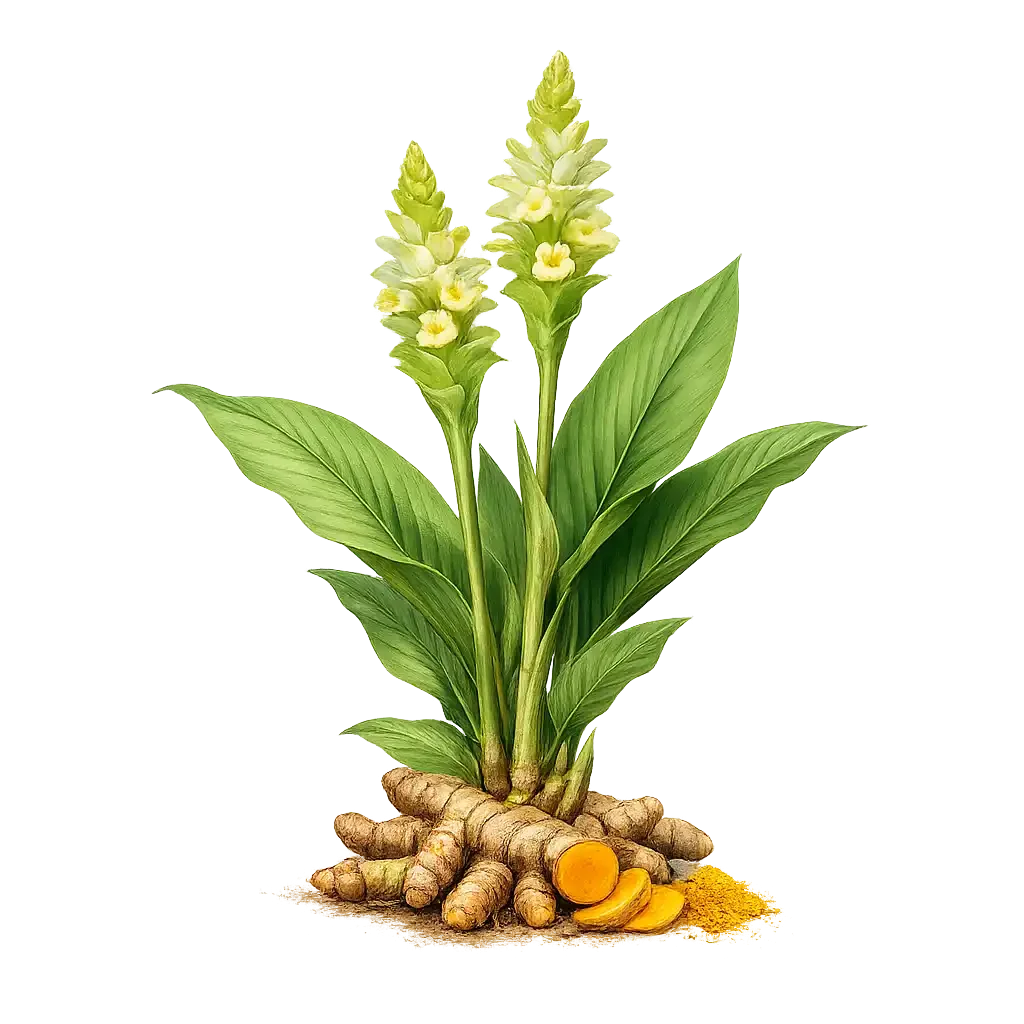
Written By Arthur Simitian
QUICK FACTS
Common Name
Turmeric, Indian Saffron, Golden Spice
Scientific Name
Curcuma longa
Plant Type
Tropical perennial rhizome; grown as annual in temperate climates
Hardiness Zones
8 to 11 in ground; zones 4 to 7 in containers with overwintering
Sun Requirements
Full sun to partial shade
Soil Type
Rich, moist, well-drained; loamy with high organic matter
Plant Height
2 to 4 feet
Spacing
12 to 18 inches
Uses
Culinary spice, medicinal anti-inflammatory, natural dye, tea, livestock supplement, skin care
Turmeric is the most researched medicinal spice plant in the world. The scientific literature on curcumin, the principal active compound of the turmeric rhizome, is now measured in thousands of published studies, and the anti-inflammatory, antioxidant, and potential therapeutic properties documented in that research have driven an extraordinary popular interest in a plant that South and Southeast Asian culinary and medical traditions had understood for four thousand years without requiring peer review to confirm it. Growing turmeric at home produces a harvest of fresh rhizome whose flavor, aroma, and curcumin content bears almost no resemblance to the stale orange powder sold in supermarket spice jars, and that quality difference alone justifies the modest effort of learning to grow it.
Introduction
Curcuma longa is native to the Indian subcontinent and Southeast Asia, where it has been cultivated continuously for more than four thousand years as a culinary spice, a medicinal herb, a fabric and food dye, and a ritual and ceremonial plant deeply embedded in Hindu religious practice and Ayurvedic medicine. It is a member of the ginger family Zingiberaceae and shares with ginger the growth habit of producing fleshy underground rhizomes as the primary harvestable and edible part, with the above-ground stems and broad, glossy, tropical-looking leaves dying back each year as the plant enters dormancy.
The rhizome of turmeric contains curcuminoids, principally curcumin, at concentrations of two to five percent of dry weight depending on variety and growing conditions. These curcuminoids are responsible for the vivid yellow-orange color that stains everything they contact, the warm, earthy, slightly bitter flavor that is foundational to curry powder and countless South Asian dishes, and the biological activity that has attracted such extensive research attention. The essential oils of the rhizome, including turmerone, zingiberene, and several related sesquiterpenes, contribute additional flavor complexity and their own biological activity distinct from the curcuminoids.
On the homestead, turmeric earns its place as one of the highest-value spice crops available for moderate-climate growers. A single planted rhizome multiplies into a substantial clump over one growing season, producing a harvest that far exceeds in quality anything commercially available. In zones 8 and warmer, it grows as a low-maintenance perennial in the ground. In zones 4 through 7, container culture with indoor overwintering of the dormant rhizomes extends its range to cover most of the temperate growing world.
How to Grow
Sun Requirements
Turmeric grows well across a wider light range than many rhizome crops, performing productively in full sun through partial shade of four to five hours of direct sunlight daily. In its native South Asian habitat it is often grown as an understory crop beneath taller plants, and this partial shade tolerance is genuine rather than a concession to poor siting.
In hot climates of zones 9 and 10, afternoon shade is actively beneficial, preventing the leaf scorch and moisture stress that can reduce rhizome development in intense full summer sun. In cooler zones 6 and 7, full sun maximizes the growing season heat accumulation that drives rhizome development and enlargement, and the more sun available the better the harvest in these marginal climates where the season is short.
Soil Requirements
Turmeric is one of the most soil-demanding herbs in this guide, requiring the opposite of the lean, dry conditions that suit yarrow, wormwood, and vervain. It grows best in rich, loamy, well-drained soil with high organic matter content, and the investment in soil preparation before planting is directly reflected in the size and quality of the rhizome harvest at the end of the season.
Incorporating generous quantities of finished compost into the planting area before setting rhizomes is the single most productive soil preparation step. Sandy soils that drain too quickly and lose moisture rapidly during the warm growing season require additional organic matter to retain adequate moisture around the developing rhizomes. Heavy clay soils that drain poorly and remain cold in spring delay sprouting and limit rhizome development, and raising the bed or incorporating coarse organic matter improves their suitability.
Soil pH of 5.5 to 7.0 is appropriate. Turmeric is reasonably tolerant of mildly acidic conditions and performs well in the slightly acidic range that characterizes many organically managed garden soils. Strongly alkaline soils above pH 7.5 are not appropriate and can cause micronutrient deficiencies that limit growth and rhizome development.
Water Needs
Turmeric requires consistent, moderate to generous moisture through the entire growing season and is one of the more water-demanding herbs in cultivation, reflecting its origin in the monsoon-influenced climates of South Asia where seasonal rainfall is abundant and reliable during the growing period.
The soil around turmeric should never dry out completely during the growing season. Consistent soil moisture from sprouting through the end of the growing season supports the steady rhizome enlargement that produces a productive harvest. In dry climates or dry summers, deep watering two to three times per week is typically needed to maintain the moisture levels the plant requires.
As the plants approach dormancy in autumn, reducing irrigation encourages the rhizomes to mature and develop the firm, dense texture that makes them most suitable for storage and culinary use. Continuing to water heavily into the senescence period can produce watery, less flavorful rhizomes with reduced storage life.
Planting
Turmeric is always started from rhizome divisions rather than from seed, as the plant rarely sets viable seed in cultivation and rhizome propagation is faster, more reliable, and produces a productive harvest in the same growing season. Fresh rhizomes from a previous season's harvest, or purchased fresh turmeric rhizomes from a grocery store or food co-op, both work as planting stock provided they are firm, plump, and show viable buds or eyes similar to those on ginger or potato tubers.
The critical timing constraint for turmeric in temperate climates is the long growing season it requires. From planting to harvest is eight to ten months, and in zones 6 and 7 where frost-free growing seasons are five to six months, starting the rhizomes indoors six to eight weeks before the last spring frost date is essential for achieving a worthwhile harvest before autumn frost kills the foliage and terminates growth.
Planting Process
Six to eight weeks before the last spring frost date, cut or break fresh rhizomes into sections of one to two inches each, ensuring each section has at least one viable bud or eye. Allow cut surfaces to dry for twenty-four hours before planting to reduce rot risk at the cut surface.
Plant rhizome sections two to three inches deep in small containers of rich, moist potting mix, buds facing upward. Place in a warm location at 65 to 75 degrees Fahrenheit with bright indirect light. Soil temperature is more important than air temperature at this stage: bottom heat from a seedling mat accelerates sprouting significantly in cool spring conditions.
Keep the potting mix consistently moist but not waterlogged while waiting for sprouting, which typically takes two to four weeks at adequate soil temperatures. Patience is required: rhizomes can take longer to sprout than most seeds, and apparent inactivity in the first few weeks does not indicate failure.
After sprouting, grow on in bright light indoors until nighttime temperatures are reliably above 55 degrees Fahrenheit, then harden off over one to two weeks before transplanting to the final outdoor position.
Transplant outdoors after all frost risk has passed into prepared beds or large containers, spacing 12 to 18 inches apart with rhizomes two to three inches deep. Water thoroughly after transplanting and maintain consistent moisture through the establishment period.
Plant Spacing
Plants should be spaced 12 to 18 inches apart to allow the spreading rhizome mass and broad foliage canopy to develop fully without crowding. Each planted rhizome section produces multiple new rhizomes radiating outward from the original piece through the season, and adequate space allows this expansion without competition between neighboring plants reducing the yield of any individual clump.
In container culture, a pot of at least 15 to 20 gallons per plant is needed to accommodate the full rhizome development of a productive turmeric plant. Smaller containers produce proportionally smaller rhizome harvests and require more frequent watering to maintain the consistent moisture the plant needs.
Companion Planting
Turmeric pairs well with other moisture-loving tropical and subtropical herbs and vegetables, and its partial shade tolerance makes it useful as a companion for taller crops that provide beneficial afternoon shade in hot climates.
Ginger, which shares identical growing requirements and can be planted alongside turmeric to maximize the productivity of a dedicated rhizome growing area
Lemongrass, which provides windbreak and partial shade for the turmeric while requiring the same warm, moist, rich conditions
Sweet potatoes, which share the warm season, moisture-requiring growth habit and together with turmeric create a productive tropical-climate polyculture on the same bed
Comfrey, which accumulates minerals in its deep-rooted foliage and when used as a mulch around turmeric provides a slow-release nutrient supplement that supports the high fertility demands of the crop
Tall annuals such as sunflowers or sweet corn, which provide afternoon shade in zones 9 and 10 where full summer sun can stress the turmeric foliage
Harvesting
Harvest Time
Turmeric rhizomes are ready to harvest when the above-ground foliage begins to yellow and die back naturally in autumn, signaling that the plant has completed its growing cycle and the rhizomes have reached their maximum size and curcumin concentration. In temperate climates where frost terminates the growing season before the foliage dies back naturally, harvest is triggered by the first frost that kills the aerial parts, typically in October in zones 6 and 7.
Early harvest of small, immature rhizomes is possible from midsummer for fresh culinary use where smaller, more delicately flavored rhizomes are preferred. The flavor of young turmeric is brighter, less earthy, and more floral than fully mature rhizomes, and some culinary traditions specifically prefer the young rhizome for fresh preparations where this character is an asset.
Harvest Method
Dig the rhizome clump carefully with a garden fork, working from outside the clump inward to avoid cutting through the rhizomes. The entire clump, consisting of the original planted section surrounded by the new season's growth, is lifted free and the soil shaken from the roots. The rhizomes are separated from the fibrous roots and plant stems, rinsed, and sorted: the plumpest, healthiest sections are set aside as seed stock for the following season, and the remainder is cured, stored, or processed for use.
Fresh turmeric rhizomes stain intensely and permanently on contact with skin, clothing, and surfaces. Wearing gloves, old clothing, and working on a surface that can be scrubbed are practical precautions that become obvious the first time one handles a freshly harvested rhizome without them.
Curing turmeric for storage: For long-term storage and the production of dried ground turmeric powder, fresh rhizomes are cured by boiling or steaming for forty-five to sixty minutes until a knife inserted into the thickest section meets little resistance, then dried completely in a dehydrator at 100 to 115 degrees Fahrenheit or in a warm oven at the lowest setting until fully desiccated. Properly dried rhizomes store for twelve to eighteen months and can be ground to powder in a spice grinder as needed. The color of home-cured dried turmeric is typically more vivid and the flavor more complex than any commercial dried turmeric available.
How to Use
Kitchen Uses
Fresh turmeric rhizome grated or finely chopped into dishes provides a brighter, more aromatic, and more complex flavor than dried powder, with floral and citrus notes alongside the earthy warmth that characterizes the dried spice. It is used in curry pastes and spice blends, incorporated into rice dishes and pilafs, added to soups and stews, blended into smoothies, and used as a fresh flavoring in the same way fresh ginger is used alongside dried ginger powder.
The classic culinary applications of dried ground turmeric are too numerous to catalogue comprehensively, but the most practically important for the homestead kitchen include curry powder blends where turmeric provides the yellow color and earthy warmth that defines the style, mustard preparations where it replaces or augments commercial mustard's color, fermented and pickled vegetables where it contributes both flavor and preservative activity, and egg and legume dishes where it provides color and depth without overwhelming more delicate flavors.
Golden milk, a preparation of turmeric in warm milk or plant milk with black pepper, ginger, and sweetener, has become one of the most popular modern culinary-medicinal preparations incorporating turmeric, and the combination of turmeric with black pepper is nutritionally significant: piperine in black pepper increases the bioavailability of curcumin by up to two thousand percent, which is the basis for the traditional Indian culinary practice of combining turmeric and black pepper in spice blends and is worth understanding for anyone using turmeric for medicinal rather than purely culinary purposes.
Tea Uses
Turmeric tea prepared from fresh grated or dried powdered rhizome, combined with ginger, black pepper, honey, and lemon, produces a warming, anti-inflammatory drink that is genuinely pleasant and practically useful as a daily tonic. The proportions are flexible and adjustable to taste: a standard preparation uses one teaspoon of dried turmeric or a one-inch piece of fresh grated rhizome per cup of water, simmered for ten minutes rather than merely steeped to extract the fat-soluble curcuminoids more completely into the hot liquid.
Including a fat source in turmeric tea preparations, such as a teaspoon of coconut oil, whole milk, or a nut milk, significantly improves the absorption of curcumin alongside the black pepper addition mentioned above. The combination of fat and piperine produces a preparation that delivers meaningfully more bioavailable curcumin than a simple water infusion.
Medicinal Uses
The medicinal applications of turmeric in Ayurvedic and traditional Chinese medicine span several thousand years of continuous use and cover a remarkably wide range of conditions from digestive disorders and skin disease to joint inflammation and wound healing. Modern research has focused most intensively on curcumin's anti-inflammatory and antioxidant properties, with the COX-2 inhibiting activity of curcumin attracting particular attention as a mechanism comparable in some respects to non-steroidal anti-inflammatory drugs but with a different safety profile at nutritional doses.
The most evidence-supported applications at nutritional and supplemental doses include reduction of inflammatory joint pain in osteoarthritis, where several randomized controlled trials have shown benefit comparable to ibuprofen at standard supplemental doses; support for digestive health, where turmeric's choleretic effects stimulate bile flow and support fat digestion; and topical wound healing, where curcumin's antimicrobial and anti-inflammatory properties support tissue healing in minor wounds and skin conditions.
It is important to distinguish between the nutritional-dose effects of culinary turmeric use and the supplemental-dose effects studied in clinical trials. The curcumin content of culinary turmeric use is relatively modest, and the most studied medicinal effects require supplemental doses significantly higher than typical culinary use delivers. Regular culinary use of fresh and dried turmeric contributes genuine anti-inflammatory and antioxidant dietary value without the higher-dose considerations that apply to concentrated curcumin supplements.
High-dose curcumin supplements are contraindicated in gallbladder disease, during pregnancy in medicinal doses, and alongside anticoagulant medications, where the blood-thinning effect of concentrated curcumin preparations can be clinically significant. Culinary use of turmeric in food carries no such restrictions for healthy individuals.
Natural Dye Uses
The vivid yellow color of turmeric has been used as a fabric, food, and cosmetic dye for thousands of years and remains one of the most accessible and easiest-to-use natural dyes available for homestead fiber dyeing. Turmeric dyes natural fibers in strong yellow to golden tones without mordanting, which distinguishes it from most natural dyes that require a mordant to fix the color. The tradeoff is that turmeric dye is not particularly lightfast and will fade with prolonged sun exposure, making it more appropriate for items not constantly exposed to UV light.
Livestock Uses
Turmeric has attracted attention in livestock management as a feed supplement with potential anti-inflammatory, antimicrobial, and digestive benefits comparable to those documented in human use. Poultry, pigs, and cattle have all been studied as subjects, with the most consistent results showing improvements in feed conversion, reduction in inflammatory joint conditions, and antimicrobial properties that reduce reliance on antibiotic growth promoters. The practical homestead application is straightforward: a small amount of dried turmeric powder mixed into feed provides a low-cost, natural supplement with a long traditional use history and a reasonable body of supporting modern research.
Storage
Fresh turmeric rhizomes store for two to three weeks at room temperature in a cool, dry location, and for two to three months refrigerated in a paper bag or wrapped in a dry cloth that absorbs excess moisture without completely drying the rhizome surface. For longer-term fresh storage, rhizomes can be frozen whole or grated: frozen whole rhizomes grate more easily when still partially frozen and retain flavor and curcumin content well for up to six months.
Dried and cured rhizomes store whole for twelve to eighteen months in airtight containers kept cool and dark. Grinding to powder as needed rather than grinding the entire harvest at once preserves both flavor and curcumin content more effectively, as ground turmeric loses its volatile aromatic compounds and oxidizes faster than whole dried rhizomes.
Seed stock rhizomes for the following season are best stored in barely moist peat or coco coir in a cool location between 55 and 65 degrees Fahrenheit, where they remain viable without either drying out and shriveling or developing mold from excessive moisture.
Lifespan of the Plant
In zones 8 through 11 where winter temperatures do not drop below approximately 50 degrees Fahrenheit for extended periods, turmeric is a perennial that dies back to its underground rhizome each winter and re-sprouts the following spring without any lifting or intervention. The rhizome clump expands over successive years, and established perennial plants in appropriate climates produce increasingly large harvests with each passing season.
In zones 4 through 7, turmeric is grown as an annual, with the rhizomes harvested each autumn and a portion stored through winter as seed stock for the following year's planting. This annual cycle of planting, growing, harvesting, and storing is the standard approach for temperate-climate turmeric production and produces a reliable, sustainable harvest indefinitely as long as some of each year's harvest is reserved for replanting.
Container-grown turmeric can be overwintered in zones 5 through 7 by moving the containers indoors before frost, allowing the foliage to die back completely, then storing the containers with their rhizomes in a cool, dim indoor location at 50 to 60 degrees Fahrenheit through winter with minimal or no watering until re-sprouting in spring when temperatures and light levels increase.
Pros and Cons
Advantages
Fresh home-grown rhizome is dramatically superior in flavor, aroma, and curcumin content to commercial dried turmeric powder
One of the most extensively researched medicinal spice plants in existence, with a strong traditional use record confirmed by modern research
A single planted rhizome section multiplies substantially in one growing season, producing a large harvest from minimal planting stock
Partial shade tolerance makes it practical for sites where full sun is not available
Perennial in zones 8 and warmer, returning reliably without replanting
Dual culinary and medicinal value makes it one of the highest-return herbs per square foot in the homestead garden
Useful livestock feed supplement with documented anti-inflammatory and digestive benefits
Excellent natural yellow dye available from the harvest without additional processing
Limitations
Requires an eight to ten month growing season, necessitating indoor starting in most temperate climates
Demands rich, consistently moist soil, the opposite of the lean dry conditions that suit most medicinal herbs
Rhizome stains skin, clothing, and surfaces intensely and permanently
Annual lifting, storage, and replanting required in zones below 8
High-dose supplemental curcumin is contraindicated in gallbladder disease, pregnancy, and with anticoagulant medications
Requires large containers for productive results in container culture
Natural dye color is not lightfast and fades with UV exposure
Common Problems
Rhizome rot is the most common problem in turmeric cultivation and occurs most frequently at two distinct points in the growing cycle: at planting when cut rhizome surfaces are placed in cold, wet soil before they have developed sufficient root growth to support the plant, and during storage when rhizomes are held in overly moist conditions that allow fungal pathogens to establish.
Preventing planting-time rot requires ensuring soil temperature is adequate before planting, drying cut surfaces before planting, and avoiding the temptation to overwater newly planted rhizomes before sprouting begins. Preventing storage rot requires curing rhizomes properly before storage, maintaining cool and moderately dry rather than moist storage conditions, and checking stored rhizomes periodically through winter to identify and remove any that begin to show soft spots or mold.
Leaf scorch on the tips and margins of the broad leaves is a common symptom of low humidity, excessive heat, or irregular watering, and is most common on container-grown plants in hot, dry summer conditions. Maintaining consistent soil moisture, providing afternoon shade in the hottest climates, and misting the foliage in very dry conditions all reduce leaf scorch without addressing the underlying moisture management that is the most effective long-term solution.
Spider mites occasionally affect container-grown plants brought indoors for overwintering, where the warm, dry indoor environment favors their proliferation. Increasing humidity around overwintering containers and inspecting plants before bringing them indoors are the most practical preventive measures.
Varieties
Alleppey and Madras are the two most widely available commercial turmeric varieties in the Western market, named for the Indian regions where they are primarily grown. Alleppey has higher curcumin content averaging four to five percent of dry weight and is the preferred variety for medicinal and supplemental use. Madras has a slightly lower curcumin content but a more complex, floral aromatic profile that makes it preferred by some cooks for culinary applications.
Curcuma longa Indira, developed at the Indian Institute of Spice Research, is a high-yielding variety with curcumin content above six percent, making it particularly appropriate for growers prioritizing medicinal potency in their harvest. It is available from specialist rhizome suppliers serving the growing homestead turmeric community in North America and Europe.
Curcuma zedoaria, white turmeric or zedoary, is a closely related species with white-fleshed rhizomes and a more camphor-like, bitter flavor than the standard yellow-fleshed turmeric. It is used in South and Southeast Asian cooking and traditional medicine with a distinct application profile from common turmeric. For growers interested in expanding their Curcuma collection, zedoary is available from specialty suppliers and grows under identical conditions to common turmeric.
Final Thoughts
The gap between what comes out of a supermarket spice jar labeled turmeric and what comes out of the ground at the end of a season spent growing Curcuma longa properly is one of the more striking illustrations of why growing culinary herbs matters. Commercial dried turmeric is processed, stale, and handled for shelf life rather than flavor or curcumin content. Fresh home-grown turmeric, grated into a dish or a golden milk or a spice blend, is fragrant, vivid, and genuinely different in character from anything the commercial supply chain delivers.
The investment is a long growing season, rich soil, consistent water, and the annual cycle of lifting and storing rhizomes in zones below 8. The return is one of the most medicinally active, culinarily versatile, and visually dramatic crops the homestead herb garden produces. For most growers who try it once, it becomes a permanent part of the annual planting plan.