
Valerian
Written By Arthur Simitian
QUICK FACTS
Common Name
Valerian, Garden Valerian, All-Heal, Setwall
Scientific Name
Valeriana officinalis
Plant Type
Hardy perennial
Hardiness Zones
4 to 9
Sun Requirements
Full sun to partial shade
Soil Type
Moist, well-drained, moderately rich; tolerates a wide range
Plant Height
3 to 5 feet in bloom
Spacing
18 to 24 inches
Uses
Medicinal sedative and sleep herb, nervine, pollinator plant, cat attractant, companion plant
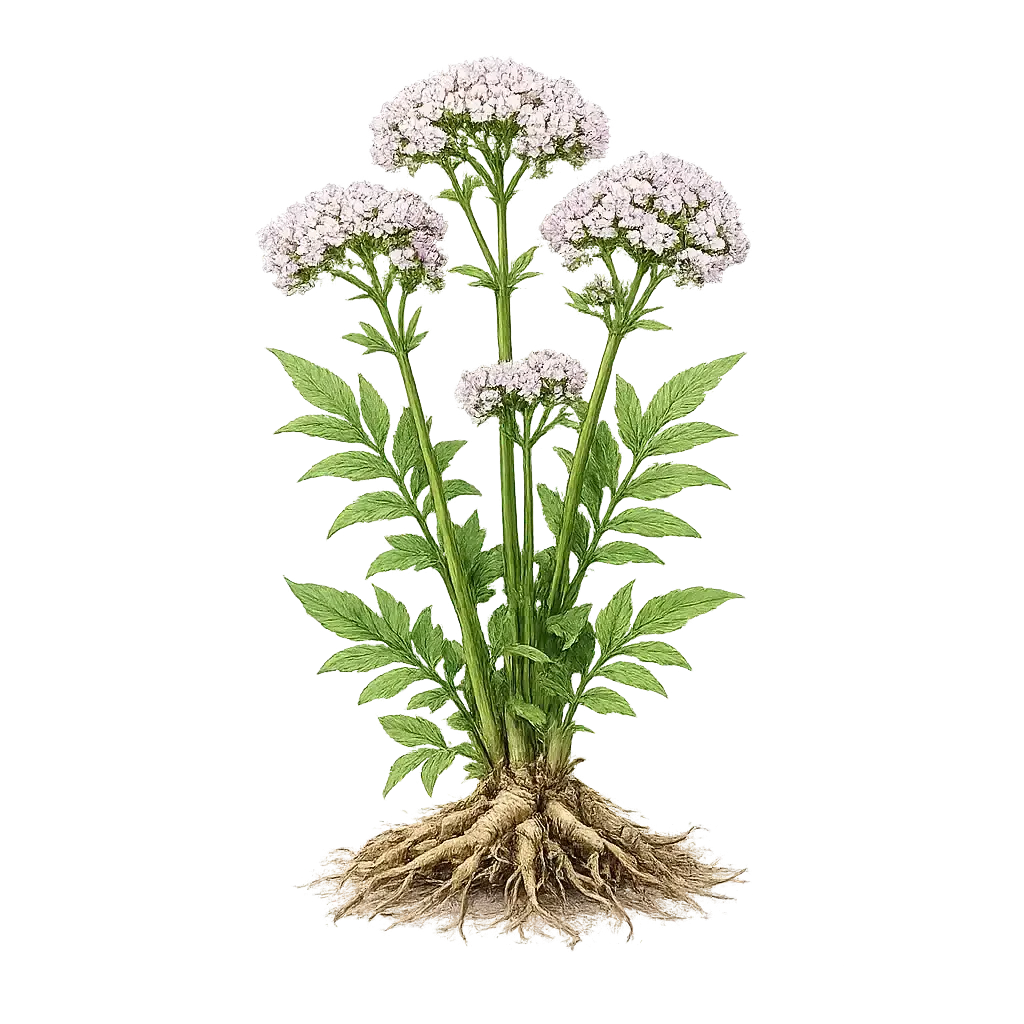
Valerian has been the Western herbal tradition's primary sleep and sedative herb for two thousand years. The ancient Greeks used it, the medieval apothecaries stocked it, and it remains today the most widely sold herbal sleep supplement in Europe and North America. The root smells distinctly unpleasant when dried, something between old socks and warm earth that is not improved by description, and this has done little to reduce its popularity among the people who need what it reliably delivers. On the homestead, valerian earns its place not only as a medicine for the inevitable sleepless nights and anxious periods that come with managing land and animals, but as one of the most dramatically beautiful flowering perennials available for the back of a border, a genuine pollinator magnet, and a plant that the garden cats will find before you do.
Introduction
Valeriana officinalis is native to Europe and parts of Asia, growing naturally on riverbanks, damp meadows, woodland edges, and disturbed ground across a wide range that extends into naturalized populations in North America. It is a robust, tall-growing perennial with deeply divided, pinnate leaves and hollow stems that reach three to five feet in height by midsummer, topped with large, flat-topped clusters of tiny pale pink to white flowers that are intensely fragrant in a way that is genuinely pleasant despite the sharp contrast with the earthy, pungent odor of the dried root. The flowers are highly attractive to bumblebees, butterflies, and hoverflies, and the fragrance carries well on warm summer evenings.
The medicinally active constituents of the valerian root are complex and not fully characterized. Valerenic acid and its derivatives are the most studied, with demonstrated binding activity at GABA receptors in the brain in a mechanism that produces sedation and anxiolysis without the dependency potential of pharmaceutical benzodiazepines that act on the same receptor system. Isovaleric acid is largely responsible for the distinctive odor of dried valerian root. Iridoid compounds called valepotriates were once considered the primary active compounds but are now understood to be unstable and largely destroyed during drying and extraction, leaving valerenic acid and the essential oil components as the primary contributors to the documented pharmacological activity of standard dried root preparations.
On the homestead, valerian is a plant of multiple roles. The root is the primary medicine, harvested in autumn and prepared as tea, tincture, or capsule for sleep and anxiety applications. The flowers provide several weeks of exceptional pollinator habitat at peak summer. The tall, dramatic foliage and flower structure provides back-of-border height and visual structure through the growing season. And the cats, which are reliably attracted to valerian root by the same isovaleric acid compounds that attract them to catnip, will remind you the plant is there long before the flowers open.
How to Grow
Sun Requirements
Valerian grows well across a wide light range from full sun to partial shade, reflecting its natural habitat on riverbanks and woodland edges where light conditions are variable. In full sun with adequate moisture it produces the tallest, most robust plants with the most abundant flowering. In partial shade of three to five hours of direct sun it grows somewhat less tall but remains vigorous, flowers reliably, and is often more appropriate in climates where full summer sun combined with dry conditions creates moisture stress that partial shade alleviates.
In very hot climates of zones 8 and 9, afternoon shade significantly improves the plant's performance and prevents the premature browning of the foliage that occurs when tall, moisture-demanding plants are exposed to intense afternoon sun in summer. The morning sun and afternoon shade position that suits many moisture-requiring herbs is equally appropriate for valerian in these warmer zones.
Soil Requirements
Unlike the lean-soil medicinal herbs earlier in this series, valerian prefers moderately rich, moist, well-drained soil and performs best with more organic matter and moisture retention than herbs like yarrow, wormwood, or vervain require. Its natural riverbank and damp meadow habitat reflects a genuine preference for consistent soil moisture alongside good drainage, and this combination of moist but not waterlogged conditions produces the most vigorous growth and the most medicinally potent root development.
Incorporating finished compost into the planting area before establishment supports the plant's moderate fertility requirements without producing the excessive, lax growth that very rich soils can encourage. On sandy soils that drain quickly and lose moisture rapidly, additional organic matter helps maintain the consistent soil moisture that supports strong root development. On heavy clay soils, improving drainage is the priority, as persistent waterlogging causes root rot despite the plant's moisture preference.
pH tolerance is wide, from 5.5 to 7.0, and valerian adapts to both mildly acidic and near-neutral soils without requiring amendment beyond the organic matter that supports its moisture needs.
Water Needs
Valerian requires more consistent moisture than most of the herbs in this series and benefits from supplemental irrigation during dry periods, particularly in its first growing season and in climates with unreliable summer rainfall. The tall, leafy growth of a mature valerian plant transpires significant moisture on warm days, and drought stress reduces both the above-ground vigor and the root development that represents the primary medicinal harvest.
A deep mulch of wood chips, straw, or compost around the base of established plants significantly reduces the irrigation requirement by moderating soil temperature and retaining moisture between rainfall events or supplemental waterings. This is particularly valuable in drier climates where maintaining the consistent soil moisture valerian prefers requires active management rather than passive reliance on rainfall.
Planting
Valerian is reliably established from seed, from nursery transplants, or from division of established clumps. Seed germinates readily without stratification at soil temperatures above 60 degrees Fahrenheit, typically within ten to fourteen days of sowing in warm conditions. It can be sown directly into prepared beds in early spring or started indoors six to eight weeks before the last frost for transplanting as established seedlings.
One practical consideration with valerian seed is that it loses viability relatively quickly, and fresh seed from the current or previous season germinates significantly more reliably than seed stored for two or more years. Sourcing fresh seed or starting from divisions and transplants sidesteps germination variability from old seed entirely.
Division of established clumps in early spring is the most reliable propagation method and produces large, productive plants in their first season. The clumps divide easily and the divisions establish quickly, making valerian one of the more straightforward tall perennials to multiply once an initial planting is in place. Dividing every three to four years also maintains vigor in the center of older clumps that can become less productive with age.
Plant Spacing
Valerian should be spaced 18 to 24 inches apart to allow the broad, spreading basal rosette and the tall flowering stems to develop without competition. At maturity a well-grown valerian plant occupies a significant footprint, and spacing that appears generous at planting is typically justified by the third year as the clump expands and the full architectural presence of the plant develops.
In the garden border, valerian is most effective at the back where its height provides structure and background for shorter plants in front, with the flat-topped flower clusters visible above the surrounding planting rather than hidden within it. Staking may be needed on exposed sites or in very fertile soils where the tall stems are susceptible to wind damage during summer storms.
Companion Planting
Valerian has a long traditional reputation as a beneficial companion plant in the vegetable garden, attributed variously to root exudates that stimulate earthworm activity, to the attraction of beneficial insects to the flowers, and to a general improvement in soil health around established plants. The scientific evidence for specific companion planting benefits is limited, but the general pollinator attraction value of the flowers is genuine and well documented.
Vegetables such as tomatoes, peppers, and brassicas that benefit from increased pollinator activity during their flowering period
Fruit trees and berry bushes, where the tall flowering stems visible above surrounding plantings attract pollinators that service adjacent crops
Other tall medicinal perennials including angelica, elecampane, and mullein, which share the back-of-border position and create a productive tall medicinal herb tier that provides structure, medicine, and pollinator habitat simultaneously
Echinacea, yarrow, and other mid-border pollinator plants that combine with valerian to create a continuous pollinator corridor from midsummer through autumn
Harvesting
Harvest Time
The root is the primary medicinal harvest and is collected in autumn of the second or third year, when the root system is fully developed and the concentration of valerenic acid and related compounds is at its seasonal peak before winter dormancy. Harvesting in the first year produces small, medicinally thin roots that are not worth the loss of the plant. Second-year roots from well-grown plants are adequate, and third-year roots from undisturbed plants on appropriate sites represent the most potent harvest.
The timing of root harvest in relation to the aerial parts is important. Harvesting after the aerial parts have died back naturally in late autumn, when the plant's energy and chemical resources have fully retreated into the root, produces the most medicinally potent root material. Early harvest in summer or early autumn, before senescence is complete, yields roots with lower valerenic acid concentration.
Aerial parts including the flowers can be harvested during the blooming period in June and July for use as a milder, more pleasant-smelling preparation for anxiety and tension. The aerial parts contain lower concentrations of the sedative compounds than the root but produce a more palatable tea with a gentler action appropriate for mild stress and anxiety applications where the full sedative force of the root preparation is not needed.
Harvest Method
Dig the root clump carefully with a garden fork, working from outside the clump to avoid cutting through the main root mass. Valerian produces a dense network of rhizomes and fibrous roots that can extend twelve to eighteen inches deep in well-cultivated soil, and a thorough excavation retrieves significantly more root material than a shallow dig. The lifted root clump is shaken free of soil, rinsed thoroughly, and the roots separated from the crown and fibrous root hairs.
The freshly harvested root has a mild, earthy, almost pleasant smell quite different from the sharp, pungent odor that develops during drying. This transformation in odor occurs as valerenic acid and isovaleric acid compounds develop and concentrate during the drying process, and it is entirely normal rather than a sign of spoilage or improper handling.
Chop or slice the cleaned roots into pieces no more than half an inch thick to allow thorough drying throughout the interior, which is necessary to prevent mold developing in the dense, moisture-rich root tissue. Dry at 95 to 110 degrees Fahrenheit in a dehydrator or in a warm oven at the lowest setting until completely desiccated, which typically takes twelve to twenty-four hours depending on root thickness and the drying method used.
On the smell: Dried valerian root smells strongly and distinctly. Storing it in tightly sealed glass jars keeps the odor contained, and keeping those jars in a dedicated location separate from culinary herbs prevents the smell from transferring to other stored herbs. Fresh tincture made from undried root has a significantly less pungent odor than dried root preparations and is worth considering for growers who find the dried root smell objectionable.
How to Use
Medicinal Uses
Valerian's primary and most consistently documented medicinal application is as a sleep-promoting herb for insomnia, difficulty falling asleep, and poor sleep quality associated with nervous tension and anxiety. The evidence base for this application is stronger than for most herbal medicines, with multiple randomized controlled trials demonstrating significant improvements in sleep onset time, sleep quality, and morning alertness compared to placebo, and several head-to-head comparisons with pharmaceutical sleep aids showing comparable efficacy with a more favorable side effect profile.
The mechanism of action involves valerenic acid's partial agonist activity at GABA-A receptors, the same receptor system targeted by benzodiazepine drugs such as diazepam. Unlike benzodiazepines, which are full agonists at these receptors and carry significant risks of dependency, tolerance, and rebound insomnia with regular use, valerenic acid's partial agonist activity produces a more moderate receptor effect with a different safety profile at standard herbal doses. This does not mean valerian is entirely without risk of dependency with excessive long-term use, but the risk profile is meaningfully different from pharmaceutical GABA modulators.
As an anxiolytic herb for daytime anxiety and nervous tension, valerian is effective but carries the practical limitation that many people find it produces noticeable sedation at doses adequate for anxiety relief, making it less suitable for daytime use than the milder, non-sedating nervine herbs such as lemon balm, skullcap, or vervain. Individual responses vary considerably, and some people tolerate valerian well during the day at lower doses without sedation while others experience significant drowsiness at any dose.
Valerian is also used for muscle spasm and tension, particularly the tension-related pain of tight muscles associated with stress and anxiety, where its muscle-relaxing effects complement the nervous system sedation to address both the physical and mental components of tension simultaneously.
Tea Uses
Valerian root tea is prepared as a cold infusion or as a short warm infusion rather than the standard boiling-water steep used for most medicinal herbs. Boiling water degrades some of the valerenic acid compounds responsible for the sedative effect, and a cold infusion prepared by steeping one to two teaspoons of dried root in cold water for eight to twelve hours produces a preparation that preserves more of the active compounds than a hot-water extraction.
The flavor of valerian root tea is earthy and moderately bitter, markedly unpleasant to many people when taken alone. Combining it with more palatable herbs such as passionflower, lemon balm, hops, or chamomile improves the flavor substantially while producing a more broadly effective sleep blend than any single herb alone. Honey helps with both flavor and palatability. Taking the tea thirty to sixty minutes before the intended sleep time allows the compounds to reach effective concentration in the bloodstream by bedtime.
Tincture Uses
Fresh root tincture made from valerian root before drying is widely considered by experienced herbalists to be more effective and more pleasant in odor and flavor than tinctures made from dried root. The fresh root is chopped finely and immediately covered with 60 to 65 percent alcohol to halt the enzymatic changes that produce the characteristic dried-root smell and to capture the full spectrum of unstable active compounds at their highest concentration.
Fresh root tincture stores for three to five years in sealed dark glass. The standard dose of two to four milliliters taken thirty to sixty minutes before sleep is the typical recommendation, with higher doses within the traditional range used for acute anxiety or sleep difficulty and lower doses used for general tonic nervous system support.
Cat Attractant Uses
The isovaleric acid in valerian root produces a response in domestic cats similar to, and in some cats stronger than, the nepetalactone response to catnip. Cats are reliably attracted to freshly dug valerian roots and to dried valerian root preparations, and this property has practical homestead applications in training cats to specific areas, as an enrichment stimulus for barn cats, and as a useful ingredient in cat toys and scratch posts. It is worth being aware of this attraction when harvesting and processing valerian root, as the smell will draw any cats in the vicinity with considerable enthusiasm.
Storage
Dried valerian root stores well for two to three years in tightly sealed glass containers kept cool, dark, and dry. The valerenic acid compounds that carry the primary sedative activity are reasonably stable in properly dried and stored root material, though some potency loss over extended storage is inevitable. The characteristic smell, which intensifies during drying, remains strong throughout the storage life of properly dried root and is a reliable indicator that active compounds are still present.
Fresh root tincture in 60 to 65 percent alcohol stores for three to five years without significant loss of potency and represents the most stable and most potent long-term preparation. For growers who want year-round access to the most effective valerian preparation, making a fresh root tincture at the autumn harvest and storing it in sealed dark glass is the most practical approach.
Lifespan of the Plant
Valerian is a reliably long-lived perennial that returns vigorously from its root crown each spring in zones 4 through 9. Individual plants persist for many years on appropriate sites, expanding their basal clump gradually and flowering more abundantly with each successive season as the root system matures. The flowering stems die back completely after seed set and should be cut to the ground in late autumn to tidy the planting and remove potential slug habitat from around the crown.
Valerian self-seeds freely and can establish naturalized colonies in appropriate conditions, particularly in the moist, disturbed soil of garden beds and borders. Managing self-seeding by removing the flower heads before seed ripens, or by pulling unwanted seedlings when small, prevents the plant from spreading beyond its intended area. The self-seeding habit is generally an asset rather than a problem, producing free plants for expanding the planting or filling gaps elsewhere in the garden.
Division every three to four years maintains vigor in older clumps and produces the root divisions that can be used as planting stock for new areas or shared with other growers. The division simultaneously harvests a portion of the root for medicinal use, making the periodic maintenance of the planting directly productive rather than purely horticultural.
Pros and Cons
Advantages
The most extensively clinically studied herbal sleep medicine, with multiple randomized controlled trials supporting its effectiveness for insomnia and sleep quality
Dramatic, tall ornamental presence with fragrant flat-topped flower clusters that are genuinely beautiful at the back of a border
Exceptional pollinator plant attracting bumblebees, butterflies, and hoverflies through several weeks of summer bloom
Hardy to zone 4, reliable across the full range of cold-climate temperate gardens
Self-seeds freely, maintaining itself and expanding without intervention
Tolerates partial shade, useful for sites where full-sun herb space is limited
More favorable dependency and side effect profile than pharmaceutical sleep aids acting on the same GABA receptor system
Aerial parts provide a milder, more pleasant alternative to root preparations for anxiety applications
Limitations
Dried root has a distinctly unpleasant smell that makes storage, preparation, and processing less agreeable than most medicinal herbs
Produces noticeable daytime sedation in many people at doses adequate for anxiety relief, limiting its usefulness as a daytime herb
Not appropriate for use during pregnancy or while operating vehicles or machinery
Should not be combined with alcohol, pharmaceutical sedatives, or benzodiazepines without medical guidance
Requires two to three years before the root is worth harvesting medicinally
Tall stems are susceptible to wind damage on exposed sites and may require staking
Self-seeding can become excessive in favorable conditions without management
Strongly attracts cats, which can be a practical nuisance during harvest and processing
Common Problems
Valerian is a robust perennial with few serious pest or disease problems on appropriate sites with adequate moisture. The most consistently reported issue is powdery mildew on the foliage in dry conditions, which is somewhat paradoxical given the plant's moisture preference but occurs when soil moisture is adequate while air humidity is low and air circulation is poor. Appropriate spacing, avoiding overhead irrigation that wets the foliage without improving soil moisture, and the automatic removal of affected stems during the autumn cut-back all manage it adequately without fungicide treatment.
Aphids colonize the new spring growth and the stem tips reliably in many gardens, and valerian's combination of soft new growth and attractiveness to beneficial insects means that natural predator pressure typically manages aphid populations adequately once the season is underway. The same beneficial insects that visit the flowers for nectar include aphid predators, and established valerian plantings develop a self-regulating insect community around them over time.
Slugs and snails find the large, soft leaves of emerging spring growth attractive and can cause significant cosmetic damage to young plants, particularly in cool, wet springs. Protection through the establishment period and an awareness that slug pressure typically reduces as the plants harden off and the growing season progresses are sufficient responses in most garden situations.
Wind damage to the tall flowering stems during summer storms is a practical consideration on exposed sites. Staking individual stems or providing a grow-through support installed early in the season before the stems reach their full height is more effective and less disruptive than attempting to stake already-fallen stems after storm damage.
Varieties
Valeriana officinalis in the straight species form is the medicinal standard and the appropriate choice for all the applications described in this guide. It is widely available from herb nurseries, perennial plant suppliers, and through seed, making it one of the more accessible tall medicinal perennials to source.
Valeriana officinalis var. latifolia, broad-leaved valerian, is a selection with larger leaves and a somewhat more vigorous habit than the straight species. It retains the medicinal properties of the species alongside its more robust ornamental character and is preferred by some growers for garden positions where a more substantial visual presence is desired.
Valeriana wallichii, Indian valerian or tagar, is the valerian species used in Ayurvedic medicine and is considered by some practitioners to have a more refined medicinal profile than the European species for certain nervous system applications. It is less hardy than the European species and more appropriate for zones 7 and warmer, and is available from specialist medicinal herb suppliers for growers interested in expanding their valerian collection with the Asian species.
Safety summary: Valerian is contraindicated in pregnancy and should not be used while operating vehicles or machinery where sedation would be hazardous. It should not be combined with alcohol, pharmaceutical sedatives, barbiturates, or benzodiazepines, as additive central nervous system depression can occur. Rare individuals experience a paradoxical stimulant response to valerian rather than sedation, and discontinuing use resolves this without further intervention. Long-term high-dose use is not recommended pending more comprehensive safety data, though short to medium-term use at standard doses in healthy adults is well supported by clinical evidence.
Final Thoughts
Valerian asks for space, moisture, and two years of patience before the root is ready to harvest. In return it provides one of the most structurally dramatic plants available for the back of the herb garden border, several weeks of exceptional pollinator habitat at the height of summer, and a genuinely effective sleep medicine that two thousand years of continuous use and a solid body of clinical research both support.
The smell of the dried root is not a selling point. It is simply the price of access to what the root contains, and a tightly sealed jar in the medicine cabinet manages it entirely adequately. The flowers, by contrast, smell beautiful. The bees will confirm this every summer morning from June through July, which is reason enough to give valerian the space it needs at the back of the border and let it do what it has always done.