
Not Every Vegetable Belongs in the Freezer the Same Way
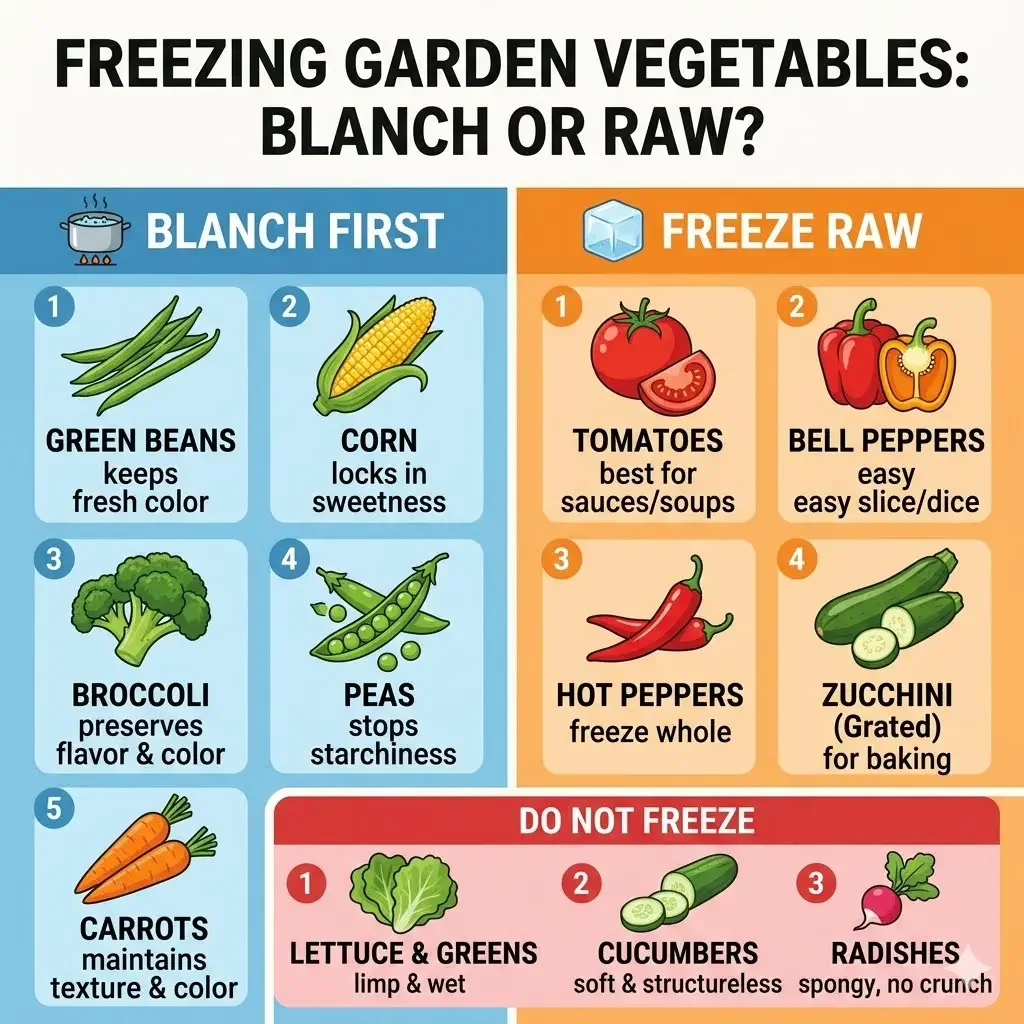
Freezing is one of the easiest ways to keep a summer garden working for you long after the season ends. It is fast, practical, and far less intimidating than canning. But it is also where a lot of home harvests quietly go downhill.
The mistake is not usually freezing itself. The mistake is assuming every vegetable should be treated the same before it goes in.
That is where people lose quality. A method that works perfectly for beans can wreck peppers. A shortcut that is fine for tomatoes can leave broccoli dull, bitter, and lifeless. By winter, the freezer bag is still full, but the food inside is disappointing enough that it never makes it to the plate.
The key question is simple. Does that vegetable need blanching first, or not?
Blanching Is What Saves Certain Vegetables in the Freezer
Blanching is just a short dip in boiling water followed by a quick chill in ice water. It sounds like an extra step, and it is, but for many vegetables it is the difference between preserving food and just storing decline at a lower temperature.
Even in the freezer, enzymes inside vegetables keep working. Slowly, but still working. Those enzymes affect color, flavor, texture, and overall quality. Blanching stops that process before the vegetables are packed away.
Skip it on the wrong crop, and the result can be disappointing fast. The produce may stay frozen, but the quality keeps slipping.
Vegetables That Should Be Blanched Before Freezing
Green Beans
Green beans freeze much better when they are blanched first. A short boil, about three minutes, followed by an ice bath helps them keep a fresher color and better flavor. After that, dry them well, freeze them in a single layer, and then bag them.
Without blanching, beans often darken and develop a stale taste much sooner.
Corn
Corn is one of the best crops to freeze, but only when you handle it correctly. Blanch whole ears for a few minutes, cool them quickly, then cut off the kernels. You can also blanch kernels directly for a shorter time.
Fresh-picked corn starts losing sweetness almost immediately after harvest, so the sooner it is processed, the better.
Broccoli
Broccoli should be cut into even florets and blanched before freezing. This helps preserve both color and flavor. It also makes the florets freeze more cleanly instead of locking together in one solid frozen mass.
Raw frozen broccoli tends to lose its freshness quickly and can develop an unpleasant smell.
Peas
Peas are one of the most time-sensitive vegetables in the garden. Their sugars start shifting fast after picking, which is why fresh peas can go from sweet to starchy in a short window.
Blanch shelled peas briefly, cool them, dry them, and freeze them the same day you harvest them whenever possible.
Carrots
Carrots hold up well in the freezer, but not when frozen raw for long-term use. Peel them, cut them to size, blanch them briefly, then chill and freeze. Done this way, they keep their color and cook much better later.
Raw-frozen carrots often end up with a flat taste and a rougher texture.
Vegetables That Freeze Better Without Blanching
Tomatoes
Tomatoes are one of the easiest garden crops to freeze because they do not need blanching at all. In fact, blanching before freezing usually makes them worse.
You can freeze them whole, halved, or crushed. Once thawed, they are not great for fresh slicing, but they are excellent for soup, sauce, chili, and stews. Their best freezer future is in cooked dishes, not salads.
Bell Peppers
Bell peppers do better when they are sliced or diced raw, then frozen in a single layer before bagging. That keeps them from sticking together and makes it easy to grab only what you need.
Blanching softens them too much and takes away the little bit of structure they could have held onto in the freezer.
Hot Peppers
Most hot peppers freeze surprisingly well without any prep beyond washing and drying. Jalapenos, serranos, and similar peppers can go in whole. Larger hot peppers can be sliced first if that makes them easier to use later.
A useful bonus, frozen hot peppers are often easier to cut cleanly than fresh ones.
Zucchini and Summer Squash
These are tricky because freezing changes the texture no matter what. But that does not mean they are not worth saving. The best move is to grate them raw, squeeze out some excess moisture, then freeze in measured portions.
That makes them perfect for breads, muffins, fritters, pancakes, and soups. Trying to preserve a fresh firm zucchini texture in the freezer is a losing battle. Freezing it for the right purpose works much better.
Vegetables That Are Usually Not Worth Freezing
Some crops simply do not come back in a useful form after freezing.
Lettuce and Tender Greens
These collapse into a wet, limp mass once thawed. The texture is gone, and there is no real saving it.
Cucumbers
Cucumbers contain so much water that freezing destroys their structure. What comes out is soft, translucent, and nothing like what went in.
Radishes
The crunch is the whole point of a radish. Freezing takes that away and leaves behind a spongy texture that rarely earns a place in a meal.
A Few Freezer Habits That Make a Huge Difference
No matter what vegetable you are preserving, a few basics improve results across the board.
Freeze produce as close to harvest time as possible. The longer it sits, the more quality it loses before preservation even begins.
Dry everything well before packaging. Extra moisture creates ice crystals, and ice crystals damage texture.
Freeze in a single layer first when you can. Sheet-pan freezing keeps pieces separate, which makes frozen vegetables much easier to portion later.
Label everything. It sounds obvious until January shows up and every freezer bag looks the same.
Use realistic expectations. Frozen vegetables are usually best for cooked dishes, not for recreating fresh summer texture in the middle of winter.
The Freezer Is Not Magic, but It Is Powerful
Freezing does not preserve vegetables by default. It preserves them well only when the method matches the crop.
That is the real difference.
A properly frozen harvest becomes soup in January, stir-fry in February, pasta sauce in March. A poorly frozen harvest becomes a bag of regret pushed to the back of the freezer until you finally throw it out.
So the goal is not just to freeze more. The goal is to freeze smarter.
Because a harvest is not truly saved when it is packed away. It is saved when you still want to cook with it months later.
Final Thought
The freezer is one of the best tools a gardener has, but it rewards precision.
Some vegetables need heat before cold. Some need to go in raw. Some are better left out of the freezer altogether.
Learn which is which, and your summer harvest keeps feeding you well into winter.
Guess wrong, and you do all the work twice, once in the garden, and once again when you realize the food you saved is not worth using.
