The Domestic Duck Breeds Section Is Done
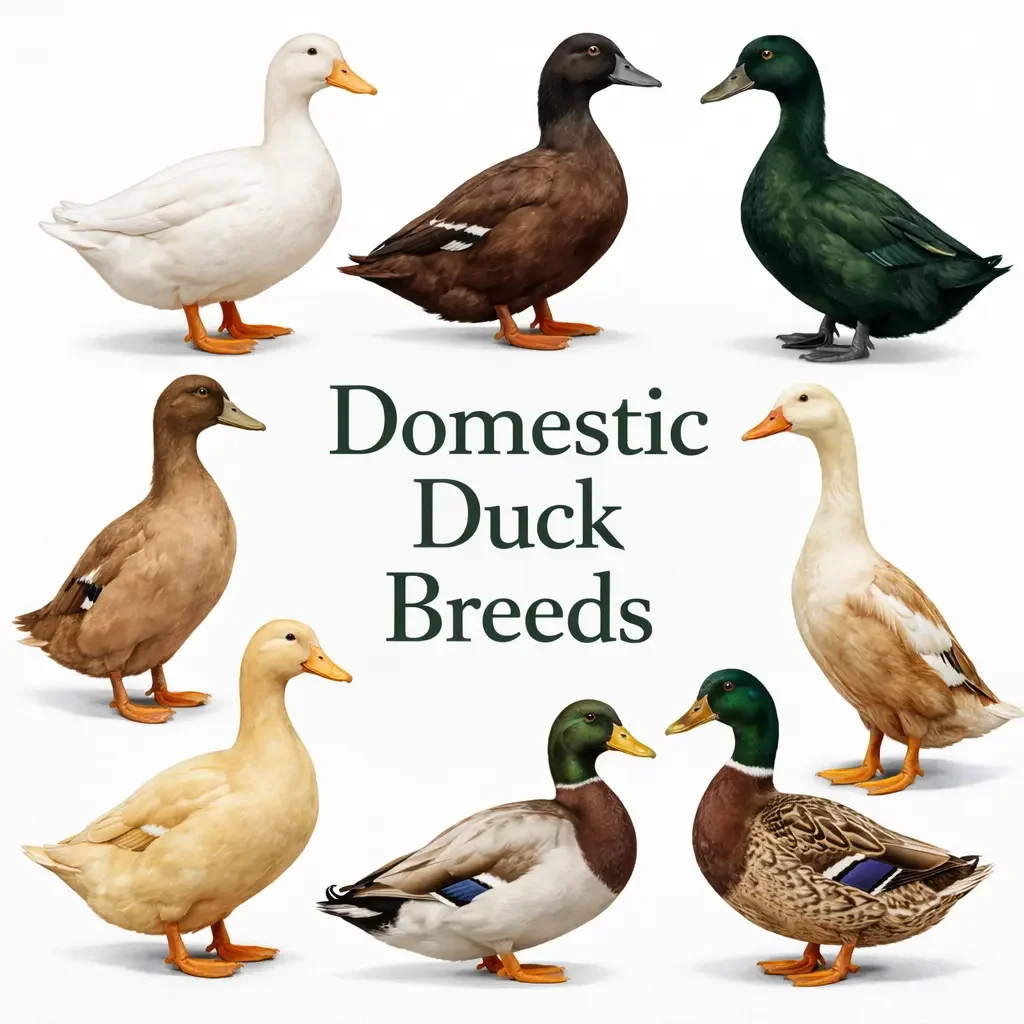
22 individual domestic duck guides are now live. From the tiny Call Duck to the massive Muscovy, from the critically rare Aylesbury to the world-record-laying Khaki Campbell, hundreds of hours of research, writing, and breed knowledge are now organized into one of the most complete domestic duck libraries built for the Midwest homesteader. Here is a look at every breed we covered and why each one earned its place in the directory.
The Domestic Duck Breeds section has been months in the making. Every guide follows the same standard: breed overview and history, quick facts, plumage and appearance, egg production, meat quality and best preparations, temperament and behavior, climate adaptability, housing and management, conservation significance where applicable, pros and cons, profitability notes, comparison with related breeds, a full FAQ, and a final verdict. No filler. No generic hatchery catalog copy recycled from other sources.
You can browse the full library here: simitiannest.com/ducks
Below is a look at all 22 breeds, organized alphabetically, with a summary of what makes each one worth knowing.
DOMESTIC DUCK BREEDS
Abacot Ranger
One of the most overlooked productive duck breeds in the English-language poultry world. Developed in Essex, England, between 1917 and 1922 by Oscar Gray, the Abacot Ranger scored the highest marks in its section at the Wye College egg-laying trials in 1922 and 1923, then effectively disappeared from British breeding records within a decade. It survived because German breeders recognized its quality, standardized it as the Streicher-Ente in 1934, and returned it to Britain in the 1970s from clean continental bloodlines. Its two-phase seasonal plumage, easy eight-week sexing from bill color, decent broodiness in a light breed, and active foraging character make it one of the most rewarding rare heritage ducks in the directory.
Alabio Duck
Indonesia's most important domestic duck breed and one of the least-known productive breeds outside Southeast Asia. Developed in the Alabio sub-district of South Kalimantan on the island of Borneo, the Alabio lays 200 to 250 large eggs per year while retaining genuine broodiness that most high-production laying ducks have entirely lost. It is also one of the few domestic ducks that retains meaningful flight capability, adding a containment management consideration that Western breeds do not require. A bird shaped by generations in the wetlands and rice paddies of Borneo, included here as a global heritage breed of genuine productive and cultural significance.
Ancona Duck
The quiet achiever of the domestic duck directory. The Ancona lays 210 to 280 large eggs per year in a range of colors from white and cream to blue and green, produces lean flavorful meat superior to commercial Pekin, forages actively, stays close to home, handles varied climate conditions with exceptional hardiness, and does all of it quietly and with a calm, undemanding temperament. As recently as 2000, only 125 breeding Ancona ducks were documented in the United States. Conservation efforts have grown that number to between 1,000 and 1,500 breeding pairs, but the breed remains on Watch status and every quality Ancona flock maintained on a Midwest homestead contributes directly to its recovery.
Aylesbury Duck
England's most celebrated domestic duck and one of the finest meat breeds in the world. From the Vale of Aylesbury forty miles north of London, breeders supplied London's most discerning markets for two centuries with white-skinned, pink-billed, mild-flavored ducklings that no other breed could match for delicacy and table quality. The Livestock Conservancy classifies the Aylesbury as Critical in the United States, the most urgent conservation status available, and pure breeding stock is genuinely rare in North America. Finding and maintaining a verified Aylesbury flock is a direct act of conservation for one of the most historically significant domestic duck breeds in the English-speaking world.
Bali Duck
An ancient crested duck from the island of Bali, Indonesia, with a crest that sits upright rather than floppy, a slender upright carriage reminiscent of the Indian Runner, and an origin story reaching back centuries in Balinese agricultural and ceremonial life. The Bali is rare outside Indonesia and not APA-recognized in the United States, but it lays reliably, forages actively, and brings a visual character to the homestead that no European or North American breed can replicate.
Black East Indian
North America's only bantam breed with APA recognition and the darkest duck in any domestic directory: beetle-green iridescent black throughout, from the bill to the feet. Despite its exotic name, the Black East Indian is most likely an American breed developed in the early 19th century and named for marketing appeal rather than geographic origin. It is kept almost entirely for exhibition and ornamental purposes, produces 25 to 75 small black-to-gray-to-white eggs per year, and is one of The Livestock Conservancy's Threatened breeds. For homesteads where visual impact and exhibition interest matter as much as production, the Black East Indian is without peer.
Blue Swedish
The most consistently recommended dual-purpose duck for Midwest homesteaders who want heritage production, cold-weather hardiness, and a bird that is genuinely enjoyable to watch and manage. The Blue Swedish lays 100 to 150 large white to pale blue eggs per year, produces flavorful lean meat with good breast development, handles Midwest winters better than most breeds, forages actively, and carries the added genetic interest of the blue dilution gene: mating two Blue Swedish together produces blue, black, and silver-splashed offspring in a predictable ratio that keeps every hatch visually varied.
Buff Orpington Duck
Developed in England in the 1890s by William Cook, the same breeder responsible for the Buff Orpington chicken, the Buff Orpington Duck is a calm, golden-buff dual-purpose breed that lays 150 to 220 eggs per year, produces flavorful meat with white skin, and carries a temperament so placid it is often recommended as the gentlest duck in the heavy class. It is listed as Threatened by The Livestock Conservancy and is a Heritage Breed of genuine conservation importance, a beautiful and productive bird whose quiet dignity sets it apart from more excitable breeds.
Call Duck
The smallest duck in the domestic directory and the loudest per ounce of any bird on the homestead. The Call Duck was originally developed as a live decoy to lure wild ducks within range before the practice was banned, and the extraordinary carrying power of the hen's voice reflects generations of selection for exactly that purpose. Today it is kept entirely for exhibition and ornamental purposes, recognized by the APA in more color varieties than any other duck breed, and is the champion of the show bench in domestic waterfowl. Not a production bird, but one of the most characterful and visually diverse breeds in any domestic duck collection.
Cayuga Duck
Named for Cayuga Lake in central New York, where it was developed in the mid-19th century, the Cayuga is the only duck breed developed entirely in the United States that the APA originally recognized. Its black iridescent plumage with beetle-green sheen is one of the most beautiful in the domestic duck directory. The Cayuga lays 100 to 150 eggs per year in a color sequence that begins jet black in spring and fades through charcoal, gray, and white as the season progresses, producing a visually distinctive and marketable egg basket. The Livestock Conservancy lists it as Threatened and it is a Heritage Breed worth supporting.
Crested Duck
The Crested Duck is defined by the tuft of feathers that erupts from the top of its head, caused by a genetic mutation that creates a skull deformity affecting how head feathers grow and orient. The same gene in double dose is lethal, which means approximately a quarter of eggs from crested-to-crested matings do not hatch. Despite this biological complexity, the Crested has been maintained for centuries as an ornamental and functional breed, recognized by the APA in White and Black varieties, and is kept on homesteads across the Midwest for decoration, exhibition, and modest egg production of 100 to 130 eggs per year.
Golden Cascade
One of the few American-developed heritage breeds in the domestic duck directory, the Golden Cascade was created in the 1980s by David Holderread of Holderread Waterfowl Preservation Center in Corvallis, Oregon, specifically to address the need for a productive, attractive, and foraging-capable dual-purpose duck for American homesteaders. It lays 250 to 290 large white eggs per year, making it one of the highest-producing heritage breeds in the directory, produces lean flavorful meat, and carries the warm golden-buff plumage that gives it its name. Holderread's deliberate design choices are evident in every aspect of the breed's performance.
Hook Bill Duck
The oldest distinctly identifiable domestic duck breed in Western history, documented in Dutch paintings from the 17th century with the same downward-curving bill that makes it visually unmistakable today. The Hook Bill was developed in the Netherlands as a semi-free ranging duck for canal and waterway management, and its slightly downward-curving bill is the feature that distinguishes it from every other breed at a glance. It lays 100 to 225 eggs per year in white or pale blue-green, is classified as Critical by The Livestock Conservancy, and is one of the most historically significant conservation breeds in the entire domestic duck directory.
Indian Runner
The most visually distinctive duck in the domestic directory and one of the most efficient laying breeds available. The Indian Runner's upright, nearly vertical posture, which gives it a wine-bottle silhouette and a waddling run rather than a waddle, is the result of generations of selection in Southeast Asia for a duck that could keep pace with rice field workers and lay prolifically through the production season. It produces 150 to 300 large white eggs per year depending on the line, forages more actively than almost any other breed in the directory, and is the genetic ancestor of the Khaki Campbell, Welsh Harlequin, Abacot Ranger, and several other productive light breeds developed from it.
Khaki Campbell
The world's premier egg-laying duck. No domestic duck breed lays more eggs per year than a well-managed Khaki Campbell, averaging 250 to 340 large white eggs annually, and production lines approaching an egg a day have been documented under optimal conditions. Developed in England in the 1890s by Adele Campbell by crossing Indian Runner, Rouen, and Mallard stock, the Campbell is the benchmark against which every other laying breed in the directory is measured. For Midwest homesteaders whose primary interest is maximum egg volume from a manageable, active, and reliable heritage breed, the Khaki Campbell is the unambiguous answer.
Magpie Duck
Named for the magpie bird's black and white plumage pattern, the Magpie Duck is a lightweight British heritage breed that lays 220 to 290 eggs per year, produces lean flavorful meat, forages actively, and carries a distinctive cap-and-back patterning that makes it one of the most visually recognizable ducks in the directory. It is classified as Threatened by The Livestock Conservancy and shares close genetic ancestry with the Ancona Duck. The Magpie's challenge is exhibition-standard consistency: the specific cap and back pattern required by the standard is difficult to produce predictably in every hatch, which adds a breeding puzzle that many experienced keepers find as engaging as the production itself.
Muscovy Duck
The Muscovy is not a duck. Taxonomically it is a separate species of waterfowl, Cairina moschata, native to Central and South America, that was domesticated independently from the Mallard lineage from which all other domestic ducks descend. The practical consequences of this distinction are significant: Muscovies are largely silent where all other domestic ducks quack, they are the best broodies and mothers in the directory, their meat is leaner and more flavorful than any Mallard-derived breed, and the males can reach 15 pounds while the females stay at 6 to 8. It is the most productive meat duck available on a per-pound basis and one of the most useful all-around homestead birds in the directory.
Pekin Duck
The duck that everyone knows. The Pekin is the dominant commercial duck breed in the United States, accounting for the vast majority of duck meat sold in American markets, and the breed that most people picture when they hear the word duck: large, white, orange-billed, calm, and familiar. Developed in China and brought to the United States in 1873, the Pekin grows faster than any other breed to commercial weight and lays 125 to 225 eggs per year. For homesteaders who want the fastest, most accessible, most widely supported meat production breed available, the Pekin is the starting point for the entire category.
Rouen Duck
The Mallard's full-sized domestic counterpart, the Rouen carries essentially the same plumage pattern as the wild Mallard but at two to three times the body weight and with none of the Mallard's flighty temperament. Developed in France and standardized in the United States in the mid-19th century, the Rouen is a slow-growing heritage meat breed that takes four to six months to reach optimal table weight, rewarding patient producers with some of the most richly flavored duck meat available from any domestic breed. It lays 35 to 125 eggs per year and is classified as Threatened by The Livestock Conservancy.
Saxony Duck
Developed in Germany in the 1930s by Albert Franz of Chemnitz by crossing Rouen, German Pekin, and Blue Pomeranian stock, the Saxony is a large dual-purpose breed that lays 190 to 240 eggs per year, produces excellent lean meat at nine weeks, is among the most active foragers of the heavyweight breeds, and carries a warm buff and blue-gray plumage that is genuinely beautiful in both sexes. Classified as Threatened by The Livestock Conservancy, the Saxony is the Silver Appleyard's closest functional counterpart in the directory and one of the most complete dual-purpose heritage breeds available.
Silver Appleyard
The closest thing to a perfect all-around domestic duck. Developed in 1930s England by Reginald Appleyard with the explicit goal of combining beauty, size, abundant large white eggs, and a wide deep breast in a single bird, the Silver Appleyard succeeds on every count. It lays 220 to 265 eggs per year, the best of any heavyweight breed, produces lean flavorful meat at nine weeks, forages as actively as any large duck in the directory, retains moderate broodiness that most heavyweight breeds have lost, and carries arguably the most visually striking plumage of any dual-purpose breed. The Silver Appleyard also comes in a Miniature form, covered in the same guide.
Welsh Harlequin
The most productive heritage laying breed in the directory after the Khaki Campbell, the Welsh Harlequin lays 240 to 330 eggs per year and carries the additional practical advantage of sex-linked bill color that allows reliable duckling sexing within the first week of life, before the traditional voice and tail-curl methods are available. Developed in Wales in 1949 by Leslie Bonnet from a color mutation in his Khaki Campbell flock, it is classified as Watch by The Livestock Conservancy and is one of the most recommended heritage ducks for Midwest homesteaders who want maximum laying performance from a beautiful, calm, and foraging-capable breed.
22 guides. Every major domestic duck breed worth raising on a Midwest homestead.
Every one researched, written, and built to the same standard as everything else on this site. The Domestic Duck Breeds section now covers the full spectrum from bantam exhibition birds to massive heavyweight meat producers, from the most critically endangered heritage breeds in North America to the world-record-laying production breeds that anchor the egg and meat markets. Building it has been one of the most comprehensive and rewarding breed library projects on this site so far.
The series continues. Domestic geese and wild geese are both in progress. If there is a breed or species you want covered first, leave a comment below.
Browse the full Duck Breeds section here: simitiannest.com/ducks
Happy Growing!