
Bitter Almond Tree
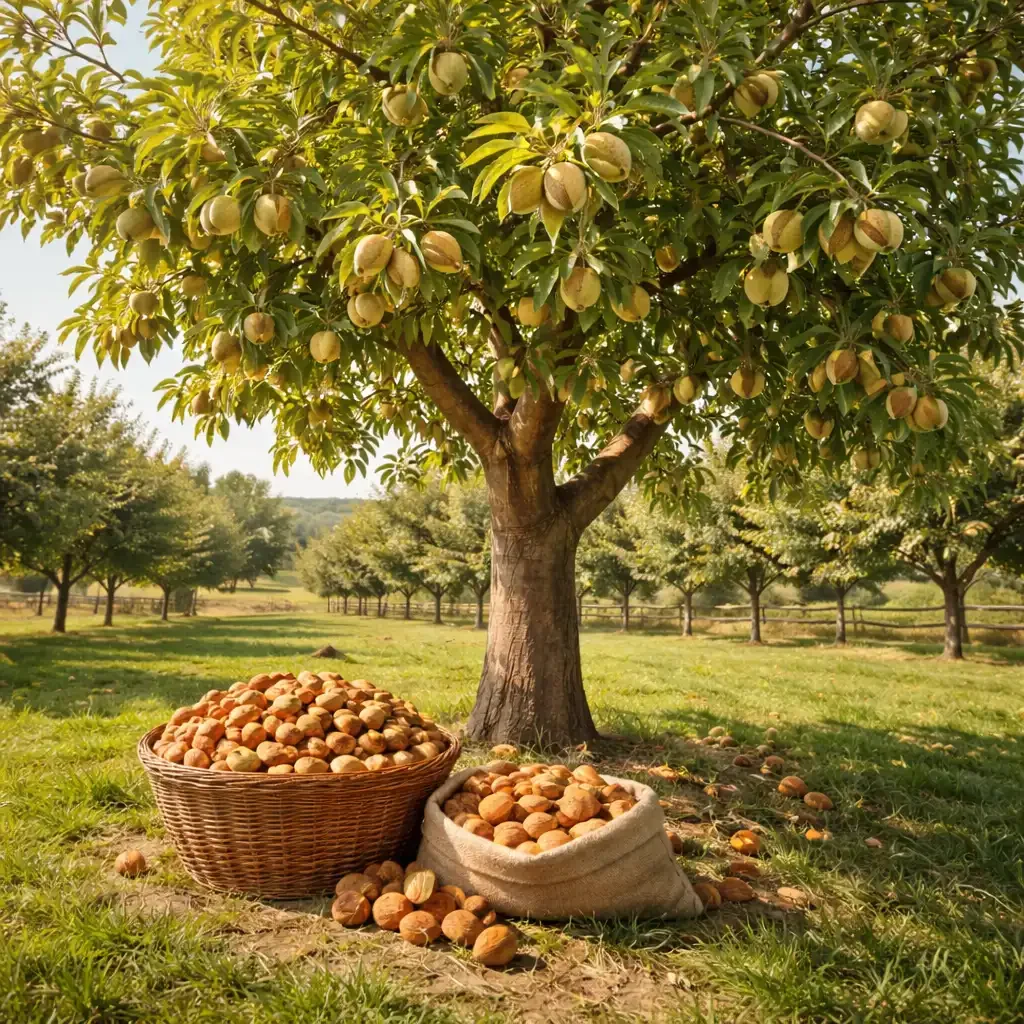
The Ancient Almond with a Dangerous Secret
The bitter almond tree (Prunus dulcis var. amara) holds a unique place in botanical history - revered for centuries for its aromatic essence and medicinal properties, yet containing compounds that make its raw nuts potentially lethal. Native to the Mediterranean and Middle East, bitter almonds have been cultivated since at least 3000 BCE, with ancient texts describing both their therapeutic benefits and toxic nature. Unlike the sweet almond variety bred for safe consumption, bitter almonds contain amygdalin, which breaks down into hydrogen cyanide when crushed or chewed. Despite this danger, they remain essential in traditional medicine, flavoring extracts, and liqueur production. The tree itself is virtually identical to sweet almond trees in appearance and growing habits, making them distinguishable only by tasting the nuts - a test best left to experts.
GROWING TIMELINE: FROM PLANTING TO HARVEST
Time to First Fruit
- Standard Rootstock: 5-6 years to first significant harvest
- Semi-Dwarf Rootstock: 3-4 years to productive bearing
- Dwarf Rootstock: 2-3 years to first nuts
Growth Rate
Bitter almond trees are moderate to fast growers, typically adding 18-24 inches of new growth per year under ideal conditions. Young trees establish quickly in well-drained soil and full sun, with most reaching productive maturity within 5-7 years. Trees grown from seed take longer (7-8 years) to bear fruit compared to grafted varieties.
Tree Lifespan
A well-maintained bitter almond tree can live 50-80 years, with some historical specimens documented at over 100 years old in Mediterranean orchards. Peak production occurs between ages 15-40, after which yields gradually decline but the tree continues producing for decades.
Mature Tree Size
- Standard (on own roots): 15-25 feet tall, 15-20 feet wide
- Semi-Dwarf (on rootstock): 10-15 feet tall, 10-12 feet wide
- Dwarf (on rootstock): 6-10 feet tall, 8-10 feet wide
Most commercial and traditional plantings use standard-sized trees, as bitter almonds are primarily grown for processing rather than fresh consumption.
Annual Production
A mature bitter almond tree produces 15-40 pounds of in-shell nuts annually, depending on tree size, age, growing conditions, and pollination success. Commercial yields average 1,500-2,500 pounds per acre in established orchards.
GROWING REQUIREMENTS
USDA Hardiness Zones
Zones 7-9 are ideal for bitter almond cultivation. The trees require 200-300 chill hours (below 45 degrees F) during winter dormancy to produce well, but they're vulnerable to late spring frosts that can destroy blossoms. Zone 7 plantings need protection from extreme cold below 10 degrees F.
Sunlight
Full sun is essential - minimum 6-8 hours of direct sunlight daily. Bitter almonds bloom very early (February-March in most climates), so southern or southeastern exposure helps maximize early spring warmth and pollinator activity.
Soil Requirements
Well-drained, slightly alkaline to neutral soil (pH 7.0-8.5) produces the best results. Bitter almonds tolerate poor, rocky soils better than many fruit trees and actually prefer lean conditions over heavily fertilized ground. Avoid heavy clay or waterlogged areas, as root rot quickly kills almond trees.
Water Needs
Drought-tolerant once established, bitter almonds need regular deep watering during nut development (spring through mid-summer). Mediterranean-climate growers typically provide 36-40 inches of water annually through irrigation, concentrated during growing season. Overwatering causes more problems than underwatering.
Pollination
Bitter almonds are self-incompatible and require cross-pollination from another almond variety. Sweet almond varieties work as pollinators, and vice versa. Plant at least two different varieties within 50 feet, or graft a branch of another variety onto your tree. Honeybees are the primary pollinators, arriving when February-March temperatures reach 55-60 degrees F.
TREE APPEARANCE
Size and Form
Bitter almond trees develop an upright, spreading form with a rounded canopy. The trunk develops attractive gray-brown bark with vertical fissures as it matures. Branch structure is similar to peach trees, with a relatively open canopy that allows good light penetration.
Leaves
Lance-shaped leaves emerge after flowering, measuring 3-5 inches long with finely serrated edges. They're a glossy medium green that turns yellow in fall before dropping. The foliage is identical to sweet almond trees.
Blossoms
One of the earliest bloomers in temperate climates, bitter almond produces stunning white to pale pink flowers in late winter to early spring, often while frost still threatens. Five-petaled blossoms appear in clusters directly on branches before leaves emerge, creating a spectacular display that lasts 10-14 days. The flowers are sweetly fragrant and attract early-emerging bees.
Nuts
The fruit is a fuzzy, gray-green drupe (like a small, flat peach) that splits open when mature to reveal the almond shell inside. Bitter almond shells are slightly smaller and harder than sweet almonds, containing a single kernel that looks virtually identical to sweet almonds but tastes intensely bitter and contains amygdalin. Raw bitter almonds have a strong marzipan-like aroma.
FLAVOR AND CHARACTERISTICS
Raw bitter almonds are inedible due to their extreme bitterness and toxicity - containing 40-50 times more amygdalin than sweet almonds. Just 6-10 raw bitter almonds can be lethal to an adult. However, heating destroys the toxic compounds, making them safe for use in processed forms. The distinctive flavor - once detoxified through heating or processing - provides the authentic almond essence used in extracts, liqueurs like Amaretto, and traditional European baking. Many confectioners prefer bitter almond extract over sweet almond for its more intense, complex flavor profile. The essential oil steam-distilled from bitter almonds (after removing prussic acid) delivers the true "almond" scent and taste that most people recognize, as sweet almonds actually have relatively mild flavor.
BENEFITS AND USES
Historical and Medicinal Uses
For thousands of years, bitter almonds have been used in traditional medicine across Mediterranean, Middle Eastern, and Asian cultures. Ancient physicians used them to treat coughs, chest pain, and digestive issues. Modern herbalists still employ bitter almond oil (properly processed) for aromatherapy and some topical applications, though internal consumption is strictly controlled due to toxicity concerns.
Culinary Applications
Bitter almond extract remains essential in professional baking and confectionery. Italian amaretti cookies, German marzipan, and French frangipane traditionally incorporate bitter almond for authentic flavor. The liqueur Amaretto derives its characteristic taste from bitter almond essence. Food-grade bitter almond extract sold commercially has been processed to remove cyanide compounds while preserving the distinctive flavor.
Cosmetic and Aromatic Uses
Bitter almond essential oil appears in perfumery, soaps, and cosmetic formulations for its rich, sweet, nutty fragrance. The oil must be processed to remove toxic components before use in these applications.
Industrial Applications
Beyond food and fragrance, bitter almond oil finds use in pharmaceutical formulations and as a flavoring agent in some medications to mask unpleasant tastes.
STORAGE AND SAFETY
Shell Storage
In-shell bitter almonds store similarly to sweet almonds - in cool, dry conditions they keep 12-18 months. The shell provides protection against moisture and pests.
Kernel Handling
CRITICAL SAFETY WARNING: Never consume raw bitter almond kernels. Even small amounts can cause cyanide poisoning. Symptoms include headache, dizziness, confusion, anxiety, vomiting, and in severe cases, respiratory failure. Store bitter almond kernels securely away from children and clearly labeled as toxic. Only use in recipes that involve extensive heating or in properly processed extract form.
Processing for Safety
Commercial processing removes or neutralizes amygdalin through methods including roasting at high temperatures (over 350 degrees F), treating with solvents, or using enzymatic processes. Home processing is not recommended due to safety risks.
POPULARITY AND CULTIVATION
Bitter almonds comprise only 1-2% of global almond cultivation today, with most production occurring in Mediterranean countries (Italy, Spain, Greece), parts of North Africa, and the Middle East. California, which produces 80% of the world's almonds, focuses almost exclusively on sweet varieties due to FDA restrictions on bitter almond sales for direct consumption.
In Europe, bitter almond cultivation continues in traditional growing regions, where they're valued for extract production and regional specialties. Small-scale artisan producers maintain heirloom bitter almond orchards, particularly in Italy's Piedmont region and Spain's Mediterranean coast.
The global market for bitter almond oil and extract remains steady, valued at approximately 15-20 million dollars annually, serving the flavoring, pharmaceutical, and cosmetic industries.
VARIETIES AND RELATED CULTIVARS
Traditional bitter almond varieties are primarily wild-type or landrace selections rather than named cultivars. Most differ only slightly in nut size, shell hardness, or tree vigor. Some semi-bitter varieties contain lower amygdalin levels but still require caution.
Notable types include:
- Italian bitter almond (Mandorla amara): Traditional variety grown in Puglia and Sicily
- Spanish bitter almond (Almendra amarga): Cultivated in Valencia and Alicante regions
- Wild bitter almond (Prunus dulcis var. spontanea): Ancestor of all domesticated almonds
FUN FACTS ABOUT BITTER ALMOND TREES
1. Ancient Poison and Cure: The ancient Egyptians, Greeks, and Romans all documented bitter almonds as both poison and medicine. Hippocrates prescribed them for various ailments, while also warning of their dangers. The dual nature appears in mythology - the Greek god Apollo's sacred tree was the bitter almond, symbolizing both life and death.
2. The Agatha Christie Connection: Bitter almonds became famous in detective fiction as the poison of choice. Agatha Christie used cyanide from bitter almonds in several novels, and the "scent of bitter almonds" became a literary cue for cyanide poisoning. In reality, only about 40% of people can smell cyanide, which does have a bitter almond scent.
3. Amaretto's Secret: The famous Italian liqueur Amaretto means "a little bitter" in Italian, originally made from bitter almonds. Today, most commercial Amaretto uses apricot pits (which also contain amygdalin) due to bitter almond restrictions in many countries. The flavor profiles are nearly identical.
4. Natural Pesticide Heritage: Ancient farmers planted bitter almond trees around orchards because their leaves and shells, when crushed and mixed with water, created a natural insecticide. This practice continued into the 20th century in Mediterranean regions.
5. Biblical and Koranic References: Almonds (primarily bitter varieties in ancient times) appear throughout religious texts. Aaron's staff that budded in the Bible was an almond branch. The menorah's design was based on the almond tree's branching pattern. Almonds symbolized divine approval and watchfulness.
6. Wild Almond Origins: All sweet almonds descended from bitter almonds through a single genetic mutation that eliminated most amygdalin production. This mutation, occurring thousands of years ago, allowed humans to safely eat almonds and made almond cultivation economically viable. Wild almonds are still bitter and toxic.
7. Peach Family Surprise: Bitter almonds are more closely related to peaches, plums, and cherries than to tree nuts like walnuts or hazelnuts. The almond "nut" is actually the pit inside a fruit that never fully develops the fleshy exterior of its stone-fruit cousins. If you've ever cracked open a peach pit, you've seen a structure remarkably similar to an almond.
8. FDA Ban and Exemption: The U.S. FDA banned the sale of bitter almonds for direct consumption in 1995 due to toxicity concerns, but bitter almond extract (processed to remove cyanide) remains legal and widely used. This created a strange situation where the processed product is everywhere in American baking, but few Americans have access to the actual nuts.
CONCLUSION: A TREE OF CONTRADICTIONS
The bitter almond tree represents one of nature's most fascinating contradictions - beautiful and toxic, useful and dangerous, ancient and restricted. While not suitable for the home orchard where safety is paramount, understanding bitter almonds provides insight into agricultural history, the development of sweet almonds we enjoy today, and the complex relationship humans have maintained with useful but dangerous plants for millennia.
For those interested in traditional almond cultivation, sweet almond varieties offer all the beauty, adaptability, and productivity without the safety concerns. The stunning early bloom, drought tolerance, and graceful form make almond trees excellent landscape specimens in Mediterranean climates.
If you do choose to grow bitter almonds (where legal), treat them with respect, secure nuts away from children and pets, use only in properly processed forms, and appreciate them as a living connection to thousands of years of agricultural and medicinal history.
Ready to explore more fruit tree options? Download our Complete Tree Directory to discover varieties perfect for your climate and needs.
Growing Knowledge, Cultivating Community