
Sweet Almond Tree
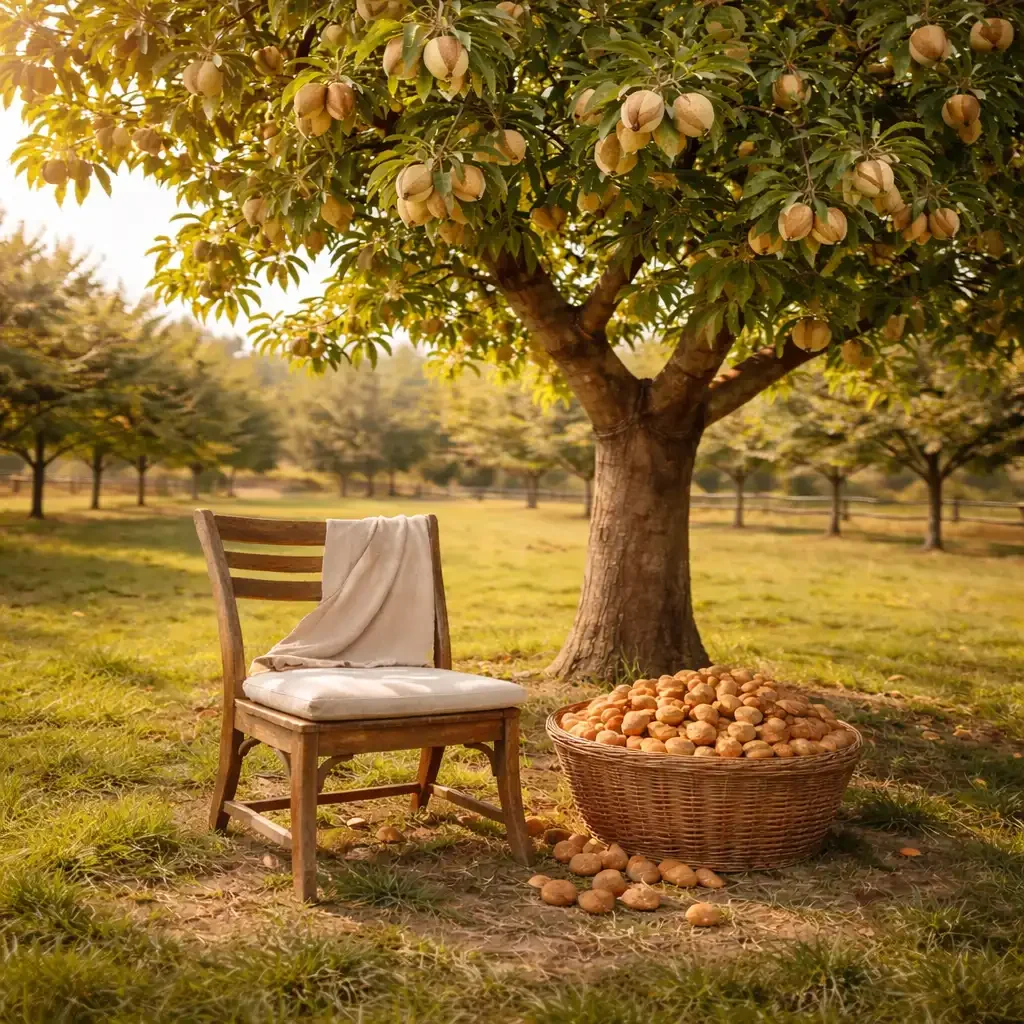
California's Billion-Dollar Crop with Ancient Mediterranean Roots
The sweet almond tree (Prunus dulcis var. dulcis) stands as one of humanity's most successful agricultural transformations - a single genetic mutation thousands of years ago turned a poisonous nut into a global superfood. Native to the Mediterranean and Central Asia, sweet almonds have been cultivated for at least 4,000 years, spreading from ancient Persia along trade routes to become a staple of Mediterranean cuisine and eventually California's most valuable agricultural export. Today, California produces 80% of the world's almonds, generating over $5 billion annually. The sweet almond tree thrives in hot, dry summers and mild winters - the same climate that suits olives, grapes, and figs. Beyond their economic importance, sweet almonds offer exceptional nutrition, providing protein, healthy fats, fiber, vitamin E, and magnesium. The trees themselves are stunning ornamentals, producing clouds of pale pink blossoms in early spring before most other trees have awakened. Whether grown for commercial production, backyard harvests, or simply for their breathtaking spring display, sweet almond trees represent agricultural heritage meeting modern superfood culture.
GROWING TIMELINE: FROM PLANTING TO HARVEST
Time to First Fruit
- Standard Rootstock: 5-6 years to first significant harvest
- Semi-Dwarf Rootstock: 3-4 years to productive bearing
- Dwarf Rootstock: 2-3 years to first nuts (limited availability)
Growth Rate
Sweet almond trees are moderate to fast growers, typically adding 18-30 inches of new growth per year in ideal conditions. Young trees establish quickly in well-drained soil with full sun exposure. Most reach full productive maturity within 7-10 years. Commercial orchards consider trees fully mature and at peak production by age 12-15.
Tree Lifespan
A well-maintained sweet almond tree can live 50-80 years, with some exceptional specimens reaching 100+ years. However, commercial orchards typically replace trees after 25-30 years when production declines below economic viability. Home orchard trees often produce well for 40-60 years with proper care. Peak production occurs between ages 10-25, after which yields gradually decrease but fruit quality remains excellent.
Mature Tree Size
- Standard (on own roots or standard rootstock): 15-30 feet tall, 15-25 feet wide
- Semi-Dwarf (on rootstock): 12-18 feet tall, 12-15 feet wide
- Dwarf (on specialized rootstock): 8-12 feet tall, 8-10 feet wide
Commercial operations primarily use standard trees for maximum production, while home orchards increasingly favor semi-dwarf varieties for easier harvest and maintenance. True dwarf almonds remain relatively rare compared to dwarf versions of other fruit trees.
Annual Production
A mature standard sweet almond tree produces 25-60 pounds of in-shell nuts annually, depending on variety, growing conditions, pollination success, and tree age. Semi-dwarf trees yield 15-30 pounds, while dwarf varieties produce 8-15 pounds per year. Commercial California orchards average 2,000-2,500 pounds per acre, with top producers reaching 3,500+ pounds per acre. Production begins light in years 3-5, increases substantially through year 10, peaks between years 12-25, then gradually declines while maintaining consistent quality.
GROWING REQUIREMENTS
USDA Hardiness Zones
Zones 7-9 are ideal for sweet almond cultivation, with Zone 8 being optimal. The trees require 200-400 chill hours (temperatures between 32-45 degrees F) during winter dormancy to set fruit properly. However, they're extremely vulnerable to late spring frosts that can destroy the early blossoms and eliminate the crop for that year. This makes climate selection critical - areas with reliable mild springs perform best. Zone 7 growers should select late-blooming varieties and provide frost protection. Zones 9b-10a can work in coastal California and similar Mediterranean climates, but hot-summer inland zones 9b-10 often lack sufficient chill hours.
Sunlight
Full sun is absolutely essential - minimum 8 hours of direct sunlight daily, with 10-12 hours ideal. Almonds bloom very early (February-March in most climates), so southern or southeastern exposure helps maximize warmth during critical pollination periods. Insufficient sun results in poor nut development, lower yields, and increased disease susceptibility. Avoid planting where buildings or large trees create afternoon shade.
Soil Requirements
Well-drained soil is absolutely critical - sweet almonds are extremely susceptible to root rot and crown disease in waterlogged conditions. They prefer slightly alkaline to neutral soil (pH 7.0-8.5) but tolerate a wider range (pH 6.0-8.5) if drainage is excellent. Sandy loam or loamy soils work best. The trees tolerate poor, rocky soils remarkably well and actually produce better quality nuts in lean soils compared to heavily fertilized ground. Avoid heavy clay, compacted areas, or locations with high water tables. If drainage is questionable, plant on raised beds or berms.
Water Needs
Sweet almonds are moderately drought-tolerant once established but require consistent irrigation during the growing season for optimal nut production. Water needs vary by climate and tree age, but mature trees in California's Central Valley typically receive 36-48 inches annually through irrigation. Water deeply and infrequently rather than shallow and often - this encourages deep root development. Critical irrigation periods are bloom through hull split (February-August in most climates). Reduce watering after harvest to encourage dormancy. Drip irrigation works exceptionally well for almonds. Young trees (years 1-3) need more frequent watering to establish root systems. Overwatering causes more problems than underwatering, particularly crown rot and root diseases.
Pollination
Most sweet almond varieties are self-incompatible and require cross-pollination from a different variety blooming at the same time. Plant at least two compatible varieties within 50-100 feet, or graft a branch of a compatible pollinator onto your tree. Popular pollination pairings include Nonpareil with Carmel or Price, Butte with Padre, and Texas with Mission. Honeybees are essential pollinators - commercial orchards bring in 2-3 hives per acre during bloom. Cold, wet, or windy weather during bloom significantly reduces pollination success and yields. Some newer varieties (like Independence and Hall's Hardy) are self-fertile but still produce better with cross-pollination.
TREE APPEARANCE
Size and Form
Sweet almond trees develop an upright, spreading form with a rounded to vase-shaped canopy. The trunk develops attractive gray-brown bark that becomes rough and fissured with age. Branch structure is relatively open, similar to peach trees, allowing good light penetration and air circulation - important for disease prevention and nut development. The overall silhouette is graceful and somewhat irregular, giving the tree character and visual interest year-round.
Leaves
Lance-shaped leaves emerge after flowering, measuring 3-5 inches long with finely serrated edges. They're a glossy, vibrant medium green that provides attractive summer foliage. In fall, leaves turn yellow-gold before dropping - not as spectacular as some deciduous trees but still providing pleasant autumn color. The leaves emit a subtle, sweet aroma when crushed.
Blossoms
The spectacular early spring bloom is sweet almond's greatest ornamental feature. In late winter to early spring (February-March in most climates), trees produce masses of white to pale pink flowers that cover bare branches before leaves emerge. Each five-petaled blossom measures about 1-2 inches across, arranged in clusters along branches. The flowers are lightly fragrant with a delicate, sweet scent. The bloom period lasts 10-14 days and attracts early-emerging honeybees and other pollinators. When thousands of blooms open simultaneously, the effect is breathtaking - California's Central Valley almond bloom draws tourists from around the world. The early bloom makes almonds one of the first signs of spring in temperate climates.
Nuts and Hulls
The almond fruit is a fuzzy, gray-green drupe (similar to a small, flat peach) that appears in early spring after pollination. As summer progresses, the hull dries and splits open along one side, revealing the almond shell inside. This "hull split" typically occurs in late July through September, signaling harvest time. The shell is light brown, hard, and slightly porous, containing a single oval kernel. Sweet almond kernels are cream to light brown, with a papery skin that can be blanched off in hot water. Size varies by variety - Nonpareil almonds are larger and more uniform than many other varieties. Freshly harvested almonds have a subtly sweet, buttery flavor that intensifies with roasting.
FLAVOR AND CHARACTERISTICS
Sweet almonds offer a mild, subtly sweet, nutty flavor with buttery undertones - quite different from the intense "almond" flavor most people associate with almond extract (which actually comes from bitter almonds). The taste is clean and relatively neutral, making sweet almonds incredibly versatile. Raw almonds have a slightly vegetal note that disappears with roasting, which intensifies the natural sweetness and adds depth. Blanched almonds (with skin removed) taste milder and sweeter than unblanched. The texture is firm and crisp when raw, becoming tender and creamy when roasted. Fresh almonds harvested in late summer have a uniquely delicate flavor and softer texture compared to stored nuts. Quality varies significantly by variety - Nonpareil is prized for its mild, sweet flavor and light color, while Mission and Carmel offer richer, slightly more complex tastes.
NUTRITIONAL BENEFITS
Sweet almonds rank among the most nutritious nuts, offering an exceptional nutrient profile that supports overall health:
Macronutrients (per 1 oz/28g serving, about 23 almonds):
- Calories: 160-170
- Protein: 6 grams (higher than most nuts)
- Healthy fats: 14 grams (primarily monounsaturated)
- Fiber: 3.5 grams
- Carbohydrates: 6 grams (3g net carbs after fiber)
Key Vitamins and Minerals:
- Vitamin E: 37% Daily Value (powerful antioxidant)
- Magnesium: 19% DV (supports bone health, muscle function)
- Calcium: 8% DV
- Iron: 6% DV
- Potassium: 6% DV
- Phosphorus: 14% DV
Health Benefits:
- Heart Health: Monounsaturated fats help reduce LDL cholesterol while maintaining HDL levels. Regular almond consumption correlates with reduced cardiovascular disease risk.
- Blood Sugar Control: Despite containing carbs, almonds have a low glycemic index and may improve insulin sensitivity.
- Weight Management: High protein and fiber content promotes satiety, potentially reducing overall calorie intake.
- Bone Health: Calcium, magnesium, and phosphorus support bone density.
- Skin Health: Vitamin E protects skin from oxidative damage and supports healthy aging.
- Brain Function: Vitamin E and healthy fats support cognitive function and may reduce age-related decline.
Almonds are naturally cholesterol-free, low in saturated fat, and contain beneficial phytochemicals including flavonoids and phenolic compounds with antioxidant properties.
CULINARY USES
Sweet almonds' versatility makes them one of the most widely used nuts in global cuisine:
Snacking and Basics:
- Raw or roasted, salted or unsalted, as a nutritious snack
- Sliced, slivered, or chopped as toppings for salads, yogurt, oatmeal
- Candied or honey-roasted for desserts and gifts
- Almond butter as a spread or protein boost
- Ground into almond flour for gluten-free baking
Baking and Desserts:
- Almond cookies, biscotti, macarons, and amaretti
- Almond paste and marzipan for confections
- Frangipane filling for tarts and pastries
- Ground almonds in cakes and tortes
- Almond extract (from sweet almonds or combined with bitter almond essence)
Savory Applications:
- Romesco sauce and other Mediterranean sauces
- Coating for fish or chicken (crushed almonds)
- Pilaf and grain dishes with toasted almonds
- Pesto variations using almonds instead of pine nuts
- Middle Eastern and North African dishes (couscous, tagines)
Dairy Alternatives:
- Almond milk (commercial and homemade)
- Almond-based yogurt and ice cream
- Almond cream for coffee
Other Products:
- Almond oil for cooking and cosmetics
- Almond meal/flour for baking and breading
- Activated almonds (soaked and dehydrated)
STORAGE AND HANDLING
In-Shell Storage
In-shell almonds store exceptionally well. In cool (32-45 degrees F), dry conditions with good air circulation, they keep 12-24 months. The shell protects kernels from moisture, light, and pests. Store in breathable bags or containers - avoid plastic bags that trap moisture. Check periodically for signs of mold or rancidity. In-shell almonds stored at room temperature remain fresh 3-6 months.
Shelled Almond Storage
Shelled almonds are more vulnerable to rancidity due to their high oil content. Store in airtight containers in cool, dark locations:
- Pantry (cool, dark): 2-3 months
- Refrigerator: 8-12 months
- Freezer: 18-24 months
Almonds absorb odors, so store away from strong-smelling foods. Signs of rancidity include bitter or sour taste, paint-like smell, or darkened appearance. Roasted almonds have shorter shelf life than raw due to oil oxidation.
Fresh Harvest Handling
Harvest almonds when hulls split naturally (typically August-October depending on variety and climate). Shake or knock nuts from branches onto tarps. Remove hulls within 24 hours to prevent kernel staining. Rinse nuts and dry thoroughly before storage - moisture content should drop to 6-8% to prevent mold. Spread nuts in single layers in well-ventilated areas until completely dry (1-2 weeks). Home-harvested almonds benefit from a 4-6 week "curing" period at room temperature to develop full flavor before long-term storage.
POPULARITY AND PRODUCTION
Sweet almonds have become a global agricultural and culinary phenomenon. California dominates world production, growing 80% of global supply on approximately 1.6 million acres - primarily in the Central Valley (San Joaquin and Sacramento Valleys). The California almond industry generates over $5 billion annually and employs over 100,000 people.
Global production reaches approximately 3.5-4 million tons annually (in-shell basis), with production increasing 3-5% yearly to meet growing demand. Top producing regions include:
1. California, USA: 80% of world production
2. Spain: 5-7% (traditional Mediterranean production)
3. Australia: 4-6% (rapidly growing industry)
4. Iran, Turkey, Morocco, Italy: Remaining production
Almond consumption has exploded over the past two decades, driven by:
- Health consciousness and plant-based diet trends
- Almond milk's rise as dairy alternative (40% of U.S. almond crop becomes almond milk)
- Gluten-free baking using almond flour
- Snacking trend toward nuts over processed foods
- Asian market growth (China imports have increased 10x since 2005)
The United States remains the largest consumer (domestic use of California production), followed by European Union, China, and India. Per capita consumption in the U.S. has tripled since 1980, reaching approximately 2 pounds per person annually.
Almonds have become California's top agricultural export and most valuable crop by revenue, surpassing grapes and dairy. However, the industry faces challenges including water usage concerns (1 gallon of water per almond), labor costs, and increasing demand on limited suitable land.
POPULAR VARIETIES
Sweet almond cultivars number in the hundreds worldwide, but several dominate commercial production and home orchards:
Nonpareil
The gold standard of California almonds, comprising 40% of state production. Large, uniform kernels with thin shells, smooth light-colored skin, and superior flavor. Self-incompatible, requiring pollinators. Harvest: late August to early September. Most valuable commercially due to appearance and processing ease.
Carmel
California's second most planted variety (10-15% of acreage). Excellent Nonpareil pollinator with overlapping bloom time. Medium-sized kernels, slightly darker than Nonpareil. Good flavor for eating and processing. Harvest: early September.
Butte
Developed at UC Davis, now comprising 8-10% of California acreage. Small to medium kernels with good flavor. Consistent, reliable producer. Good pollinator choice. Blooms slightly later than Nonpareil, offering some frost protection. Harvest: mid-September.
Monterey
Newer variety gaining popularity. High yields, excellent Nonpareil pollinator. Good kernel quality and size. Disease resistant. Harvest: late August to early September, similar to Nonpareil.
Price (Peerless)
Traditional California variety, declining in acreage but still significant. Small, plump kernels. Good Nonpareil pollinator with overlapping bloom. Harvest: early to mid-September.
Mission (Texas)
Late-blooming variety offering frost protection. Small kernels with thick, hard shells - primarily used for in-shell markets and specialty products. Good for areas with late spring frosts. Harvest: late September to October.
All-In-One
Semi-dwarf variety ideal for home orchards. Self-fertile (produces without pollinator, though yields improve with one). Medium-sized, sweet kernels. Excellent for small spaces. Harvest: early to mid-September.
Hall's Hardy
Cold-hardy variety for Zone 5-7 (can survive -20 to -25F). Later blooming reduces frost damage risk. Self-fertile. Medium-sized nuts with good flavor. Excellent choice for regions beyond traditional almond climates. Harvest: late September to October.
FUN FACTS ABOUT SWEET ALMOND TREES
1. Not Actually a Nut: Botanically, almonds aren't true nuts - they're drupes, more closely related to peaches, plums, and cherries. The "nut" we eat is actually the seed inside the pit of a fruit that never fully develops its fleshy exterior. If you crack open a peach pit, you'll find something remarkably similar to an almond inside - bitter and inedible in the peach's case, but the resemblance is striking. This family relationship explains why almond trees look so similar to peach trees and bloom around the same time.
2. One Mutation Changed Everything: All sweet almonds descended from bitter almonds through a single genetic mutation that eliminated most amygdalin (cyanide compound) production. This mutation occurred naturally thousands of years ago, and ancient farmers recognized and propagated these rare non-bitter trees. Without this mutation, almonds would have remained poisonous curiosities rather than becoming one of humanity's most important crops. Scientists estimate this mutation occurred 3,000-4,000 years ago in the Levant or Persia.
3. California's Accidental Dominance: California grew virtually no almonds until Spanish missionaries planted them at missions in the 1700s. Commercial production didn't begin until the 1870s. California's Mediterranean climate proved perfect - hot, dry summers and mild winters with just enough chill. By the 1950s, California had surpassed all other regions. Today, 80% of world production occurs in a 400-mile stretch of California's Central Valley. Australia is now attempting to replicate this success.
4. The Billion-Dollar Bloom: California's almond bloom in February-March is one of the world's largest managed pollination events. Commercial orchards require 2-3 honeybee hives per acre during bloom - that's approximately 2.8 million hives total, representing 70% of all commercial honeybee colonies in the United States. Beekeepers truck hives from across the country, earning $200-300 per hive for 4-6 weeks of pollination service. This massive annual migration costs the industry over $600 million and is critical to both almond and honey production.
5. Ancient Royal Food: Almonds appear in ancient texts from multiple civilizations. King Tut's tomb contained almonds placed there 3,300 years ago. The Bible mentions almonds at least 10 times, including as decoration for the menorah and Aaron's miraculous staff that budded almond blossoms. Ancient Romans showered newlyweds with almonds as fertility symbols. Almonds traveled the Silk Road from Asia to Europe, becoming prized luxury goods. In medieval Europe, almond milk was a staple during Lent when dairy was forbidden - this isn't a modern invention but a rediscovery of medieval practice.
6. Water Controversy: Almonds have become controversial due to water usage - approximately 1 gallon per almond (or 1,900 gallons per pound). During California's 2012-2016 drought, almonds became a flashpoint in water policy debates. However, context matters: almonds use 10% of California's agricultural water while generating 17% of agricultural revenue. They use less water per calorie or protein than most animal agriculture. The industry has improved efficiency 33% since 1990s. Still, in drought-prone California, any high-water-use crop faces scrutiny.
7. Jordan Almonds Aren't From Jordan: Jordan almonds - the candy-coated almonds at weddings and celebrations - have nothing to do with the country Jordan. The name likely derives from the French "jardin" (garden) or the Spanish "jordon" variety. These sugar-coated almonds originated in ancient Rome, where honey-coated almonds were served as desserts. By the Middle Ages, sugar-coating became standard. The tradition of giving five Jordan almonds at weddings (symbolizing health, wealth, happiness, fertility, and longevity) dates back centuries in Mediterranean cultures.
8. Almond Milk's Explosive Rise: Almond milk sales have grown 250% since 2010, now capturing 64% of the plant-based milk market in the U.S. (surpassing soy milk around 2013). This single product now consumes approximately 40% of California's almond crop. The environmental impact is complex - almond milk uses less water than dairy milk (on average), but more than oat or soy milk. One pound of almonds makes approximately one gallon of almond milk, with the leftover almond meal often used for animal feed or composting.
CONCLUSION: THE PERFECT BALANCE OF BEAUTY AND BOUNTY
The sweet almond tree represents one of humanity's most successful agricultural partnerships - a plant transformed from poisonous wild ancestor to nutritious global staple through thousands of years of selection and cultivation. Today's sweet almond trees offer the best of both worlds: stunning ornamental value with their spectacular early spring bloom, and practical production of one of the world's healthiest nuts.
For home orchards in Mediterranean and similar climates (zones 7-9), sweet almonds make excellent choices. They're relatively low-maintenance once established, drought-tolerant, long-lived, and generous producers. The early bloom provides hope and beauty when winter still grips the landscape. The nuts offer exceptional nutrition and culinary versatility. Even a single tree can produce 25-50 pounds of almonds annually - enough for fresh eating, baking, and gift-giving.
Choose varieties suited to your climate and space. Standard trees work well for larger properties, while semi-dwarf selections fit smaller home orchards. Remember to plant compatible pollinators or select self-fertile varieties like All-In-One or Hall's Hardy. Provide excellent drainage, full sun, and protection from late frosts if possible.
Whether you're seeking a productive food tree, an ornamental specimen, or both, sweet almonds deliver. They connect you to agricultural history stretching back millennia while providing modern superfood nutrition. The trees stand as living proof that with patience, care, and the right conditions, ancient crops can thrive in contemporary landscapes.
Ready to explore more fruit and nut tree options? Download our Complete Tree Directory to discover varieties perfect for your climate and needs.
Growing Knowledge, Cultivating Community