
The Arkansas Black Apple
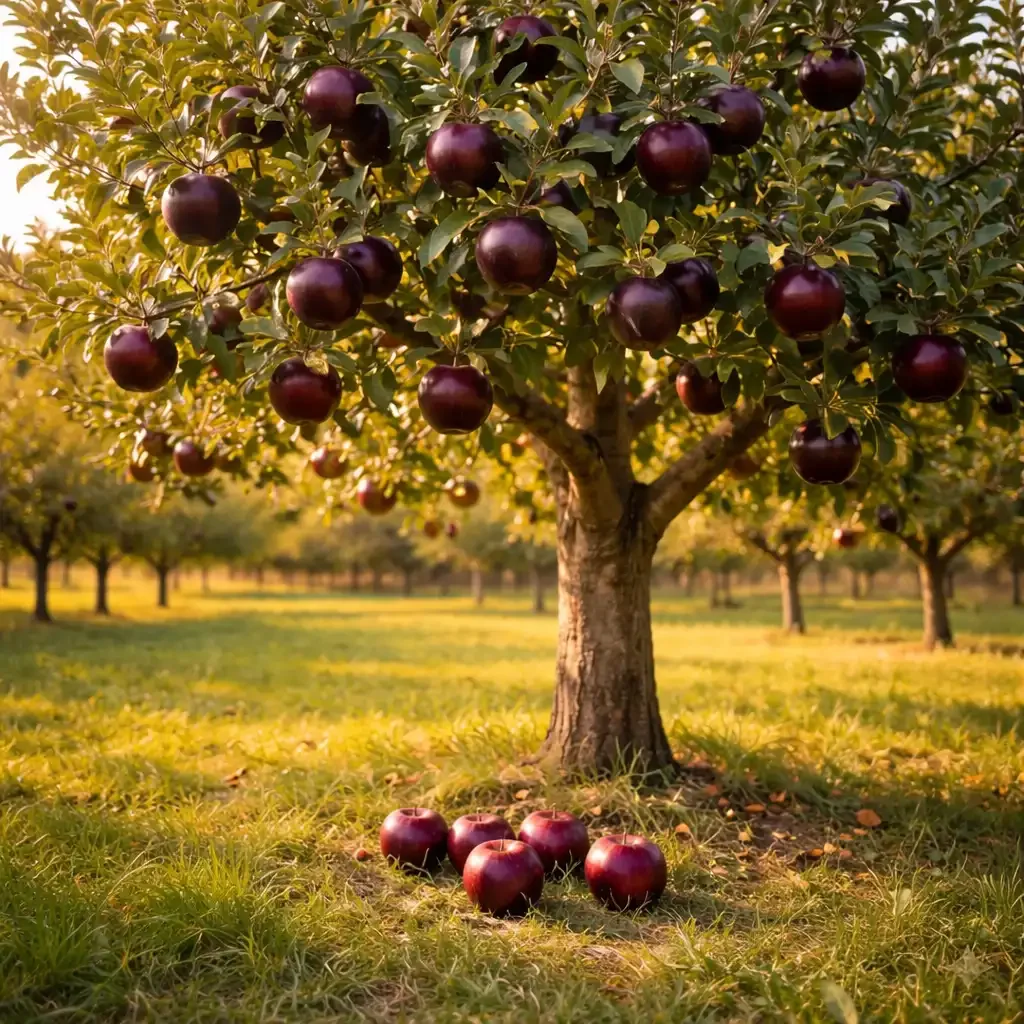
The Forgotten Heirloom That's Almost Black, Rock-Hard, and Tastes Better with Age
When most apples are past their prime, Arkansas Black is just getting started
Picture this: It's 1870 in Benton County, Arkansas. A farmer discovers a seedling producing apples so dark they look almost black in certain light. The flesh is hard as a rock - you could practically use them as baseballs. Most people would cut the tree down.
But this farmer waited. And waited. And kept a few apples in the cellar through winter.
By March, something magical happened. Those rock-hard apples had mellowed into something extraordinary - crisp, complex, intensely flavored, with a perfect sweet-tart balance. The apples that seemed worthless in October had become treasures by spring.
That's the Arkansas Black apple - an heirloom variety that defies everything we think we know about apples. While modern varieties are bred for immediate gratification (eat them right off the tree!), Arkansas Black plays the long game. It's the apple that gets better with age, stores for months without refrigeration, and has developed an almost cult following among apple enthusiasts who understand its secret.
Today, you won't find Arkansas Black at your grocery store. It's too hard when fresh, too slow to ripen, too dark (people think it's rotten), and requires patience that modern consumers don't have. But for those willing to wait, Arkansas Black offers something no modern apple can match: complexity that develops over months, storage life that lasts until spring, and a connection to 19th-century apple culture when people actually appreciated fruit that lasted through winter.
Growing Timeline: From Planting to Harvest
🍎 Time to First Fruit
• From grafted nursery tree on dwarf rootstock: 2-3 years
• From semi-dwarf rootstock: 3-5 years (most common)
• From standard rootstock: 5-7 years
• From seed: 7-10 years (won't produce true Arkansas Black, not recommended)
Note: Arkansas Black is slower to start bearing than modern varieties, but once it starts, it's a reliable annual producer for decades.
🌳 Tree Growth & Maturity
• Vegetative growth stage: First 2-4 years (establishing structure)
• Full production maturity: 7-10 years
• Peak production: Years 10-30 (incredibly long productive period)
• Growth rate: Moderate (12-18 inches per year)
• Growth habit: Upright, spreading, vigorous with strong branch structure
⏳ Tree Lifespan
Expected productive lifespan: 50-100+ years
Arkansas Black trees are incredibly long-lived. Some original trees from the 1800s are still producing in Arkansas. The trees develop thick, strong trunks and maintain productivity far longer than modern commercial varieties.
These are heritage trees in the truest sense - plant one today, and it could still be producing apples for your great-grandchildren.
📏 Mature Tree Size
• Dwarf rootstock: 8-10 feet tall, 8-10 feet wide
• Semi-dwarf rootstock: 12-15 feet tall, 12-15 feet wide
• Standard rootstock: 15-25 feet tall, 15-20 feet wide (can reach 30 feet with age)
🍏 Annual Production
• Dwarf tree yield: 30-50 pounds per year once established
• Semi-dwarf tree yield: 50-100 pounds per year
• Standard tree yield: 100-200+ pounds per year (mature trees are prolific!)
• Bearing pattern: Annual bearer (produces every year)
• Harvest time: Very late season - late October to early November (one of the last apples harvested)
Here's the beauty of Arkansas Black: Because they store for 4-6 months without refrigeration, a single harvest in November can provide fresh apples all the way through March or April. You're essentially extending your apple season by half a year.
Growing Requirements
• Climate zones: Zones 4-8 (very cold-hardy!)
• Chill hours needed: 800-1,000 hours below 45°F
• Heat tolerance: Excellent - originated in Arkansas, handles hot summers well
• Sunlight: Full sun - minimum 6-8 hours daily
• Soil: Adaptable! Tolerates clay, loam, sandy soils. Prefers well-drained, pH 6.0-7.0
• Water: Drought-tolerant once established. Needs regular water during fruit development
• Pollination: Not self-fertile - needs another apple variety blooming at same time (Granny Smith, Red Delicious, Golden Delicious, Gala all work)
• Spacing: 12-15 feet apart for semi-dwarf; 18-25 feet for standard
• Disease resistance: Excellent! Highly resistant to apple scab, cedar apple rust, and fire blight
Why Arkansas Black is easier than you think: This is one of the most disease-resistant heritage apples. While many heirloom varieties need constant spraying, Arkansas Black shrugs off the diseases that plague modern apples. It's tough, adaptable, and relatively low-maintenance once established.
What Does an Arkansas Black Apple Look Like?
Arkansas Black is instantly recognizable - if you know what you're looking at:
The Color (Why It's Called Black):
At harvest in late October, Arkansas Black apples are dark, dark red - almost burgundy. But here's where it gets interesting: As the apples sit in storage, the red deepens to such a dark shade that in certain light, they genuinely look black or deep purple-black. The skin develops a waxy coating that makes them shine like polished mahogany.
First-time growers often panic thinking the apples have gone bad. Nope - that's exactly what they're supposed to look like.
The Size:
Medium to large apples, typically 2.5-3.5 inches in diameter. Round to slightly conical shape with smooth, tough skin.
The Texture When Fresh:
Rock. Hard. Seriously - freshly harvested Arkansas Black apples are so dense and hard that biting into one is a jaw workout. The flesh is yellowish-white, incredibly crisp, and almost woody in texture.
This is not a bug - it's a feature. That rock-hard texture is why these apples store for months.
The Transformation:
After 1-2 months in cool storage (a basement works fine, doesn't need refrigeration), the texture begins to soften. By 2-3 months, the flesh becomes pleasantly crisp rather than tooth-breaking. The flavors mellow and develop complexity. By 4-6 months, you have an apple with incredible depth - sweet, tart, rich, complex, almost wine-like.
The Flavor Profile: An Apple That Rewards Patience
Here's where Arkansas Black separates itself from every modern apple:
At Harvest (Late October/Early November):
Extremely tart, astringent, hard, almost unpleasant to eat fresh. High acidity with minimal sweetness. The tannins make your mouth pucker.
Most people taste it once and think "this is terrible." That's because you're eating it wrong.
After 1 Month of Storage:
The astringency begins to mellow. Still quite tart but now edible. Crisp and crunchy rather than rock-hard.
After 2-3 Months of Storage (December/January):
Now we're talking. The sugars have developed, the acids have mellowed, the tannins have softened. You get a complex sweet-tart balance with hints of spice, wine, and depth that modern apples can't touch.
After 4-6 Months of Storage (February-April):
Peak flavor. Sweet-tart perfection. Complex notes of wine, spice, honey, and fruit. Crisp texture maintained. This is when Arkansas Black shows why people obsessed over it in the 1800s.
Flavor Notes:
• Initial tartness with developing sweetness
• Complex, wine-like flavors
• Hints of spice, cherry, and honey
• Dense, firm flesh that stays crisp in storage
• Rich, concentrated apple flavor
The best comparison? Imagine if apple and wine had a baby, and that baby got better with age.
Nutritional Benefits
A medium Arkansas Black apple (about 180g) contains:
• Calories: 95-110
• Dietary Fiber: 4-5 grams
• Vitamin C: 8-10% of daily value
• Potassium: 5-6% of daily value
• Natural Sugars: 19-25 grams (increases with storage)
• Antioxidants: High levels of polyphenols and flavonoids
What Makes Arkansas Black Special Nutritionally:
High Tannin Content: Those tannins that make fresh Arkansas Black so astringent? They're powerful antioxidants. The high tannin levels (higher than most modern apples) provide cardiovascular benefits and anti-inflammatory properties.
Dense Flesh = Concentrated Nutrients: The incredibly dense texture means more apple per bite - more fiber, more nutrients, more satisfaction.
Storage Stability: Unlike modern apples that lose nutrients in storage, Arkansas Black maintains its nutritional profile for months because the dense flesh and thick skin protect against oxidation.
Low Glycemic Impact: The high fiber and tannin content slow sugar absorption, making Arkansas Black a better choice for blood sugar management than sweeter modern varieties.
How to Enjoy Arkansas Black Apples
Fresh Eating:
Wait. Seriously, wait at least 6-8 weeks after harvest. Stored Arkansas Black (2+ months) makes an excellent fresh eating apple for those who love complex, tart flavors. Not for kids who want something sweet and simple.
Baking (Exceptional!):
Arkansas Black is arguably the best baking apple you've never tried:
• Apple pie: Holds shape beautifully, doesn't turn mushy, provides complex flavor
• Apple crisp and cobblers: The tartness balances added sugars perfectly
• Baked apples: Stuff and bake whole - they hold their structure
• Apple butter: The complex flavors create rich, dark apple butter
The secret: That rock-hard texture that seems like a problem? In the oven, it means the apples hold their shape instead of dissolving into mush like many modern varieties.
Cider Making:
Arkansas Black is a cider-maker's dream. The high tannin content, balanced acidity, and complex flavors create cider with depth and structure. Mix with sweeter apples for balanced cider, or use Arkansas Black as the "backbone" variety that provides tannins and complexity.
Historical cider makers prized Arkansas Black because it added what they called "grip" - that tannic structure that makes cider interesting rather than just sweet juice.
Drying:
Dried Arkansas Black apple slices maintain flavor and texture better than most varieties. The dense flesh dries evenly without becoming leather-tough.
Applesauce:
Makes a tart, complex applesauce. Combine with sweeter apples for balance, or embrace the tartness.
Storage: Where Arkansas Black Dominates
This is Arkansas Black's superpower.
Without Refrigeration:
• Cool basement or cellar (40-50°F): 4-6 months easily
• Traditional root cellar: 6-8 months
• Some growers report successful storage through May (8 months!)
With Refrigeration:
• Standard refrigerator (35-40°F): 6-9 months
• Maintains quality the entire time
Why Arkansas Black Stores So Well:
1. Thick, tough skin creates a natural barrier against moisture loss and decay
2. Dense, hard flesh resists breakdown
3. High tannin content acts as natural preservative
4. Low ethylene production (doesn't trigger ripening in nearby fruit)
5. Waxy natural coating on skin
Historical Context:
Before refrigeration, apples like Arkansas Black were invaluable. You could harvest in November and eat fresh apples through April - spanning the entire winter when no other fresh fruit was available. This is why people obsessed over "keeper" apple varieties in the 1800s.
Arkansas Black was specifically bred for this trait. It's not a bug that they're hard when fresh - it's the entire point.
Storage Tips:
• Don't wash before storage (removes natural protective coating)
• Store in single layers in boxes, separated by newspaper
• Cool, dark location (basement, garage, unheated room)
• Check monthly and remove any that show soft spots
• For best flavor, wait 2-3 months before eating
History: The Rise, Fall, and Rediscovery of Arkansas Black
The Origin Story (1870s):
Arkansas Black originated as a chance seedling in Benton County, Arkansas, around 1870. Most sources believe it's a seedling of Winesap (another excellent keeper apple). By the 1880s, it had spread throughout Arkansas and neighboring states.
The Golden Age (1880s-1940s):
In the late 1800s and early 1900s, Arkansas Black was hugely popular across the South and Midwest. Why? Because refrigeration didn't exist, and Arkansas Black solved a critical problem: How do you have fresh apples in March?
In an era when people stored apples in root cellars, barrels, and cool basements, Arkansas Black was a star. It lasted longer than almost any other apple while maintaining quality.
The Decline (1950s-1990s):
Post-World War II refrigeration became common. Suddenly, any apple could be stored year-round. The market shifted toward apples that tasted good immediately - Red Delicious, Golden Delicious, and later Gala, Fuji, and Honeycrisp.
Arkansas Black's "flaws" became dealbreakers:
• Too hard when fresh
• Too dark (looks rotten to modern consumers)
• Requires patience (unacceptable in modern culture)
• Not sweet enough for kids
• Harvest is too late for early market sales
Commercial orchards ripped out Arkansas Black trees. By the 1980s, it had nearly disappeared except for a few specialty orchards and backyard trees maintained by old-timers who remembered.
The Renaissance (2000s-Present):
The heirloom apple movement discovered Arkansas Black. Suddenly, its "flaws" became virtues:
• Incredible storage life = food security, self-sufficiency
• Complex flavors = sophisticated palate
• Disease resistance = low-spray organic growing
• Heritage genetics = biodiversity preservation
Today, Arkansas Black is experiencing a revival among:
• Heritage fruit enthusiasts
• Homesteaders seeking self-sufficiency
• Organic orchardists (disease resistance = less spraying)
• Craft cider makers (complex flavors and tannins)
• Slow Food advocates
You still won't find Arkansas Black at grocery stores. But at farmers markets, specialty orchards, and through mail-order nurseries, Arkansas Black is back.
Fun Facts About Arkansas Black Apples
1. The Color Intensifies with Storage: Fresh-picked Arkansas Black is dark red. But as months pass, the color deepens to such a dark shade that it genuinely appears black in certain light. This deepening is caused by anthocyanin pigments concentrating as the apple matures in storage. By February, an Arkansas Black apple held up to the light looks almost purple-black - hence the name.
2. Related to Winesap: Most pomologists believe Arkansas Black is a seedling of Winesap, another excellent keeper apple from the 1700s. You can taste the family resemblance - both have complex, wine-like flavors and exceptional storage life. Arkansas Black essentially took Winesap's best traits and amplified them.
3. The "Baseball Apple": Old-timers called freshly harvested Arkansas Black the "baseball apple" because the apples were so hard you could literally play catch with them without bruising. The dense flesh was practically wooden. This wasn't seen as a problem - it was the entire point. That rock-hard texture meant the apples would last through winter.
4. Commercial Failure, Homestead Success: Arkansas Black flopped commercially in the 20th century because it didn't meet modern expectations (eat it immediately, super sweet, available year-round). But among homesteaders and self-sufficiency advocates, it's a treasure. One tree produces enough apples to eat fresh from November through April - half the year. That's food security.
5. The Cider Maker's Secret Weapon: Craft cider makers love Arkansas Black because it provides what commercial cider apples lack: tannins and structure. Mix Arkansas Black with sweeter apples, and you get cider with complexity and "grip" rather than just sweet juice. The high tannin content (similar to wine grapes) creates cider that ages well and has depth.
6. Disease Resistance Superstar: While many heirloom apples are disease-prone nightmares, Arkansas Black is the opposite. It shows excellent resistance to apple scab, cedar apple rust, and fire blight - the three most common apple diseases. This makes it perfect for organic growers or anyone who wants apples without constant spraying. The thick skin and dense flesh seem to physically resist disease penetration.
7. Almost Lost to History: By the 1980s, Arkansas Black had nearly vanished. A few old trees survived in backyard orchards, maintained by people who remembered "the old keeper apples" from childhood. The heirloom apple movement tracked down these surviving trees, collected scion wood, and preserved the variety. Today's Arkansas Black trees are descendants of those survivors.
8. The Anti-Modern Apple: Everything about Arkansas Black contradicts modern apple breeding. Modern breeders want: immediate sweetness, early harvest, soft texture, bright colors, long shelf life with refrigeration. Arkansas Black offers: delayed gratification, late harvest, hard texture, dark color that looks "wrong," and long shelf life WITHOUT refrigeration. It's an apple from a different era that solves problems we've forgotten we had.
Why Choose Arkansas Black?
Arkansas Black isn't for everyone. If you want an apple you can bite into right off the tree in September, this isn't it. If you want super-sweet apples that kids love, look elsewhere. If you want apples that look perfect on display at a farmers market, these dark, almost black apples will confuse people.
But if you want:
• An apple that stores for months without refrigeration
• Complex, sophisticated flavors that develop over time
• Disease-resistant trees that don't need constant spraying
• A connection to pre-industrial apple culture
• Food security and self-sufficiency
• The best baking apple you've never tried
• Apples for craft cider with real tannin structure
• A heritage variety worth preserving
Then Arkansas Black might be the apple you've been searching for.
This is an apple that requires patience, rewards attention, and connects you to a time when people actually understood that the best things in life - including fruit - often get better with age.
Plant an Arkansas Black tree today. In 5-7 years, you'll harvest your first crop. Store those rock-hard apples in a cool place. Wait. By February, pull out an apple that's been transforming in storage for four months.
That first bite - complex, sweet-tart, crisp, with flavors that modern apples can't touch - will make you understand why people 150 years ago treasured these trees.
And your tree will keep producing those apples for the next 50-100 years.
Ready to explore more heirloom fruit trees? Download our Complete Tree Directory to discover varieties that connect you to agricultural heritage.
SimitianNest.com | Your Complete Guide to Tree Families