The Gala Apple: New Zealand's Gift That Conquered America
The Gala Apple: New Zealand's Gift That Conquered America
Discover the perfectly balanced sweet-tart apple that's now #1 in the United States
A New Zealand Treasure from the 1930s
If you reach for the same apple variety week after week at the grocery store, there's a good chance it's a Gala. This sweet, crisp, beautifully striped apple has climbed to become the #1 most popular apple variety in the United States, and for very good reason!
The Gala apple was first developed in New Zealand in the 1930s by orchardist J.H. Kidd, who crossed Golden Delicious with Kidd's Orange Red (itself a cross between Red Delicious and Cox's Orange Pippin). The result was a perfectly balanced apple that combined the best qualities of its parent varieties. Introduced to the commercial market in the 1960s, Gala made its way to the United States in the 1970s and quickly won over American consumers with its sweet flavor and early harvest time.
What makes this story even more remarkable? The Gala was one of the first new apple introductions to the U.S. market in a long time, and it changed the apple industry. A notable moment came when England's Queen Elizabeth II praised the Royal Gala variety during her visit to New Zealand. This led to one popular strain being named in her honor!
Growing Timeline: From Planting to Harvest
Thinking about growing your own Gala apple tree? Here's what to expect:
🍎 Time to First Fruit
· From grafted nursery tree: 2-4 years (one of the earlier producers!)
· From dwarf rootstock (M-26): 2-3 years (very fast!)
· From semi-dwarf rootstock (M-106): 3-4 years
· From seed: 6-10 years (not recommended because it won't produce true Gala fruit)
Advantage: Gala is known as an early-bearing variety, producing fruit sooner than many other apple varieties!
🌳 Tree Growth & Maturity
· Vegetative growth stage: 1-3 years (establishing roots and structure)
· Full maturity: 5-7 years after planting
· Growth rate: Moderate (1-2 feet per year)
· Peak production: Years 10-15
Special trait: Unlike many apple varieties, Gala is an annual bearer, producing a good crop of apples every single year instead of alternating between heavy and light years!
⏳ Tree Lifespan
Expected productive lifespan: 20-30+ years with proper care
Home gardens: Can live 30+ years and produce fruit reliably for decades
Long-term value: One tree planted today can provide your family with thousands of apples over its lifetime
📏 Mature Tree Size
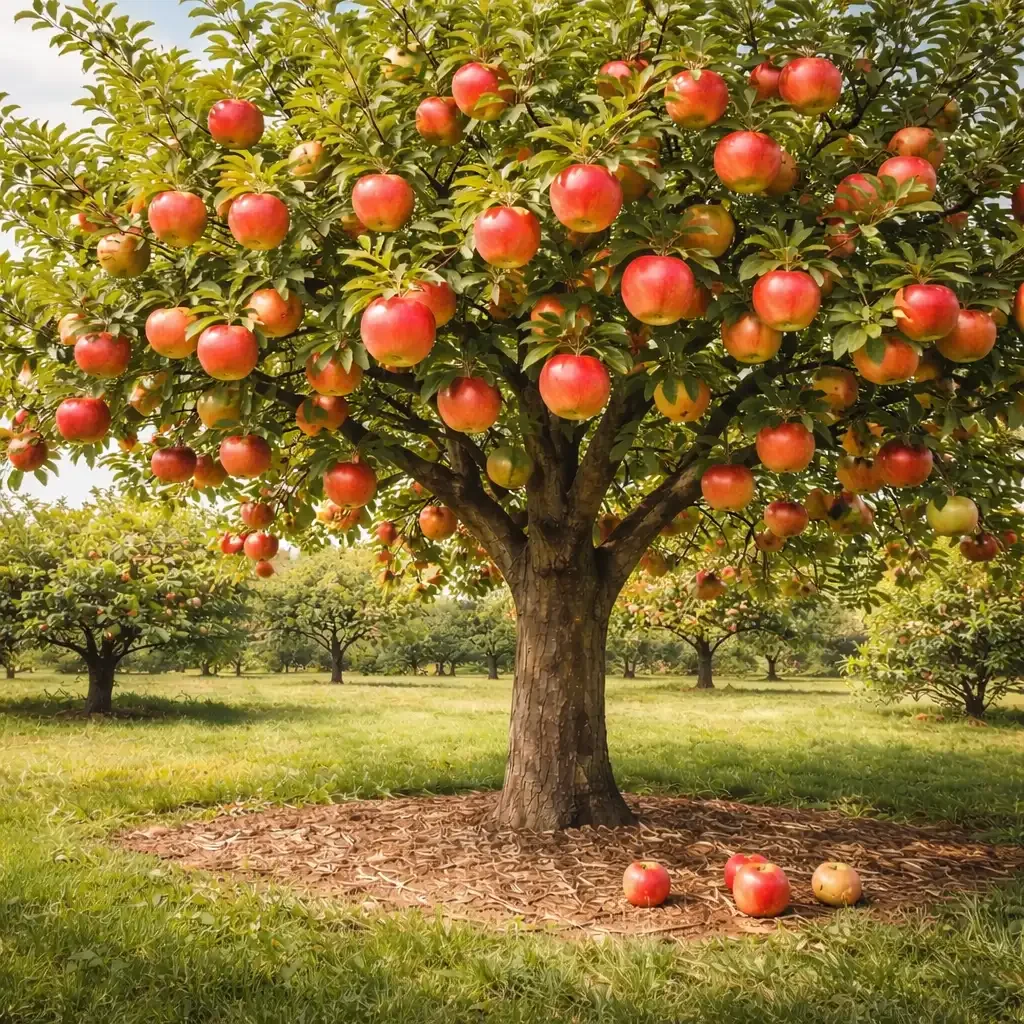
· Standard rootstock: 20-25 feet tall and wide
· Semi-dwarf rootstock (M-106): 12-16 feet tall and wide (most common)
· Dwarf rootstock (M-26): 8-12 feet tall and wide (perfect for small yards)
· Spread: Trees typically reach 14 feet in width at maturity
🍏 Annual Production
· Semi-dwarf tree yield: 2-3 bushels (80-120 apples) per year
· Mature tree yield: 6-12 bushels per year when fully established
· Bearing pattern: Annual (consistent crop every year!)
· Harvest time: Late August through early October (early-season variety)
· Harvest period: Long harvest window lasting through autumn
Growing Requirements
· Climate zones: USDA Zones 4-9 (very adaptable!)
· Chill hours needed: 500 hours below 45°F (moderate requirement)
· Sunlight: Full sun (minimum 6-8 hours daily)
· Soil: Well-drained, loamy soil, pH 6.0-7.0
· Water: 12-15 gallons per week during growing season (May-September)
· Pollination: Requires cross-pollination with another apple variety (Red Delicious, Golden Delicious, Fuji, Granny Smith, Honeycrisp, or crabapple)
· Spacing: 12-16 feet apart for semi-dwarf trees; 15 feet from buildings
· Special advantage: Grows well in both warm and cold climates!
What Does a Gala Apple Look Like?
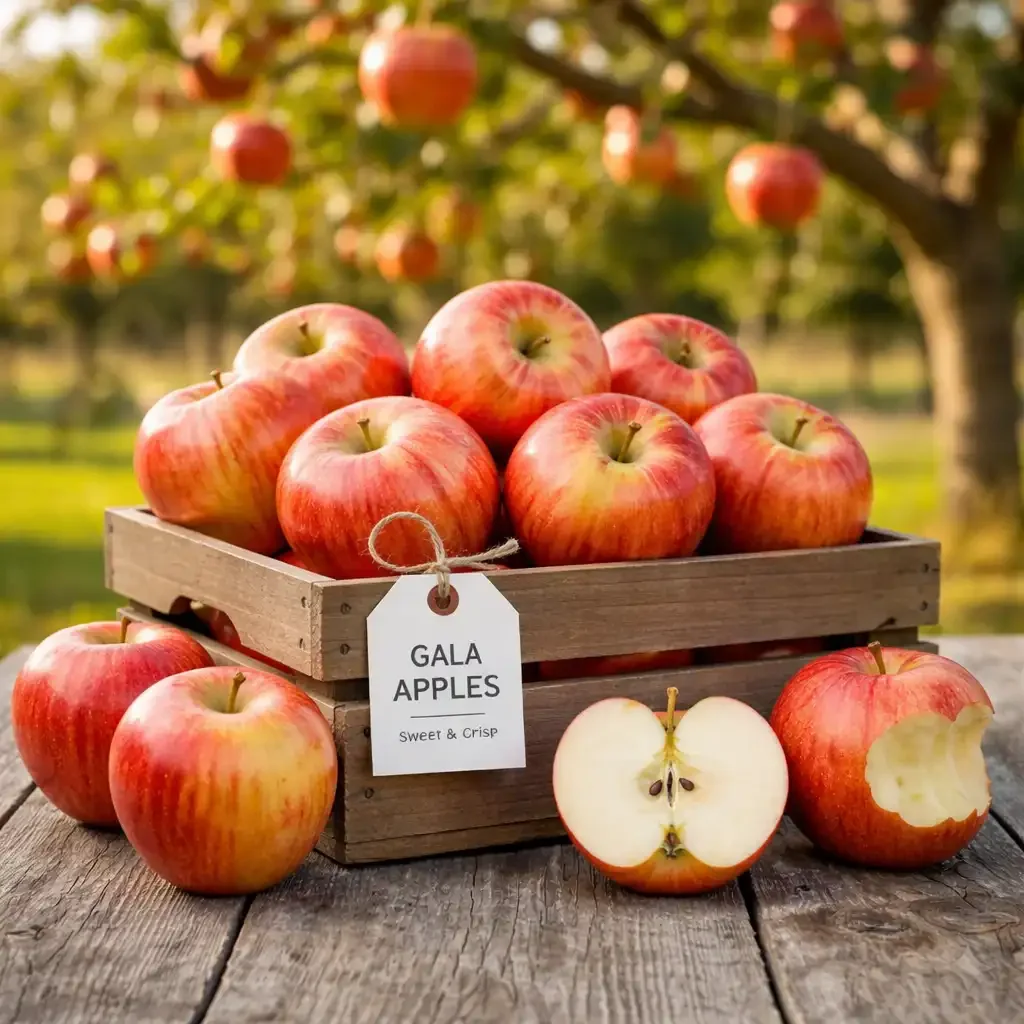
Gala apples have a distinctive, beautiful appearance that makes them easy to identify:
· Small to medium size (2-3 inches in diameter, perfect for kids!)
· Round to slightly oblong, conical shape
· Yellow-orange base color with red-orange vertical striping or mottled blush
· Thin, smooth, glossy skin that's tender and easy to eat
· Creamy white to pale yellow, fine-grained flesh
· Crisp, firm texture with a satisfying crunch
· Color variation: Early-season Galas are lighter (more yellow-orange); late-season Galas develop deeper red color
Pro tip: In stores, a very pale Gala means it's probably from the new season's crop (freshly picked). A very dark red Gala has either been left on the tree to fully mature or stored for several months.
The Flavor Profile: Why People Love Galas
Gala apples strike a perfect balance between sweet and tart, making them one of the most popular eating apples:
Mildly Sweet: Not as intensely sweet as Fuji, but sweeter than Granny Smith. A balanced, approachable sweetness.
Subtle Tartness: Just a hint of acidity that adds complexity and prevents the flavor from being one-dimensional.
Aromatic & Floral: Gala emits a perfumed, floral aroma with nuances of vanilla, pear, honey, and apple blossoms.
Crisp & Juicy: The flesh is crisp, tender, and very juicy. Refreshing with every bite.
Flavor notes: Hints of vanilla, pear, and citrus create a complex, satisfying flavor profile.
Nutritional Benefits
A medium Gala apple (about 180g) contains:
· Calories: 80-95 (low in calories!)
· Dietary Fiber: 3.6-4g (promotes digestive health and regularity)
· Vitamin C: 8-10% of daily value (immune support)
· Potassium: 170mg (heart health and blood pressure regulation)
· Natural Sugars: 16g (provides quick, natural energy)
· Antioxidants: Quercetin, catechins, and polyphenols (cardiovascular and brain health)
· Pectin: Soluble fiber that removes toxins and supports gut health
· Zero fat, cholesterol, and sodium
Gala apples support healthy digestion, immune function, heart health, and may help with weight management thanks to their low calorie and high fiber content. They also have a moderate glycemic index, making them a good choice for blood sugar management when paired with protein or healthy fats.
How to Enjoy Gala Apples
Gala apples are incredibly versatile:
Fresh Eating (Best Use!)
· Perfect for snacking right off the tree-their sweet-tart balance is ideal
· Small to medium size makes them perfect for lunchboxes and kids
· Pair with cheese (cheddar, brie, swiss) and crackers for appetizers
Salads
· Add crisp slices to green salads, Waldorf salad, or coleslaw
· Great in chicken, tuna, or turkey salad for sweet crunch
· Pairs well with nuts (almonds, pecans, walnuts) and pears
Baking
· Best when combined with firmer apples (Granny Smith, Mutsu, Arkansas Black)
· Excellent for pies, tarts, crisps, crumbles, and galettes when mixed with other varieties
· Makes smooth, naturally sweet applesauce
· Great in apple butter, jams, and jellies
Juicing & Cider
· Perfect for fresh apple juice due to sweet, juicy flavor
· Excellent for pressing homemade cider (high sugar content)
· Blend into smoothies for natural sweetness
Cooking
· Pairs with poultry, turkey, and pork
· Works well with caramelized onions and squash
· Can be grilled for desserts or salad toppings
Storage Tips
Gala apples store well, though not quite as long as Fuji:
· Room temperature: Keep for up to 1 week
· Refrigerator: Store 1-3 weeks in crisper drawer (up to 2 months in optimal conditions)
· Best practice: Store in a plastic bag with holes to maintain humidity
· Tip: Keep away from vegetables-apples emit ethylene gas that ripens other produce faster
· Optimal storage: Cool, dark conditions extend freshness
Note: Galas stored for many months can lose some crispness and become slightly mealy. For best quality, eat within 1-2 months of purchase or buy fresh seasonal apples.
Global Popularity & Availability
The Gala apple has achieved remarkable commercial success worldwide:
United States: #1 most popular apple variety in America (overtook Red Delicious!). Widely grown in Washington State, New York, Michigan, Pennsylvania, and Oregon.
New Zealand: Remains a key producer where the variety originated. Exports globally, especially to Asia and Europe.
Year-round availability: Gala apples are grown in both Northern and Southern Hemispheres, making them available all year. Northern Hemisphere harvest (August-February), Southern Hemisphere harvest (March-July).
Global production: One of the most widely cultivated apple varieties worldwide, grown from Minnesota to Texas and from France to Australia.
Shopping tip: Buy Southern Hemisphere Galas (New Zealand, South Africa, Australia) from April-September. Buy Northern Hemisphere Galas (USA, Europe) from September-April for the freshest fruit.
Gala Apple Varieties (Sports)
Gala has produced many "sports" (natural genetic mutations) with improved characteristics:
Royal Gala: The most famous sport, discovered in New Zealand in the late 1960s. Produces redder fruit than the original. Named after Queen Elizabeth II praised it! Nearly replaced the original Gala in New Zealand.
Galaxy: Deep red color, excellent flavor, stores particularly well.
Gala Must: Enhanced red coloring for improved shelf appeal.
Imperial Gala: Brighter, more vibrant red color.
Offspring varieties: Gala has been used as a parent to create other popular varieties including Jazz, Envy, Kanzi, and SweeTango.
Fun Facts About Gala Apples
1. Named after the town where it was developed (actually from "Gala" meaning festive, not a place name!)
2. Royal Gala was named after Queen Elizabeth II praised the apple during her visit to New Zealand
3. Gala overtook Red Delicious as America's #1 apple in the mid-2010s
4. One of the first "new" apple varieties introduced to the U.S. market in decades (1970s)
5. Gala is an annual bearer-it produces apples every year instead of alternating like most varieties
6. A mature Gala tree can produce 6-12 bushels (240-480 apples) annually
7. The color of a Gala apple can tell you its age-pale means fresh, dark red means stored or fully tree-ripened
8. Gala apples contain over 300 volatile organic compounds that create their distinctive aroma
Why Choose Gala?
Whether you're looking for the perfect snacking apple, a variety that produces fruit quickly, or want to plant America's favorite apple in your own backyard, Gala delivers on all fronts. Their perfectly balanced sweet-tart flavor, crisp juicy texture, early production (2-4 years), and annual bearing make them a top choice for both home gardeners and commercial orchards.
A single Gala apple tree will reward you with hundreds of delicious apples every single year for decades. Plant one today, and in just 2-4 years, you'll be enjoying your own homegrown Gala apples. Fresher and tastier than anything you'll find at the store!
---
SimitianNest.com | Your Complete Guide to Tree Families