
The Granny Smith Apple: The Accidental Australian Icon
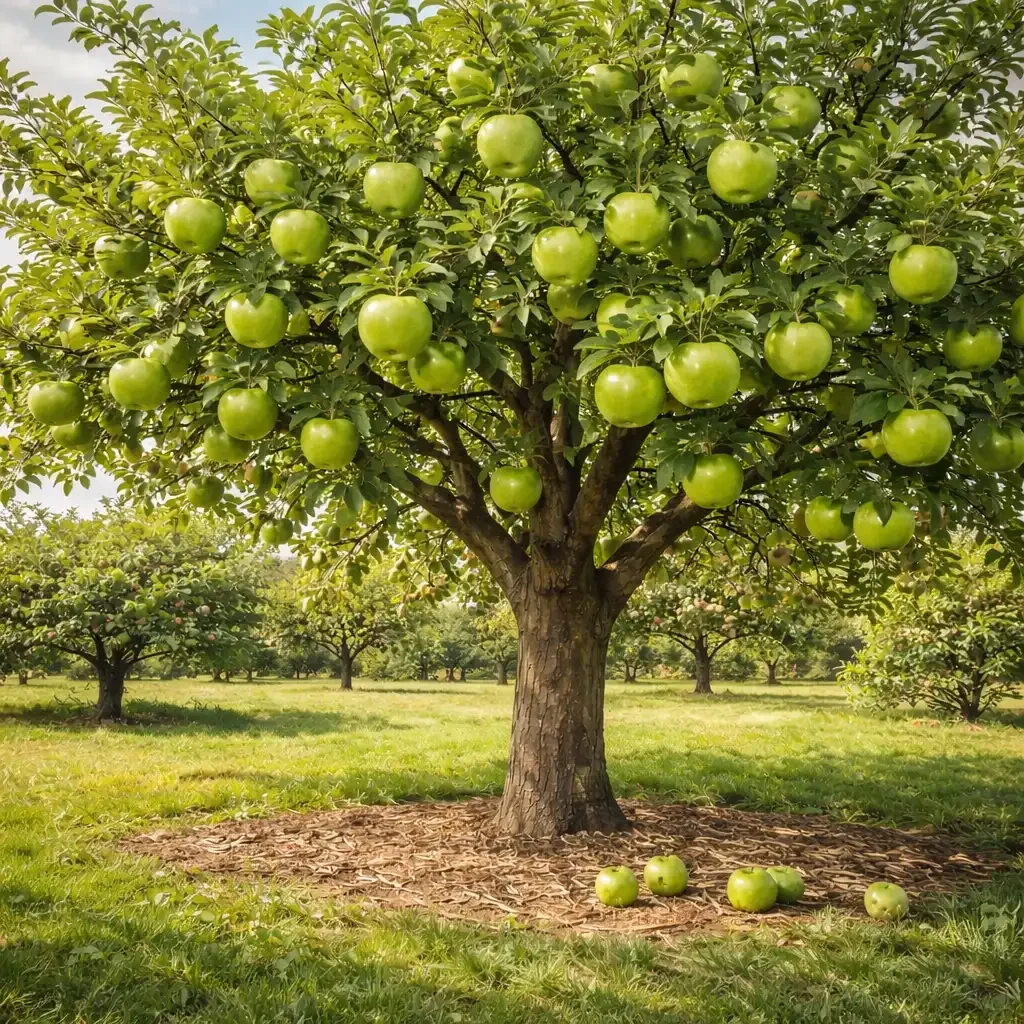
How a compost heap in 1868 gave the world its most famous tart green apple
A Chance Seedling That Changed the Apple World
If you've ever baked an apple pie, you've probably reached for a Granny Smith. That bright green, impossibly tart, perfectly crisp apple that holds its shape when baked and balances sweetness in desserts better than any other variety.
But did you know this iconic apple was discovered by accident in Australia in 1868?
The Granny Smith apple is named after a real person: Maria Ann Smith, a British immigrant to Australia who found a chance seedling growing by a creek on her property. The tree likely sprouted from French crabapple cores she had tossed in a compost heap. She propagated the tree, sold the apples at Sydney's George Street Market, and became locally famous as "Granny" Smith.
Maria Smith died in 1870, just two years after discovering the apple. But her neighbor Edward Gallard continued planting Granny Smith trees, and by 1891, the variety was winning prizes at horticultural shows. By 1975, Granny Smiths made up 40% of Australia's entire apple crop. Today, it's one of the most recognizable apples in the world, celebrated annually at the Granny Smith Festival in Eastwood, Australia.
Growing Timeline: From Planting to Harvest
Thinking about growing your own Granny Smith apple tree? Here's what to expect:
Time to First Fruit
· From grafted nursery tree: 2-4 years (early producer!)
· From dwarf rootstock: 2-3 years (very fast)
· From semi-dwarf rootstock: 3-4 years
· From standard rootstock: 5-8 years
· From seed: 6-10 years (not recommended, won't produce true Granny Smith)
Note: Many nurseries ship 3-year-old trees, meaning you could harvest your first crop within 1 to 2 years of planting!
Tree Growth & Maturity
· Vegetative growth stage: First 1-3 years (establishing roots and structure)
· Full maturity for crop production: 5-7 years
· Growth rate: Medium (steady, reliable growth)
· Growth habit: Vigorous, upright, spreading, open canopy
Tree Lifespan
Expected productive lifespan: 50-80 years
Long-term value: A well-maintained Granny Smith tree can produce apples for multiple generations, making it an excellent investment for home orchards.
Mature Tree Size
· Standard rootstock: 15-20 feet tall, 14-16 feet wide
· Semi-dwarf rootstock: 12-16 feet tall and wide (most common)
· Dwarf rootstock: 8-12 feet tall and wide (perfect for smaller yards)
Annual Production
· Dwarf tree yield: 30-50 lbs per year (about 3/4 to 1 bushel)
· Semi-dwarf tree yield: 1-2 bushels per year (40-80 lbs)
· Standard tree yield: 2-5 bushels per year (80-200 lbs)
· Bearing pattern: Reliable annual producer
· Harvest time: Late September to mid-October (late-season variety)
Growing Requirements
· Climate zones: USDA Zones 5-9 (very versatile!)
· Chill hours needed: 400-500 hours below 45°F
· Heat tolerance: Excellent! Originated in Australia, thrives in warmer climates
· Sunlight: Full sun (6-8 hours daily minimum)
· Soil: Well-drained, loamy soil, slightly acidic, pH 6.0-7.0
· Water: 12-15 gallons per week during growing season (May-September)
· Pollination: Requires cross-pollination (Red Delicious, Liberty, Fuji, Gala, Honeycrisp, or crabapple)
· Spacing: 12-16 feet apart for semi-dwarf; 14-16 feet for standard
· Growing season needed: Longer season required, at least 160 days for proper ripening
What Does a Granny Smith Apple Look Like?
Granny Smith apples are instantly recognizable:
· Color: Bright green skin (can turn yellow when overripe)
· Size: Medium to large (3 to 3.5 inches in diameter)
· Shape: Round, uniform, classic apple shape
· Skin: Smooth, glossy, waxy finish
· Flesh: White to pale cream, very firm, crisp, and dense
· Texture: Exceptionally crisp with a satisfying crunch
Ripeness indicator: Harvest when the background color is no longer dark green. If the apple turns yellow, it's overripe (but still edible and sweeter).
The Flavor Profile: Why Bakers Love Granny Smiths
Granny Smith apples have a distinct flavor profile that sets them apart from all other varieties:
Exceptionally Tart: High acidity (7.7 g/L total acidity) creates that signature mouth-puckering tartness. Less sweet than Gala, Fuji, or Honeycrisp.
Balanced Sweet-Tart: When left on the tree until yellow, Granny Smiths develop a complex sweet flavor while maintaining tartness.
Crisp & Crunchy: Dense, firm flesh with an incredibly satisfying crunch. The texture is unmatched.
Flavor notes: Green, grassy, lemony, and fresh. Described as having "grassy green cut grass" and "lemon" aroma descriptors.
Perfect for baking: The tartness balances added sugar in desserts, and the firm texture holds shape beautifully when cooked. Doesn't turn mushy!
Nutritional Benefits
A medium Granny Smith apple (about 200g) contains:
· Calories: 72-95 (very low in calories!)
· Dietary Fiber: 4-5g (excellent for digestion and satiety)
· Vitamin C: 5-8% of daily value
· Vitamin A: 3% of daily value
· Vitamin K: Trace amounts (supports bone health)
· Potassium: 5-6% of daily value (heart health)
· Natural Sugars: 25g (lower than Fuji or Gala)
· Antioxidants: Highest phenol content of all apple varieties! 83% flavanols, powerful antioxidants
· Quercetin: High levels (cardiovascular protection, mental health, liver and kidney support)
· Pectin: Soluble fiber that removes toxins from the gut
· Zero fat, cholesterol, and sodium
Weight loss favorite: At only 72 calories with high fiber, Granny Smiths are one of the best apples for weight management and healthy snacking.
How to Enjoy Granny Smith Apples
Granny Smiths are the most versatile cooking apple:
Baking (Best Use!)
· Apple pie: The gold standard. Holds shape, balances sweetness perfectly
· Apple crisp, crumble, cobbler: Doesn't turn mushy when baked
· Tarts and galettes: Beautiful presentation, firm texture
· Apple cake and muffins: Adds tartness and texture
· Apple fritters and dumplings: Classic choice
Cooking & Sauces
· Applesauce: Tart, refreshing, needs less added sugar
· Apple butter and preserves
· Savory dishes: Pairs with pork, chicken, cabbage
· Soups and salads: Adds crunch and tartness
Fresh Eating
· Perfect for those who love tart apples
· Excellent with nut butter (balances tartness)
· Great in salads (Waldorf, chicken salad)
· Low-calorie, high-fiber snack for weight management
Beverages
· Apple cider: Adds tartness and complexity
· Fresh juice: Tangy, refreshing
· Smoothies: Balances sweeter fruits
Storage Tips
Granny Smiths have EXCEPTIONAL storage capabilities:
· Room temperature: 1-2 weeks
· Refrigerator: 3-6 months (excellent long-term storage!)
· Cold storage (controlled atmosphere): Up to 1 year without quality loss
· Storage temperature: 32-45°F is ideal
Why they store so well: Granny Smiths produce very low levels of ethylene gas (which causes ripening). This makes them one of the best apples for export and long-distance shipping.
Storage tip: Store in the crisper drawer in a plastic bag with holes. Keep away from vegetables to prevent them from ripening too quickly.
Global Popularity & Cultural Impact
The Granny Smith has achieved worldwide fame:
Australia: By 1975, Granny Smiths comprised 40% of Australia's entire apple crop. Celebrated annually at the Granny Smith Festival in Eastwood (attracts 80,000+ people).
United States: One of the top 15 most popular apple varieties. Didn't arrive in the US until the 1970s but quickly became a staple. Honored on a USPS stamp in 2013 alongside Northern Spy, Baldwin, and Golden Delicious.
United Kingdom: Arrived in the 1930s and became a baking favorite.
The Beatles connection: In 1968, The Beatles used a Granny Smith apple as the logo for Apple Corps Limited and Apple Records. One side of vinyl albums showed the whole apple, the flip side showed a cross-section.
Export success: Approved for Australian export in 1895. Excellent shelf life (up to 9 months in cold storage) made it perfect for international shipping. Massive exports began after WWI.
Disease & Pest Considerations
Granny Smith trees are moderately susceptible to common apple diseases:
· Apple scab: Moderately susceptible
· Fire blight: Moderately susceptible
· Powdery mildew: Moderately susceptible
· Cedar apple rust: Moderately susceptible
· Superficial scald: Can be controlled with diphenylamine treatment or low-oxygen storage
· Bitter pit: Control with calcium sprays during growing season and postharvest calcium dips
Prevention: Regular pruning for airflow, proper spacing, and annual fungicide applications in spring can prevent most issues.
Fun Facts About Granny Smith Apples
1. Named after a real person: Maria Ann Smith (1799-1870), who emigrated from England to Australia in 1838
2. Discovered by accident in 1868 from discarded French crabapple cores in a compost heap
3. Maria Smith only lived 2 years after her discovery, dying in 1870 at age 71
4. The Beatles used a Granny Smith as their Apple Corps logo in 1968
5. Highest antioxidant (phenol) content of all apple varieties
6. Can be stored for up to a year in proper conditions without losing quality
7. The Granny Smith Festival in Eastwood, Australia draws 80,000+ people annually
8. Featured on a US Postal Service stamp in 2013
9. Only apple variety to become synonymous with the word "apple" itself (1960s)
Why Choose Granny Smith?
Whether you love tart apples, want the absolute best baking apple, need a low-calorie snack with high fiber, or want a tree that produces reliably for 50+ years, Granny Smith delivers.
Its exceptional storage life (up to 6 months refrigerated), firm texture that holds up to heat, perfectly balanced tartness, and highest antioxidant content make it the most versatile apple variety you can grow or buy.
A single Granny Smith tree planted today can provide your family with hundreds of pounds of apples every year for generations. Plant one in full sun, give it a pollinator partner, and in just 2 to 4 years, you'll be baking your own homemade apple pies with fruit from your own backyard.
---
SimitianNest.com | Your Complete Guide to Tree Families