
The Persimmon: Divine Fruit of the Gods
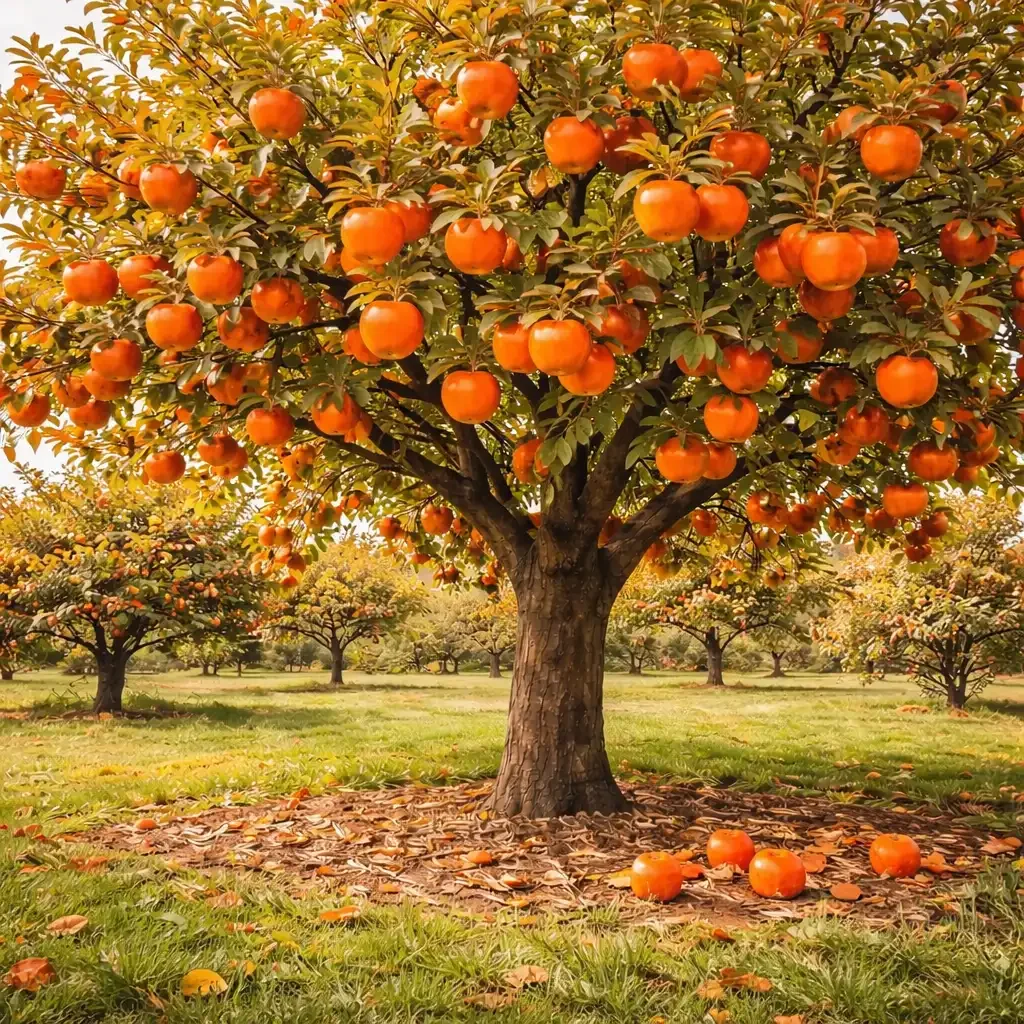
2,000 years of Asian tradition meets backyard orchard
A Tree Cultivated for Millennia
The persimmon tree has been cultivated for over 2,000 years, dating back to the Han Dynasty in China (206 BCE to 220 CE). The genus name Diospyros translates literally to "divine fruit" or "fruit of the gods," and once you taste a perfectly ripe persimmon, you'll understand why.
From China, persimmons spread to Korea and Japan, where they became deeply woven into the cultural fabric. In Japan, the persimmon is considered the national fruit. During the Silk Road era (206 BCE to 1453 CE), persimmons made their way to the Middle East and Europe, valued for both their unique taste and medicinal properties.
Persimmons didn't arrive in California until the mid-1800s, brought by American missionaries and traders. Today, California and Florida account for most US commercial production, though most American orchards remain small scale (70% are less than 1 acre, 90% are less than 5 acres).
There are two main types of persimmons: Asian (Diospyros kaki) and American (Diospyros virginiana). Asian varieties like Fuyu and Hachiya are the most popular worldwide. American persimmons are native to the eastern United States and beloved for their wild, intensely sweet flavor.
Growing Timeline: From Planting to Harvest
Here's what to expect when growing your own persimmon tree:
Time to First Fruit
· Grafted Asian persimmon: 3-6 years (most common)
· Grafted American persimmon: 3-5 years
· Seedling Asian persimmon: 5-7 years for first blooms, then 2 more years for fruit
· Seedling American persimmon: 4-10 years (highly variable)
· Named grafted varieties: May begin fruiting in as little as 3 years after planting
Important: Remove all fruit from trees younger than 3 years (Asian) or 10 years (American seedlings) to direct energy toward root growth instead of fruit production.
Tree Growth & Maturity
· Full bearing maturity: 7-10 years old (peak production years)
· Optimum fruit-bearing age: 25-50 years for American persimmons
· Growth rate: Slow to moderate (American slower than Asian)
· Early years: Focus on establishing strong root system and framework
⏳ Tree Lifespan
Expected productive lifespan: Many decades when well cared for. Persimmon trees are known for longevity.
Long-term value: A single persimmon tree can provide fruit for multiple generations, producing for 50+ years.
📏 Mature Tree Size
· Asian persimmon (Diospyros kaki): 25-30 feet tall, 25-foot spread
· American persimmon (D. virginiana): 30-60 feet tall (some reach 70-80 feet in optimal conditions)
· Grafted named varieties: Typically 10-20 feet tall (90-chromosome types, more manageable)
· Growth pattern: Upright, rounded or conical crown, may be multi-trunked
Annual Production
· Young trees (first bearing years): 50-96 lbs per year
· Peak production (7-10 years old): 330-550 lbs per year!
· Asian persimmons: 1-2 bushels per year
· American persimmons: 2-3 bushels per year
· Named grafted varieties: 90-100 lbs per mature tree
· Fuyu (mature tree): Up to 300 lbs of fruit per year!
· Average yield at age 10: About 1 bushel (15-20 lbs)
Bearing pattern: Persimmons can be biennial or have multi-year bearing cycles. One year you may get a massive crop, the next year little to nothing. Regular watering and protection from environmental stress helps prevent this.
Growing Requirements
· Climate zones: Asian persimmons (Zones 7-11), American persimmons (Zones 5-9, very cold hardy)
· Chill hours: Minimal requirements, adaptable to mild winters
· Sunlight: Full sun (6-8 hours daily), tolerates partial shade but produces less fruit
· Soil: Widely adaptable! Grows in sandy, loamy, or clay soils as long as drainage is good
· Soil pH: Slightly acidic to neutral, 6.0-6.5 optimal
· Water: Moderate watering, especially during fruit development. Can tolerate brief droughts once established
· Drainage: Critical! Will not tolerate waterlogged soil. American persimmons tolerate some flooding.
· Pollination: Most Asian varieties are self-fertile (but produce more with cross-pollination). American persimmons are dioecious (separate male and female trees needed)
· Spacing: 20-35 feet apart depending on variety
· Fertilizing: Very sensitive when young! Do NOT fertilize at planting. After 2-3 years, use balanced fertilizer if needed.
What Does a Persimmon Tree Look Like?
Persimmon trees are beautiful ornamentals:
Leaves: Broad, stiff, ovate or obovate leaves (3 to 7 inches long). Shiny deep green on top, pubescent (fuzzy) beneath. Turn brilliant orange, red, or yellow in fall!
Flowers: Yellowish-white, small (0.75 inches), fragrant. Bloom in late May to early June. Male flowers have 16-24 stamens and appear in clusters of three. Female flowers are cream-colored and appear singly.
Bark: Thick, dark, beautifully grained. Distinctive square scales resembling alligator skin (especially on American persimmons). The wood is hard and has been used for golf clubs and specialized furniture.
Fruit appearance: Color ranges from light yellow-orange to deep orange-red. Shape varies by variety: squat and tomato-like (Fuyu), elongated and acorn-shaped (Hachiya), or heart-shaped. Size ranges from 1 to 5 inches in diameter.
Understanding Persimmon Types: Astringent vs Non-Astringent
This is THE most important thing to know about persimmons:
Astringent Persimmons (MUST be jelly-soft to eat)
Examples: Hachiya (most common), Saijo, Tanenashi, American persimmons
Tannin content: High in soluble tannins when unripe. Eating an unripe astringent persimmon is like "swishing black tea with a dash of sawdust." Your mouth will pucker intensely!
When to eat: Wait until the fruit feels like a water balloon, almost collapsing under its own weight. The flesh becomes translucent, custardy, jelly-like.
Flavor when ripe: Intensely sweet, honeyed, hints of tropical fruits, apricot, vanilla, date. Ultra-rich!
Best uses: Scoop with a spoon like pudding, blend into smoothies, baking (cookies, cakes, breads), jams, sauces
Non-Astringent Persimmons (Eat firm like an apple!)
Examples: Fuyu (most popular, 80% of world market!), Jiro
Tannin content: Low tannins, can be eaten while still firm and crisp
When to eat: Eat them firm and crunchy, or wait for them to soften for sweeter flavor. Both stages are delicious!
Flavor: Sweet, honey-like, gently spicy crunch when firm. Flavor improves and sweetens as it softens.
Best uses: Fresh slices (skin and all!), salads, roasted, dried, smoothies, baking
Nutritional Powerhouse
One medium persimmon (about 168g or 1 cup diced) contains:
· Calories: 70-120 (low calorie!)
· Carbohydrates: 18-31g (natural sugars: glucose, fructose, sucrose)
· Dietary Fiber: 3.6-6g (excellent for gut health!)
· Protein: 0.6-1g
· Fat: Less than 0.5g (virtually fat-free!)
· Vitamin A: 55% of daily value! (supports vision, skin, immune health)
· Vitamin C: 20-80% of daily value (American persimmons have 73% DV!)
· Vitamin B9 (Folate): 11% of daily value
· Vitamin B6: Good source
· Potassium: 8% of daily value (heart health, blood pressure)
· Manganese: 15% of daily value (powerful antioxidant enzyme cofactor)
· Copper: 12% of daily value
· Iron: American persimmons have 2.5mg (31% DV for men, 14% for women!)
Antioxidant superstars: Beta-carotene, lycopene, lutein, zeaxanthin, cryptoxanthin, catechins, gallocatechin, betulinic acid (anti-tumor compound!), flavonoid polyphenols
Special benefits: Catechins have anti-infective, anti-inflammatory, and anti-hemorrhagic properties. The deep orange color signals high carotenoid content, protecting your eyes from blue light and age-related macular degeneration.
Health Benefits
· Supports immune health: High vitamin C boosts resistance to infections
· Promotes digestive health: 6g of fiber per serving feeds gut microbiome, regulates bowel movements
· Protects vision: Vitamin A, lutein, zeaxanthin protect eyes from glaucoma and macular degeneration
· Heart healthy: Flavonoid antioxidants lower blood pressure, reduce inflammation, lower LDL cholesterol
· Anti-inflammatory: Powerful antioxidants fight chronic inflammation throughout the body
· Blood sugar regulation: Fiber slows sugar absorption, helps avoid insulin spikes
· Weight management: Low calorie (70 per fruit), high fiber promotes satiety
· Skin health: Vitamin A supports glowing, healthy skin
Traditional medicine: For centuries in Asia, persimmons have been used to soothe sore throats, support digestion, quell coughs, and cool inflammation. Modern studies now support many of these traditional uses.
How to Enjoy Persimmons
Fresh Eating
· Fuyu: Slice and eat like an apple, skin and all. Crisp, sweet, refreshing!
· Hachiya: Wait until jelly-soft, then scoop out the custardy flesh with a spoon
· Add to salads for color, sweetness, and nutrition
· Pair with cheese, nuts, yogurt
Baking & Cooking
· Persimmon bread, muffins, cookies, cakes (naturally sweet and moist!)
· Spice cakes and puddings (classic uses for Hachiya)
· Roasted persimmons for sweet and savory side dishes
· Jams, sauces, chutneys
· Curries and savory dishes
Beverages
· Smoothies and smoothie bowls
· Fresh juice
· Traditional Korean spicy punch (sujeonggwa)
· Persimmon beer (American tradition)
· Persimmon leaf tea (traditional Asian remedy)
Preserving
· Dried persimmons: Hoshigaki (Japanese), Shi-bing (Chinese), Gotgam (Korean)
· Dehydrator for chewy snacks (concentrated minerals and fiber)
· Freezing (shortcut to ripen Hachiya, though flavor may differ)
How to Ripen Persimmons
For astringent varieties (Hachiya, Saijo, American):
· Store leaf-side down at room temperature. This can take days to weeks!
· Speed ripening: Place in sealed container with apple or banana (ethylene gas ripens in 2-3 days)
· Freezing method: Freeze unripe fruit, then thaw completely. Ready when jelly-soft.
· Traditional method: Wrap in paper to increase ethylene concentration
· Ready to eat: When fruit is deep orange, soft, almost collapsing, feels like a water balloon
For non-astringent varieties (Fuyu, Jiro):
· Eat them firm right away OR let soften at room temperature for sweeter flavor
· Store in refrigerator to maintain crisp consistency
Storage Tips
· Ripe Hachiya: Store leaf-side down at room temperature until ready to eat
· Fuyu: Refrigerate to maintain crispness, lasts about 1 week
· Harvest timing: Pick when hard and fully colored to keep away birds and wildlife
· Handle carefully: Fruit bruises easily, especially when soft. Use shallow trays.
· Harvest season: Late August through December depending on variety
· Fruit hangs on tree: Often persimmons hang after leaf drop, finishing ripening in late fall to winter
Popular Varieties
Asian Persimmons (Diospyros kaki)
Fuyu (non-astringent): Squat, tomato-shaped. Most widely planted cultivar in the world (80% of market). Crimson red with blue blush when ripe. Self-fertile. Eat firm or soft.
Hachiya (astringent): Acorn-shaped, heart-shaped. Must be jelly-soft before eating. Favorite for baking and traditional puddings.
Jiro (non-astringent): Similar to Fuyu, squat shape. Sweet, crisp.
Saijo (astringent): Smaller, intensely sweet when ripe.
Chocolate/Cinnamon Persimmons: Pollination-variant types. Brown flesh when pollinated. Tsurunoko (chocolate), Maru (cinnamon), Hyakume (brown sugar). Highly sought after at specialty markets!
American Persimmons (Diospyros virginiana)
Wild American persimmon: Native to eastern US. Smaller fruit (1 to 2 inches), astringent. Richly flavored. Better after first frost.
Named cultivars: Meador (self-fruitful), Full Draw, Deer Magnet, Early Drop, Great Wall, Matsumoto
Fun Facts About Persimmons
1. The persimmon is Japan's national fruit
2. The genus name Diospyros means "divine fruit" or "fruit of the gods" in Greek
3. Cultivated for over 2,000 years, making it one of the oldest cultivated plants in the world
4. American persimmon wood is hard, dark, beautifully grained. It was used to make golf clubs in the early 1900s.
5. The bark has distinctive alligator-skin pattern with thick square scales
6. Roasted and ground persimmon seeds were a coffee substitute during the Civil War
7. In Buddhism, persimmons symbolize transformation. In China, they're an auspicious gift to newlyweds celebrating eternal love.
8. Taiwan persimmon production peaked at 5,300 hectares but declined due to typhoons and climate change
9. California produces 10,000 tons of Fuyu annually
Why Choose Persimmons?
Whether you want a beautiful ornamental tree with stunning fall foliage, a reliable fruit producer that lasts for generations, or one of the most nutrient-dense fruits available (70 calories, 6g fiber, 55% vitamin A!), persimmons deliver.
Asian persimmons like Fuyu are incredibly versatile, eaten fresh like apples with no wait time. Hachiya persimmons reward your patience with an intensely sweet, honey-like pudding that makes the best baked goods you've ever tasted. American persimmons are cold-hardy natives perfect for homesteaders in zones 5-9.
A single persimmon tree can produce 300+ pounds of fruit per year at peak maturity (7 to 10 years old) and will continue producing for 50+ years. Few fruit trees offer this combination of beauty, nutrition, longevity, and sheer abundance.
Plant one in full sun with well-drained soil, and in just 3 to 6 years, you'll be harvesting divine fruit that has been treasured for 2,000 years.
---
SimitianNest.com | Your Complete Guide to Tree Families