
The Honeycrisp Apple Tree
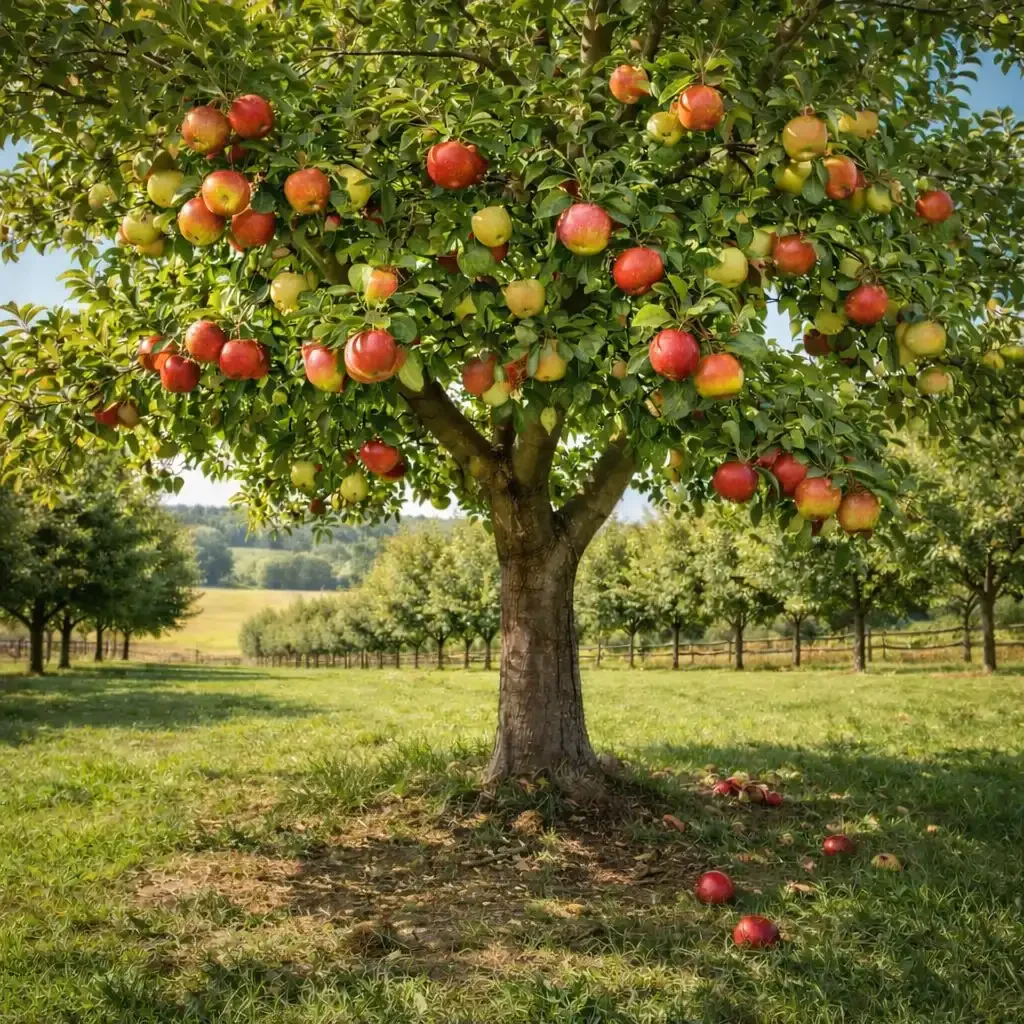
Minnesota's Sweet Revolution in Your Backyard
In 1982, a young horticulturist named David Bedford made a decision that would change the apple industry forever. He rescued an apple tree designated as MN 1711 from the University of Minnesota's discard pile, giving it one more chance to prove itself. That tree became the Honeycrisp, an apple so revolutionary that it would be recognized alongside Google and the nicotine patch as one of the 25 innovations that changed the world.
The Honeycrisp wasn't bred for shelf life, shipping ease, or even appearance. It was bred for one thing: taste. With its explosively crisp texture, honey-sweet flavor balanced by a refreshing tartness, and cells so large they burst rather than squish when you bite, the Honeycrisp transformed consumer expectations and revived Minnesota's apple industry. Today, it's the official state fruit of Minnesota and one of the top-selling apples in America.
Growing Timeline: Your Journey to Harvest
Time to First Fruit
Dwarf trees: 2-3 years after planting
Semi-dwarf trees: 3-5 years after planting
Standard trees: 5-8 years after planting
Tree Lifespan
Standard-size Honeycrisp apple trees: 35-45 years with proper care. Dwarf varieties from nurseries: 20-25 years.
Time to Maturity
Dwarf and mini-dwarf trees reach full size in 4-5 years. Semi-dwarf varieties mature around 5-7 years. Standard trees achieve full height after about 8 years. Honeycrisp trees mature in about 6 years and begin steady fruit production.
Mature Size
Mini-dwarf: 6-8 feet tall and wide
Dwarf: 8-11 feet tall and wide
Semi-dwarf: 12-18 feet tall and wide
Standard: 20+ feet tall
Annual Production
Dwarf and semi-dwarf trees: 1-2 bushels per year once established. Standard-size trees: 4-5 bushels of apples per year. Honeycrisp is known as a heavy producer once established.
Growing Requirements
USDA Hardiness Zones: 3-8 (performs best in zones 3-4). Honeycrisp thrives in cold climates and needs cold winters to develop its signature crisp texture and honey-sweet flavor. Cold hardy down to -30 degrees F to -35 degrees F.
Sunlight: Full sun required - at least 6-8 hours of direct sunlight daily. Morning sun is especially important to dry dew from leaves, which helps reduce disease spread and kill fungi and bacteria.
Soil: Well-drained loam soil (mostly sand and silt with a little clay). pH 6.0-7.0 (slightly acidic to neutral). Cannot tolerate heavy clay soil or waterlogged areas. Avoid planting in low-lying areas where frost can gather.
Water: Regular watering to keep roots moist. During warm months (May-October), water daily, allowing water to penetrate 7 inches down into the root system. Provide about 2 inches of water per week. During dormancy, only provide enough water to keep soil slightly moistened.
Pollination: NOT self-pollinating. Requires another apple variety planted 6-50 feet away. Compatible pollinators include Gala, Fuji, Granny Smith, Golden Delicious, McIntosh, Red Delicious, Cortland, and Pink Lady. Trees must be mid-season bloomers for successful pollination.
Fertilizer: Apply annually in spring. Use nitrogen-rich fertilizer like 10-10-10 grade or 5-10-10 formula. Spread fertilizer a few inches away from the tree's trunk. Begin fertilizing in the second or third year of growth.
Appearance
The Honeycrisp apple tree is a stunning addition to any landscape. In spring, it bursts into bloom with clouds of fragrant white blossoms tinged with just a hint of pink, attracting honeybees and adding ornamental beauty. The tree's foliage is lush green throughout the growing season.
The apples themselves are medium to large in size (typically 2.5-3 inches in diameter, though some can exceed 3 inches). They feature a beautiful red-blushed skin with yellow and orange background colors. The striping and color intensity depend on sunlight exposure and cool nights - some years produce deeper red, while others show more yellow or orange tones.
The flesh is crisp, white (sometimes with a beautiful pink cast in good light), and remarkably juicy. You can see the small brown spots called lenticels on the skin - these allow the apple to breathe. The fruit has thin, delicate skin that can sunburn easily, making it somewhat challenging to grow but worth every effort.
Flavor & Characteristics
The Honeycrisp delivers an unparalleled eating experience that revolutionized consumer expectations. David Bedford, the apple breeder who saved it from extinction, famously described biting into a Honeycrisp as "a piece of apple shrapnel in your mouth."
The taste is honey-sweet with a refreshing touch of tartness - not as tart as Granny Smith, but brighter and more complex than mild sweet varieties like Gala. The signature characteristic is the explosive crispness. Honeycrisp cells are larger than most apple varieties, and when you bite, those cells burst instead of squishing, creating that loud crunch and juice explosion.
The flavor is aromatic and clean, with a balanced sweet-tart finish. Unlike many apples whose flavor fades after harvest, the Honeycrisp maintains its characteristic taste for months when properly stored. The texture remains crisp and juicy for up to 7 months in refrigerated storage (32-45 degrees F).
Nutritional Benefits
A medium Honeycrisp apple (about 200 grams) contains approximately 80-95 calories, making it a perfect low-calorie snack. It provides about 22 grams of carbohydrates, 4 grams of dietary fiber (11% of daily value), and 1 gram of protein.
Honeycrisp apples are virtually fat-free and cholesterol-free. They're rich in vitamin C, providing approximately 8% of the daily recommended intake (4-8mg per 100g), which supports immune health and skin repair. They also contain small amounts of potassium (135mg, 2% DV), calcium (8mg), and iron (0.15mg).
The dietary fiber promotes digestive health and regularity while creating a feeling of fullness. Honeycrisp apples also contain antioxidants such as quercetin, which may reduce inflammation and support overall cell health. The natural sugars (about 13 grams per apple) provide an instant energy boost, making them excellent pre-workout snacks.
Uses
Fresh eating: The Honeycrisp was specifically bred for superior fresh-eating qualities. Its explosive crunch and balanced sweet-tart flavor make it perfect for snacking straight from the tree. Many consider it the ultimate fresh apple.
Salads: The firm texture holds up beautifully in salads, adding crisp sweetness without turning mushy. Slice it into green salads, waldorf salads, or fruit salads.
Baking: While bred for fresh eating, Honeycrisp apples add delightful crisp sweetness to pies, tarts, crisps, and cobblers. Their juiciness and flavor enhance baked goods.
Applesauce: Makes aromatic, naturally sweet applesauce with minimal added sugar needed.
Cider: Excellent for making homemade apple cider, providing crisp sweetness and bright flavor.
Landscape value: The tree offers ornamental beauty with spring blossoms and attractive form, making it perfect for edible landscaping and home orchards.
Storage & Care Tips
Harvesting: Honeycrisp apples ripen in early to mid-September (can extend into October depending on climate). Harvest when the background color is no longer green and the flesh is firm. The apple should part readily from the branch when cupped in your palm and given a slight twist. Don't harvest too early - flavor doesn't develop after picking.
Storage: Honeycrisp apples have exceptional storage life. Store at 32-45 degrees F in refrigeration for up to 6-7 months while maintaining their crisp texture and flavor. Handle carefully due to thin, delicate skins that bruise easily.
Pruning: Prune in late winter when the tree is dormant. Remove dead, damaged, diseased, crossing, or underperforming branches. Shape the tree to maintain a strong structure capable of holding heavy fruits. Remove lower hanging branches. Thin excess fruits on lower stems to reduce branch breakage.
Fruit Thinning: After fruit-set, thin fruits to leave one every 4-8 inches. Remove smallest, damaged, or diseased fruits. This encourages larger fruits and better flavor. Fruits should never touch each other.
Disease Management: Honeycrisp is resistant to apple scab and mature trees are unbothered by fire blight (though young trees are susceptible). Watch for powdery mildew, flyspeck, and sooty blotch. Apply fungicide in early spring as preventative. Prune for good airflow through the canopy.
Pest Control: Common pests include codling moths, leafrollers (cosmetic damage), and aphids (attack new growth and buds). Monitor regularly and treat as needed.
Special Considerations: Apply mulch around the base (3-4 inches thick) to retain moisture, but don't pile against the trunk. Protect from deer - they love apple trees. Use physical barriers like fencing or plant crabapples elsewhere as decoys. Use trunk protectors against rabbit damage.
Popularity & Regional Success
The Honeycrisp has achieved phenomenal success since its 1991 release. By 2025, it accounts for 12% of the American apple market, ranking as the third most popular variety behind Gala (16%) and Red Delicious (13%). It overtook Golden Delicious as the fifth most grown variety in 2018.
Production grew by a factor of five between the early 2010s and mid-2020s. The variety is now one of the top income generators for American apple growers, with the third-most bushels produced nationally. Many consumers know the Honeycrisp by name - a rarity in the apple industry.
Regional strongholds include Minnesota (where it's the official state fruit and most cultivated variety), Michigan (second-largest apple state), New York, Wisconsin, and the broader Upper Midwest and New England. The variety performs best in regions with cool climates and cold winters.
In Canada, Honeycrisp became one of the three most popular varieties by the late 2010s, particularly reviving apple farms in Nova Scotia. Top Canadian producers are Ontario, Nova Scotia, British Columbia, and Quebec. Some Nova Scotia farmers successfully export Honeycrisp to the United States.
The Honeycrisp commands premium pricing - at least twice the per-pound price of Gala, Red Delicious, Fuji, and Granny Smith. Despite higher costs (due to growing challenges and only 55-60% of apples making it to market), consumer demand continues to exceed supply.
Honeycrisp Offspring & Related Varieties
The Honeycrisp's success sparked a breeding revolution. By the 2020s, about half of new apple varieties in the US and Canada are Honeycrisp progeny. Notable offspring include:
SweeTango (Honeycrisp x Zestar): University of Minnesota variety with intense sweetness and crunch.
First Kiss/Rave (Honeycrisp x MonArk): Early-season variety from University of Minnesota.
Cosmic Crisp (Honeycrisp x Enterprise): Washington State University's blockbuster variety.
EverCrisp (Honeycrisp x Fuji): Midwest Apple Improvement Association variety with extended crispness.
SnapDragon (Honeycrisp x Gala): Cornell University variety with monster crunch.
SugarBee (Honeycrisp x unknown): Chance seedling with exceptional sweetness.
These varieties draw crowds at pick-your-own orchards, with many consumers specifically seeking Honeycrisp genetics.
Fun Facts
1. The Honeycrisp was almost discarded! The original tree (MN 1711) was badly damaged in the harsh winter of 1976-77 and marked for termination. Horticulturist David Bedford rescued it in 1982, believing it deserved another chance. That decision changed apple history forever.
2. It's one in 10,000. That's how many apple seedlings make it through the University of Minnesota's rigorous testing process to become a named, commercial variety. The Honeycrisp beat incredible odds.
3. It took 31 years to develop. The first crosses were made in 1960, it was patented in 1988, released to growers in 1991, and didn't reach grocery stores until 1997. Patience truly paid off!
4. The University of Minnesota earned over $16.5 million in royalties from the Honeycrisp by 2019, making it the university's third-most-profitable invention after an anti-HIV drug and a gene-editing technique for cancer treatment.
5. It was named by just two apple breeders in their office - a converted farmhouse in Victoria, Minnesota. Unlike most modern apples (named by marketing committees and focus groups), Honeycrisp got its perfect name organically.
6. The explosive crunch comes from larger cells than most apples. When you bite, these cells rupture and burst instead of cleaving along cell walls, creating that famous "apple shrapnel" sensation and incredible juiciness.
7. Fourth-graders made it Minnesota's state fruit! In 2006, a class from Andersen Elementary School in Bayport ran a successful letter-writing campaign to designate the Honeycrisp as Minnesota's official state fruit.
8. It's recognized as a world-changing innovation. In 2006, AUTM (Association of University Technology Managers) recognized the Honeycrisp as one of 25 innovations that changed the world - alongside Google and the nicotine patch. The Honeycrisp revolutionized consumer expectations and the entire apple industry.
Why Choose a Honeycrisp Apple Tree
The Honeycrisp apple tree represents more than just fruit production - it's a piece of horticultural history and a testament to what happens when flavor takes precedence over convenience. This is the apple that changed everything, raising the bar for texture, taste, and consumer expectations worldwide.
Yes, Honeycrisp trees are more challenging to grow than some varieties. They demand attention, proper care, and patience. But the reward is extraordinary: apples with explosive crispness, honey-sweet flavor balanced by refreshing tartness, and a crunch so satisfying it's been described as "apple shrapnel in your mouth." No store-bought Honeycrisp can compare to one picked fresh from your own tree at peak ripeness.
For cold-climate gardeners in zones 3-8, especially in the Upper Midwest and New England, the Honeycrisp is perfectly suited to your conditions. It thrives where others struggle, developing its signature texture and flavor in cool autumn nights. With multiple rootstock options available - from compact 6-foot mini-dwarfs perfect for small yards to majestic 20-foot standards - there's a Honeycrisp for every space.
Plant a Honeycrisp apple tree, and you're not just growing fruit - you're cultivating a legacy. You're joining a revolution that proved flavor matters most, and you're ensuring that for decades to come, you'll bite into apples that changed the world.
___________________________________
SimitianNest.com | Your Complete Guide to Tree Families