
The Red Delicious Apple Tree
America's Iconic Apple Born from Iowa Persistence
In the 1870s, a stubborn seedling changed American apple history forever. Iowa farmer Jesse Hiatt discovered a rogue apple tree sprouting between the orderly rows of his Yellow Bellflower orchard near Peru, Iowa. Not one to tolerate disruption in his neat rows, the determined Quaker farmer chopped it down. The tree grew back. He chopped it down again. It grew back a second time. Finally, in a moment of exasperation mixed with admiration, Hiatt told the persistent sprout: "If thee must grow, thee may."
That decision to let the tree live would create the Red Delicious, an apple so distinctive with its elongated shape, five-pointed bottom, and deep red color that it would become America's most recognizable fruit. From 1968 to 2018, the Red Delicious reigned as the most produced apple variety in the United States. When Jesse Hiatt entered his "Hawkeye" apple in the 1894 competition and Clarence M. Stark took his first bite, the nursery president exclaimed, "My, that's delicious!" And with those three words, an American icon was born.
Growing Timeline: Your Journey to Harvest
Time to First Fruit
Dwarf trees: 3-4 years after planting
Semi-dwarf trees: 3-4 years after planting
Standard trees: 5-8 years after planting
Tree Lifespan
Standard-size Red Delicious apple trees: 30-50 years with proper care. Dwarf and semi-dwarf varieties: 20-30 years. The original mother tree on Jesse Hiatt's farm stood for decades until the devastating Armistice Day Blizzard of 1940.
Time to Maturity
Dwarf trees reach full size in 4-6 years. Semi-dwarf varieties mature around 6-8 years. Standard trees achieve full height after 8-10 years. Red Delicious is known as a fast grower, adding more than 24 inches per year under optimal conditions.
Mature Size
Dwarf: 8-10 feet tall and wide
Semi-dwarf: 12-15 feet tall and wide
Standard: 20-25 feet tall and wide
Annual Production
Dwarf and semi-dwarf trees: 1-2 bushels per year once established. Standard-size trees: 4-5 bushels of apples per year. Red Delicious is known for reliable, consistent production year after year.
Growing Requirements
USDA Hardiness Zones: 4-8 (some sources say 5-8). Red Delicious is adaptable to a broad range of climates and was originally bred in Iowa's challenging conditions. The tree is notably hardy, having withstood severe droughts and cold that killed three-fifths of Jesse Hiatt's orchard.
Sunlight: Full sun required - at least 6-8 hours of direct sunlight daily. Avoid planting near taller trees or structures that would shade the tree for even a few hours each day. Full sun and air movement lead to a healthy, productive tree.
Soil: Well-drained soil is essential. Average to loamy soil types work best, but the tree responds to enriched soil with better production. Slightly acidic soil pH 5.0-6.8 (most apples prefer 6.0-7.0). The tree is adaptable to various soil types but cannot tolerate waterlogged conditions. North or east-facing exposure is best.
Water: Regular watering is crucial - Red Delicious does not tolerate drought. Keep soil moist but not waterlogged. Water deeply once weekly in spring and summer during the first year, then only during dry spells after establishment. The tree is susceptible to drought stress, so maintain consistent moisture.
Pollination: NOT self-pollinating. Requires cross-pollination with another apple variety. Red Delicious is a mid-season bloomer (late April to early May). Excellent pollinators include Golden Delicious, Gala, Fuji, Granny Smith, Winesap, McIntosh, and Jonathan. Plant pollinators 6-50 feet away. Red Delicious itself is also an excellent pollinator for other varieties.
Fertilizer: Apply apple-specific fertilizer in early spring before new growth appears. Follow label instructions, typically fertilizing from April through August. Apply fertilizer at the drip line and increase diameter as the tree grows. Avoid over-fertilization, which can cause excessive vegetative growth at the expense of fruit.
Chill Hours: Requires 800-1,000 chill hours for optimal fruiting.
Appearance
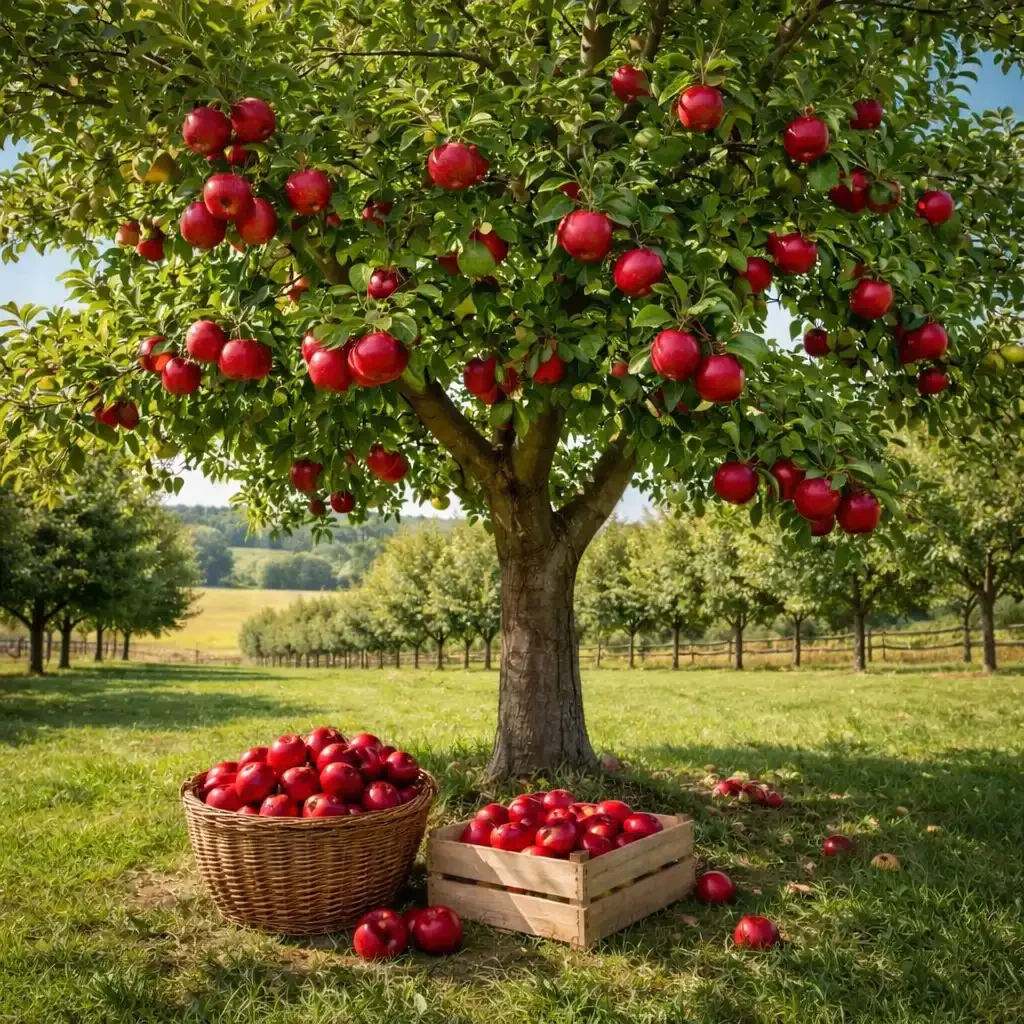
The Red Delicious apple tree is beautiful in every season. In mid-spring (late April to early May), the tree bursts into bloom with fragrant white flowers touched with pale pink, attracting honeybees, hummingbirds, and butterflies. The foliage is dark green and lush throughout the growing season, turning golden in autumn before dropping.
The Red Delicious apple is instantly recognizable and uniquely shaped. Medium to large in size (6-8 centimeters in diameter), the fruit has an elongated, conical shape with broad, flat shoulders that taper to a distinctive five-pointed bottom - a characteristic never before seen in apples when Jesse Hiatt first discovered it. The original apples were red-and-gold striped with a strawberry-colored appearance.
Modern Red Delicious apples display deep, brilliant crimson-red color, often nearly solid red with waxy, smooth skin. The flesh inside is pure white, crisp, and juicy. The skin has small white lenticels (breathing pores) scattered across the surface. The shape is heart-shaped when viewed from certain angles, making it one of the most visually appealing apples available.
Flavor & Characteristics
The original Red Delicious discovered by Jesse Hiatt was praised for its wonderful, superior flavor - so delicious that Clarence M. Stark couldn't contain his excitement upon tasting it. Hiatt described it as having "a peculiar quality which cannot be surpassed or described" with "a delicious fragrance."
The flavor is sweet and mildly tart, making it excellent for fresh eating. The texture is firm, crisp, and juicy with a tender, smooth flesh. Red Delicious has a mild sweetness that appeals to children and adults alike, with just enough complexity to remain interesting.
One of the variety's greatest strengths is its exceptional storage life and durability. Red Delicious originally became popular not just for visual appeal but also for its ability to withstand storage and transportation, making it perfect for commercial distribution. Apples keep well for about six months at temperatures between 32 and 45 degrees F.
Note: Over decades of commercial production, some growers selected for longer storage and cosmetic appeal rather than flavor, which affected some modern strains. Home-grown Red Delicious, harvested at peak ripeness, often tastes significantly better than store-bought varieties.
Nutritional Benefits
A medium Red Delicious apple (about 182 grams) contains approximately 90-95 calories, making it a perfect low-calorie snack. It provides about 25 grams of carbohydrates, 4-5 grams of dietary fiber (14-20% of daily value), and minimal protein.
Red Delicious apples are virtually fat-free (0g total fat) and cholesterol-free. They're rich in vitamin C, providing approximately 20% of the daily recommended intake, which supports immune health and skin repair. They also contain vitamin A (2% DV), potassium (190mg, 4% DV), calcium (2% DV), and iron (0.6mg, 3% DV).
The dietary fiber promotes digestive health, regularity, and helps create a feeling of fullness. Red Delicious apples contain powerful antioxidants, particularly in the red skin. The skin is rich in anthocyanins, compounds with strong antioxidant properties that give the apple its distinctive red color.
Additional beneficial compounds include quercetin (anti-inflammatory, antiviral properties), catechin (supports mitochondrial health), and various polyphenols. The natural sugars (about 17-19 grams per apple) provide quick energy. Apples have a low to moderate glycemic index (42-44), making them suitable for most dietary plans.
Uses
Fresh eating: Red Delicious excels as a fresh eating apple. The mild, sweet flavor and crisp texture make it perfect for snacking. It's especially popular with children due to its sweetness and appealing appearance.
Salads: The firm texture and sweet flavor make Red Delicious excellent for salads. The apples hold their shape well and don't turn mushy. The attractive red skin adds visual appeal to green salads and fruit salads.
Baking: Good for pies, tarts, crisps, and other baked goods. While not as tart as some baking apples, Red Delicious adds sweetness and holds its shape during cooking.
Juicing and cider: Red Delicious makes excellent apple juice and can be part of cider blends. The sweet flavor creates refreshing, naturally sweet juice.
Applesauce: Makes naturally sweet, smooth applesauce that requires minimal added sugar.
Landscape value: The tree offers four-season interest with spring blossoms, summer foliage, autumn color, and attractive branching structure in winter. Makes an excellent addition to home orchards and edible landscapes.
Storage & Care Tips
Harvesting: Red Delicious apples ripen in late September to mid-October (harvest period 4). Look for deep, uniform red color, firm texture, and slight give when gently squeezed. The background color should no longer be green. The apple should part readily from the branch when cupped and given a slight twist. Use gentle lifting and twisting motions to avoid bruising. Cut or twist fruit from the tree rather than pulling.
Storage: Red Delicious has exceptional storage life. Store in a cool, dark, humid place - a refrigerator's crisper drawer is ideal. Maintain temperatures between 32-45 degrees F for up to six months while maintaining quality. Store away from strong-odored foods like cabbage or onions to prevent flavor transfer. Rub cut apples with lemon juice to keep slices creamy white for hours.
Pruning: Prune in late winter when the tree is dormant. The tree has strong, finely molded limbs adapted to bearing great weights of fruit and needs little pruning compared to other varieties. Remove dead, diseased, or damaged wood. Thin out overly crowded branches to allow light penetration and air circulation. Shape the tree to encourage an open center. Remove weak twigs hanging from undersides of limbs. After 10 years, cut away overcrowded fruiting spurs.
Fruit Thinning: Thin excess apples in early summer to reduce stress on the tree and improve fruit size. Leave adequate spacing between fruits so they don't touch. This prevents biennial bearing (producing heavily one year, lightly the next).
Disease Management: Red Delicious does not succumb to blight easily and shows no signs of tenderness. The tree is notably resistant to fire blight and has strong general disease resistance. Jesse Hiatt noted it never showed signs of blight. Monitor for common apple diseases and maintain good cultural practices.
Pest Control: Watch for common apple pests including codling moths, aphids, and apple maggots. Use integrated pest management approaches combining cultural, biological, and chemical controls as needed.
Mulching: Apply 2-3 inches of organic mulch around the base to retain moisture and suppress weeds. Keep mulch away from the trunk to prevent rot and pest issues.
Popularity & Regional Success
The Red Delicious enjoyed an unprecedented reign as America's favorite apple. From 1968 to 2018 - a remarkable 50-year period - the Red Delicious was the most produced apple cultivar in the United States. It also dominated the Canadian market during this same period, only losing its top position around 2018 when the Gala variety surpassed it.
The Red Delicious is the most widely planted apple tree in North America and, at its peak, in the world. The variety became so successful that Stark Brothers Nurseries & Orchards Co., which purchased the rights from Jesse Hiatt, built much of their business around it. The apple was showcased at the St. Louis World's Fair of 1904, launching it to national fame.
For decades, tourists came from across the country to see the famous Red Delicious mother tree on Jesse Hiatt's farm in Peru, Iowa. The historic tree stood as a living monument to American agricultural innovation until the devastating Armistice Day Blizzard of 1940 struck it down.
Today, Red Delicious remains popular in Mexico and several Asian countries, where it continues to be highly valued for its distinctive appearance and sweet flavor. While newer varieties have captured market share in the US, the Red Delicious maintains its legacy as an American icon and continues to be grown in orchards worldwide.
The variety thrives particularly well in Washington State, which became the primary commercial production area. Fresh Red Delicious apples from Washington are available from September through December, while cold storage product is available year-round.
Varieties & Offspring
Today, the name Red Delicious covers more than 50 cultivars (cultivated varieties). Over the decades, growers have developed numerous strains and sports of the original, each with slightly different characteristics.
Starkrimson Red Delicious: A popular strain marketed by Stark Brothers with enhanced red color.
The Red Delicious has also been important in breeding programs. A 1996 study found that clones of the Red Delicious were among the most commonly used apples to breed new varieties, behind only McIntosh, Golden Delicious, Jonathan, and Cox's Orange Pippin.
Note: Red Delicious is not related to Golden Delicious despite the similar name. Both were marketed by Stark Nurseries, but they are separate varieties. The Golden Delicious was discovered in Clay County, West Virginia, and was purchased by Stark after the success of the original "Delicious" (Red Delicious). The name "Red Delicious" was adopted in 1914 as a retronym to distinguish it from the newly introduced Golden Delicious.
Fun Facts
1. The Red Delicious survived three attempts to be killed! Jesse Hiatt chopped down the stubborn seedling twice, but it kept growing back. Only on the third attempt did Hiatt relent and allow it to grow. That persistent seedling would become the most widely planted apple in America.
2. It was originally called "Hawkeye" by Jesse Hiatt in honor of Iowa, the Hawkeye State. The apple won first place at the 1894 International New Fruit Show under this name before being renamed "Stark Delicious" and later "Red Delicious."
3. The first contest entry was lost! When Jesse Hiatt entered his apple in the 1893 competition, his information got lost during shipping and unpacking. Clarence Stark loved the apple so much he held another competition the next year hoping the mysterious grower would enter again - and Hiatt did, winning in 1894.
4. The five-pointed bottom was revolutionary. When Red Delicious first appeared, no apple had ever been seen with five distinct lobes on the bottom. This unique characteristic became one of its most recognizable features.
5. It reigned as America's number one apple for 50 years. From 1968 to 2018, the Red Delicious was the most produced apple variety in the United States - an incredible half-century of dominance that no other apple variety has matched.
6. The original tree survived for nearly 70 years. The mother tree on Jesse Hiatt's farm in Peru, Iowa, became a tourist attraction with visitors coming from across the country to see it. The historic tree stood until the catastrophic Armistice Day Blizzard of 1940 finally took it down.
7. It survived extreme hardship that killed most other trees. Jesse Hiatt reported that during eight years of severe drought and cold that killed three-fifths of his orchard in Iowa, the Red Delicious tree "withstood it all" without showing any signs of tenderness.
8. It was showcased at a World's Fair. Stark Brothers took the Red Delicious to the St. Louis World's Fair of 1904, where it gained national and international recognition. This exposure helped launch the variety to worldwide fame and changed apple marketing forever.
Why Choose a Red Delicious Apple Tree
The Red Delicious apple tree represents a remarkable piece of American agricultural history. Born from Iowa soil through pure chance and preserved by the stubborn persistence of a Quaker farmer who refused to give up on a scraggly seedling, this variety changed the American apple industry forever.
For home orchardists, the Red Delicious offers numerous advantages. It's a fast grower, adding more than 24 inches per year. It has strong, well-formed limbs that need minimal pruning and can bear great weights of fruit without breaking. It's exceptionally hardy, resistant to blight and fire blight, and can withstand severe weather that kills other varieties. The tree is adaptable to various soil types and climates across zones 4-8.
The fruit itself is unmistakable. That distinctive elongated shape with five-pointed bottom, deep red color, and sweet flavor make Red Delicious instantly recognizable to generations of Americans. While commercial production sometimes prioritized appearance over flavor, home-grown Red Delicious harvested at peak ripeness delivers the wonderful taste that made Clarence Stark exclaim "Delicious!" over a century ago.
The apples store exceptionally well - up to six months - making them perfect for enjoying fresh fruit through the winter. They're excellent for fresh eating, salads, baking, juicing, and making applesauce. Children love their mild sweetness and appealing appearance.
Plant a Red Delicious apple tree, and you're not just growing fruit - you're cultivating an American icon. You're growing the same variety that dominated American apple production for 50 years, that drew tourists to Iowa, that changed how apples were marketed forever. You're growing a piece of the perseverance that defines American agriculture: a tree that refused to die, discovered by a farmer who refused to give up, creating an apple that became beloved worldwide.
___________________________________
SimitianNest.com | Your Complete Guide to Tree Families
Growing Knowledge, Cultivating Community