
Jersey Buff
Quick Overview
Common Name: Jersey Buff, Buffs, Sandy, Butter Turkey
Breed Type: Heritage Turkey
Origin: New Jersey, United States
Primary Use: Meat, Exhibition
Mature Tom Weight: 21 pounds
Mature Hen Weight: 12 pounds
Egg Production: Moderate, 50 to 90 eggs per year
Egg Color: Cream to light brown with brown speckling
Temperament: Calm, docile, gentle
Conservation Status: Critical (Livestock Conservancy)
Lifespan: 5 to 10 years
Breed History and Origin
The Jersey Buff is one of the rarest and most historically obscure of all the recognized American heritage turkey breeds, with an origin story that is less thoroughly documented than most of the other breeds in this series and a conservation status that reflects decades of population decline from an already modest starting point. What is established in the historical record is that the Jersey Buff was developed in New Jersey and that its defining characteristic, the warm, buff to light reddish-buff plumage that gives the breed its name, was maintained as a distinct color type in American turkey breeding for long enough to achieve formal recognition in the American Poultry Association Standard of Perfection, where it was admitted in 1874 alongside the Bronze, White Holland, Slate, and Narragansett in the foundational group of recognized American heritage turkey breeds.
The buff coloration in turkeys is produced by a specific genetic combination that reduces the intensity of the standard dark pigmentation to produce a warm, yellowish-brown to reddish-buff tone across the plumage. The Jersey Buff's coloration places it in a color family that includes the Bourbon Red, which was developed in Kentucky from stock that included Buff turkeys among the foundation breeds, and which shares some of the warm reddish-brown tones that characterize the buff color family in domestic turkeys. The precise relationship between the Jersey Buff and the Bourbon Red in terms of shared genetic ancestry is not fully documented, but the overlap in color genetics suggests a connection through the broader American heritage of buff-colored turkey breeding that was present in several regions during the nineteenth century.
The name Jersey Buff reflects both the geographic origin of the breed in New Jersey and the defining plumage color that distinguishes it from all other recognized heritage turkey varieties. New Jersey's agricultural history during the colonial and early national periods included significant turkey production, and the development of a distinct local turkey type with the buff coloration suggests that New Jersey farmers were selecting for this specific color expression over a long enough period to establish a reproducibly consistent breed population before the formal recognition process of the late nineteenth century.
The twentieth century history of the Jersey Buff follows the devastating pattern common to all American heritage turkey breeds but with the additional pressure of a smaller initial population and a more limited geographic distribution than the larger, more commercially established breeds like the Bronze and Narragansett. The breed was already relatively rare when the broad-breasted commercial varieties displaced heritage turkey production from mainstream markets, and the subsequent decline left the Jersey Buff with one of the smallest surviving populations of any recognized American heritage turkey breed. The Livestock Conservancy lists it as Critical, with fewer than 500 registered breeding birds globally, and the practical difficulty of finding authentic, genetically diverse Jersey Buff breeding stock is among the most significant challenges facing the breed's conservation.
Physical Characteristics
The Jersey Buff is a medium-sized heritage turkey with a well-proportioned body appropriate for genuine table bird production. The body conformation follows the classic heritage turkey structure of a broad chest, good muscling, a level back, and a strong, balanced frame that reflects genuine meat-producing capability without the extreme proportions of commercial broad-breasted varieties. The overall appearance is of a compact, solid, well-balanced bird that conveys both production capability and the active, functional quality of a fully heritage turkey.
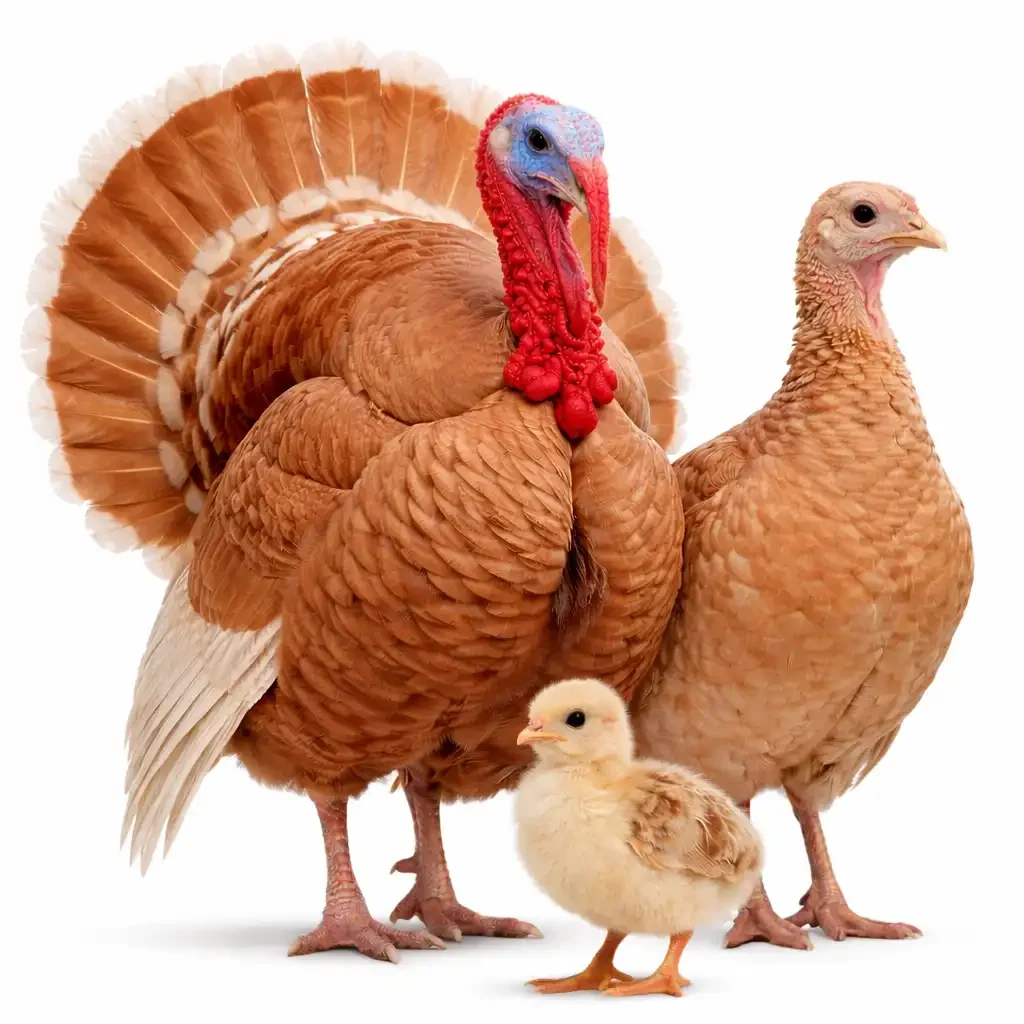
The defining and most immediately distinctive characteristic of the Jersey Buff is the warm, buff to reddish-buff plumage coloration that covers the body. The standard color description for the Jersey Buff specifies a warm, light reddish-buff tone across the main body feathering, with white or whitish flight feathers in the wings and a buff tail with a white terminal band. The warm, earthy quality of the buff coloration gives the Jersey Buff a soft, naturalistic appearance that is quite different from the bold iridescence of the Bronze, the graphic black and white of the Royal Palm, or the cool blue-gray of the Slate family. The buff color has a quality of warmth and earthiness that many observers find immediately appealing and that photographs particularly well in natural light conditions.
The head and facial skin display the standard turkey characteristics of caruncles, wattles, and snood that change color with emotional and hormonal state. The legs are typically pink to reddish, the beak is horn-colored to light, and the eyes are dark brown. Mature toms reach approximately 21 pounds and mature hens reach approximately 12 pounds, placing the Jersey Buff in the medium to small heritage turkey size range, somewhat larger than the Midget White and Beltsville Small White but significantly smaller than the large heritage breeds like the Bronze, Narragansett, and Bourbon Red.
Temperament and Behavior
The Jersey Buff is consistently described by the breeders who work with the breed as calm, docile, and relatively easy to manage, with a temperament that reflects the long history of farm management in the New Jersey agricultural tradition that shaped the breed. The calm temperament makes the Jersey Buff a manageable breed for homestead keepers, and the relatively small mature size compared to the largest heritage breeds reduces the physical demands of handling while the docile disposition makes regular contact and examination straightforward.
The breed shows the natural foraging instincts appropriate to a heritage turkey with range access, displaying active ground foraging behavior, dust bathing, and the alert, responsive awareness of the environment that distinguishes heritage breeds from more passive commercial varieties. Jersey Buff turkeys on range make genuine use of their foraging environment, seeking insects, seeds, and plant material with the purposeful energy of birds with intact natural instincts.
Toms display the full turkey behavioral repertoire during the breeding season, with the warm buff plumage of the displaying tom creating a visually distinctive and attractive display quite different from the more familiar iridescent bronze or graphic black and white patterns of other heritage breeds. The buff coloration in the spread tail fan has a warm, honey-like quality in display that is genuinely beautiful and that sets the Jersey Buff apart visually from every other heritage turkey variety in a display context.
Raising on a Homestead
Housing
Jersey Buff turkeys require housing appropriate for medium-sized heritage breeds. Provide a minimum of 5 square feet of indoor floor space per bird, with 6 to 8 square feet preferable for behavioral health and comfort. The medium size of the Jersey Buff reduces the structural demands on housing compared to the large heritage breeds while still requiring the secure, predator-proof shelter appropriate for any turkey breed. Roost bars at appropriate heights, nest boxes at one per three to four hens, and good ventilation without cold drafts are the standard housing requirements.
The warm buff plumage of the Jersey Buff creates a specific predator visibility consideration similar to the Lavender turkey. The lighter coloration makes Jersey Buff birds somewhat more visible to aerial predators than darker-feathered breeds in open range situations. Overhead cover in range areas and secure overnight housing with complete predator exclusion are particularly relevant management considerations for this lighter-colored breed.
Feeding
Jersey Buff poults require the standard heritage turkey feeding program. Begin with 28 to 30 percent protein turkey or game bird starter for the first six to eight weeks, transition to 20 to 22 percent protein grower feed through 14 to 16 weeks, and provide a 16 to 18 percent protein finisher ration in the final growing period before processing. Breeding stock maintained year-round requires a balanced maintenance ration with adequate vitamin E, vitamin A, and selenium to support reproductive performance.
A nutritional consideration specific to maintaining the characteristic warm buff coloration of the Jersey Buff is the potential role of carotenoid pigments in the expression of warm, yellow to reddish-yellow tones in poultry plumage. While the primary determinant of the buff color is genetic, adequate access to carotenoid-rich forage through outdoor range access may support the warmest and most vivid expression of the buff coloration in birds with the appropriate genetic background. This is an area where range management and nutritional quality intersect with the genetic color expression in ways that experienced breeders observe empirically in their flocks.
Range and Foraging
Outdoor range access is strongly recommended for Jersey Buff production for the standard heritage turkey reasons of production quality, behavioral health, and meat flavor development. The Jersey Buff's active foraging instinct and good ranging behavior make it a genuine beneficiary of pasture access, and the extended growing period on range produces the flavor complexity that distinguishes heritage turkey from commercial alternatives.
The visual impact of Jersey Buff turkeys foraging on green pasture, with the warm buff coloration of the birds creating a beautiful contrast against the green of the grass, provides exceptional marketing photography and social media content for homestead operations that document their farming practices publicly. The unusual warm tone of the buff plumage against natural backgrounds creates images that stand out distinctly from the more commonly photographed white or dark heritage turkey varieties.
Brooding Poults
Jersey Buff poults require the same careful early brooding management as all heritage turkey poults. Maintain brooder temperature at 95 to 100 degrees Fahrenheit for the first week, reducing by 5 degrees per week until fully feathered. Monitor closely for starve-out vulnerability during the critical first days. The warm buff coloration of Jersey Buff poults, which is visible from hatching in well-bred birds, makes color assessment of early chick quality possible from a very early age, which is useful for preliminary selection in conservation breeding programs.
Meat and Production Value
The Jersey Buff produces genuine heritage turkey meat quality from a medium-sized carcass that positions it in an interesting commercial niche between the very small heritage breeds like the Beltsville Small White and Midget White and the large heritage breeds like the Narragansett and Bronze. A finished Jersey Buff tom produces a dressed carcass of approximately 12 to 16 pounds and a finished hen produces approximately 8 to 10 pounds, making the Jersey Buff suitable for medium-sized family holiday meals and for direct-to-consumer customers who want a heritage turkey in a more manageable size than the largest breeds provide.
The active ranging lifestyle, heritage genetics, and extended 26 to 28 week growing period of the Jersey Buff produce the characteristic heritage turkey meat quality of richer flavor, better fat distribution, and greater textural complexity compared to commercial broad-breasted alternatives. The warm buff plumage produces less dramatic pinfeather staining on the dressed carcass than dark-feathered breeds, creating a reasonably clean dressed appearance that supports positive customer perception of the whole dressed bird.
The Jersey Buff's rarity creates a specific premium pricing opportunity that goes beyond the standard heritage turkey premium. As one of the rarest recognized American heritage turkey breeds in existence, a Jersey Buff turkey carries a conservation story and a genuine rarity value that customers who understand the heritage food movement recognize and respond to. Marketing the Jersey Buff not just as a premium heritage turkey but as a genuinely rare breed whose continued existence depends on homestead production operations that maintain breeding flocks creates a product narrative of exceptional resonance with the direct-to-consumer heritage food customer base.
Conservation Status
The Jersey Buff is listed as Critical by the Livestock Conservancy, placing it among the most endangered heritage turkey breeds in existence alongside the Beltsville Small White, White Holland, Slate, and Midget White. The Critical designation indicates a global population of fewer than 500 registered breeding birds with fewer than five primary breeding flocks maintaining the breed at a genetically meaningful level.
The Jersey Buff's conservation situation is compounded by the difficulty of finding authentic, genetically pure breeding stock with sufficient diversity to support a healthy conservation breeding program. The small surviving population means that the effective genetic diversity within the breed is very limited, and the risk of inbreeding depression in small, isolated breeding populations is a genuine concern for breeders working with this variety. Connecting with other Jersey Buff breeders to exchange breeding stock and introduce unrelated genetics into individual breeding programs is an important conservation management practice for anyone working seriously with this breed.
The Jersey Buff's Critical status and genuine rarity make it one of the most significant conservation opportunities available to homestead turkey keepers. A homestead operation that establishes a quality Jersey Buff breeding flock, maintains accurate breeding records, practices careful genetic management, and connects with the Livestock Conservancy's conservation program makes a contribution to American agricultural heritage preservation that cannot be replicated by any other activity.
Varieties and Color Patterns
The Jersey Buff is recognized as a single-variety breed with the warm buff to reddish-buff plumage as the defining color expression. The breed standard describes a body plumage of warm, light reddish-buff tones, white to whitish primary wing feathers, and a buff tail with a white terminal band. The consistency and warmth of the buff body color and the clean white tail banding are the primary color quality criteria for exhibition and conservation breeding selection.
The buff coloration in turkeys is produced by specific genetic combinations that dilute and modify the standard dark pigmentation to produce the warm, yellowish to reddish-brown tone characteristic of the buff color family. The relationship of the Jersey Buff's color genetics to the buff tones present in the Bourbon Red's history suggests some shared genetic background in the broader American heritage of buff turkey breeding, though the two breeds are maintained as distinct varieties with distinct color standard descriptions.
Maintaining the authenticity of the Jersey Buff color requires consistent selection of breeding birds that display the warmest, most correctly toned buff body color and the cleanest white tail banding. Birds showing bronze, brown, or other color contamination that departs from the standard buff description indicate genetic impurity that should be managed out of the conservation breeding population over successive generations of careful selection.
Common Health Issues
Blackhead Disease
Blackhead Disease is the primary health management concern for Jersey Buff turkeys as for all domestic turkey breeds. Strict separation from chickens and chicken ground is the essential preventive management practice. The Jersey Buff's small population makes individual bird losses to preventable disease particularly significant from a conservation perspective, making health management diligence more important for this breed than for more numerous varieties where individual losses are less genetically significant.
Inbreeding Depression
The small population size of the Jersey Buff creates a specific health concern that is less relevant for more numerous heritage turkey breeds: the risk of inbreeding depression from breeding within a limited gene pool. Small, isolated breeding populations that do not exchange genetics with other breeders over multiple generations accumulate recessive deleterious alleles that begin expressing as reduced fertility, poorer immune function, lower hatch rates, and generally reduced vigor. Connecting with other Jersey Buff breeders to exchange breeding stock and introduce unrelated genetics into individual flocks is the most important management practice for preventing inbreeding depression in this critically small population.
Respiratory Disease
Standard respiratory health management through good ventilation, dry litter, appropriate stocking density, and health-tested sourcing applies fully to the Jersey Buff. Given the conservation significance of every individual bird in this small population, early identification and treatment of respiratory disease is particularly important.
Parasites
Internal and external parasite management through regular monitoring, targeted treatment, and dust bathing provision are standard ongoing care practices. The conservation significance of each individual Jersey Buff bird makes proactive health management particularly valuable, as bird losses from preventable parasite burdens represent a meaningful impact on the already small population.
Reproductive Performance
Maintaining strong reproductive performance in the Jersey Buff breeding population is a conservation priority that requires attention to breeding management practices that support natural mating capability, adequate tom-to-hen ratios, appropriate nutrition for breeding condition, and selection of breeding stock that demonstrates good natural reproductive function. Any decline in fertility, hatch rates, or poult viability should be investigated promptly as these metrics are sensitive indicators of underlying genetic or management problems in small breeding populations.
FAQ
Why is the Jersey Buff so rare even among heritage turkey breeds? The Jersey Buff's rarity reflects the combination of a relatively small initial population compared to the large commercial heritage breeds, a limited geographic distribution centered in New Jersey that reduced the breadth of the breeder community maintaining the variety, and the same commercial displacement pressure that affected all heritage turkey breeds through the latter twentieth century. Unlike breeds such as the Narragansett or Bronze that had large, geographically distributed populations at the time of the commercial displacement, the Jersey Buff entered the crisis period of heritage breed decline with fewer birds, fewer breeders, and a narrower genetic base that made recovery more difficult. The result is a breed that survived the worst of the heritage turkey crisis in fragments too small to have fully recovered to the Watch status that the Narragansett and Royal Palm have achieved.
How does the Jersey Buff differ from the Bourbon Red? The Jersey Buff and Bourbon Red are both warm-toned heritage turkey breeds with buff to reddish-brown plumage coloration, and the historical connection between the two through the broader American buff turkey genetic heritage creates a superficial similarity that prompts frequent comparison. The key differences are in the specific tone and depth of the coloration, the geographic and historical origin of each breed, and the body size at maturity. The Bourbon Red displays a richer, deeper reddish-chestnut color with white wing and tail markings, while the Jersey Buff displays a lighter, warmer buff to pale reddish-buff tone. The Bourbon Red is significantly larger at maturity, with toms reaching approximately 33 pounds compared to the Jersey Buff tom's approximately 21 pounds. The two breeds are distinct varieties with separate breed standards despite the shared warm-toned color family connection.
Where can I find authentic Jersey Buff breeding stock? Finding authentic Jersey Buff breeding stock with documented lineage and sufficient genetic diversity is one of the most challenging aspects of working with this breed. The most reliable sources are breeders registered with the Livestock Conservancy's Jersey Buff conservation program, the Society for the Preservation of Poultry Antiquities, and heritage turkey breeder networks associated with the American Poultry Association. Given the Critical population status and the genuine rarity of quality breeding stock, connecting with multiple potential sources and being prepared for a waiting period before birds become available is a realistic expectation. Attending poultry shows where heritage turkey breeds are exhibited provides direct access to serious breeders and the opportunity to evaluate bird quality in person.
What is the ideal production and market strategy for Jersey Buff turkeys on a homestead? The Jersey Buff's medium size, genuine heritage meat quality, and extraordinary rarity create a specific market positioning that is distinct from larger heritage breeds. The most financially rewarding approach combines direct-to-consumer holiday turkey sales, where the combination of heritage flavor and conservation rarity story supports premium pricing, with breeding stock and poult sales to other heritage turkey enthusiasts who want to work with this rare breed. Building a customer base that values both the culinary quality of heritage turkey and the conservation significance of maintaining a Critical heritage breed creates a loyal, mission-aligned customer community willing to pay premiums that reflect the genuine rarity of what they are purchasing. Social media documentation of the breeding program, hatch events, and the birds' development creates the content that builds this community over time.
Is the Jersey Buff suitable for a first-time turkey keeper? The Jersey Buff's calm, docile temperament and medium size make it a manageable breed from a daily handling and management perspective. However, the Critical conservation status creates additional responsibilities for anyone keeping this breed that go beyond the standard management requirements of heritage turkey production. First-time turkey keepers who choose the Jersey Buff should be prepared to invest in understanding the breed's genetic management needs, maintaining detailed breeding records, connecting with the conservation breeding community, and treating their flock as a conservation resource rather than simply a production unit. The breed is technically manageable for a committed beginner, but the conservation responsibility it carries makes it a more appropriate choice for someone who has researched heritage turkey breeding thoroughly and is genuinely committed to the conservation mission rather than someone who wants a straightforward introductory turkey keeping experience.