
Slate (Blue Slate)
Quick Overview
Common Name: Slate, Blue Slate, Lavender Slate
Breed Type: Heritage Turkey
Origin: United States
Primary Use: Meat, Exhibition
Mature Tom Weight: 33 pounds
Mature Hen Weight: 18 pounds
Egg Production: Moderate, 50 to 100 eggs per year
Egg Color: Cream to light brown with brown speckling
Temperament: Calm, gentle, relatively docile
Conservation Status: Critical (Livestock Conservancy)
Lifespan: 5 to 10 years
Breed History and Origin
The Slate turkey, also widely known as the Blue Slate, is one of the most historically distinctive and visually arresting heritage turkey breeds in the American poultry tradition. Its origins are not as precisely documented as some of the more formally developed heritage breeds, and the exact genetic pathway that produced the characteristic slate-blue to gray-blue plumage coloration remains a subject of some discussion among breed historians and geneticists. What is clear is that the Slate has been present in American poultry keeping for well over a century, with documented references to slate-colored turkeys appearing in American agricultural literature through the nineteenth century and the breed achieving formal recognition in the American Poultry Association Standard of Perfection in 1874, the same year as the White Holland.
The slate coloration in turkeys is produced by a specific genetic mechanism that differs from the simple dilution genetics of some other slate or blue-colored poultry. The Blue Slate coloration results from a gene that reduces the intensity of the black pigmentation present in the underlying feather genetics, producing the characteristic slate-blue to gray-blue color across the plumage. The genetics of slate coloration in turkeys are somewhat complex and incompletely dominant, meaning that breeding two Blue Slate birds together does not always produce entirely blue offspring. The offspring of Blue Slate crosses can include birds expressing the full slate color, birds with a lighter, more washed-out version of the color sometimes called Self-Blue or Lavender, and birds with darker, more black-influenced plumage. This genetic variability is one of the most interesting and occasionally frustrating characteristics of working with this breed in a conservation breeding context.
The breed's history through the twentieth century follows the familiar arc of American heritage turkey breeds: relative commercial relevance through the early decades of the century followed by progressive displacement as broad-breasted commercial varieties took over mainstream turkey production. The Slate suffered additional population pressure from the rarity of truly accurate color genetics knowledge among the general farming population, which led to inconsistent breeding practices that blurred the distinctions between well-colored Blue Slate birds, the lighter Lavender variant, and darker or irregularly colored birds. Today the Livestock Conservancy lists the Slate as Critical, with fewer than 500 registered breeding birds globally, making it one of the rarest heritage turkey breeds in the United States.
Physical Characteristics
The Slate turkey is a medium to large heritage breed with a well-proportioned, classically balanced body structure that conveys substance and meat-producing capability without the extreme breast development that characterizes commercial broad-breasted varieties. The body is broad and well-muscled with a full breast, a level back, and a strong frame that reflects the breed's genuine heritage turkey conformation rather than the artificially selected extremes of industrial poultry production.
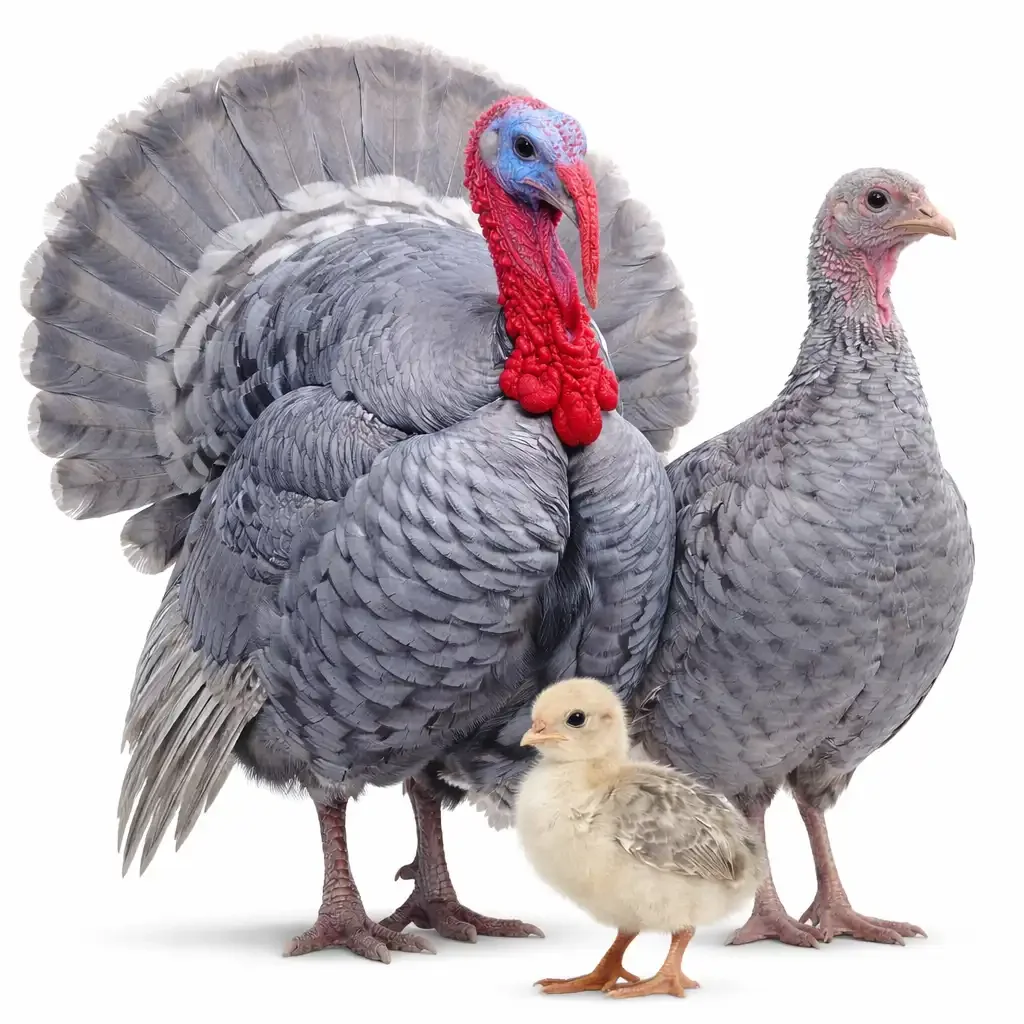
The defining and most immediately striking characteristic of the Slate turkey is its plumage color. Well-colored Blue Slate birds display a consistent, even slate-blue to gray-blue coloration across the entire plumage, with no brown, bronze, or other color contamination that would suggest impure genetics. The quality and consistency of the slate coloration varies between individuals and breeding lines, with the best examples showing a clean, even blue-gray tone that is immediately distinctive from every other heritage turkey variety. The slate coloration has a subtly matte quality in diffuse light but can show a faint iridescent sheen in strong direct sunlight, giving the plumage a depth and dimension that makes well-colored Slate turkeys genuinely beautiful birds.
The head and facial skin display the standard turkey characteristics of caruncles, wattles, and snood that flush and change color with the bird's emotional and hormonal state. The legs are typically dark to black, the beak is horn-colored to dark, and the eyes are dark brown. Mature toms reach approximately 33 pounds and mature hens reach approximately 18 pounds under appropriate heritage management conditions with outdoor range access.
Temperament and Behavior
The Slate turkey is consistently described by experienced breeders and homestead keepers as one of the calmer and more approachable heritage turkey breeds, with a temperament that is generally considered easier to manage than more active and reactive breeds like the Bronze family or the Black Spanish. The relatively gentle disposition makes the Slate a reasonable choice for homestead keepers who are newer to turkey management or who want birds that are manageable during the regular handling that conservation breeding programs require.
Toms display the full range of turkey behavioral characteristics during breeding season, including the strutting, gobbling, and territorial behaviors that are part of the natural turkey behavioral repertoire. Slate toms are generally reported to be less aggressively reactive toward handlers than some other heritage breeds while still expressing the full complement of natural turkey behaviors that make the species interesting to keep. The combination of calm baseline temperament and genuine natural turkey character makes the Slate one of the more satisfying heritage breeds to work with from a daily management perspective.
The breed forages actively when given range access, expressing the natural behaviors of a fully functional heritage turkey including ground foraging for insects and seeds, dust bathing, and the alert, responsive awareness of the environment that distinguishes heritage breeds from the passive, minimally reactive commercial varieties. Slate turkeys on good pasture are engaging, active birds that make genuine use of their range environment.
Raising on a Homestead
Housing
Slate turkeys require housing appropriate for medium to large heritage turkey breeds. Provide a minimum of 6 square feet of indoor floor space per bird, with 8 square feet preferable for the comfort and behavioral health of the flock. Roost bars must be sturdy and positioned at heights that large birds of 18 to 33 pounds can access comfortably without jump heights that risk leg or joint injury on landing. Nest boxes for laying hens should be provided at one box per three to four hens with dimensions appropriate for the body size of the Slate hen.
Bedding management is particularly important for turkey housing. Wet, compacted litter creates ammonia accumulation that damages respiratory tissue and predisposes birds to the respiratory infections that are among turkeys' most common health challenges. Maintaining dry, well-managed bedding through regular additions of clean material and removal of heavily soiled areas is one of the most important ongoing housing management practices for any turkey flock.
Feeding
Slate poults require the standard heritage turkey feeding program. Start with 28 to 30 percent protein turkey or game bird starter for the first six to eight weeks, transition to 20 to 22 percent protein grower feed through 14 to 16 weeks, and finish with a 16 to 18 percent protein finisher ration in the final weeks before processing. Breeding stock maintained year-round should receive a balanced maintenance ration with attention to vitamin E, vitamin A, and selenium levels that support reproductive performance in conservation breeding programs.
Fresh, clean water at all times is non-negotiable. Turkey health declines quickly without consistent water access, and the importance of clean water is amplified during hot weather and the peak production periods of the breeding season.
Range and Foraging
Outdoor range access is strongly recommended for Slate turkey production both for the production quality benefits it provides and for the behavioral health of birds that are genetically programmed for an active, ranging lifestyle. Slate turkeys on pasture produce meat with the flavor complexity that distinguishes heritage turkey from commercial alternatives, and the active foraging lifestyle supports the physical health and behavioral contentment that makes heritage turkey keeping genuinely rewarding.
Rotational management that moves birds to fresh pasture ground regularly reduces internal parasite load, prevents pasture degradation, and gives birds access to the variety of forage material that produces the richest flavor profiles. A minimum of 25 to 30 square feet of outdoor range space per bird is a reasonable baseline, with more space consistently beneficial.
Brooding Poults
Slate poults require the same careful brooding management as all heritage turkey poults. Maintain brooder temperature at 95 to 100 degrees Fahrenheit for the first week and reduce by 5 degrees per week until poults are fully feathered at six to eight weeks. The starve-out vulnerability during the first critical days requires active management attention including colored marbles in waterers, brightly colored starter feed placed in highly visible locations, and close monitoring of individual poult behavior for signs of failure to find feed and water. Early intervention for weak or separated poults dramatically improves survival rates through the most vulnerable brooding period.
Meat and Production Value
The Slate turkey produces meat of genuine heritage quality that compares favorably with the other recognized heritage turkey breeds in terms of flavor, texture, and overall eating experience. The medium to large body size, active ranging lifestyle, and 28 to 30 week heritage growing period produce a dressed carcass with the rich, complex flavor profile, good fat distribution, and higher proportion of dark meat that consistently distinguish heritage turkey from commercial broad-breasted alternatives in direct sensory comparison.
A finished Slate tom produces a dressed carcass in the range of 18 to 23 pounds and a finished hen produces a dressed carcass of 10 to 14 pounds. These weights are appropriate for the premium whole heritage turkey market that represents the most financially rewarding sales channel for homestead turkey production. The Thanksgiving and Christmas holiday period is the primary demand window for premium heritage turkeys, and building a customer list well before the production season with advance deposits taken for confirmed birds is the standard business approach for heritage turkey homestead operations.
The Slate's distinctive blue-gray plumage creates an interesting dressed carcass presentation consideration. The dark feather pigmentation produces darker pinfeather staining on the dressed skin compared to white-feathered breeds, similar to the Bronze family. Careful scalding and picking technique and honest customer communication about the natural appearance of heritage bird carcasses manages this presentation difference effectively. Many customers who purchase heritage turkeys specifically for their flavor and production story are not deterred by the natural appearance differences from the uniformly pale commercial birds they are accustomed to seeing.
The visual distinctiveness of live Slate turkeys also creates marketing opportunities beyond the dressed bird market. The striking blue-gray plumage generates genuine customer interest and conversation at farm visits, farmers markets, and through social media content, providing a natural platform for telling the heritage turkey conservation story that supports premium pricing and customer loyalty.
Conservation Status
The Slate turkey is listed as Critical by the Livestock Conservancy, placing it among the most endangered heritage turkey breeds in the United States alongside the Beltsville Small White and several other breeds in this series. The Critical designation indicates a global population of fewer than 500 registered breeding birds with fewer than five primary breeding flocks maintaining the breed at a genetically meaningful level.
The conservation challenges specific to the Slate are compounded by the complexity of its color genetics. Because breeding two Blue Slate birds together does not always produce entirely blue offspring, maintaining a breeding program that consistently produces well-colored birds requires a level of genetic understanding and selective breeding skill that is more demanding than working with breeds whose characteristics breed more uniformly true. The appearance of lighter Lavender birds and darker or irregularly colored birds in Slate breeding programs creates ongoing selection decisions about which offspring to retain for conservation breeding and which represent genetic expressions that dilute the distinctiveness of the standard Blue Slate color type.
Connecting with the Livestock Conservancy, the Society for the Preservation of Poultry Antiquities, and experienced Slate breeders through heritage turkey networks provides both the most reliable access to authentic breeding stock and the genetic and breeding knowledge needed to manage a Slate conservation program effectively. For homestead keepers who are serious about contributing to Slate conservation, maintaining detailed records of breeding pairs, hatch outcomes, and color expression in offspring is essential for understanding the genetics within a specific breeding population and making informed selection decisions across multiple generations.
Varieties and Color Patterns
The color genetics of the Slate turkey produce a range of expressions that are important for breeders to understand when managing a conservation breeding program. The primary color expressions within Slate breeding populations include the following.
The standard Blue Slate displays the characteristic even, consistent slate-blue to gray-blue coloration across the entire plumage that defines the breed as recognized in the American Poultry Association Standard of Perfection. Well-colored Blue Slate birds are among the most visually distinctive heritage turkeys available, with the clean, even blue-gray tone that has no equivalent in any other heritage turkey variety.
The Lavender or Self-Blue expression produces birds with a lighter, more uniformly pale blue to silvery-gray coloration compared to the standard Blue Slate. Lavender birds result from specific genetic combinations within the Slate color genetics and are sometimes maintained as a distinct variant by breeders who appreciate the lighter, softer color expression. The Lavender Aster listed elsewhere in this series shares the same common name but refers to a completely different species. In the turkey context, Lavender is used to describe this lighter color variant within the Blue Slate genetic family.
Darker expressions within Slate breeding programs produce birds with more black or charcoal influence in the plumage, reflecting the underlying black pigmentation genetics that the slate dilution gene is modifying. These darker birds are generally not considered ideal for conservation breeding toward the Blue Slate standard but represent the natural range of color expression within the genetics of the variety.
Common Health Issues
Blackhead Disease
Blackhead Disease is the most critical health management concern for Slate turkeys as for all domestic turkey breeds. The protozoan Histomonas meleagridis transmitted through the cecal worm carried asymptomatically by chickens causes rapid and typically fatal liver and cecal damage in affected turkeys. Maintaining strict physical separation between turkey and chicken flocks with no access to shared ground is the single most important preventive management practice. Ground previously used by chickens can carry infectious cecal worm eggs for years, making site history an important consideration when establishing a turkey operation on any property that has previously kept chickens.
Respiratory Disease
Good ventilation in housing, dry clean litter management, appropriate stocking density, and acquisition from health-tested sources are the primary preventive measures for the respiratory infections including Mycoplasma that represent one of the most common disease challenges in turkey management. Any bird showing nasal discharge, labored breathing, coughing, or reduced activity should be isolated immediately and evaluated. Early identification and separation of affected birds prevents the respiratory disease spread that can move rapidly through a housed flock.
Genetic Management Challenges
While not a health issue in the conventional sense, the color genetics complexity of the Slate turkey creates a specific management challenge that experienced breeders list as one of the most significant ongoing concerns in working with this breed. The production of off-color offspring from Blue Slate crosses requires consistent genetic knowledge and selective discipline to maintain a breeding program that produces the standard Blue Slate color expression reliably. Homestead keepers new to the Slate should seek mentorship from experienced Slate breeders and invest time in understanding the color genetics before making breeding decisions that will affect the character of their flock across multiple generations.
Parasites
Internal and external parasites are standard management considerations for any heritage turkey flock with outdoor range access. Regular fecal monitoring for internal parasites, targeted deworming based on results, and provision of generous dust bathing areas for natural external parasite management are appropriate ongoing practices for Slate turkey flocks. The blue-gray plumage of the Slate, while not as dark as Bronze feathering, still requires thorough examination during routine handling to catch external parasite infestations before they become significant.
Leg and Joint Health
Appropriate roost heights, non-slip flooring, adequate space, and a feeding program that supports steady growth without excessive early weight gain maintain the leg and joint health of large heritage birds reaching mature weights of 18 to 33 pounds. Regular observation of individual bird gait and posture allows early identification of developing leg issues before they become serious.
FAQ
Why do Slate turkeys sometimes produce offspring that are not blue? The slate coloration in turkeys is produced by a gene that is incompletely dominant, meaning that its color-modifying effects do not always override other color genetics cleanly and completely in every offspring. When two Blue Slate birds are bred together, the resulting offspring can express the full slate-blue color, a lighter Lavender expression, or a darker expression with more black pigmentation influence, depending on which combination of the underlying color genes each offspring inherits from both parents. This genetic variability is a fundamental characteristic of working with Slate turkey color genetics and requires breeders to understand the underlying genetics of their specific birds in order to select breeding pairs that consistently produce the most birds with the desired standard Blue Slate color expression.
Is the Blue Slate the same as the Lavender turkey? The Blue Slate and Lavender turkey are related but distinct color expressions within the same genetic family. The standard Blue Slate displays the characteristic slate-blue to gray-blue coloration recognized in the American Poultry Association Standard of Perfection. The Lavender expression, sometimes also called Self-Blue, produces a lighter, more uniformly pale silvery-gray coloration that is a different genetic expression within the same color genetics system. Some breeders maintain the Lavender expression as a distinct variant separate from the standard Blue Slate, while others manage them together within the same breeding program. The Lavender turkey listed as a separate entry in this series represents the same general color genetics family as the Blue Slate but with specific emphasis on the lighter Lavender color expression.
How do I find authentic Blue Slate breeding stock? Authentic Blue Slate breeding stock with documented breeding records and confirmed color genetics is most reliably found through breeders registered with the Livestock Conservancy, the Society for the Preservation of Poultry Antiquities, and heritage turkey breeder networks associated with the American Poultry Association. The Critical conservation status of the Slate means that the number of breeders maintaining quality stock is limited, and connecting with established conservation breeders is more reliable than sourcing from general hatcheries whose Slate offerings may not represent the breed standard accurately. Attending poultry shows where heritage turkey breeds are exhibited provides direct access to serious breeders and the opportunity to evaluate bird quality in person.
What is the best market for Slate turkeys? The Slate turkey is well suited to the premium direct-to-consumer heritage turkey market, particularly the Thanksgiving and holiday window that represents the peak demand period for whole heritage turkeys. The combination of genuine heritage flavor quality, the conservation story of a Critical heritage breed, and the distinctive visual character of the blue-gray plumage creates a premium product narrative that supports six to ten dollars per pound pricing in direct farm sales. Building a loyal customer base through transparent communication about heritage production practices, the conservation significance of the breed, and the genuine flavor difference of heritage turkey meat creates the long-term customer relationships that make heritage turkey production financially sustainable for homestead operations.
Can Slate turkeys be raised alongside other heritage turkey breeds? Slate turkeys can be physically housed and managed alongside other heritage turkey breeds without specific management conflicts beyond the standard requirements of appropriate space, predator protection, and Blackhead Disease ground management that apply to all turkey flocks. However, for breeders who want to maintain the Blue Slate color genetics and produce consistently colored offspring, keeping Slate birds separate from other breeds during the breeding season and managing them as a dedicated breeding flock is important. Cross-breeding Slate birds with other heritage breeds produces offspring whose color genetics become increasingly difficult to manage toward the Blue Slate standard, diluting the conservation value of the breeding program over subsequent generations.