
Belted Galloway
Overview
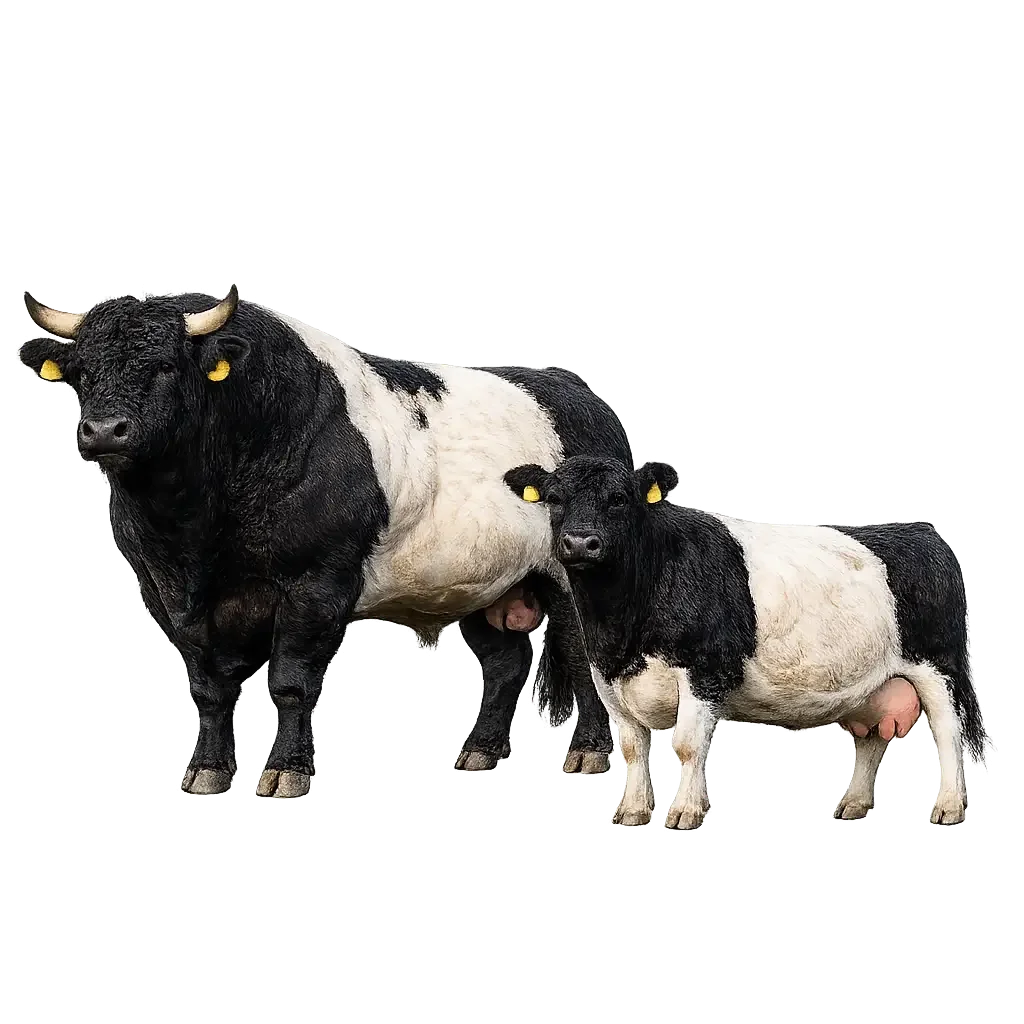
The Belted Galloway, affectionately known as "Belties" or "Oreo Cows," is one of the most visually distinctive cattle breeds in the world. Originating in the Galloway region of southwestern Scotland, these hardy beef cattle are instantly recognizable by their unique white "belt" around their midsection. Beyond their striking appearance, Belted Galloways are prized for their exceptional hardiness, premium beef quality, and ability to thrive in harsh conditions with minimal inputs.
Origin & History
Origin: Galloway region of southwestern Scotland
Development Period: 16th-19th centuries
Foundation: Developed from traditional Galloway cattle with the distinctive belt pattern
Belt Pattern Origin: Believed to result from crossing Galloways with Dutch Lakenvelder cattle (belted pattern) in the 17th-18th centuries
Introduction to US: 1950s
Recognition: Separate breed registry established in 1921; known for cold hardiness and conservation grazing abilities
Physical Characteristics
Color: Black with white belt most common; also dun (brown) or red with white belt
Belt Pattern: Distinctive white band encircling the body from shoulders to hips
Build: Medium-sized, compact, well-muscled frame
Weight: Bulls 1,700-2,300 lbs; Cows 1,000-1,500 lbs
Height: Bulls ~4.5-5 feet at shoulder; Cows ~4-4.5 feet
Distinctive Features:
Unique white belt encircling midsection (must extend over backbone and down both sides)
Long, shaggy double coat for cold protection
Naturally polled (hornless)
Short legs and deep body
Thick, weather-resistant hide
Prominent eyes and alert expression
Reproduction & Breeding
Gestation Period: Approximately 283 days (9 months)
Breeding Age: Heifers typically bred at 15-18 months
Calving: Exceptional ease of calving with minimal assistance required
Calf Birth Weight: 50-75 lbs (small calves reduce calving difficulty)
Calving Interval: 12-13 months optimal
Fertility: High fertility and conception rates
Breeding Season: Year-round capability; excellent cold-weather breeders
Longevity: Cows regularly breed into their teens
Lifespan & Productivity
Average Lifespan: 15-20+ years
Productive Life: Cows can calve successfully well into their teens
Prime Production Years: 3-12 years of age
Longevity: Exceptional durability and extended productive life
Milk Production
Purpose: Beef breed - milk primarily for calf rearing
Daily Production: 12-18 lbs per day (good for beef cattle)
Lactation Period: 7-10 months
Maternal Ability: Excellent mothers with strong protective instincts
Butterfat Content: Rich, high-quality milk for rapid calf growth
Note: Not used for commercial dairy production
Calf Growth & Development
Weaning Weight: 450-600 lbs at 7-8 months
Daily Gain: 2-3 lbs per day on good feed
Market Weight: 1,000-1,300 lbs at 18-24 months
Feed Efficiency: Excellent conversion on grass and forage
Growth Rate: Moderate, steady growth with excellent finish
Temperament
Belted Galloways are known for their calm, docile, and friendly temperament, making them excellent for small farms and families. They are curious and intelligent, often approaching handlers with interest. Cows are attentive, protective mothers without being overly aggressive. Bulls are generally manageable and less aggressive than many beef breeds. Their gentle nature makes them popular for agritourism operations, educational farms, and hobby farmers, while remaining practical for commercial operations.
Meat Quality
Marbling: Excellent intramuscular marbling
Flavor: Rich, distinctive beef flavor highly prized by consumers
Tenderness: Exceptionally tender with fine texture
Grading: Regularly achieves Choice and Prime USDA grades
Dressing Percentage: 60-65% (excellent yield)
Fat Distribution: Marbling throughout meat rather than external fat
Market Appeal: Premium prices for specialty, grass-fed, and heritage beef markets
Health Benefits: Lower in fat and cholesterol than conventional beef when grass-fed
Feeding & Nutrition
Grazing: Superior foragers, thrive on marginal pastures and rough terrain
Feed Requirements: Very efficient - require less feed than larger breeds
Finishing: Excel on grass-finishing programs; can also be grain-finished
Water: 8-15 gallons per day (less than many breeds)
Mineral Needs: Standard beef cattle mineral supplementation
Browse Utilization: Will eat brush and varied vegetation, excellent for conservation grazing
Winter Feeding: Double coat reduces feed requirements in cold weather
Health & Care
Hardiness: Exceptionally hardy and disease-resistant
Common Issues: Very few breed-specific health problems
Vaccinations: Standard cattle vaccination protocols
Parasite Control: Regular deworming recommended; generally resistant
Hoof Care: Minimal trimming needed; naturally sound feet
Climate Adaptation: Outstanding in cold, wet climates; double coat provides insulation
Heat Tolerance: Moderate; double coat can be challenging in extreme heat
Shelter: Minimal shelter required even in harsh winters
Coat Care: Long coat sheds naturally; no special grooming needed
Advantages
Exceptionally hardy and cold-tolerant
Superior foraging ability on marginal land
Easy calving with small birth weights
Excellent maternal characteristics and longevity
Premium, well-marbled beef quality
Naturally polled (no dehorning needed)
Docile, friendly temperament
Low maintenance requirements
Efficient feed converters
Unique, eye-catching appearance
Long productive lifespan
Disease and parasite resistant
Excellent for conservation grazing
Minimal shelter requirements
Disadvantages
Slower growth rate than continental breeds
Smaller frame size produces less total meat per animal
Long hair coat can be problematic in hot, humid climates
Limited availability - smaller breed population
Higher initial purchase price for quality stock
May take longer to reach market weight (18-24 months)
Smaller carcass size may not suit all markets
Best Suited For
Cold, wet, or harsh climate operations
Grass-fed and pasture-based beef production
Conservation grazing and land management
Organic and sustainable beef operations
Small farms and hobby operations
Marginal or rough pastureland
Direct-to-consumer and farmers market sales
Agritourism and educational farms
Heritage breed enthusiasts
Low-input, extensive management systems
Premium, specialty beef markets
Economic Considerations
Initial Cost: Moderate to high for registered breeding stock
Return on Investment: Excellent due to longevity, low inputs, and premium prices
Market Demand: Growing demand for specialty and grass-fed beef
Premium Pricing: Commands premium prices in direct markets
Maintenance Costs: Very low - minimal feed, shelter, and health costs
Resale Value: Strong breeding stock market; unique appearance attracts buyers
Agritourism Value: Distinctive appearance draws visitors
Fun Facts
Belted Galloways are nicknamed "Oreo Cows" because they look like the cookie
Their double coat has an outer layer of long hair and an inner layer of soft, insulating fur
The white belt must completely encircle the body and extend over the backbone to meet breed standards
They originated in the same region as their solid-colored cousins, the Galloway cattle
Belted Galloways can withstand temperatures as low as -40°F without additional shelter
The breed is considered a "Heritage" breed by the Livestock Conservancy
Their unique appearance makes them popular subjects for photography and art
Some Belted Galloways are used in conservation grazing to maintain native grasslands and control invasive species
The breed has its own Facebook fan pages with thousands of followers celebrating their distinctive looks
The 'Oreo' cow produces gourmet-quality beef; see how its anatomy compares to standard industry primal beef cuts.