
Hereford
Overview
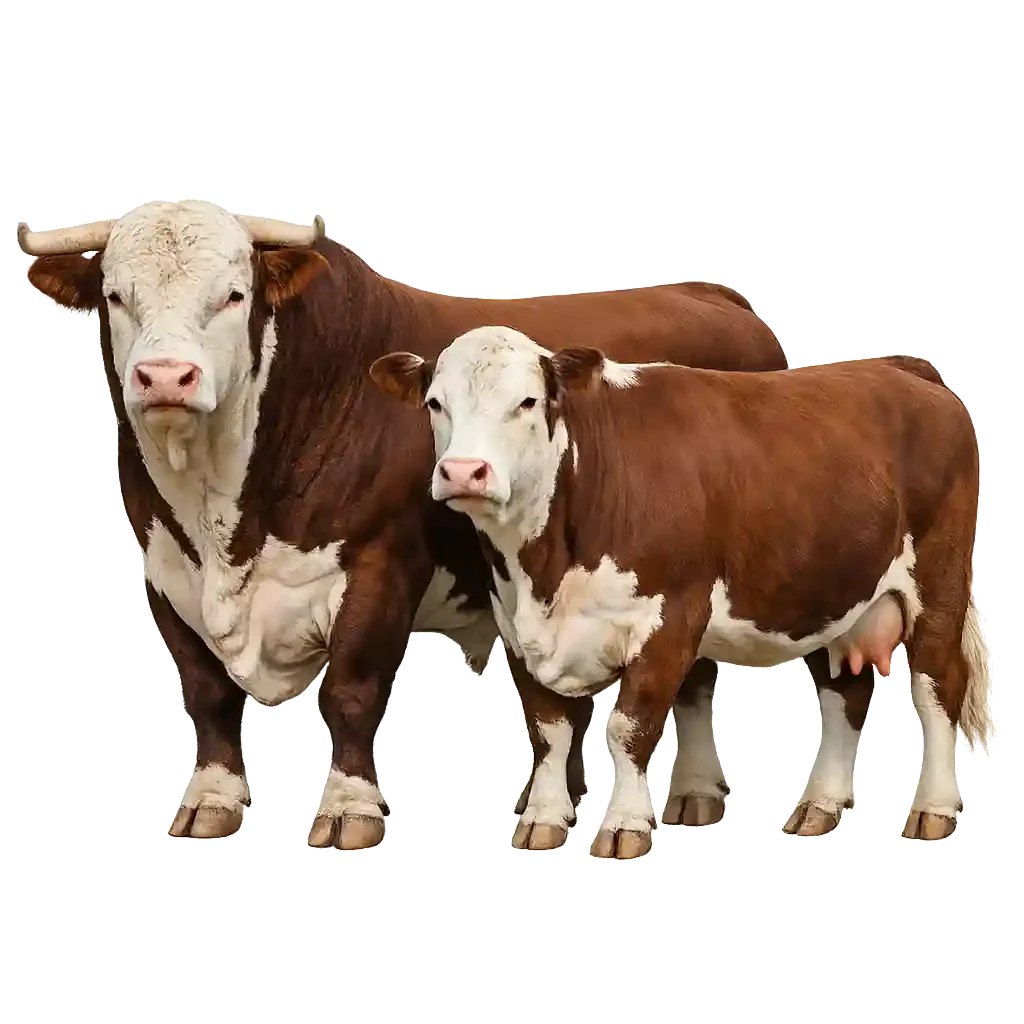
Hereford cattle are one of the world's most recognizable and widely distributed beef breeds, famous for their distinctive red body with white face, crest, dewlap, and underline. Originating from Herefordshire, England in the 1700s, Herefords have become a foundation breed for beef production worldwide, valued for their adaptability, hardiness, and exceptional foraging ability. Known for their docile temperament, excellent maternal qualities, and ability to thrive in diverse climates from arctic cold to desert heat, Herefords excel in extensive range operations and are a cornerstone of commercial beef production across six continents.
Related Reading: For those working with limited space, many producers are now looking into Miniature Herefords for their high feed conversion and ease of handling.
Origin & History
Origin: Herefordshire County, England
Development Period: Refined in mid-1700s by Benjamin Tomkins and others
Original Purpose: Dual-purpose for beef and draft work
Foundation: Developed from red cattle of Herefordshire region
U.S. Introduction: First imported to United States in 1817 by Henry Clay
Recognition: American Hereford Association formed 1881
Global Spread: Now raised in over 50 countries on all continents
Modern Varieties: Horned and Polled Hereford strains available
Physical Characteristics
Color: Red body with white face, crest, dewlap, underline, and switch
Build: Medium to large frame with well-muscled body
Weight: Bulls 1,800-2,400 lbs; Cows 1,200-1,600 lbs
Height: Bulls 5-5.5 feet at shoulder; Cows 4.5-5 feet
Distinctive Features:
Iconic white face - instantly recognizable trademark
Red body ranging from light to dark red
White markings on crest, dewlap, brisket, and underline
White switch (tail tip)
Both horned and polled (naturally hornless) varieties
Stocky, well-muscled conformation
Deep body with broad back
Strong, sound feet and legs
Reproduction & Breeding
Gestation Period: Approximately 285 days
Breeding Age: Heifers bred at 14-16 months
Calving: Excellent calving ease with minimal assistance
Calf Birth Weight: 75-90 lbs (moderate and manageable)
Calving Interval: 365 days achievable with good management
Fertility: Very good fertility and conception rates
Breeding Season: Year-round breeding capability
Sexual Maturity: Bulls mature at 12-15 months
Lifespan & Productivity
Average Lifespan: 12-18 years
Productive Life: Cows typically produce 10-14 calves in lifetime
Prime Production Years: 3-12 years of age
Longevity: Excellent longevity and durability
Stayability: Cows remain productive well into teens
Milk Production
Purpose: Beef breed - milk primarily for calf rearing
Daily Production: 12-18 lbs per day (good for beef cattle)
Lactation Period: 8-10 months
Maternal Ability: Excellent mothers with abundant milk
Milk Quality: Rich milk supporting excellent calf growth
Udder Quality: Well-attached functional udders
Calf Growth & Development
Weaning Weight: 550-650 lbs at 205 days
Daily Gain: 2.5-3.5 lbs per day on good feed
Market Weight: 1,100-1,350 lbs at 14-18 months
Feed Efficiency: Good efficiency on various diets
Vigor: Calves are hardy and vigorous from birth
Growth Rate: Steady, consistent growth
Temperament
Hereford cattle are renowned for their exceptionally docile and calm temperament, making them one of the easiest beef breeds to handle. They are gentle, patient, and cooperative, suitable for operations of all sizes from large ranches to small family farms. Herefords are notably less flighty than many breeds, remaining calm in stressful situations and responding well to quiet handling.
The breed demonstrates excellent maternal instincts with protective but not aggressive behavior toward calves. Cows are attentive mothers that allow reasonable human interaction. Bulls are generally manageable and less aggressive than many beef breed bulls, though all bulls require proper respect and facilities. Hereford cattle's calm nature, combined with their adaptability, makes them ideal for beginning cattle operations and family ranches.
Meat Quality
Marbling: Good marbling throughout muscle
Flavor: Excellent beef flavor, well-developed and satisfying
Tenderness: Tender meat with good texture
Grading: Typically grades Choice with proper finishing
Dressing Percentage: 60-65%
Cutability: Good yield of retail cuts
Market Appeal: Strong demand for Hereford and Hereford-cross beef
Consistency: Uniform quality across animals
Feeding & Nutrition
Grazing: Exceptional grazers and foragers
Feed Requirements: Efficient on various feed types
Finishing: Finish well on grass or grain-based programs
Water: 10-15 gallons per day
Mineral Needs: Standard beef cattle mineral program
Forage Utilization: Excel on rangeland and marginal forage
Drought Tolerance: Maintain condition during drought better than many breeds
Health & Care
Hardiness: Exceptionally hardy and disease-resistant
Common Issues: Very healthy; minimal breed-specific problems
Vaccinations: Standard cattle vaccination protocols
Parasite Control: Standard beef cattle parasite management
Hoof Care: Excellent hoof quality, minimal problems
Climate Adaptation: Excel in diverse climates from -40°F to 110°F+
Heat Tolerance: Light-colored face helps reflect heat
Cold Tolerance: Excellent cold hardiness
Eye Protection: Pigmented eyelids reduce cancer eye incidence
Adaptability and Hardiness
Climate Range: Thrive from arctic to desert conditions
Altitude Tolerance: Perform from sea level to high mountains
Temperature Extremes: Handle -40°F to 110°F+
Drought Resistance: Survive and reproduce in drought conditions
Forage Flexibility: Utilize wide variety of forage types
Terrain Adaptability: Navigate rough, mountainous country
Low Maintenance: Require minimal inputs in extensive operations
Advantages
Instantly recognizable white face provides breed identification
Exceptionally docile and easy to handle
Superior adaptability to diverse climates and conditions
Excellent foraging ability on range and marginal land
Outstanding maternal qualities and easy calving
Good longevity and reproductive efficiency
Hardy and disease-resistant
Maintain condition in harsh conditions
Good beef quality with consistent marbling
Polled genetics available eliminating dehorning
Strong hybrid vigor in crossbreeding programs
Excellent for commercial cow-calf operations
Disadvantages
White face more susceptible to sunburn and cancer eye without pigmentation
Less marbling than Angus in direct comparison
Light-colored cattle may have more fly problems in some areas
Moderate growth rate compared to Continental breeds
May not suit feedlots optimizing for rapid gain alone
Some bloodlines prone to udder problems if not selected carefully
Best Suited For
Extensive range and ranch operations
Harsh climate regions (hot or cold extremes)
Rough, marginal forage land
Commercial cow-calf operations
Crossbreeding programs for maternal traits
Beginning cattle operations wanting gentle cattle
Family ranches and farms
Drought-prone regions
Operations prioritizing adaptability and hardiness
Grass-fed beef programs
Economic Considerations
Initial Cost: Moderate for quality breeding stock
Return on Investment: Excellent due to longevity and low inputs
Market Demand: Strong demand for breeding stock and commercial cattle
Feeder Calf Value: Herefords and Hereford-crosses command good prices
Maintenance Costs: Low - excel on minimal inputs
Veterinary Costs: Lower than average due to hardiness
Feed Costs: Efficient utilization reduces feed expense
Longevity Value: Extended productive life maximizes investment
Crossbreeding Applications
Maternal Crosses: Excellent for producing commercial F1 females
Popular Crosses: Hereford x Angus (Black Baldy) highly valued
Hybrid Vigor: Strong heterosis in crossbreeding programs
White Face Marker: Dominant white face identifies crossbred calves
Adaptability Transfer: Pass hardiness and foraging to crosses
Balancer Programs: Used in rotational crossbreeding systems
Fun Facts
The white face is a dominant genetic trait that passes to crossbred calves
Herefords are raised in more countries worldwide than any other beef breed
The famous "Black Baldy" (Hereford x Angus cross) is one of America's most popular commercial cattle
Herefords were the first English cattle imported to America in 1817
The breed was developed by just a handful of Herefordshire farmers in the 1700s
Herefords thrive from the Canadian arctic to the Australian outback
They can survive and reproduce in conditions where other breeds fail
The American Hereford Association was the first beef breed registry in the U.S.
Polled Herefords were developed in the 1900s and are now as common as horned
Herefords excel at converting grass into high-quality beef efficiently
The breed played a major role in settling the American West
Their docile nature made them ideal for trail drives in frontier days
A favorite for grass-fed beef; learn how to identify the best marbling in Hereford steaks using our beef cuts guide.