
Highland
Overview
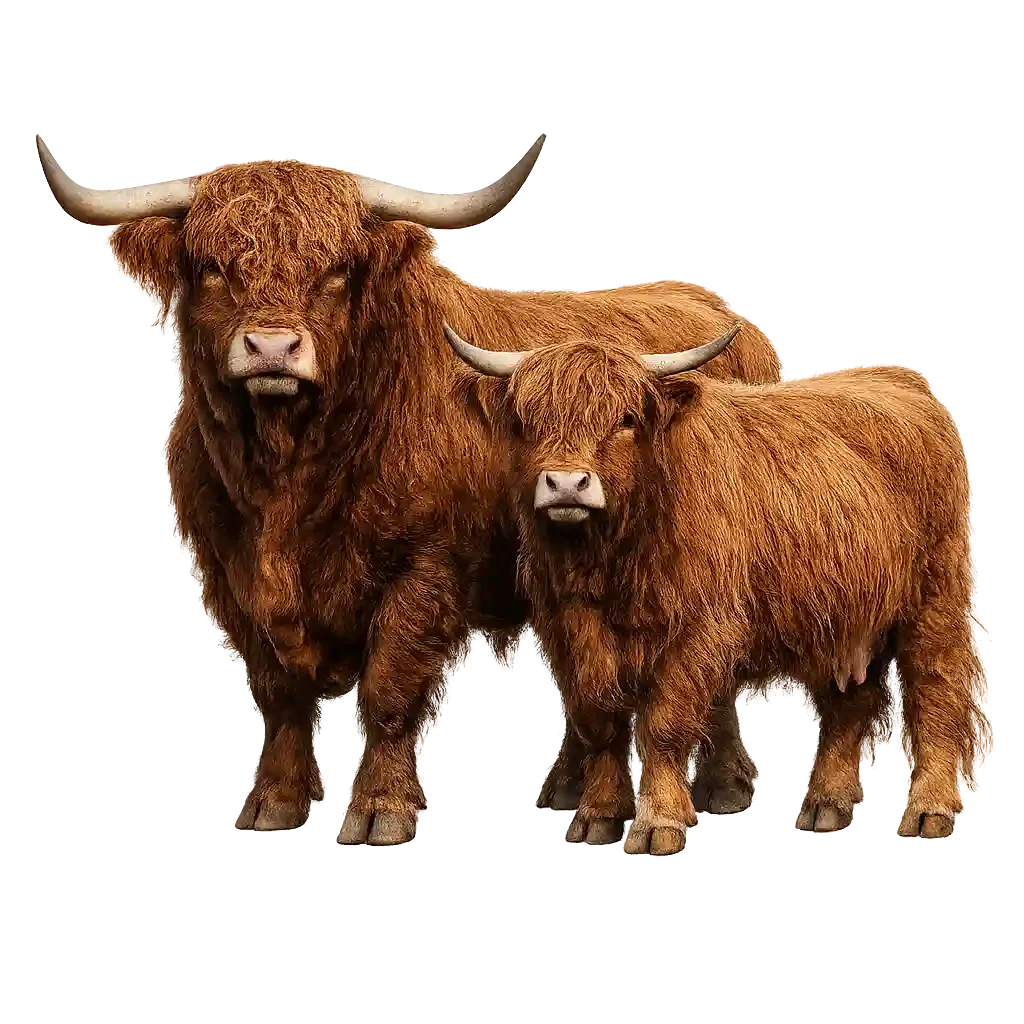
Highland cattle are one of the world's most distinctive and ancient cattle breeds, instantly recognizable by their long, shaggy coats and impressive horns. Originating from the rugged Scottish Highlands over 1,000 years ago, these hardy cattle were shaped by one of the harshest environments in Europe, creating animals of exceptional hardiness and self-sufficiency. Highland cattle excel in cold, wet climates and on marginal land where other breeds struggle, browsing rough forage and requiring minimal shelter even in severe weather. Their striking appearance, premium grass-fed beef quality, and growing popularity in agritourism make them increasingly valued for sustainable agriculture, conservation grazing, and heritage livestock operations.
Origin & History
Origin: Scottish Highlands and Western Isles of Scotland
Development Period: Ancient breed, documented over 1,000 years
Historical Varieties: Originally two types - smaller island cattle and larger mainland cattle
Original Environment: Harsh, cold, wet Scottish highlands with poor forage
U.S. Introduction: First imported in late 1800s
Recognition: Highland Cattle Society formed in Scotland 1884
American Recognition: American Highland Cattle Association formed 1948
Modern Status: Growing popularity for conservation grazing and specialty beef
Physical Characteristics
Color: Red, black, brindle, yellow, dun, or white
Build: Medium frame with sturdy, compact body
Weight: Bulls 1,500-2,000 lbs; Cows 900-1,300 lbs
Height: Bulls 4.5-5 feet at shoulder; Cows 4-4.5 feet
Distinctive Features:
Extremely long, thick, shaggy double coat
Long, dramatic horns spreading wide (both sexes)
Long bangs (dossan) covering eyes
Thick, wavy hair up to 13 inches long
Dense undercoat for insulation
Short legs relative to body depth
Compact, low-set body structure
Wide variety of colors including red, black, brindle
Reproduction & Breeding
Gestation Period: Approximately 283-285 days
Breeding Age: Heifers bred at 18-24 months
Calving: Excellent calving ease with minimal assistance
Calf Birth Weight: 50-75 lbs (light and manageable)
Calving Interval: 365 days achievable
Fertility: Very good fertility even in harsh conditions
Breeding Season: Year-round capability; breed successfully in severe weather
Sexual Maturity: Bulls mature at 15-18 months
Lifespan & Productivity
Average Lifespan: 15-22 years
Productive Life: Cows typically produce 12-18 calves in lifetime
Prime Production Years: 3-16 years of age
Longevity: Exceptional longevity - among longest-lived breeds
Stayability: Cows remain productive well into late teens
Milk Production
Purpose: Beef breed - milk primarily for calf rearing
Daily Production: 8-12 lbs per day (adequate for calves)
Lactation Period: 8-10 months
Maternal Ability: Excellent mothers, extremely protective
Milk Quality: Rich milk supporting vigorous calf growth
Milking Ease: Good milk letdown for calves
Calf Growth & Development
Weaning Weight: 450-550 lbs at 205 days
Daily Gain: 1.8-2.5 lbs per day on grass
Market Weight: 900-1,200 lbs at 24-30 months
Feed Efficiency: Excellent on forage-based diets
Growth Rate: Slower than commercial breeds but steady
Vigor: Calves are extremely hardy from birth
Temperament
Highland cattle are generally docile and calm despite their wild appearance. When raised with consistent human contact, they become gentle and manageable. However, they are more independent and self-sufficient than many domestic breeds, retaining some primitive survival instincts. Highlands can be wary of strangers but bond well with their regular handlers.
Highland cows are fiercely protective mothers, particularly in the first days after calving. They will aggressively defend calves against perceived threats, requiring careful handling during calving season. Bulls can be more assertive than British breed bulls and require respectful handling and secure facilities. Despite their impressive horns and protective nature, well-socialized Highlands are generally tractable and safe to work with using appropriate facilities and techniques.
Meat Quality
Marbling: Excellent marbling throughout muscle
Flavor: Outstanding grass-fed beef flavor, rich and distinctive
Tenderness: Very tender, ranks among top grass-fed breeds
Grading: Typically grades Choice on grass-fed programs
Dressing Percentage: 56-62% (lower due to thick coat and hide)
Fat Distribution: Less external fat, more intramuscular marbling
Health Benefits: Lower cholesterol and saturated fat than commercial beef
Market Appeal: Premium prices in specialty and grass-fed markets
Feeding & Nutrition
Grazing: Superior browsers and grazers on rough forage
Feed Requirements: Lower requirements due to efficiency
Winter Feeding: Require significantly less feed than other breeds in cold
Water: 8-12 gallons per day
Mineral Needs: Standard beef cattle mineral program
Browse: Excellent browsers on brush, weeds, and rough vegetation
Forage Quality: Thrive on marginal forage other cattle reject
Health & Care
Hardiness: Exceptionally hardy - one of toughest breeds
Common Issues: Very few health problems; extremely disease-resistant
Vaccinations: Standard cattle vaccination protocols
Parasite Control: Good natural resistance; standard management
Hoof Care: Excellent hoof quality, minimal problems
Climate Adaptation: Exceptional cold and wet weather hardiness
Heat Tolerance: Moderate; long coat can cause overheating in extreme heat
Shelter Requirements: Minimal - thrive with just windbreak or trees
Cold Hardiness and Adaptations
Double Coat: Long outer coat (up to 13 inches) plus dense undercoat
Temperature Tolerance: Thrive in temperatures to -30°F and below
Weather Resistance: Coat naturally sheds rain and snow
Natural Insulation: Superior to most breeds, reduces feed needs
Shelter Needs: Require minimal shelter even in severe winters
Winter Calving: Can calve successfully in harsh winter conditions
Energy Efficiency: Use less energy for body temperature regulation
Dossan (Bangs): Long forelock protects eyes from wind and rain
Advantages
Exceptional cold and wet weather hardiness
Superior grass-fed beef quality with excellent marbling
Thrive on rough, marginal forage and land
Minimal shelter requirements even in severe weather
Outstanding longevity - productive into late teens
Easy calving with small birth weights
Lower feed costs due to efficiency and hardiness
Excellent for conservation grazing and land reclamation
Premium prices in specialty and heritage beef markets
Striking appearance attracts agritourism interest
Browse brush and weeds improving pastures
Very disease-resistant with minimal health issues
Disadvantages
Long coat makes condition assessment difficult
Can overheat in hot, humid climates
Slower growth rate than commercial breeds
Lower dressing percentage due to thick hide and coat
Take longer to finish (24-30 months typical)
Impressive horns require careful handling and facilities
Protective maternal behavior requires management during calving
Not suitable for intensive commercial feedlot operations
Limited availability compared to mainstream breeds
Best Suited For
Cold, harsh climates with severe winters
Wet, boggy, or mountainous terrain
Marginal, rough, or overgrown land
Conservation grazing operations
Grass-fed and organic beef programs
Heritage livestock and rare breed preservation
Sustainable and regenerative agriculture
Agritourism and farm visitor attractions
Direct-to-consumer premium beef sales
Operations wanting low-maintenance cattle
Economic Considerations
Initial Cost: Moderate to high for quality breeding stock
Return on Investment: Excellent due to longevity and low inputs
Feed Savings: Significant savings on winter feed and supplements
Shelter Costs: Minimal - reduces infrastructure investment
Market Demand: Strong demand for Highland beef in specialty markets
Premium Pricing: Commands premium for grass-fed heritage beef
Veterinary Costs: Very low due to exceptional hardiness
Agritourism Value: Attractive appearance generates farm visitor income
Conservation Grazing and Land Management
Brush Control: Excellent for clearing overgrown land
Marginal Land: Thrive where other cattle cannot survive
Wetland Grazing: Navigate and graze wet, boggy ground
Steep Terrain: Sure-footed on steep, rocky hillsides
Invasive Species: Control invasive plants through browsing
Biodiversity: Support habitat restoration through selective grazing
Environmental Impact: Low-impact grazing ideal for conservation
Fun Facts
Highland cattle have the longest hair of any cattle breed - up to 13 inches
Their long bangs (dossan) aren't just decorative - they protect eyes from weather
Highlands can survive on forage so poor other cattle would starve
The breed is over 1,000 years old, making it one of the most ancient
Both cows and bulls have impressive horns that can span over 3 feet
Highland beef has 38% less fat and 4% less cholesterol than commercial beef
They calve easily even in harsh winter conditions without shelter
Highlands come in a wide variety of colors including red, black, brindle, yellow, dun, and white
Their thick coat grows in winter and naturally sheds in summer
Highlands are increasingly popular for conservation grazing in nature preserves
Their striking appearance makes them favorites in photography and tourism
The breed can live and breed productively for 20+ years
Slow-grown and flavorful, the meat from this shaggy breed excels when you use the 'low and slow' methods found in our Complete Guide to Beef Cuts.