
Holstein Friesian
Overview
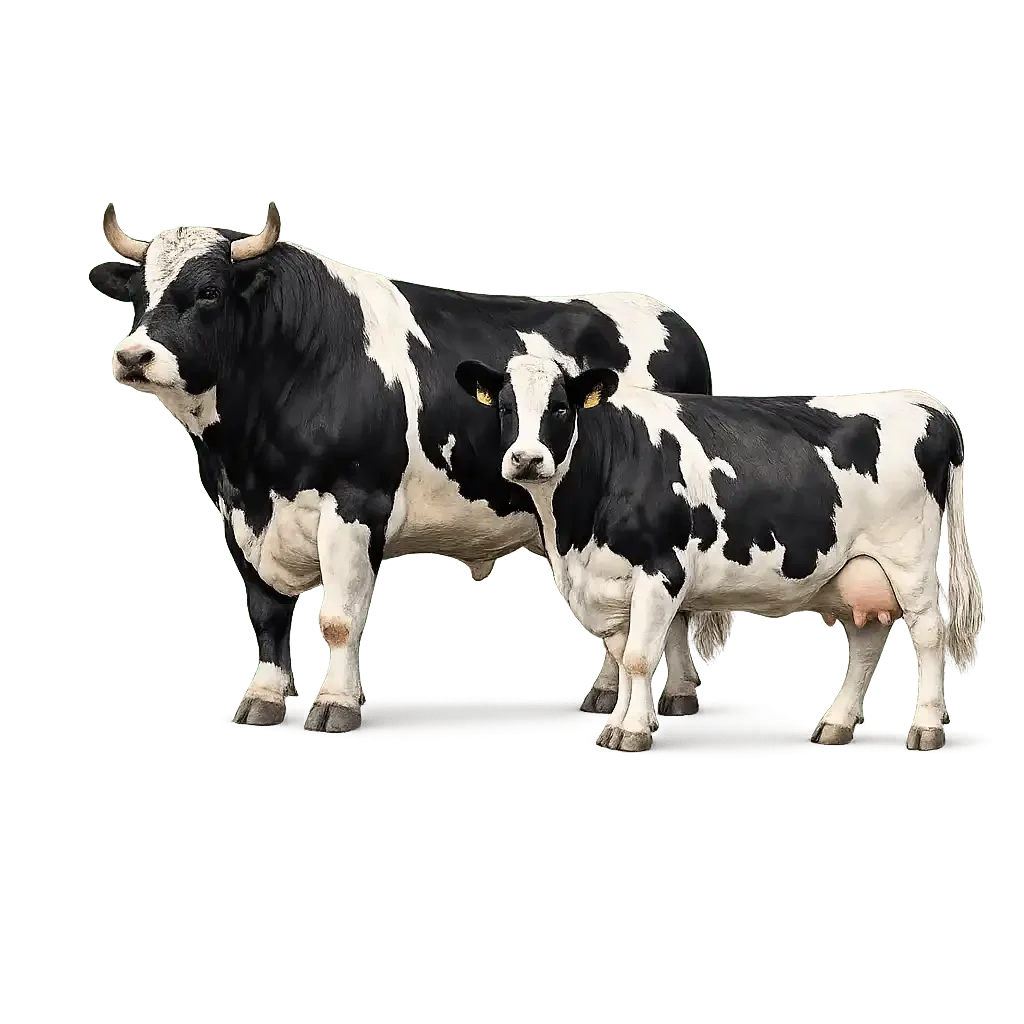
Holstein Friesian cattle, commonly known simply as Holsteins, are the world's highest-producing dairy cattle breed and the most recognizable with their distinctive black-and-white spotted pattern. Originating from the Netherlands and Northern Germany, Holsteins have become the dominant dairy breed globally, found on dairy farms across six continents. These large, efficient milk producers are renowned for their exceptional milk volume, reaching up to 9 gallons per day or 22,000+ pounds annually. Their unmatched productivity, adaptability to various management systems, and efficient feed conversion have made them the cornerstone of modern commercial dairy operations while also serving small-scale dairies seeking maximum milk production.
Origin & History
Origin: Netherlands (North Holland, Friesland) and Northern Germany
Development Period: Developed over 2,000 years from native cattle
Name Origin: Named after Holstein region (Germany) and Friesland province (Netherlands)
Original Use: Dual-purpose for milk and draft work on Dutch and German farms
U.S. Introduction: First imported to United States in 1852
Recognition: Holstein-Friesian Association of America formed 1885
Modern Status: World's most popular and productive dairy breed
Global Presence: Found on all continents except Antarctica; over 90% of U.S. dairy cattle
Physical Characteristics
Color: Black and white spotted pattern (most common); red and white also occurs
Build: Large-framed, angular, dairy-focused conformation
Weight: Bulls 2,000-2,500 lbs; Cows 1,400-1,600 lbs
Height: Bulls 60-65 inches at shoulder; Cows 58 inches average
Distinctive Features:
Iconic black-and-white spotted markings (no two alike)
Large, well-attached udder with high capacity
Angular, wedge-shaped dairy conformation
Long, lean body with prominent hip bones
Naturally polled (hornless) through selective breeding available
Large frame optimized for milk production
Alert, refined head with large eyes
Strong legs and feet for longevity
Reproduction & Breeding
Gestation Period: Approximately 279-283 days
Breeding Age: Heifers bred at 13-15 months for calving at 22-24 months
Calving: May require assistance due to large calf size
Calf Birth Weight: 80-110 lbs (heavier than smaller breeds)
Calving Interval: Target 12-13 months for optimal production
Fertility: Good fertility when properly managed and fed
Breeding Season: Year-round breeding with artificial insemination common
Sexual Maturity: Bulls mature at 12-15 months; heifers 10-12 months
Lifespan & Productivity
Average Lifespan: 6-8 years in commercial production
Productive Life: Average 3-4 lactations in commercial herds
Prime Production Years: 3rd through 5th lactations (peak production)
Longevity: Can produce 10+ years with excellent management
Stayability: Improving through genetic selection for cow longevity
Milk Production
Purpose: Specialized dairy breed - world's highest milk producer
Daily Production: 6-9 gallons per day (25-35+ liters)
Annual Production: 18,000-25,000+ lbs per lactation (elite cows exceed 30,000 lbs)
Lactation Period: 305 days standard lactation; many milk 10+ months
Butterfat Content: 3.5-3.8% (lower than Jersey but higher total fat due to volume)
Protein Content: 3.1-3.3%
Milk Quality: Ideal for fluid milk, cheese, yogurt, and all dairy products
Peak Production: Typically 6-8 weeks after calving
World Records: Highest producing cows exceed 70,000 lbs in single lactation
Calf Growth & Development
Weaning Weight: 450-600 lbs at 8-10 weeks
Daily Gain: 1.8-2.5 lbs per day on proper nutrition
Market Weight: 1,000-1,300 lbs at 15-18 months (dairy steers/cull animals)
Feed Efficiency: Good efficiency for rapid growth
Heifer Development: Heifers reach breeding weight (850-900 lbs) at 13-15 months
Vigor: Generally vigorous calves; require good colostrum management
Temperament
Holstein Friesian cattle generally exhibit calm, docile temperaments well-suited to intensive dairy management. They are intelligent animals that adapt well to routine and consistent handling, becoming familiar with milking parlor procedures and farm routines. Most Holsteins are gentle and manageable, particularly when raised with regular human contact from birth. Individual temperaments vary, with some cows being particularly friendly and curious while others may be more reserved.
The breed's temperament makes them suitable for both large commercial operations and smaller family dairies. Cows demonstrate strong maternal instincts though calves are typically separated shortly after birth in commercial systems. Holstein bulls require proper respect and handling facilities as their large size can make them dangerous regardless of temperament. Modern breeding programs increasingly include docility as a selection trait. Overall, Holsteins' manageable dispositions combined with their productivity make them practical working cattle for dedicated dairy farmers.
Meat Quality
Marbling: Limited marbling compared to beef breeds
Flavor: Acceptable beef flavor but leaner than beef breeds
Tenderness: Variable; generally tougher than specialized beef breeds
Grading: Typically grades Select; occasionally low Choice
Dressing Percentage: 50-55% (lower than beef breeds)
Market Use: Dairy steers used for ground beef, processed meats
Veal Production: Male calves often raised for veal or young beef
Cull Cow Market: Older dairy cows marketed for lean ground beef
Feeding & Nutrition
Grazing: Can utilize pasture but require supplementation for high production
Feed Requirements: High-energy, high-protein rations essential for peak production
Daily Intake: 50-60+ lbs dry matter per day for high producers
Water: 30-50 gallons per day (high-producing cows need abundant clean water)
Mineral Needs: Comprehensive mineral and vitamin supplementation required
Nutrition Management: Precise ration balancing critical for health and production
TMR Systems: Total Mixed Ration feeding common in commercial operations
Grain/Concentrate: 15-25 lbs daily for high producers
Health & Care
Hardiness: Adaptable but require good management for optimal health
Common Issues: Mastitis, ketosis, milk fever, displaced abomasum, lameness
Vaccinations: Comprehensive dairy cattle vaccination programs essential
Parasite Control: Regular deworming and fly control programs
Hoof Care: Regular trimming essential (2-3 times yearly); prone to lameness
Climate Adaptation: Prefer cooler climates; heat stress management critical in warm areas
Heat Tolerance: Moderate; require shade, fans, sprinklers in hot climates
Cold Tolerance: Excellent cold tolerance with proper shelter
Transition Management: Critical period around calving requires careful monitoring
Commercial Dairy Suitability
Production Systems: Excel in confinement, freestall, and parlor systems
Scale: Suitable for operations from 20 to 2,000+ cow herds
Infrastructure Needs: Require proper milking facilities and housing
Labor Efficiency: Efficient to milk and manage in larger groups
Technology Compatible: Work well with automated milking systems and monitoring
Breeding Programs: Extensive AI stud selection for genetic improvement
Record Keeping: DHIA testing and herd management software recommended
Advantages
Highest milk production volume of all dairy breeds
Excellent feed-to-milk conversion efficiency
Extensive genetic improvement programs and AI sire selection
Generally docile and manageable temperament
Adapts well to various management systems
Strong global breeding and support infrastructure
High milk volume spreads fixed costs efficiently
Excellent genetic selection for production traits
Large body size provides some beef value for culls
Worldwide market for genetics and breeding stock
Well-suited to automated and intensive systems
Strong milk production persistence through lactation
Disadvantages
Lower butterfat percentage than Jersey or Guernsey
Require high-quality feed and intensive management
More susceptible to heat stress than smaller breeds
Higher feed costs due to large body size and production
Shorter productive lifespan in intensive systems (3-4 lactations average)
Calving difficulty more common than smaller breeds
Limited beef quality compared to specialized beef breeds
Require substantial infrastructure investment
Health issues more common in very high producers
Large size requires sturdy facilities and equipment
Best Suited For
Commercial dairy operations of all sizes
Farmers seeking maximum milk volume per cow
Operations with proper milking facilities and housing
Producers in moderate to cool climates
Farms using Total Mixed Ration feeding systems
Operations focused on fluid milk production
Producers with good technical knowledge and management skills
Farms with access to quality forages and concentrates
Large-scale dairy operations seeking efficiency
Producers utilizing artificial insemination and genetic selection
Confinement and freestall dairy systems
Operations with strong veterinary support
Economic Considerations
Initial Cost: $1,500-$3,000 for bred heifers; $2,000-$5,000+ for proven cows
Return on Investment: Excellent for commercial dairies due to high volume
Feed Costs: Higher total feed cost but efficient milk per pound of feed
Infrastructure: Requires significant investment in facilities and equipment
Market Demand: Strong global demand for milk and breeding genetics
Cull Value: Moderate beef value for cull cows and dairy steers
Genetic Investment: Premium sires command high AI fees but improve herd
Efficiency: High milk volume per cow reduces labor cost per unit milk
Production Management
Milking Frequency: 2-3 times daily; some use robotic milking
Dry Period: 45-60 days between lactations for optimal health
Grouping: Often grouped by production level for targeted feeding
Reproduction Management: Timed AI protocols common for efficiency
Calf Rearing: Early separation; bottle or bucket feeding standard
Heifer Development: Structured programs for optimal growth to breeding
Culling Strategy: Regular culling of low producers, sick, or problem cows
Fun Facts
Holstein cattle account for over 90% of the U.S. dairy herd
No two Holsteins have exactly the same spot pattern - like fingerprints
The average Holstein produces enough milk yearly to fill a small swimming pool
A single cow can produce over 200,000 glasses of milk in her lifetime
Red and white Holsteins are the same breed - red is a recessive color gene
The world record Holstein produced over 74,000 pounds of milk in one year
Holsteins were originally dual-purpose cattle used for both milk and farm work
A high-producing Holstein drinks a bathtub of water daily (30-50 gallons)
Holsteins were first called "Holstein-Friesians" in America, later shortened to "Holsteins"
The average Holstein eats about 100 pounds of feed daily
Holstein genetics are used worldwide - exported to over 160 countries
Modern Holsteins produce 3-4 times more milk than cows from 100 years ago
Holstein cow named Selz-Pralle Aftershock 3918 produced 78,170 lbs milk in one lactation
Holsteins have been recognized as a distinct breed for over 2,000 years
Often overlooked, Holstein beef has surprising marbling; see how it stacks up in our Complete Guide to Beef Cuts.