
Limousin
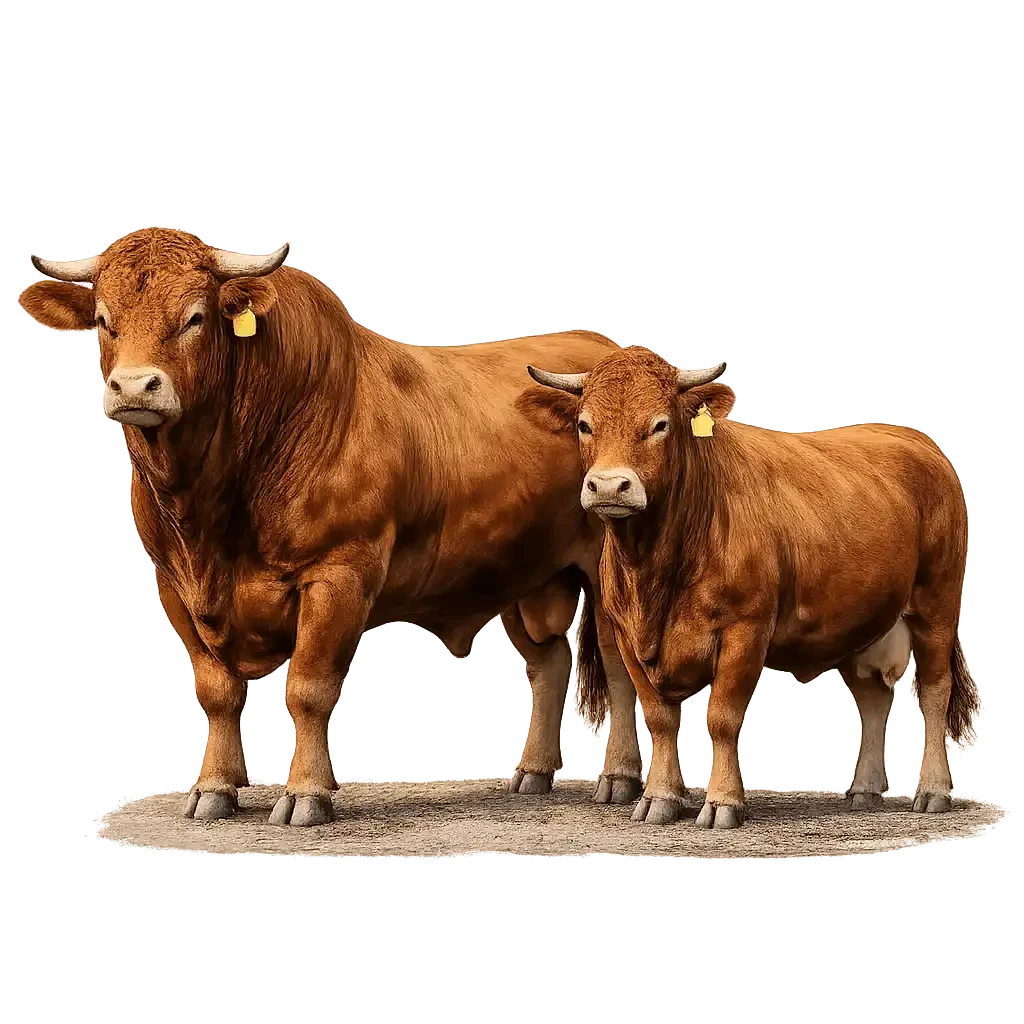
Overview
Limousin cattle are a premier French beef breed renowned for their exceptional muscling, lean meat production, and outstanding feed efficiency. Originating from the Limousin and Marche regions of west-central France, these distinctive golden-red cattle have become one of the world's leading terminal sire breeds. Limousins are prized for producing extremely high-yielding carcasses with minimal fat and maximum lean meat, making them ideal for quality beef production and crossbreeding programs. Their combination of heavy muscling, easy fleshing ability, docile temperament, and maternal qualities has made them increasingly popular in commercial beef operations worldwide.
Origin & History
Origin: Limousin and Marche regions, west-central France
Development Period: Ancient breed developed over centuries
Historical Use: Triple-purpose for draft work, meat, and milk
Herd Book: French herd book established 1886
U.S. Introduction: First imported in 1968
Recognition: North American Limousin Foundation formed 1968
Global Spread: Now raised in over 70 countries worldwide
Modern Development: Specialized for lean beef production and terminal sire use
Physical Characteristics
Color: Golden-red to darker red; lighter circles around eyes and muzzle
Build: Large frame with heavy muscling throughout
Weight: Bulls 2,000-2,600 lbs; Cows 1,300-1,700 lbs
Height: Bulls 5.5-6 feet at shoulder; Cows 5-5.5 feet
Distinctive Features:
Beautiful golden-red color
Lighter hair around eyes creating "spectacles"
Light-colored muzzle and underline
Heavily muscled throughout body
Fine bone structure relative to muscle mass
Smooth, refined appearance
Both horned and polled varieties available
Deep body with well-sprung ribs
Reproduction & Breeding
Gestation Period: Approximately 285-290 days
Breeding Age: Heifers bred at 14-16 months
Calving: Good calving ease, particularly in maternal lines
Calf Birth Weight: 75-95 lbs (moderate for large breed)
Calving Interval: 365 days achievable
Fertility: Very good fertility and conception rates
Breeding Season: Year-round breeding capability
Sexual Maturity: Bulls mature at 14-18 months
Lifespan & Productivity
Average Lifespan: 12-16 years
Productive Life: Cows typically produce 10-14 calves in lifetime
Prime Production Years: 3-12 years of age
Longevity: Good longevity with proper management
Stayability: Cows remain productive into teens
Milk Production
Purpose: Beef breed - milk primarily for calf rearing
Daily Production: 12-16 lbs per day (good for beef cattle)
Lactation Period: 8-10 months
Maternal Ability: Excellent mothers with good milk production
Milk Quality: Good quality supporting strong calf growth
Udder Quality: Well-attached, functional udders
Calf Growth & Development
Weaning Weight: 600-700 lbs at 205 days (excellent)
Daily Gain: 3.0-4.0 lbs per day on good feed (exceptional)
Market Weight: 1,200-1,500 lbs at 12-16 months
Feed Efficiency: Outstanding - among best feed converters
Growth Rate: Rapid and sustained growth
Vigor: Calves are vigorous and hardy
Temperament
Limousin cattle have generally calm, docile temperaments, particularly in modern American bloodlines selected for disposition. They are intelligent and trainable, responding well to consistent handling. While early imports had variable temperaments, decades of selection have produced cattle that are manageable and suitable for commercial operations.
Limousin cows demonstrate excellent maternal instincts with appropriate protectiveness. They are attentive mothers that allow reasonable human interaction while remaining alert to their calves. Bulls are typically manageable with proper facilities and respect, generally cooperative when well-handled from youth. The breed's calm nature, combined with their size and muscling, makes them suitable for various operation sizes with appropriate handling facilities.
Meat Quality
Marbling: Moderate marbling, leaner than British breeds
Flavor: Excellent beef flavor with good palatability
Tenderness: Tender with proper aging and finishing
Grading: Typically grades Select to low Choice
Dressing Percentage: 63-68% (exceptional - among highest)
Cutability: Outstanding - very high percentage of retail cuts
Lean Meat Yield: Exceptional lean meat production per animal
Ribeye Area: Large ribeye relative to carcass weight
Feeding & Nutrition
Grazing: Good grazers on quality pasture
Feed Requirements: Efficient - require less feed per pound of gain
Finishing: Finish at reasonable weights with good efficiency
Water: 12-18 gallons per day
Mineral Needs: Standard beef cattle mineral program
Feed Conversion: Among best in breed for converting feed to lean muscle
Grain Efficiency: Excel in feedlot settings
Health & Care
Hardiness: Hardy and adaptable to various climates
Common Issues: Generally healthy with few breed-specific problems
Vaccinations: Standard cattle vaccination protocols
Parasite Control: Standard beef cattle parasite management
Hoof Care: Good hoof quality; regular trimming on soft ground
Climate Adaptation: Adapt to temperate to warm climates
Heat Tolerance: Good heat tolerance for large breed
Cold Tolerance: Good cold hardiness
Carcass Quality and Yield
Dressing Percentage: 63-68% - among highest of all breeds
Ribeye Area: Large muscling provides excellent ribeye
Fat Cover: Minimal external fat, more intramuscular marbling
Retail Cuts: Very high percentage of saleable meat
Bone Percentage: Fine bone means more meat, less waste
Yield Grade: Consistently high yield grades (1-2)
Lean Meat: Produce more lean meat per animal than most breeds
Advantages
Exceptional muscling and lean meat production
Outstanding dressing percentage (63-68%)
Superior feed efficiency and conversion
Rapid growth rate and excellent weight gains
High cutability and retail cut percentage
Fine bone structure maximizes meat-to-bone ratio
Good maternal qualities in cow lines
Docile temperament in modern bloodlines
Excellent hybrid vigor in crossbreeding
Adaptable to various climates and management systems
Strong market demand as terminal sires
Polled genetics available
Disadvantages
Less marbling than British breeds may affect premium grading
Large frame size requires more feed for maintenance
May produce heavier calves requiring attention at calving
Light-colored cattle may be more susceptible to sunburn
Require high-quality feed for optimal performance
Not ideal for very rough, marginal forage conditions
May be too large for some smaller operations
Best Suited For
Commercial feedlot operations seeking efficiency
Terminal sire programs for maximum carcass value
Operations with quality forage and feed
Markets prioritizing lean beef and yield
Crossbreeding programs to add muscling and growth
Quality-focused beef production
Producers marketing to lean beef or health-conscious markets
Large-scale ranching operations
Feedlots emphasizing feed efficiency
Economic Considerations
Initial Cost: Moderate to high for quality breeding stock
Return on Investment: Excellent due to efficiency and carcass value
Market Demand: Strong demand for terminal sire bulls
Carcass Value: Premium prices for high-yielding carcasses
Feed Efficiency: Lower feed costs per pound of gain
Feedlot Performance: Excellent returns in feedlot settings
Terminal Sire Value: Strong market for crossbreeding programs
Weaning Value: Heavy weaning weights increase revenue
Crossbreeding Applications
Terminal Sire: Primary use on British breed cows for market calves
Hybrid Vigor: Excellent heterosis in crossbreeding
Popular Crosses: Limousin x Angus (LimFlex) highly valued
Muscling: Add heavy muscling and growth to crosses
Efficiency: Transfer superior feed conversion to crossbreds
Carcass Merit: Improve yield and cutability in commercial cattle
Market Acceptance: Limousin-cross feeders command premium prices
Fun Facts
Limousin cattle have the highest dressing percentage of major beef breeds
The breed's name comes from the Limousin region of France
Limousins were historically used as draft animals before mechanization
They produce more lean meat per animal than most other breeds
The golden-red color with light "spectacles" around eyes is a breed trademark
Limousins weren't imported to the U.S. until 1968, making them relatively new here
The breed's fine bone structure means more meat and less waste
Limousin x Angus crosses (LimFlex) are among the most efficient beef cattle
They consistently produce yield grade 1-2 carcasses
Limousins can gain over 4 pounds daily in optimal feedlot conditions
The breed is the second most numerous beef breed in France
Limousin cattle adapt well to both intensive and extensive production systems
Often called the 'butcher's breed' for its high yield, discover how these yields are categorized into 8 primal beef cuts.