
Lowline Angus
Overview
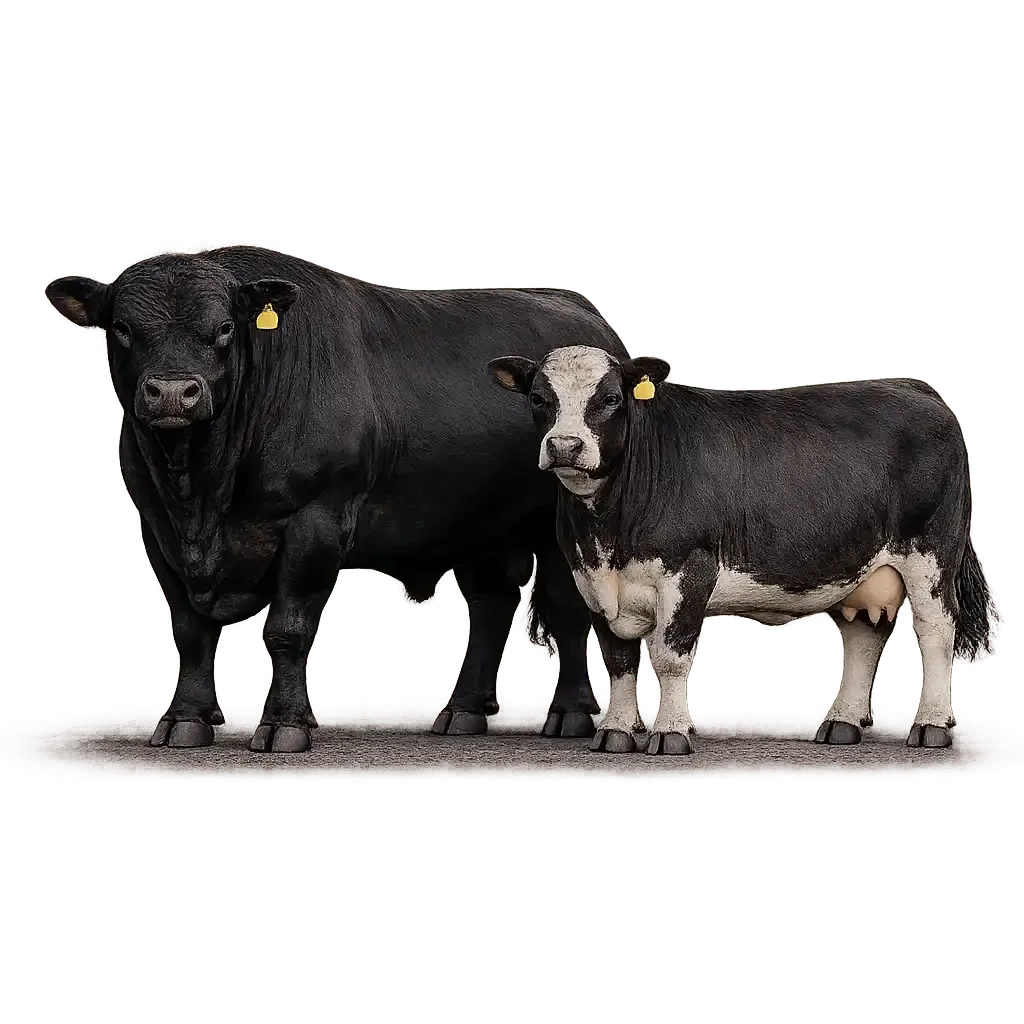
Lowline Angus, also known as Australian Lowline or Aberdeen Angus Lowline, are a compact beef breed developed from pure Aberdeen Angus cattle through scientific selection for small size without dwarfism. Standing just 36-48 inches at the shoulder, these miniature cattle retain all the premium beef quality, marbling, and docile temperament of full-size Angus while requiring significantly less feed and land. Developed in Australia through a research project beginning in 1974, Lowline Angus are true Angus cattle - not a separate breed but rather a size variation selected for efficiency. Their small size, premium beef quality, and manageable nature make them increasingly popular for small farms, hobby ranches, and niche beef markets.
While Lowlines are smaller, they share many traits with Black Angus
Origin & History
Origin: Trangie Research Centre, New South Wales, Australia
Development Period: 1974-1992 research project
Foundation Stock: Pure Aberdeen Angus cattle from research herd
Selection Criteria: Scientifically selected for small size and efficiency
Research Goal: Determine if small cattle were more efficient producers
U.S. Introduction: First imported to United States in 1996
Recognition: Australian Lowline Cattle Association formed 1992
American Recognition: American Lowline Registry established 1997
Physical Characteristics
Color: Solid black (most common) or solid red
Build: Compact, well-muscled, proportionate body
Weight: Bulls 950-1,350 lbs; Cows 650-950 lbs
Height: Bulls 39-48 inches at shoulder; Cows 36-42 inches
Distinctive Features:
Compact size - about 2/3 height of standard Angus
Solid black or solid red coloring
Naturally polled (no horns)
Well-muscled, proportionate conformation
Not dwarf cattle - properly proportioned
Deep body with good spring of rib
Short, smooth hair coat
Retain classic Angus appearance in miniature
Reproduction & Breeding
Gestation Period: Approximately 280-283 days
Breeding Age: Heifers bred at 15-18 months
Calving: Excellent calving ease with very low assistance rates
Calf Birth Weight: 45-65 lbs (very manageable)
Calving Interval: 365 days achievable
Fertility: Very good fertility and conception rates
Breeding Season: Year-round breeding capability
Sexual Maturity: Bulls mature at 12-15 months
Lifespan & Productivity
Average Lifespan: 12-18 years
Productive Life: Cows typically produce 10-14 calves in lifetime
Prime Production Years: 3-12 years of age
Longevity: Excellent longevity for their size
Stayability: Cows remain productive well into teens
Milk Production
Purpose: Beef breed - milk primarily for calf rearing
Daily Production: 8-12 lbs per day (adequate for calf size)
Lactation Period: 8-10 months
Maternal Ability: Excellent mothers with strong maternal instincts
Milk Quality: Rich milk supporting vigorous calf growth
Milk-to-Calf Ratio: Produce sufficient milk for calf size
Calf Growth & Development
Weaning Weight: 350-450 lbs at 205 days
Daily Gain: 1.8-2.5 lbs per day on good feed
Market Weight: 750-950 lbs at 18-24 months
Feed Efficiency: Exceptional - require 1/3 less feed than standard cattle
Efficiency: Higher feed conversion ratio than full-size cattle
Vigor: Calves are hardy and vigorous from birth
Temperament
Lowline Angus inherit the famously docile and calm temperament of Aberdeen Angus cattle. They are exceptionally gentle, friendly, and easy to handle, making them ideal for families, children, and beginning cattle owners. Their small size combined with calm nature creates truly manageable cattle suitable for operations of any scale.
Lowline Angus cows demonstrate excellent maternal instincts without excessive protectiveness. They are attentive mothers but allow human interaction readily, making them safe around people. Bulls are notably calm and manageable, far less intimidating than full-size bulls while maintaining breeding vigor. The breed's gentle disposition, combined with their compact size, makes them perfect for small farms, hobby ranches, and educational operations.
Meat Quality
Marbling: Excellent marbling - equal to or better than standard Angus
Flavor: Outstanding beef flavor, identical to premium Angus
Tenderness: Very tender - among top beef breeds
Grading: Consistently grades Choice to Prime
Dressing Percentage: 60-64%
Carcass Size: 400-550 lbs hanging weight - ideal for direct sales
Market Appeal: Premium prices for quality small-farm beef
Quality: Retains all Angus beef characteristics
Feeding & Nutrition
Grazing: Excellent grazers, highly efficient on pasture
Feed Requirements: Require 30-35% less feed than standard cattle
Acreage Needs: Can be raised on 1-2 acres per animal
Water: 8-12 gallons per day
Mineral Needs: Standard cattle mineral program
Finishing: Finish well on grass or minimal grain
Efficiency: Among most efficient beef cattle per pound produced
Health & Care
Hardiness: Hardy and disease-resistant
Common Issues: Very healthy; minimal breed-specific problems
Vaccinations: Standard cattle vaccination protocols
Parasite Control: Standard cattle parasite management
Hoof Care: Minimal trimming needed; naturally sound feet
Climate Adaptation: Adapt well to various climates
Heat Tolerance: Good heat tolerance
Cold Tolerance: Excellent cold hardiness
Efficiency and Small Farm Suitability
Feed Efficiency: 30-35% less feed than standard cattle per animal
Land Requirements: 1-2 acres per animal versus 2-5 for standard cattle
Fence Requirements: Standard cattle fencing adequate
Handling Ease: Small size makes handling and restraint easier
Equipment: Standard cattle facilities and equipment work
Carcass Size: Perfect for family consumption or direct sales
Market Niche: Ideal size for direct-to-consumer marketing
Advantages
Require 30-35% less feed than standard cattle
Need 1/2 to 1/3 the land of full-size cattle
Retain all premium Angus beef quality and marbling
Exceptionally gentle and easy to handle
Excellent calving ease with small birth weights
Perfect carcass size for family use and direct sales
Naturally polled (no horns)
Not dwarf cattle - properly proportioned
Lower infrastructure and equipment costs
Ideal for small acreages and hobby farms
Premium prices in niche beef markets
True purebred Angus genetics
Disadvantages
Higher initial purchase cost than commercial cattle
Smaller total carcass weight per animal
Limited availability compared to standard Angus
Not suitable for large-scale commercial operations
Take slightly longer to reach market weight
May require premium marketing to maximize returns
Less total production per animal than full-size cattle
Best Suited For
Small farms and acreages (1-10 acres)
Hobby ranches and lifestyle properties
Beginning cattle owners
Direct-to-consumer beef sales
Family beef production for home consumption
Sustainable and organic agriculture
Operations with limited acreage
Farms wanting premium Angus quality in smaller package
Educational farms and petting operations
Farms with children learning animal husbandry
Economic Considerations
Initial Cost: $2,500-$5,000+ per animal (higher than commercial)
Return on Investment: Excellent for small farms due to efficiency
Feed Costs: 30-35% lower than standard cattle - major savings
Land Costs: Minimal acreage needed reduces land requirements
Market Demand: Strong demand for breeding stock and premium beef
Premium Pricing: Commands premium for quality, locally-raised beef
Infrastructure: Lower fencing and facility costs than large cattle
Efficiency Value: Maximize production on limited resources
Size Comparison and Genetics
Height: About 2/3 the height of standard Angus
Weight: Approximately 60-70% of standard Angus weight
Proportions: Properly proportioned - not dwarf cattle
Genetics: Pure Aberdeen Angus genetics
Selection: Scientifically selected for size, not crossbred
Breeding True: Consistently produce Lowline offspring
Quality: Retain all Angus characteristics except size
Fun Facts
Lowline Angus were developed through scientific research, not selective breeding for novelty
They are pure Aberdeen Angus cattle, just smaller - not a different breed
The research project proved small cattle are more efficient per pound produced
Lowlines require about 1/3 less feed than standard cattle per animal
They can be raised on as little as 1-2 acres per animal
A 400-500 lb carcass is perfect size for a family freezer
Lowline beef grades Choice to Prime just like standard Angus
They are NOT dwarf cattle - they are proportionate miniatures
The breed was developed from 1974-1992 at an Australian research station
Lowlines retain the famous Angus marbling and beef quality
They are increasingly popular for farms transitioning from horses to cattle
Their calm nature makes them ideal "starter cattle" for beginners
All the quality of Angus in a compact package-learn about the meat yield in our Complete Guide to Beef Cuts.