
Black Angus
Overview
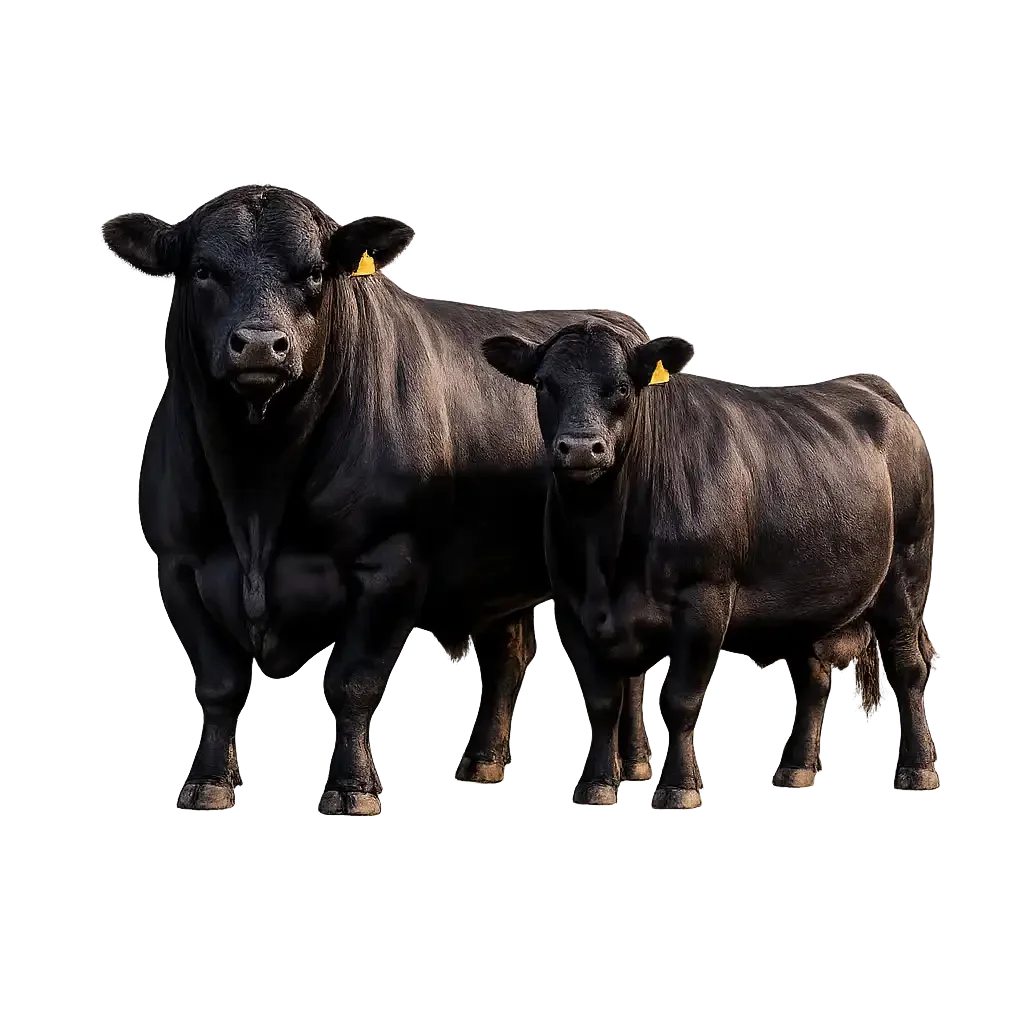
The Aberdeen Angus, commonly known as Black Angus or simply Angus, is one of the most popular and widely recognized beef cattle breeds in the world. Originating in northeastern Scotland, this naturally polled (hornless) breed has become the cornerstone of the beef industry, particularly in the United States.
While standard Black Angus cattle are the industry benchmark, many small-acreage farmers are switching to Lowline Angus for their improved efficiency and manageable size.
Origin & History
Origin: Aberdeenshire and Angus counties in Scotland
Development Period: 16th-19th centuries
Key Figures: Hugh Watson and William McCombie refined the breed in the 1800s
Introduction to US: 1873
Recognition: The breed gained fame for producing high-quality, well-marbled beef
Physical Characteristics
Color: Solid black (defining characteristic)
Build: Medium-sized, compact, muscular frame
Weight: Bulls 1,800-2,500 lbs; Cows 1,200-1,800 lbs
Height: Bulls ~4.5-5 feet at shoulder; Cows slightly smaller
Distinctive Features:
Naturally polled (no horns)
Smooth black coat
Well-muscled throughout
Strong, sturdy legs
Reproduction & Breeding
Gestation Period: Approximately 283 days (9 months)
Breeding Age: Heifers typically bred at 15-18 months
Calving: Known for easy calving with minimal assistance needed
Calf Birth Weight: 60-90 lbs (relatively light, reducing calving difficulty)
Calving Interval: 12-13 months optimal
Fertility: High conception rates
Breeding Season: Year-round, though many operations use seasonal breeding
Lifespan & Productivity
Average Lifespan: 15-20 years
Productive Life: Cows can calve successfully into their teens
Prime Production Years: 3-10 years of age
Longevity: Known for durability and extended productive life
Milk Production
Purpose: Beef breed - milk primarily for calf rearing
Daily Production: 10-20 lbs per day (moderate for beef cattle)
Lactation Period: 6-10 months
Maternal Ability: Excellent mothers with strong milk production for calf growth
Butterfat Content: Higher than dairy breeds (richer milk for calves)
Note: Not used for commercial dairy production
Calf Growth & Development
Weaning Weight: 400-600 lbs at 6-8 months
Daily Gain: 2-3.5 lbs per day on good feed
Market Weight: 1,100-1,400 lbs at 14-18 months
Feed Efficiency: Excellent conversion ratio
Temperament
Generally docile and easy to handle, making them popular with both commercial operations and smaller farms. Known for good maternal instincts and calm disposition. Cows are protective of calves but not overly aggressive.
Meat Quality
Marbling: Excellent intramuscular fat distribution
Flavor: Rich, beefy taste
Tenderness: Superior tenderness
Grading: Frequently achieves Prime and Choice USDA grades
Dressing Percentage: 60-65% (excellent carcass yield)
Market Appeal: "Certified Angus Beef" brand commands premium prices
Feeding & Nutrition
Grazing: Excellent foragers, thrive on grass-based systems
Feed Requirements: Moderate - efficient feed converters
Finishing: Can be grass-finished or grain-finished
Water: 10-20 gallons per day (more in hot weather or lactating)
Mineral Needs: Standard beef cattle mineral supplementation
Health & Care
Hardiness: Very hardy, disease-resistant
Common Issues: Generally healthy; standard cattle health management
Vaccinations: Standard cattle vaccination protocols
Parasite Control: Regular deworming recommended
Hoof Care: Minimal trimming usually needed
Climate Adaptation: Best in temperate to cool climates
Advantages
Adaptable to various climates
Efficient feed conversion
Easy calving with light birth weights
Strong maternal characteristics
Excellent meat quality and marbling
No dehorning required (naturally polled)
Hardy and disease-resistant
Docile temperament
Long productive lifespan
Good milk production for calf rearing
Disadvantages
Less heat-tolerant than Brahman-influenced breeds
Black coat can be disadvantage in very hot, sunny climates
Smaller frame size compared to some continental breeds
Not suitable for dairy production
May require shade in extreme heat
Best Suited For
Commercial beef production
Grass-fed operations
Crossbreeding programs (excellent for hybrid vigor)
Quality-focused beef producers
Moderate to cool climates
Small to large-scale operations
Farmers wanting low-maintenance cattle
Economic Considerations
Initial Cost: Moderate to high (quality genetics command premium)
Return on Investment: Excellent due to meat quality premiums
Market Demand: Consistently high
Certified Angus Beef Premium: Can add significant value
Resale Value: Strong breeding stock market
Fun Facts
Aberdeen Angus cattle outnumber people in their native Scotland
The breed has its own branded beef program (Certified Angus Beef®), established in 1978
Red Angus is a color variant of the same breed
Angus genetics are used in over 60% of U.S. beef production
The first Angus bull imported to the U.S. was named "George"
Black Angus are the most popular beef breed in the United States
The gold standard for many steakhouses-discover which specific cuts earn that 'Angus' reputation in our Complete Guide to Beef Cuts.