
Piedmontese
Overview
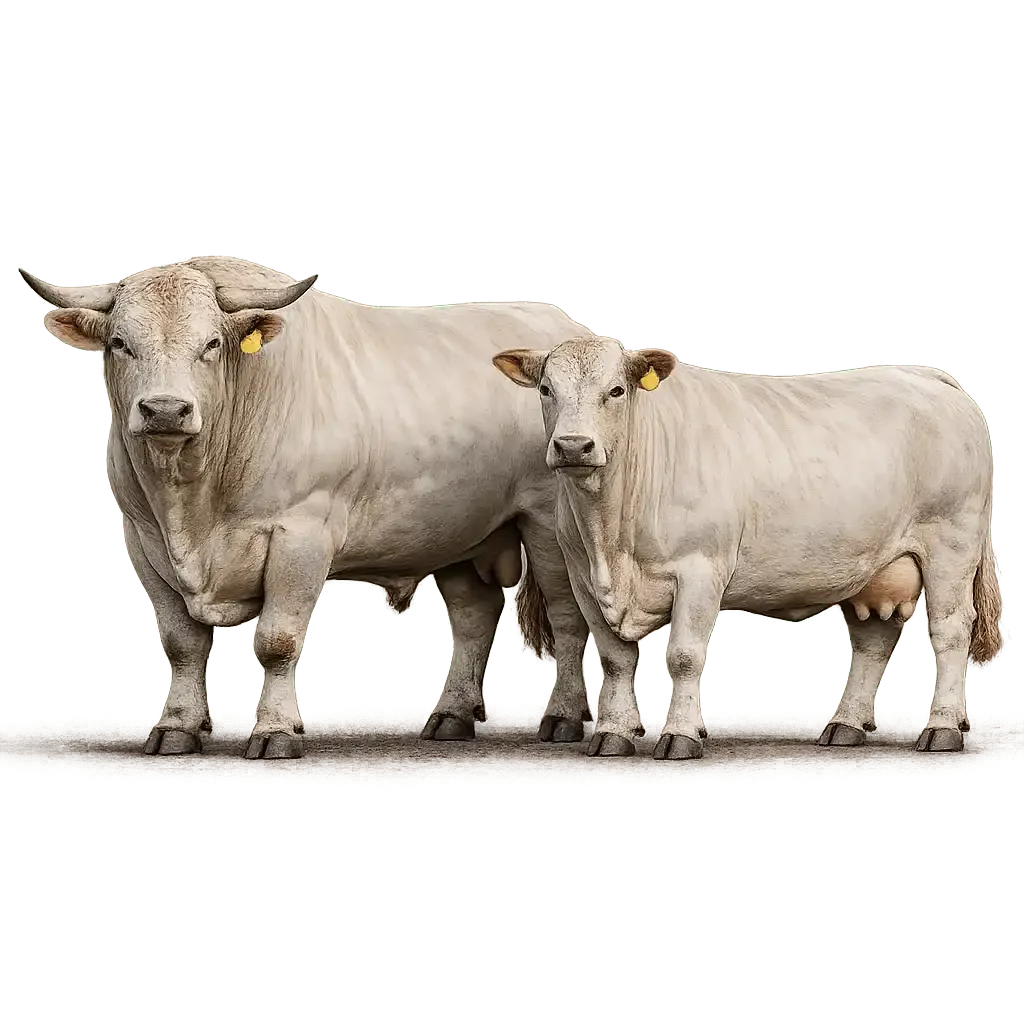
The Piedmontese is a unique and remarkable beef cattle breed originating from the Piedmont region of northwest Italy. What sets this breed apart from all others is a natural genetic mutation known as "double-muscling" (myostatin gene mutation), which results in significantly increased muscle mass and exceptionally lean beef. This ancient breed, with roots dating back thousands of years, has gained international recognition for producing some of the healthiest, most tender beef available while maintaining excellent feed efficiency.
Piedmontese cattle are particularly valued by health-conscious consumers and specialty beef producers seeking premium, ultra-lean beef with exceptional tenderness and rich flavor.
Origin & History
Origin: Piedmont region of northwestern Italy
Development Period: Over 25,000 years of natural selection
Ancestry: Descended from the Aurochs, crossbred with Zebu cattle from Pakistan
Key Development: Natural myostatin gene mutation occurred and was selectively bred
Introduction to North America: 1970s-1980s
Recognition: Gained international attention for ultra-lean, tender beef and double-muscling trait
Modern Status: Growing popularity in premium beef markets worldwide
Physical Characteristics
Color: Light gray-white to wheat-colored coat, with dark or black points (muzzle, ears, eyes, tail, hooves)
Build: Medium-framed, extremely muscular with distinctive double-muscling
Weight: Bulls 1,600-2,200 lbs; Cows 1,100-1,400 lbs
Height: Bulls ~4.5-5 feet at shoulder; Cows slightly smaller
Distinctive Features:
Double-muscling throughout body (especially hindquarters)
Extremely well-defined muscle structure
Fine bone structure
Dark pigmented muzzle, eye rings, ears, and switch
Short, smooth hair coat
Naturally polled or small horns
Reproduction & Breeding
Gestation Period: Approximately 285 days (9.5 months)
Breeding Age: Heifers typically bred at 15-18 months
Calving: May require more assistance than other breeds due to double-muscling; crossbreeding reduces issues
Calf Birth Weight: 60-75 lbs (relatively light despite muscling)
Calving Interval: 12-13 months optimal
Fertility: Good conception rates, especially in crossbred programs
Breeding Season: Year-round capability
Note: Purebred-to-purebred breeding may require veterinary assistance; crossbreeding recommended for easier calving
Lifespan & Productivity
Average Lifespan: 15-20 years
Productive Life: Cows can calve successfully for many years
Prime Production Years: 3-12 years of age
Longevity: Hardy breed with good longevity in proper conditions
Milk Production
Purpose: Beef breed - milk primarily for calf rearing
Daily Production: 8-15 lbs per day (moderate for beef cattle)
Lactation Period: 6-9 months
Maternal Ability: Good mothers with adequate milk for calf growth
Butterfat Content: Rich milk suitable for calf development
Note: Not used for commercial dairy production
Calf Growth & Development
Weaning Weight: 450-650 lbs at 6-8 months
Daily Gain: 2.5-3.5+ lbs per day on quality feed
Market Weight: 1,100-1,350 lbs at 14-18 months
Feed Efficiency: Exceptional conversion ratio - among the best in beef industry
Growth Pattern: Rapid muscle development with minimal fat deposition
Temperament
Generally docile, calm, and easy to handle. Piedmontese cattle are known for their gentle disposition and adaptability to various management systems. They respond well to human interaction and are suitable for both large commercial operations and smaller farms. Cows exhibit good maternal instincts without excessive protectiveness. Their calm nature makes them particularly suitable for intensive grazing systems and hands-on management.
Meat Quality
Leanness: Exceptional - typically less than 2% intramuscular fat (vs. 5-10% in other breeds)
Tenderness: Outstanding - higher tenderness scores than most breeds
Flavor: Rich, clean beef flavor without excess fat
Cholesterol: Lower than chicken or fish in some cuts
Protein Content: Higher protein-to-fat ratio than conventional beef
Dressing Percentage: 63-68% (excellent carcass yield)
Muscle-to-Bone Ratio: Outstanding - more meat, less waste
Market Appeal: Premium pricing for health-conscious consumers and specialty markets
Unique Attribute: Tender without extensive marbling due to muscle fiber structure
Feeding & Nutrition
Grazing: Excellent foragers, very efficient on grass-based systems
Feed Requirements: Low to moderate - exceptional feed efficiency
Finishing: Excellent on grass-finished programs; can be grain-finished
Feed Conversion: Superior - requires 15-20% less feed than conventional breeds for same weight gain
Water: 10-18 gallons per day (moderate consumption)
Mineral Needs: Standard beef cattle mineral supplementation
Efficiency: Converts feed to lean muscle rather than fat
Health & Care
Hardiness: Very hardy and adaptable to various climates
Common Issues: Generally healthy; calving assistance may be needed for purebred matings
Vaccinations: Standard cattle vaccination protocols
Parasite Control: Regular deworming recommended
Hoof Care: Minimal trimming usually needed
Climate Adaptation: Adaptable to various climates; handles both heat and cold well
Disease Resistance: Good overall health and disease resistance
Advantages
Exceptional feed efficiency - converts feed to lean muscle, not fat
Ultra-lean beef with outstanding tenderness
Lower cholesterol and higher protein than conventional beef
Excellent carcass yield (63-68% dressing percentage)
Superior muscle-to-bone ratio - more meat, less waste
Docile and easy to handle
Adaptable to various climates and management systems
Premium market prices for specialty beef
Relatively light birth weights reduce some calving difficulties
Good maternal instincts
Hardy and disease-resistant
Excellent for crossbreeding programs
Appeals to health-conscious consumers
Disadvantages
Purebred-to-purebred breeding may require calving assistance
Smaller gene pool outside Italy compared to mainstream breeds
Higher initial investment for quality breeding stock
Requires specialized marketing to reach premium beef customers
Not suitable for dairy production
May require education of processors unfamiliar with the breed
Best Suited For
Premium, specialty beef production
Health-conscious, lean beef markets
Grass-fed and pasture-based operations
Crossbreeding programs (excellent for hybrid vigor and easier calving)
Direct-to-consumer beef sales
Small to medium-scale operations
Farmers seeking exceptional feed efficiency
Sustainable and organic beef production
Producers wanting to differentiate their product
Economic Considerations
Initial Cost: Moderate to high for quality breeding stock
Return on Investment: Excellent due to feed efficiency and premium pricing
Market Demand: Growing demand in health-conscious and specialty markets
Premium Pricing: Can command 20-40% price premium over commodity beef
Feed Savings: 15-20% less feed required vs. conventional breeds
Resale Value: Strong market for breeding stock
Processing: Higher yield means more saleable meat per animal
Fun Facts
Piedmontese cattle have been depicted in cave paintings dating back over 25,000 years
The double-muscling gene is a natural mutation, not the result of genetic engineering
Piedmontese beef has been called "the heart-healthy beef" due to its low fat and cholesterol
Only about 1% of cattle worldwide carry the double-muscling gene
The breed nearly went extinct in the 1970s but has since recovered
Piedmontese beef is so tender it can score higher than wagyu in blind taste tests
The Italian government regulates Piedmontese beef with strict quality standards
Crossbred Piedmontese retain many benefits while eliminating most calving difficulties
Some cuts of Piedmontese beef have less cholesterol than skinless chicken breast
This breed's unique muscle structure makes even the tougher primals surprisingly tender; see where they sit in our beef cuts breakdown.