
Red Angus
Overview
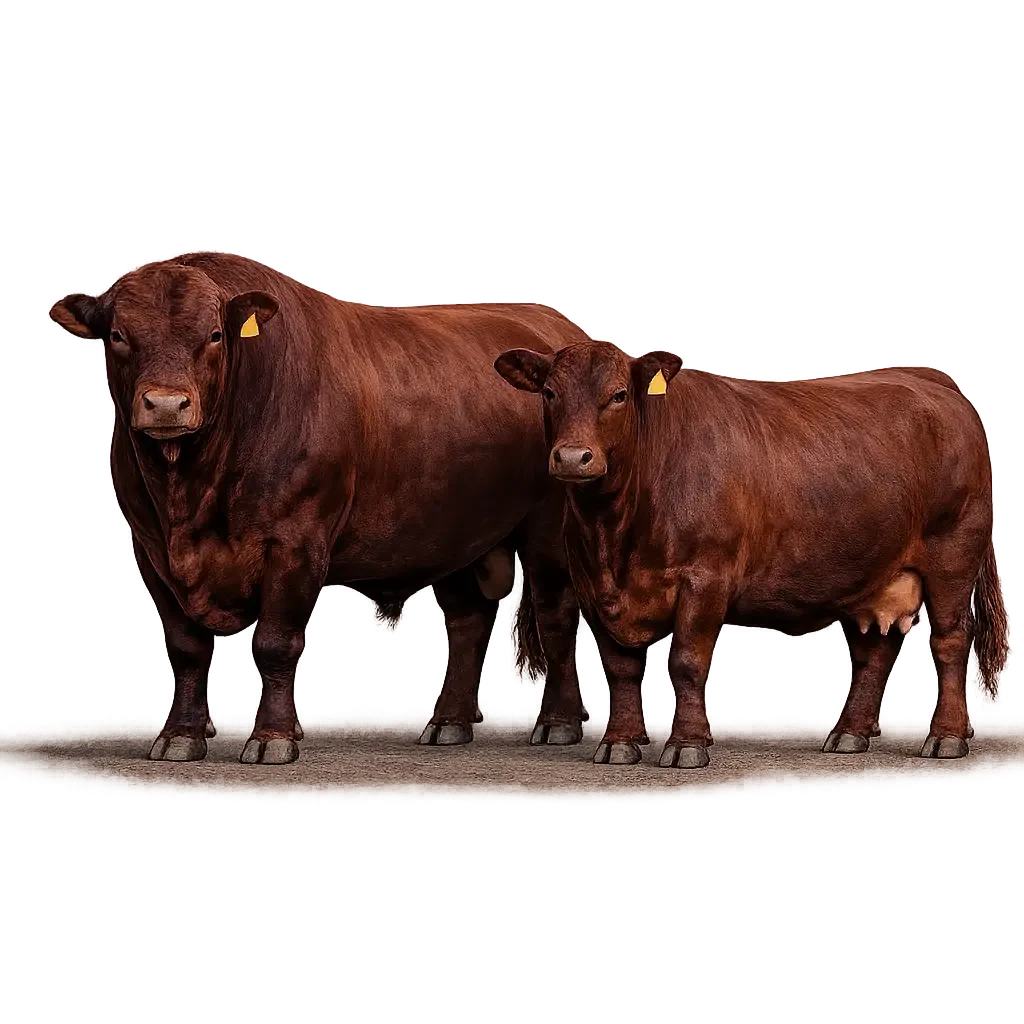
The Red Angus is a naturally occurring color variation of the Aberdeen Angus breed, sharing the same exceptional beef qualities, docile temperament, and efficient production characteristics as its Black Angus counterpart. Originally considered the same breed as Black Angus, Red Angus cattle have developed into their own distinct registry and breeding program, with particular emphasis on maternal traits, heat tolerance, and performance efficiency.
Red Angus cattle have gained tremendous popularity in the United States and internationally, prized for their superior adaptability to various climates (especially warmer regions), excellent maternal characteristics, and consistent production of high-quality, well-marbled beef. Many ranchers specifically choose Red Angus for their enhanced heat tolerance compared to black-hided cattle.
Origin & History
Origin: Aberdeenshire and Angus counties in Scotland (same as Black Angus)
Development Period: 16th-19th centuries alongside Black Angus
Genetic Background: Color variant of Aberdeen Angus - genetically similar to Black Angus
Early History: Initially culled or discriminated against in favor of black animals
U.S. Recognition: Separate Red Angus Association of America formed in 1954
Modern Development: Focused breeding program emphasizing maternal traits, efficiency, and climate adaptability
Current Status: Second-largest beef breed registry in the United States
Physical Characteristics
Color: Solid red, ranging from light red to dark mahogany/cherry red
Build: Medium-sized, compact, well-muscled frame
Weight: Bulls 1,800-2,500 lbs; Cows 1,200-1,800 lbs
Height: Bulls ~4.5-5 feet at shoulder; Cows slightly smaller
Distinctive Features:
Naturally polled (no horns)
Solid red coat without white markings
Pigmented skin, nose, and eyelids
Well-muscled throughout
Strong, correct leg structure
Moderate frame size
Reproduction & Breeding
Gestation Period: Approximately 283 days (9 months)
Breeding Age: Heifers typically bred at 14-16 months
Calving: Exceptional calving ease - among the best in beef industry
Calf Birth Weight: 60-85 lbs (light to moderate, reducing calving difficulty)
Calving Interval: 365 days optimal (bred to calve annually)
Fertility: Superior conception rates and reproductive efficiency
Breeding Season: Year-round, though seasonal breeding common
Heifer Retention: High percentage of replacement heifers due to excellent maternal genetics
Lifespan & Productivity
Average Lifespan: 15-20 years
Productive Life: Cows regularly calve into their mid-teens
Prime Production Years: 3-12 years of age
Longevity: Exceptional durability and stayability in the herd
Herd Life: Red Angus females known for producing 10+ calves in lifetime
Milk Production
Purpose: Beef breed - milk primarily for calf rearing
Daily Production: 12-22 lbs per day (above average for beef cattle)
Lactation Period: 7-10 months
Maternal Ability: Outstanding mothers with abundant milk production
Butterfat Content: Rich, high-quality milk for robust calf growth
Milking Ability: Consistently ranked among top maternal breeds
Note: Not used for commercial dairy production
Calf Growth & Development
Weaning Weight: 450-650 lbs at 6-8 months
Daily Gain: 2.5-3.5 lbs per day on quality feed
Market Weight: 1,150-1,400 lbs at 14-18 months
Feed Efficiency: Excellent - efficient converters of feed to gain
Uniformity: Consistent calf crops with minimal variation
Vigor: Calves are active and healthy from birth
Temperament
Red Angus cattle are renowned for their exceptionally docile and gentle temperament, making them one of the easiest breeds to handle and manage. They are calm, intelligent, and responsive to handlers, with minimal flight instinct. Cows exhibit outstanding maternal behavior, being protective yet manageable, rarely aggressive toward handlers. Bulls are typically calm and safe to work with compared to many other breeds. Their easy-going nature makes them ideal for operations of all sizes, from small family farms to large commercial ranches, and they adapt well to both extensive range conditions and intensive management systems.
Meat Quality
Marbling: Excellent intramuscular fat distribution
Flavor: Rich, superior beef taste
Tenderness: Consistently tender and juicy
Grading: Regularly achieves Prime and Choice USDA grades
Dressing Percentage: 62-65% (very good carcass yield)
Ribeye Area: Above average for moderate-framed cattle
Quality Grade: High percentage of premium quality grades
Market Appeal: Premium pricing for branded beef programs
Consistency: Uniform carcass characteristics across the herd
Feeding & Nutrition
Grazing: Excellent foragers with superior grazing efficiency
Feed Requirements: Moderate - efficient feed conversion
Finishing: Perform well on grass-finished or grain-finished programs
Adaptability: Thrive on various forage types and qualities
Water: 10-20 gallons per day (varies with climate and lactation)
Mineral Needs: Standard beef cattle mineral supplementation
Feed Efficiency: Convert forage to high-quality beef effectively
Health & Care
Hardiness: Exceptionally hardy and disease-resistant
Common Issues: Very healthy breed with few genetic problems
Vaccinations: Standard cattle vaccination protocols
Parasite Control: Regular deworming recommended
Hoof Care: Minimal trimming typically needed; sound feet and legs
Climate Adaptation: Superior heat tolerance; good in hot, sunny climates
Sunburn Resistance: Pigmented skin provides protection from solar radiation
Pink Eye Resistance: Less susceptible than non-pigmented breeds
Fescue Tolerance: Better performance on fescue pastures than many breeds
Advantages
Superior heat tolerance - red coat reflects more sunlight than black
Pigmented eyelids reduce pink eye incidence
Exceptional maternal characteristics and milking ability
Outstanding calving ease with low birth weights
Docile, easy-to-handle temperament
Naturally polled (no dehorning required)
Excellent feed efficiency and forage utilization
High-quality, well-marbled beef
Longevity and reproductive efficiency
Adaptable to various climates and management systems
Strong hybrid vigor when used in crossbreeding
Consistent, uniform calf crops
Hardy and disease-resistant
Performs well in hot, humid climates
Disadvantages
May sunburn on unpigmented areas (udders, around eyes) in extreme sun
Smaller frame size compared to some continental breeds
Not suitable for dairy production
Premium breeding stock can be expensive
Red color may be less marketable in areas preferring black cattle
Best Suited For
Hot, sunny climates where heat tolerance is essential
Commercial beef production (cow-calf operations)
Grass-fed and pasture-based systems
Crossbreeding programs for maternal traits
Operations prioritizing maternal efficiency and calving ease
Premium beef programs emphasizing quality
Beginning cattle ranchers due to docile temperament
Small to large-scale operations
Regions with fescue pastures
Ranchers seeking low-maintenance, productive cattle
Economic Considerations
Initial Cost: Moderate to high for quality breeding stock
Return on Investment: Excellent due to longevity, fertility, and calf quality
Market Demand: Strong and growing, especially in southern U.S.
Premium Pricing: Quality Red Angus beef commands premium prices
Replacement Costs: Lower due to exceptional cow longevity
Veterinary Costs: Lower due to calving ease and general hardiness
Feed Costs: Competitive due to excellent feed efficiency
Resale Value: Strong market for breeding stock, especially females
Fun Facts
Red Angus and Black Angus are genetically the same breed - only color differs
The red color is recessive, meaning two black Angus can produce a red calf
Red Angus Association of America is the second-largest beef breed association in the U.S.
Scientific studies show red cattle reflect up to 30% more solar radiation than black cattle
Red Angus have consistently ranked #1 in maternal traits among major beef breeds
The breed was nearly eliminated in the early 1900s when black was strongly preferred
Red Angus females often produce calves well into their teens
Many commercial ranchers use Red Angus bulls on black cows for heat tolerance in offspring
Red Angus genetics are found in beef production systems across six continents
The breed has been called "the perfect cross" due to complementarity with other breeds
While similar to its black counterparts, Red Angus offers superb texture across all 8 primal beef cuts.