
Santa Gertrudis
Overview
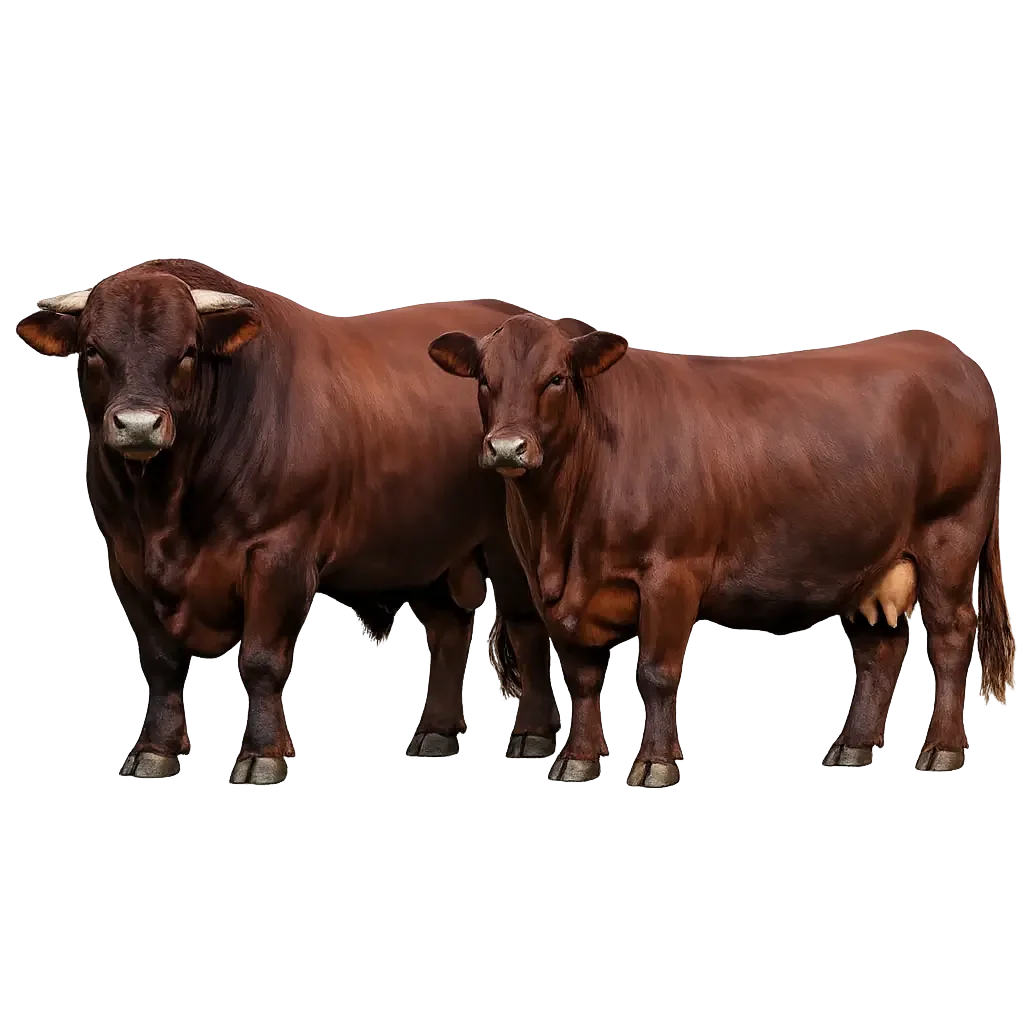
The Santa Gertrudis holds the distinction of being the first beef breed developed in the United States, created on the famous King Ranch in Texas. This impressive breed was scientifically developed to combine the heat tolerance, hardiness, and insect resistance of Brahman cattle with the superior beef quality, fertility, and carcass characteristics of British Shorthorn cattle. The result is a distinctive deep red breed that thrives in hot, humid climates where many European breeds struggle.
Recognized internationally and raised in over 70 countries, Santa Gertrudis cattle are particularly valued in tropical and subtropical regions for their ability to produce high-quality beef under challenging environmental conditions. The breed's adaptability, vigor, and production efficiency have made it a cornerstone of beef production in warm climates worldwide.
Origin & History
Origin: King Ranch, Kingsville, Texas, USA
Development Period: 1910-1940 (over 30 years of selective breeding)
Foundation Stock: 3/8 Brahman, 5/8 Shorthorn (fixed ratio)
Key Figure: Robert J. Kleberg Jr. of King Ranch led the development
Foundation Bull: "Monkey" - born in 1920, became the foundation sire
USDA Recognition: 1940 - first breed recognized by USDA
International Recognition: 1950s onward, exported worldwide
Named After: Santa Gertrudis Creek, a tributary on King Ranch property
Physical Characteristics
Color: Solid deep cherry red to dark red
Build: Large-framed, deep-bodied, muscular
Weight: Bulls 2,000-2,800 lbs; Cows 1,400-1,800 lbs
Height: Bulls ~5-5.5 feet at shoulder; Cows 4.5-5 feet
Distinctive Features:
Loose, pliable hide (heat adaptation)
Short, sleek hair coat
Moderate hump over shoulders (from Brahman heritage)
Large, drooping ears
Pigmented skin for sun protection
Well-developed dewlap and sheath
Strong, straight legs and sound feet
Naturally polled or small scurs (mostly polled)
Reproduction & Breeding
Gestation Period: Approximately 283-290 days (9-9.5 months)
Breeding Age: Heifers typically bred at 15-18 months
Calving: Good calving ease with moderate birth weights
Calf Birth Weight: 75-95 lbs
Calving Interval: 12-13 months (excellent rebreeding rates)
Fertility: Superior fertility in hot climates; high conception rates
Breeding Season: Year-round capability in warm climates
Reproductive Longevity: Cows remain productive for many years
Heat Detection: Distinct estrus signs make breeding management easier
Lifespan & Productivity
Average Lifespan: 15-20+ years
Productive Life: Cows commonly calve into their mid-teens
Prime Production Years: 3-12 years of age
Longevity: Exceptional durability and staying power
Herd Life: Long productive lives reduce replacement costs
Milk Production
Purpose: Beef breed - milk primarily for calf rearing
Daily Production: 15-25 lbs per day (excellent for beef breed)
Lactation Period: 7-10 months
Maternal Ability: Outstanding mothers with abundant milk
Butterfat Content: Rich milk supporting rapid calf growth
Udder Quality: Well-formed udders with good suspension
Note: Not used for commercial dairy production
Calf Growth & Development
Weaning Weight: 500-700 lbs at 6-8 months
Daily Gain: 2.5-4 lbs per day on quality feed
Market Weight: 1,200-1,500 lbs at 15-20 months
Feed Efficiency: Very good - efficient converters in hot climates
Growth Rate: Rapid growth with good muscling
Vigor: Calves are hardy and thrifty from birth
Temperament
Santa Gertrudis cattle are generally docile and easy to handle, though they can be more spirited than pure British breeds due to their Brahman heritage. With proper handling and management, they are calm and cooperative. They are intelligent cattle that respond well to consistent, gentle handling. Cows are excellent mothers, protective yet manageable when acclimated to human interaction. Bulls are typically manageable but require respect and proper facilities. The breed adapts well to both extensive range operations and more intensive management systems. Early and consistent human contact helps ensure the best temperament.
Meat Quality
Marbling: Good intramuscular fat for a heat-adapted breed
Flavor: Excellent, rich beef flavor
Tenderness: Good to very good tenderness
Grading: Regularly achieves Choice USDA grades
Dressing Percentage: 60-65% (good carcass yield)
Ribeye Area: Large ribeyes relative to body size
Lean Meat: Good muscle-to-bone ratio
Market Appeal: Premium pricing for quality tropical beef
Cutability: High percentage of retail cuts
Feeding & Nutrition
Grazing: Excellent foragers on various forage types including tropical grasses
Feed Requirements: Moderate - very efficient in hot climates
Finishing: Perform well on both grass-finished and grain-finished programs
Forage Utilization: Efficiently utilize lower-quality forages
Water: 12-25 gallons per day (higher in extreme heat)
Mineral Needs: Standard beef cattle minerals; important in tropical regions
Browse Ability: Will browse brush and shrubs when needed
Health & Care
Hardiness: Extremely hardy, especially in hot, humid climates
Heat Tolerance: Exceptional - among the best of all beef breeds
Humidity Tolerance: Superior performance in humid conditions
Insect Resistance: Natural resistance to many external parasites
Tick Resistance: Better tolerance than European breeds
Disease Resistance: Good overall disease resistance
Vaccinations: Standard cattle vaccination protocols
Parasite Control: Regular deworming recommended
Hoof Care: Minimal trimming needed; sound feet
Climate Adaptation: Thrives in tropical and subtropical climates
Advantages
Exceptional heat and humidity tolerance
Superior insect and tick resistance
Thrives in tropical and subtropical climates
Excellent maternal characteristics and milking ability
Good fertility in hot climates where other breeds struggle
Hardy and disease-resistant
Efficient foragers on various forage types
Utilizes lower-quality forages effectively
Good meat quality for a heat-adapted breed
Long productive lifespan
Naturally adapted to range conditions
Strong hybrid vigor when crossbred
Mostly polled or naturally dehorns
Good carcass yield and cutability
Disadvantages
May be more temperamental than pure British breeds
Requires good handling facilities and management
Larger frame requires more feed than smaller breeds
Less cold-hardy than British breeds
May not marble as well as Angus in feedlot situations
Brahman influence can affect tenderness compared to straight British breeds
Not suitable for dairy production
Best Suited For
Hot, humid climates (tropical and subtropical regions)
Gulf Coast and Southern United States
Commercial beef production in challenging climates
Range and pasture-based operations
Areas with high insect pressure
Crossbreeding programs in warm climates
Extensive grazing systems
Grass-fed beef production in hot regions
International markets in warm-climate countries
Operations prioritizing hardiness and adaptability
Economic Considerations
Initial Cost: Moderate for quality breeding stock
Return on Investment: Excellent in appropriate climates due to low maintenance
Market Demand: Strong in tropical and subtropical regions worldwide
Veterinary Costs: Lower due to hardiness and disease resistance
Feed Costs: Competitive due to efficient forage utilization
Replacement Costs: Lower due to cow longevity
Export Market: Strong international demand from warm-climate countries
Resale Value: Good market for breeding stock in appropriate regions
Fun Facts
Santa Gertrudis was the first beef breed developed in the United States
The foundation bull "Monkey" (Sire #52) is legendary in breed history
King Ranch is one of the largest ranches in the world at 825,000 acres
The breed is raised in over 70 countries on six continents
Santa Gertrudis cattle were developed through over 30 years of scientific breeding
The breed's genetic formula (3/8 Brahman, 5/8 Shorthorn) is fixed and must be maintained
A Santa Gertrudis cow once produced over 20 calves in her lifetime
The breed was specifically designed for the harsh South Texas climate
Santa Gertrudis genetics have improved beef production in countless tropical countries
The breed is particularly popular in Australia, South America, and southern Africa
They can graze efficiently on native range where other breeds struggle to survive
Developed for the heat, this breed still produces excellent Rib and Loin cuts-learn more in our Complete Guide to Beef Cuts