
Shorthorn
Overview
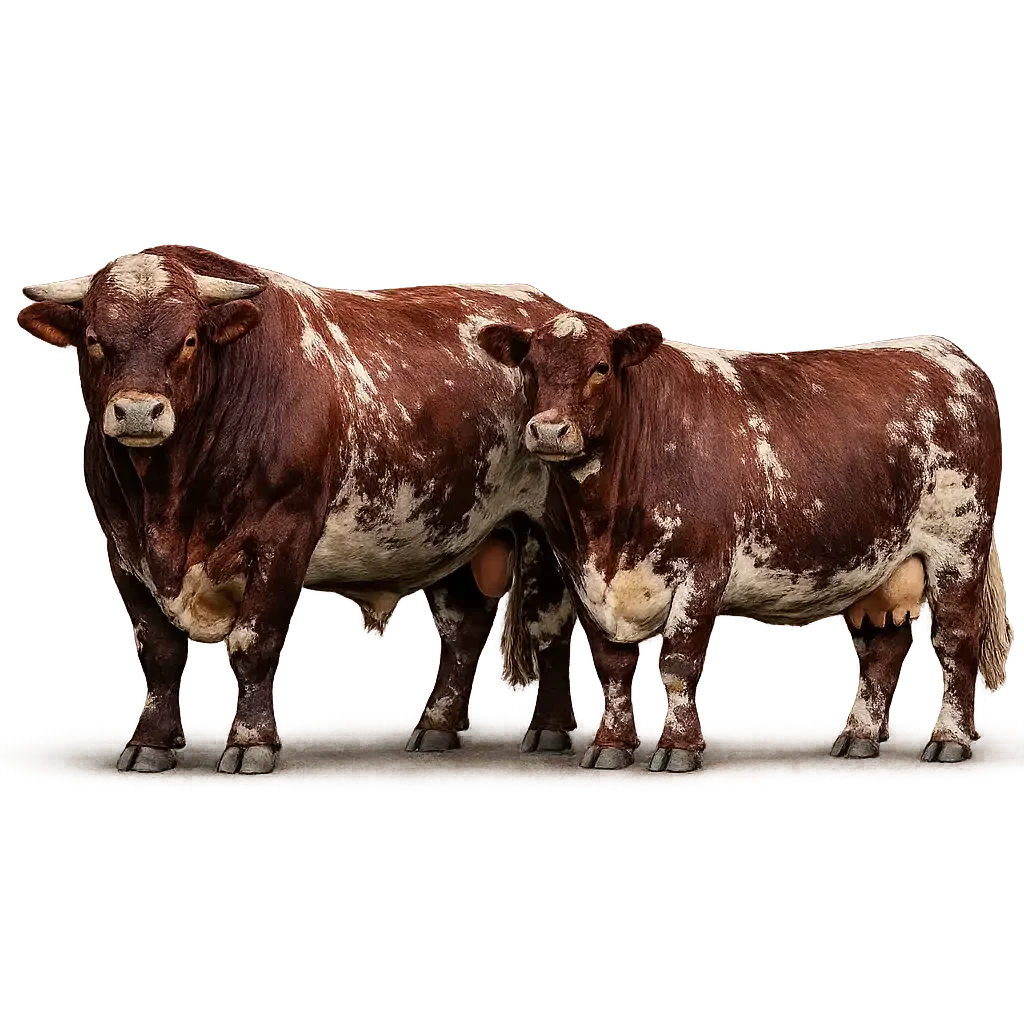
The Shorthorn, also known as Beef Shorthorn, is one of the oldest and most influential cattle breeds in the world. Originating in northeastern England in the late 1700s, this historic breed played a pivotal role in the development of numerous modern beef breeds and helped shape the global cattle industry. Known for their distinctive red, white, or roan coloring, Shorthorns are prized for their versatility, combining excellent beef production with good maternal characteristics and adaptability.
Shorthorns are renowned for their docile temperament, efficient feed conversion, and ability to thrive in various climates and management systems. The breed has been instrumental in developing other important breeds, including Santa Gertrudis, and continues to be valued for both purebred and crossbreeding operations worldwide.
Origin & History
Origin: Northeastern England (Durham, Northumberland, Yorkshire counties)
Original Name: Durham cattle
Development Period: Late 1700s-1800s
Key Figures: Charles and Robert Colling brothers were early breeders
Foundation: Developed from native cattle of the Tees River valley
Herd Book: Coates Herd Book established in 1822 (first breed registry)
Introduction to US: 1783 (among the first improved breeds imported)
Historical Importance: Dominated U.S. beef industry in the 1800s-early 1900s
Breed Split: Separated into Beef Shorthorn and Milking Shorthorn in 1940s
Global Influence: Used in development of many modern breeds worldwide
Physical Characteristics
Color: Red, white, or roan (mixture of red and white hairs)
Color Patterns: Solid colors or various combinations with white markings
Build: Medium to large-framed, well-muscled, rectangular body
Weight: Bulls 2,000-2,600 lbs; Cows 1,400-1,900 lbs
Height: Bulls ~5-5.5 feet at shoulder; Cows 4.5-5 feet
Distinctive Features:
Short horns (hence the name) or naturally polled
Broad head with wide muzzle
Deep, wide body
Well-sprung ribs
Level topline and smooth shoulders
Fine bone structure
Attractive, refined appearance
Reproduction & Breeding
Gestation Period: Approximately 283 days (9 months)
Breeding Age: Heifers typically bred at 15-18 months
Calving: Excellent calving ease - known for unassisted births
Calf Birth Weight: 70-90 lbs (moderate, facilitating easy calving)
Calving Interval: 12-13 months optimal
Fertility: High conception rates and reproductive efficiency
Breeding Season: Year-round capability
Maternal Efficiency: Excellent - bred for maternal traits for generations
Lifespan & Productivity
Average Lifespan: 15-20 years
Productive Life: Cows regularly calve into their early-to-mid teens
Prime Production Years: 3-11 years of age
Longevity: Good durability and herd longevity
Replacement Rates: Lower due to extended productive life
Milk Production
Purpose: Beef breed - milk primarily for calf rearing
Daily Production: 12-20 lbs per day (good for beef cattle)
Lactation Period: 7-10 months
Maternal Ability: Excellent mothers with good milk production
Butterfat Content: Rich milk supporting strong calf growth
Historical Note: Original dual-purpose breed; Milking Shorthorn is separate dairy breed
Note: Beef Shorthorn not used for commercial dairy production
Calf Growth & Development
Weaning Weight: 500-700 lbs at 6-8 months
Daily Gain: 2.5-3.5 lbs per day on quality feed
Market Weight: 1,200-1,450 lbs at 14-18 months
Feed Efficiency: Very good - efficient feed converters
Growth Pattern: Steady, consistent growth from birth to market
Uniformity: Consistent calf crops with minimal variation
Temperament
Shorthorn cattle are celebrated for their exceptionally gentle and docile temperament, making them one of the easiest breeds to handle and manage. They are calm, intelligent, and naturally cooperative with handlers, rarely showing aggression. Cows are excellent mothers with strong maternal instincts but remain easy to work around, even with calves at side. Bulls are typically calm and manageable compared to many other breeds, though proper respect and handling facilities are always important. Their gentle nature makes them particularly suitable for family farms, youth projects, beginning cattle ranchers, and operations where ease of handling is a priority. Shorthorns adapt well to both extensive range systems and more intensive management.
Meat Quality
Marbling: Good intramuscular fat distribution
Flavor: Excellent, well-developed beef flavor
Tenderness: Very good tenderness characteristics
Grading: Regularly achieves Choice and Prime USDA grades
Dressing Percentage: 60-64% (good carcass yield)
Meat-to-Bone Ratio: Excellent ratio due to fine bone structure
Quality Consistency: Reliable, uniform carcass quality
Market Appeal: Well-accepted in both domestic and export markets
Versatility: Suitable for various beef programs
Feeding & Nutrition
Grazing: Excellent foragers on pasture and range
Feed Requirements: Moderate - efficient feed utilization
Finishing: Perform well on both grass-finished and grain-finished programs
Adaptability: Thrive on various forage types and feed programs
Water: 12-20 gallons per day (varies with conditions)
Mineral Needs: Standard beef cattle mineral supplementation
Feed Conversion: Good efficiency in converting feed to quality beef
Health & Care
Hardiness: Hardy and adaptable to various climates
Common Issues: Generally healthy with few breed-specific problems
Vaccinations: Standard cattle vaccination protocols
Parasite Control: Regular deworming recommended
Hoof Care: Minimal trimming needed; sound feet and legs
Climate Adaptation: Adaptable to temperate, cool, and moderately warm climates
Disease Resistance: Good overall health and disease resistance
Winter Hardiness: Handle cold weather well
Advantages
Exceptionally docile and easy to handle
Excellent calving ease with minimal assistance needed
Superior maternal characteristics and milking ability
Good feed efficiency and forage utilization
Adaptable to various climates and management systems
Quality beef with good marbling and tenderness
Fine bone structure provides excellent meat-to-bone ratio
Available in polled genetics (no dehorning needed)
Hardy and disease-resistant
Long productive lifespan
Attractive appearance with multiple color options
Excellent for crossbreeding programs (strong hybrid vigor)
Good fertility and reproductive efficiency
Suitable for beginners and family operations
Historical breed with proven performance record
Disadvantages
Moderate frame size may produce smaller carcasses than some continental breeds
Less heat-tolerant than Brahman-influenced breeds
May not finish as heavily as some larger breeds
White or light-colored animals can be prone to sunburn and pink eye
Smaller gene pool than some more popular breeds
Not suitable for dairy production (Beef Shorthorn variety)
Best Suited For
Commercial beef production (cow-calf operations)
Crossbreeding programs for maternal traits and hybrid vigor
Grass-fed and pasture-based systems
Family farms and beginning cattle ranchers
Youth projects (4-H, FFA) due to docile temperament
Moderate to cool climates
Operations prioritizing calving ease and maternal efficiency
Premium beef programs emphasizing quality and consistency
Small to large-scale operations
Heritage breed conservation programs
Economic Considerations
Initial Cost: Moderate for quality breeding stock
Return on Investment: Good due to efficiency, longevity, and low maintenance
Market Demand: Steady demand in purebred and commercial markets
Crossbreeding Value: High value as maternal breed in crossbreeding
Veterinary Costs: Lower due to calving ease and general hardiness
Feed Costs: Competitive due to good feed efficiency
Replacement Costs: Lower due to cow longevity and reproductive efficiency
Resale Value: Good market for breeding stock
Fun Facts
Shorthorn is one of the oldest documented breeds, with records dating to the 1700s
The Coates Herd Book (1822) was the first breed registry ever established
Shorthorns dominated the U.S. beef industry in the 1800s and early 1900s
The breed was used to develop Santa Gertrudis, the first American beef breed
A Shorthorn bull named "Comet" sold for 1,000 guineas in 1810 - a world record at the time
Roan Shorthorns are particularly distinctive - a color seen in few other breeds
The breed was originally dual-purpose for both beef and milk production
Shorthorns were among the first improved cattle brought to America (1783)
Many modern beef breeds have Shorthorn genetics in their background
The breed has been exported to over 100 countries worldwide
Shorthorns helped establish the foundation of the Australian beef industry
They are known as "the farmer's friend" due to their gentle disposition and versatility
Valued for tenderness and marbling, learn why Shorthorn loins are so highly prized in our beef cuts guide.