
Texas Longhorn
Overview
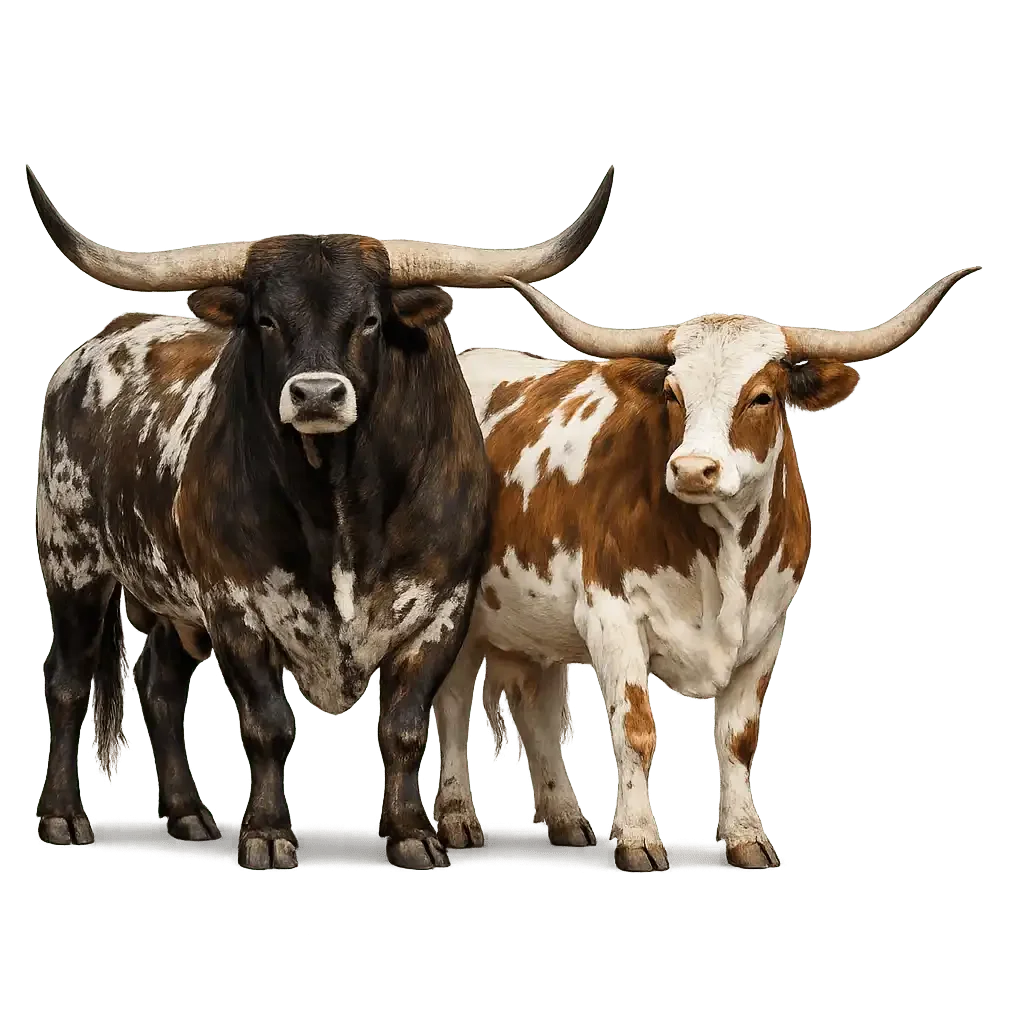
Texas Longhorn cattle are an iconic American breed instantly recognizable by their massive, distinctive horns that can span up to 8 feet tip-to-tip. Descended from Spanish cattle brought to the Americas in the 1500s, Longhorns are a living symbol of the American West, embodying the spirit of cattle drives and frontier ranching. These remarkably hardy, self-sufficient cattle survived centuries of natural selection in the harsh Texas landscape, developing exceptional disease resistance, heat tolerance, and foraging ability. Unlike heavily-selected commercial breeds, Longhorns retain their natural survival instincts and require minimal human intervention for calving, health care, and maintenance. Their lean, flavorful beef appeals to health-conscious consumers, while their spectacular horns make them popular for breeding, showing, and agritourism. Texas Longhorns excel on marginal land, in extensive grazing systems, and for producers seeking low-maintenance, naturally-adapted cattle with strong historical and cultural significance.
Origin & History
Origin: Southwestern United States (primarily Texas)
Development Period: 1500s-1800s from Spanish cattle brought by conquistadors
Ancestry: Descended from Spanish Criollo cattle (Iberian and North African bloodlines)
Natural Selection: Survived 300+ years in wild/semi-wild conditions in Texas
Historic Use: Foundation of American cattle industry; great cattle drives of 1860s-1880s
Near Extinction: Almost extinct by 1920s due to introduction of European beef breeds
Preservation: Saved by U.S. Forest Service and dedicated breeders in 1920s-1960s
Recognition: Texas Longhorn Breeders Association of America founded 1964
Modern Status: Official State Large Mammal of Texas; thriving heritage breed
Cultural Icon: Symbol of Texas and American West; featured in art, film, and culture
Physical Characteristics
Color: Extremely variable-all colors and patterns (brindle, spotted, solid, speckled)
Build: Medium-framed, athletic, lean and muscular
Weight: Bulls 1,800-2,500 lbs; Cows 800-1,400 lbs
Height: Bulls 55-60 inches at shoulder; Cows 48-52 inches
Distinctive Features:
Massive horns-most defining characteristic of the breed
Horn spread: 4-8+ feet tip-to-tip (world record over 10 feet)
Horn shapes vary: straight, curved, twisted configurations
Lean, athletic build with minimal excess fat
Long legs suited for travel and rough terrain
Deep chest and well-sprung ribs
Narrow hips facilitate easy calving
Alert, intelligent expression
Varied color patterns-no two exactly alike
Strong hooves exceptionally suited to varied terrain
Reproduction & Breeding
Gestation Period: Approximately 279-285 days
Breeding Age: Heifers can breed as yearlings; typically bred at 15-20 months
Calving: Exceptional calving ease-99%+ unassisted births
Calf Birth Weight: 50-75 lbs (very small, reducing calving difficulty)
Calving Interval: Excellent fertility; 365 days readily achievable
Fertility: Outstanding fertility and reproductive efficiency
Breeding Season: Year-round breeding capability; breed back quickly
Sexual Maturity: Bulls mature at 12-15 months; heifers 10-14 months
Longevity: Cows remain fertile into late teens and early twenties
Bull-to-Cow Ratio: One bull can efficiently breed 25-40 cows
Lifespan & Productivity
Average Lifespan: 20-25+ years
Productive Life: Cows can produce 15-20+ calves in lifetime
Prime Production Years: 3-18 years of age
Longevity: Exceptional longevity-among longest-lived cattle breeds
Stayability: Cows commonly produce calves into late teens/early twenties
Cost Efficiency: Extended productive life maximizes investment return
Milk Production
Purpose: Beef breed; milk production for calf rearing only
Production Level: Moderate milk production-adequate for healthy calf development
Maternal Ability: Excellent mothers; strong protective instincts
Calf Nutrition: Produce sufficient rich milk for vigorous calf growth
Not Used For: Not utilized for commercial dairy production
Efficiency: Milk production perfectly balanced for calf needs without waste
Calf Growth & Development
Weaning Weight: 400-550 lbs at 205 days
Daily Gain: 1.5-2.5 lbs per day on good forage
Market Weight: 1,000-1,300 lbs at 18-24 months
Feed Efficiency: Excellent efficiency on forage-based diets
Carcass Weight: 550-750 lbs hanging weight
Vigor: Exceptional vigor from birth; calves up and nursing quickly
Growth Pattern: Steady growth on minimal inputs; thrive on range conditions
Survivability: Outstanding calf survival rates approaching 100%
Temperament
Texas Longhorn temperament is generally calm and docile when handled properly, though they retain more independence and alertness than heavily-domesticated breeds. Longhorns raised with regular human contact become gentle and manageable, easily worked in pens and chutes. However, they maintain natural wariness and intelligence-they think independently and can be more reactive than extremely docile breeds. This alert nature served them well surviving in wild conditions but requires confident, calm handling.
Longhorn cows are exceptionally protective mothers, vigilantly guarding calves against predators while remaining manageable with proper handling. Bulls can be used in range breeding situations safely, though like all bulls, they require respect and appropriate facilities. The breed's temperament makes them suitable for experienced cattle handlers, agritourism operations, and show animals. Longhorns develop strong bonds with attentive owners and many become quite affectionate. Their combination of intelligence, independence, and trainability creates versatile cattle that reward good stockmanship while tolerating less-than-ideal conditions better than more refined breeds.
Meat Quality
Marbling: Lean with minimal intramuscular fat-health-conscious beef
Flavor: Excellent, rich beef flavor; less fatty than commercial breeds
Tenderness: Tender when properly aged and finished
Grading: Typically grades Select to low Choice
Dressing Percentage: 60-65% (excellent yield due to lean build)
Fat Content: Significantly leaner than commercial beef (as low as 5% fat)
Cholesterol: Lower cholesterol than chicken in some studies
Market Appeal: Premium prices for grass-fed, natural, lean beef
Health Benefits: High protein, low fat, lower calories per serving
Grass-Fed Quality: Excellent quality on 100% grass-finished programs
Niche Markets: Appeals to health-conscious, organic, grass-fed consumers
Feeding & Nutrition
Grazing: Exceptional grazers and browsers-highly efficient on pasture
Feed Requirements: Lower feed requirements than commercial breeds
Forage Utilization: Thrive on native grasses, brush, and marginal forage
Browse Capability: Will eat brush, forbs, and plants other cattle refuse
Water: 8-12 gallons per day; can travel long distances to water
Mineral Needs: Basic mineral supplementation; less demanding than commercial breeds
Finishing: Finish well on grass; grain finishing optional for increased marbling
Range Adaptation: Excel in extensive range conditions with minimal supplementation
Drought Tolerance: Can survive on scarce forage during drought
Efficiency: Convert rough forage to beef efficiently
Health & Care
Hardiness: Exceptionally hardy-among most disease-resistant cattle
Common Issues: Very few health problems; naturally healthy breed
Vaccinations: Basic vaccination programs adequate; less prone to disease
Parasite Control: Good parasite resistance; minimal treatment needed
Hoof Care: Excellent hoof structure; rarely require trimming
Climate Adaptation: Adapt to virtually all climates and altitudes
Heat Tolerance: Outstanding heat tolerance-developed in Texas heat
Cold Tolerance: Surprising cold hardiness; adapt well to northern climates
Insect Resistance: Thick hide and tail switching reduce fly problems
Natural Immunity: Centuries of natural selection created robust immune systems
Calving Health: Minimal calving problems; cows rarely need assistance
Range Cattle Suitability
Terrain: Excel in rough, mountainous, brushy terrain
Acreage: Thrive on large acreages with extensive management
Fence Requirements: Standard cattle fencing adequate; respect boundaries well
Handling: Horns require wider chutes and careful handling in confined spaces
Self-Sufficiency: Require minimal human intervention for survival
Predator Resistance: Protective mothers; horns deter predators
Travel Ability: Can travel long distances to water and forage
Advantages
Exceptional calving ease-99%+ unassisted births
Outstanding longevity and fertility-cows produce into twenties
Extremely hardy and disease-resistant
Thrive on marginal land and rough forage
Low input requirements-minimal feed, vet, labor costs
Superior heat and drought tolerance
Lean, healthy beef appeals to modern consumers
Spectacular horns create premium breeding stock market
Excellent foraging ability-will eat brush and weeds
Natural resistance to many cattle diseases
Strong historical and cultural significance
High dressing percentage due to lean build
Low calving difficulty despite bull size
Excellent mothers with strong protective instincts
Popular for agritourism and educational programs
Crossbreed well to add hardiness and calving ease
Disadvantages
Horns require special handling facilities and careful management
Can injure other cattle, handlers, or themselves if improperly managed
Lean beef doesn't grade as high as heavily-marbled breeds
Slower growth rate than commercial breeds
Not suitable for conventional feedlot finishing
More independent temperament than heavily-domesticated breeds
Require markets that value grass-fed, lean beef
Horn genetics complex-breeding for specific horn shapes challenging
Lower weaning weights than larger commercial breeds
Not ideal for operations focused on grain-finished, heavily-marbled beef
Limited market in some regions unfamiliar with the breed
Best Suited For
Range operations on large acreages
Marginal or brushy land unsuitable for other cattle
Grass-fed and organic beef producers
Low-input, extensive grazing systems
Hot, drought-prone climates
Brush control and land management programs
Heritage breed and historical preservation
Horn breeding and show cattle
Agritourism and educational farms
Direct-to-consumer marketing of lean beef
Crossbreeding programs to improve calving ease
Producers in areas with limited veterinary access
Operations seeking self-sufficient, low-maintenance cattle
Texas and Southwestern ranches honoring regional heritage
Economic Considerations
Initial Cost: $1,500-$5,000+ depending on horn quality and genetics
Premium Genetics: Elite horn cattle can sell for $20,000-$100,000+
Return on Investment: Excellent ROI due to low inputs and longevity
Feed Costs: Minimal-thrive on pasture with little supplementation
Vet Costs: Very low due to exceptional health and hardiness
Retail Beef Prices: $8-$15+ per pound for grass-fed Longhorn beef
Breeding Stock Market: Strong market for quality horn genetics
Production Efficiency: Low cost per calf due to minimal inputs
Longevity Value: 15-20+ calves per cow maximizes investment
Niche Markets: Premium prices in grass-fed and heritage beef markets
Horn Characteristics & Value
Horn Growth: Continuous growth throughout life
Measurement: Tip-to-tip (TTT) measurement most common standard
Size Categories: Average 4-6 feet; elite cattle 7-8+ feet TTT
World Records: Horn spreads exceeding 10 feet documented
Shapes: Varied configurations-upright, lateral, twisted, curved
Color: Range from white to black with various patterns
Market Value: Horn size and shape significantly affect breeding stock value
Breeding Programs: Selective breeding for horn characteristics well-established
Show Standards: Horn size, shape, symmetry judged in shows
Practical Management: Require appropriate chute and trailer dimensions
Uses Beyond Beef Production
Brush Control: Excellent for clearing brush and invasive plants
Show Cattle: Popular in livestock shows and exhibitions
Agritourism: Iconic attraction for farm tours and photo opportunities
Educational Programs: Living history of American West
Art and Photography: Spectacular subjects for Western art
Cultural Events: Trail drives, parades, historical reenactments
Crossbreeding: Used to add calving ease to commercial herds
Conservation Grazing: Suitable for wildlife habitat management
Sports Mascots: University of Texas Longhorns mascot
Fun Facts
The world record horn spread exceeds 10 feet tip-to-tip
Texas Longhorns can have over 65 different color combinations
The breed was nearly extinct in the 1920s with fewer than 1,000 head remaining
Longhorns were the foundation of the American cattle industry in the 1800s
A single Texas Longhorn cow can produce calves until age 20 or beyond
The great cattle drives moved over 10 million Longhorns north from Texas 1866-1886
Longhorn beef is often lower in cholesterol than chicken
The Texas Longhorn is the official State Large Mammal of Texas (since 1995)
Longhorn calves are born so small they can easily walk under their mother
The breed survived 300+ years in semi-wild conditions without human assistance
Longhorn horns continue growing throughout the animal's entire life
Bulls can weigh over 2,500 lbs but calves rarely weigh over 75 lbs at birth
The University of Texas mascot "Bevo" is a Texas Longhorn steer
Longhorns can travel up to 20 miles per day searching for water and forage
Historic trail drives covered 1,500+ miles over 3-4 months
Some Longhorn herds are used for conservation grazing in national parks
Lean and lower in cholesterol, these cuts require specific care-find the right cooking techniques in our beef cuts guide.