
Common Goldeneye
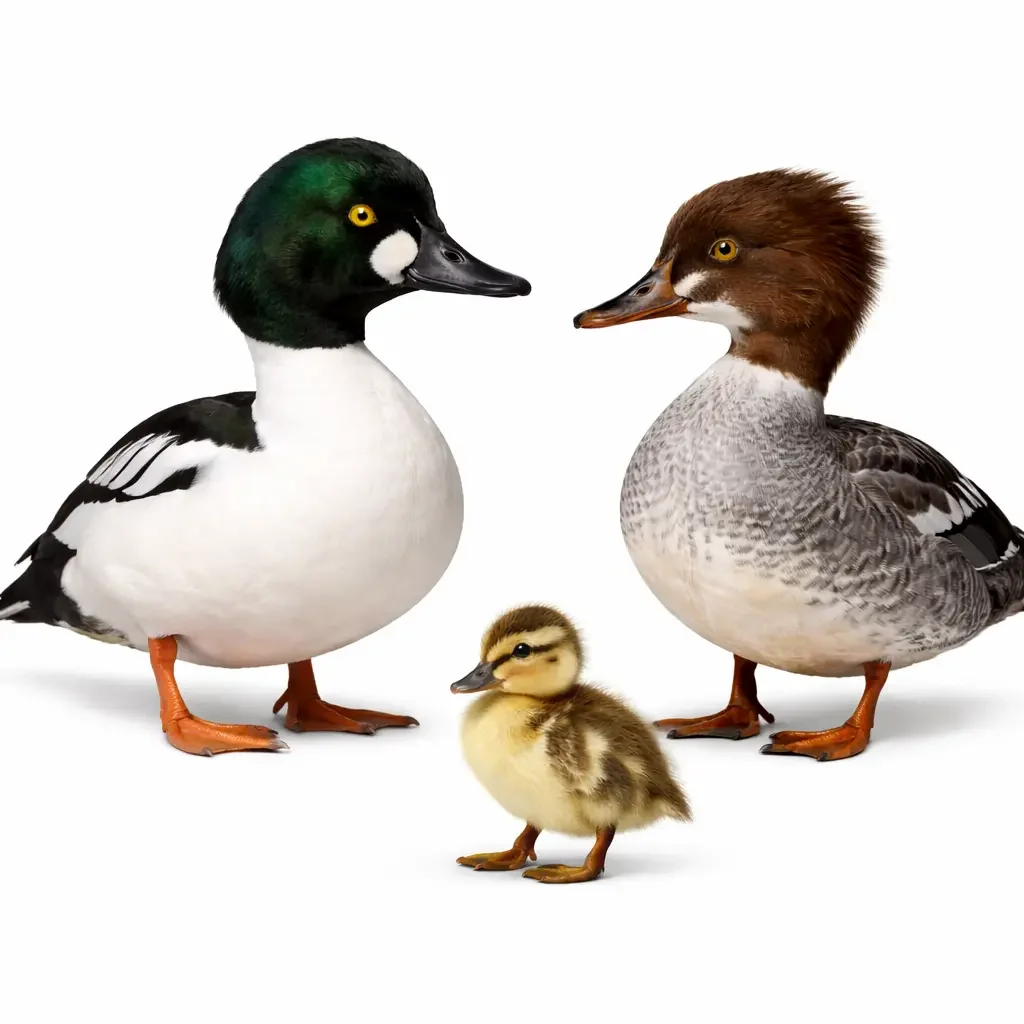
The Common Goldeneye is one of the most elegant and distinctive diving ducks in North America, a cavity-nesting boreal species with a brilliant amber eye, an iridescent green-black head, and wings that produce a loud, musical whistling sound in flight that earned it the hunter's nickname of whistler long before anyone needed a field guide to identify it by ear. For Midwest hunters and homesteaders, the Common Goldeneye is a regular late-season presence on large rivers and lakes, a potential nest box tenant on northern properties, and one of the more sporting and challenging diving ducks available during the final weeks of the duck season.
Quick Facts
Breed Type: Wild Duck
Purpose: Hunting, Wildlife Observation, Nest Box Attraction
Origin: Circumpolar, breeds across boreal Canada, Alaska, and portions of the northern United States
Egg Production: Not applicable (wild species)
Egg Color: Olive-green to blue-green, laid in large tree cavities or nest boxes near clear boreal lakes
Adult Weight: Drake approximately 2.2 lbs, Hen approximately 1.8 lbs
Temperament: Alert, aggressive toward other ducks at feeding sites, tends not to mix freely with other species
Hardiness: Very cold hardy, one of the last ducks to migrate south in fall and one of the first to move north in spring
Broodiness: Moderate, hens incubate independently after males depart, young are highly precocial
Lifespan: Up to 20 years in the wild based on banding records
Image Section
Main Image: Common Goldeneye drake on clear water, iridescent green-black head with round white facial patch and brilliant amber eye visible, crisp black and white body, 1024x1024, white or transparent background.
Breed Overview
The Common Goldeneye, known scientifically as Bucephala clangula, is a medium-sized diving duck with a circumpolar distribution across the boreal forests of North America, Europe, and Asia. It belongs to the genus Bucephala alongside the Barrow's Goldeneye and the Bufflehead, all three sharing the characteristic large, round head proportions that give the genus its name from the Greek for bullheaded.
The drake is an immediately recognizable bird. His head appears black at a distance but reveals a rich iridescent green gloss in good light. The circular white patch between the bill and the eye is the most distinctive field mark, distinguishing him from the Barrow's Goldeneye which shows a crescent-shaped rather than circular white patch in the same location. His body is clean white on the breast and sides with a black back and tail. The bright amber to golden-yellow iris that gives the species its common name is striking at close range and visible through binoculars at moderate field distances. The hen has a rich brown head, gray body, and the same golden eye, with a mostly black bill showing a yellow tip.
The wings produce one of the most distinctive sounds in North American waterfowl. The loud, penetrating whistle produced by air moving through the primary feathers is audible from surprising distances, often announcing the approach of a goldeneye before the bird is visible. Cold weather accentuates the whistling sound, making it particularly prominent during late-season hunting when temperatures drop and the birds' wingbeat frequency increases in the cold.
The Common Goldeneye is a cavity nester that shares the nesting behavior of Wood Ducks, Hooded Mergansers, Buffleheads, and Common Mergansers, using large woodpecker holes and natural tree cavities near lakes and rivers for nesting. It readily uses appropriately sized nest boxes where available, and homesteaders with forested lake or river frontage in the northern Midwest can attract nesting pairs with properly installed boxes. Females show strong fidelity to natal nest sites, returning to the same cavity or box year after year, which makes establishing nest boxes a long-term investment that pays dividends over multiple seasons once a female adopts a site.
The species is among the most aggressive of the smaller diving ducks in competition for feeding areas. Common Goldeneyes actively displace other duck species from productive foraging areas and tend not to mix freely with other species the way scaup and other diver ducks do. Flocks of feeding goldeneyes often dive synchronously, with multiple birds disappearing below the surface simultaneously.
Hunting the Common Goldeneye
Season and Timing
Common Goldeneyes fall under the general duck aggregate bag limit in most Midwest states, counted alongside Mallards and other ducks within the six-bird daily total unless state regulations classify them separately as sea ducks. A few states including Washington have specific goldeneye sub-limits of two birds, but most Midwest interior states do not restrict them separately. Always verify your state regulations before hunting.
Common Goldeneyes are among the last ducks to migrate south each fall and among the first to return north each spring. Fall migration through the Midwest typically begins in October and peaks in November and December as northern lakes and rivers freeze. Birds remain on any open water available throughout the winter and may be present well into January and February on major Midwest rivers. They are a genuinely late-season bird that provides hunting opportunity when most other duck species have departed.
Where to Hunt
Common Goldeneyes winter on large rivers, major lakes, and the Great Lakes throughout the Midwest, with the Mississippi River system, the Missouri River, and the Great Lakes shoreline supporting the most consistent concentrations. They prefer relatively open water with rocky, gravelly, or sandy substrates where they can forage for crustaceans and invertebrates. Industrial warm-water discharge areas and power plant outflows that maintain open water through severe cold draw significant concentrations of wintering goldeneyes alongside other late-season diving ducks.
Unlike Lesser Scaup that prefer large, protected lake basins, goldeneyes are comfortable in river current and can maintain position against moderate flow while foraging. River hunters working main-channel areas during late season encounter goldeneyes as a regular component of the late-season mixed diver bag alongside Common Mergansers, Buffleheads, and occasional scaup.
Difficulty of Hunting
Common Goldeneyes are considered a moderately to highly challenging duck to hunt. They migrate late, which means hunters encounter them in cold, often harsh late-season conditions that demand extra preparation and patience. They tend not to decoy as readily as Ring-necked Ducks or Redheads, particularly when hunting pressure has educated them, and they often approach spreads warily with multiple inspection passes before committing. Their willingness to dive when wounded means a quality retriever is essential for effective recovery.
The audible wing whistle is a genuine hunting advantage. Hunters frequently hear approaching goldeneyes before they are visible, which is particularly valuable on river setups where birds may appear suddenly from around a bend. Knowing the whistler's sound and being ready when you hear it significantly improves shooting opportunities.
Decoys and Calling
A small dedicated spread of six to twelve goldeneye-specific decoys positioned slightly apart from a larger mixed diver spread, rather than fully integrated into it, reflects the species' natural tendency to keep somewhat separate from other ducks. Hen and drake goldeneye decoys in a natural-looking resting configuration on open water within shooting distance of the blind produce the most confident approaches.
Common Goldeneyes are not vocal birds in ways that hunters can replicate effectively. The male's courtship call is a soft nasal peent used during breeding displays and the female's alarm call is a harsh croak, neither of which is practically useful for calling birds to a spread. The visual attraction of appropriate decoys on the right water is the primary tool.
Meat Quality
Common Goldeneye meat quality occupies a middle ground that most hunters describe as acceptable to good with proper preparation, better than mergansers and Long-tailed Ducks but generally below dabbling ducks. Their diet of crustaceans, mollusks, aquatic insects, and small fish produces meat that is darker and richer flavored than dabbling ducks with a moderate rather than intense fishy note. Birds feeding primarily on aquatic insects and invertebrates rather than fish typically produce better-tasting meat than those with heavily fish-based diets.
Some Midwest hunters describe well-prepared goldeneye as having a liver-like intensity that, while not to every palate, works well in heavily seasoned stews and slow-cooked preparations. Others find that removing all fat and skin immediately after harvest, followed by overnight soaking, produces acceptable breast meat suitable for stew and gumbo preparations where bold flavors complement the dark, rich character of the meat.
Best Preparations
Removing all fat and skin immediately is the first and most important step. Overnight soaking in salted water or buttermilk helps further. Slow cooking in stews with root vegetables, aromatics, and strong seasoning accommodates the richer flavor well. Duck and wild rice dishes or heavily seasoned Cajun-influenced preparations work effectively. Grinding breast meat for duck sausage blended with pork is a reliable approach that produces consistently good results regardless of individual bird flavor variation.
Behavior and Identification
The circular white facial patch of the drake Common Goldeneye is the most instantly useful field mark, distinguishing it from the crescent-shaped patch of the Barrow's Goldeneye. On the water, the large, distinctly rounded head with a steep forehead profile is another reliable mark visible at distance. In flight the extensive white on the secondary coverts and feathers of both sexes creates a large white wing patch immediately visible and the whistling wing sound is audible from substantial distances in calm conditions.
The species' courtship displays, performed from December through March primarily by males competing for females on wintering grounds, are among the most elaborate in North American waterfowl. Males perform sequences of up to fourteen named moves including head-throws that fling the head backward to touch the rump, forward head jabs, and foot kicks that spray water behind the bird. These elaborate displays are fascinating to observe on winter water bodies when multiple males are competing around females.
Goldeneyes are aggressive and territorial at feeding sites, dominating most other duck species when competing for foraging areas. All-dark wings with a large white patch are the key in-flight field marks. On the water, the golden-yellow eye is visible at surprisingly long range with binoculars and confirms identification once the other marks are noted.
Climate and Range
The Common Goldeneye breeds across the boreal forest zone of Canada from Newfoundland to British Columbia and Alaska, with smaller breeding populations in northern Minnesota, North Dakota, Montana, and the northeastern United States. It requires mature forest with large cavity trees or nest boxes near clear, productive lakes and rivers for nesting. Unlike most cavity-nesting ducks that prefer wooded wetland settings, the Common Goldeneye shows a preference for relatively open, clear-water lakes with little emergent vegetation and, on breeding grounds, often prefers lakes without fish that would compete with ducklings for aquatic insect prey.
Fall migration is late, with birds one of the last species to leave northern breeding areas as freeze-up advances through October and November. They winter as far north as ice-free water allows, which means the Great Lakes, major Midwest rivers, and power plant outflow areas with artificially warm water all hold wintering birds well into deep winter months. Spring migration northward begins in February and March, making goldeneyes one of the earliest species to return to northern breeding areas.
Homestead Suitability and Pond Management
The Common Goldeneye has limited relevance to small homestead pond management in the Midwest interior. It requires large, clear water bodies for foraging and prefers open lake settings over small ponds and sheltered marshes. On small homestead ponds it is unlikely to occur as anything more than an occasional visitor.
For homesteaders with forested lake or river frontage in the northern Midwest, particularly in northern Minnesota, Wisconsin, and Michigan, the Common Goldeneye is a potential nest box species. The nest box specifications are larger than Wood Duck boxes, requiring an entrance hole of approximately four inches in diameter and a deeper cavity with a floor area of at least ten by ten inches. Installing boxes on trees adjacent to clear-water lakes and rivers in mature wooded settings in early spring before the breeding season can attract nesting females, particularly in areas where natural cavity availability is limited by logging.
The species' strong natal site fidelity means that once a female adopts a nest box, she is likely to return to it year after year, making the initial investment in box installation and placement a long-term relationship rather than a single-season attraction.
Pros and Cons
Pros
The Common Goldeneye is one of the most visually striking and behaviorally fascinating diving ducks in the Midwest winter waterfowl picture, with a bold plumage, an identifiable wing sound, and spectacular courtship displays observable on winter water bodies. Late fall and winter migration timing provides hunting opportunity after most other species have departed, extending the waterfowl season for dedicated hunters. The species responds to nest boxes in appropriate northern Midwest habitats, giving homesteaders with forested lake frontage a direct role in supporting nesting. Population is stable and of low conservation concern.
Cons
Meat quality requires careful preparation to produce its best results and is generally ranked below dabbling ducks by most hunters. Late migration timing means hunting occurs during the coldest and often most challenging weather conditions of the season. The species tends to be available in smaller numbers than scaup and ringnecks on Midwest interior water bodies. Nest box attraction is limited to northern properties with appropriate clear-water lake and river habitat. Reliable identification from Barrow's Goldeneye requires attention to subtle head shape and facial patch differences.
Profitability Note
As a wild and federally protected migratory species, Common Goldeneyes cannot be commercially sold. Their value to Midwest homesteaders is primarily through the quality of the late-season hunting experience and through nest box management opportunities on appropriate northern properties. The profitability section applies fully when this guide series covers domestic duck breeds.
Comparison With Related Species
Common Goldeneye vs Barrow's Goldeneye
The Barrow's Goldeneye is the close relative most likely to be confused with the Common. The Barrow's shows a crescent-shaped white facial patch rather than the circular or oval patch of the Common, and the head profile is more steeply rounded with a more abrupt forehead. The Barrow's is far less common in the Midwest, being primarily a western mountain and coastal species with limited interior range. Both species count toward the same aggregate bag limit.
Common Goldeneye vs Bufflehead
The Bufflehead is the smallest member of the same Bucephala genus and shares similar boreal cavity-nesting habits and clear-water preferences. The Bufflehead drake shows a large white head patch rather than the small circular facial spot of the Common Goldeneye and is considerably smaller. Both species produce the whistling wing sound and tend to use similar late-season water bodies on the Midwest winter landscape.
Common Goldeneye vs Lesser Scaup
The Lesser Scaup shares large open-water winter habitat with Common Goldeneyes on Midwest lakes and rivers and is far more abundant and widely distributed across the interior. Scaup tend to form much larger flocks than goldeneyes and mix more freely with other species. Both are considered moderate table fare requiring proper preparation. The goldeneye's bold black and white plumage and the whistling wings distinguish it immediately from the more uniformly gray and black scaup at any distance.
Final Verdict
The Common Goldeneye is a winter duck that rewards the hunters and homesteaders who know it well. Its late-season presence on Midwest rivers and lakes, its spectacular courtship displays observable on any productive wintering water body, and its potential as a nest box tenant on northern properties all give it genuine practical value in a complete Midwest waterfowl education. The whistling wings on a cold December morning remain one of the more distinctive and memorable sounds in the duck hunting experience, and any hunter who hears it regularly understands why this bird earned its colloquial name long before modern field guides existed.
Frequently Asked Questions
How do I identify a Common Goldeneye versus a Barrow's Goldeneye?
The shape of the white facial patch is the most reliable field mark. The Common Goldeneye shows a circular or oval white patch at the base of the bill, while the Barrow's shows a crescent-shaped or comma-shaped patch. The Common Goldeneye also has a more sloped forehead profile and more white on the secondary feathers visible in flight. In the Midwest, the vast majority of goldeneyes encountered will be Common Goldeneyes.
Why are Common Goldeneyes called whistlers?
The loud, penetrating whistling sound produced by air moving through the primary flight feathers of both sexes in flight gave the species this hunter's nickname long before modern waterfowl field guides existed. The sound is distinctive enough that experienced hunters often identify approaching goldeneyes by ear before they are visible, and the whistle is louder and more pronounced in cold weather.
When do Common Goldeneyes migrate through the Midwest?
Common Goldeneyes are among the latest-migrating ducks, with fall movement through the Midwest occurring primarily in November and December as northern lakes freeze. They remain on open water throughout the winter and are present on major rivers and the Great Lakes well into January and February. Spring northward movement begins in February and March.
Can I attract Common Goldeneyes to my property with nest boxes?
Yes, on properties with forested frontage adjacent to clear-water lakes or rivers in the northern Midwest. The nest box requires an entrance hole of approximately four inches in diameter, larger than Wood Duck boxes but smaller than Common Merganser boxes. Placement on trees adjacent to clear-water lakes in mature boreal or mixed forest settings is essential. Females that adopt a box show strong year-to-year site fidelity, making successful establishment of a nesting pair a long-term relationship.
Are Common Goldeneyes good to eat?
They are acceptable to good with proper preparation, generally ranked below dabbling ducks but above mergansers and Long-tailed Ducks. Removing fat and skin immediately, soaking overnight, and slow cooking in stews or gumbo with bold flavors produces the most reliable results. Some hunters find the dark, rich meat genuinely appealing while others find it too intense for their preference.