
Long-tailed Duck
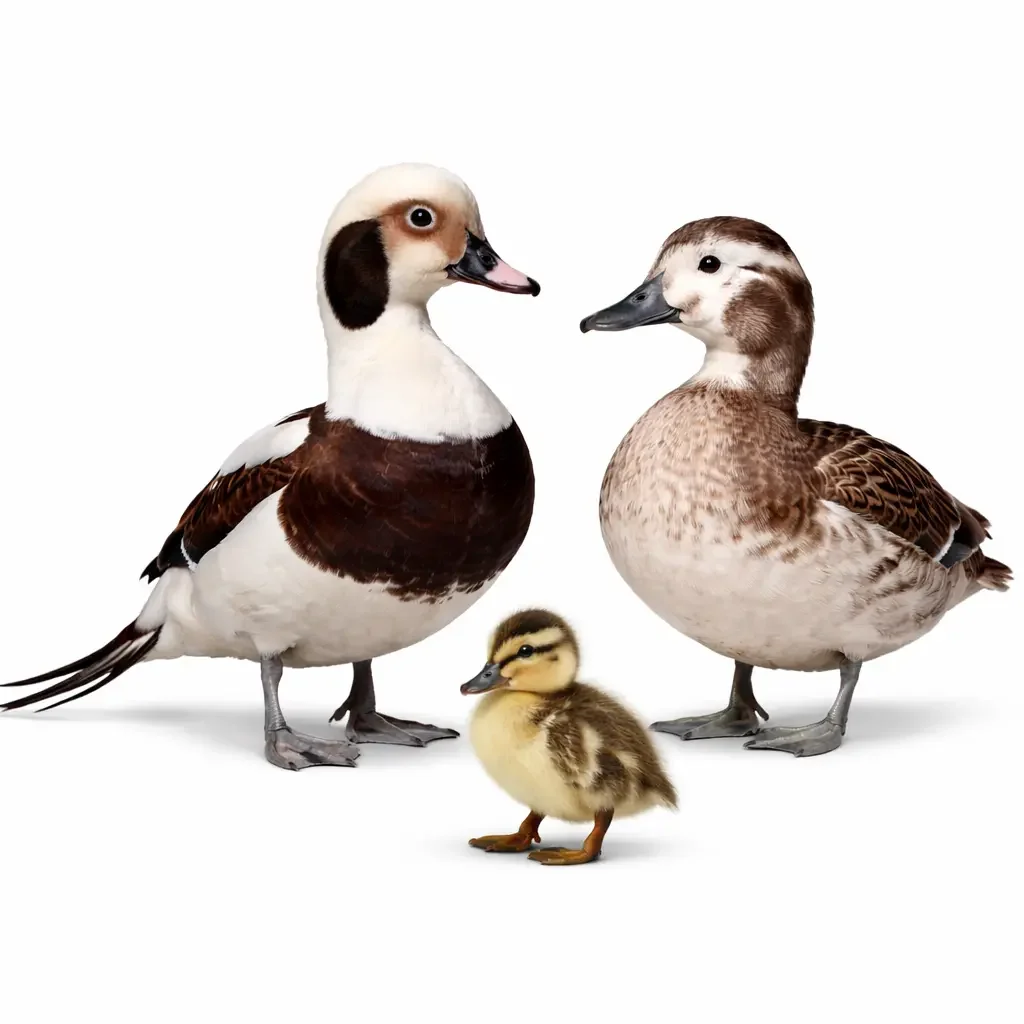
The Long-tailed Duck is one of the most remarkable and visually striking sea ducks in North America, a bird of the high Arctic that winters on large open water bodies including the Great Lakes, making it the one sea duck species with genuine relevance to the Midwest. Formerly known as the Oldsquaw, a name formally retired in 2000, it is celebrated for its extraordinary diving ability, its complex and beautiful seasonal plumage, and its remarkably loud and musical calls that carry across open water for considerable distances. For Midwest hunters and homesteaders with access to Great Lakes shoreline or large inland lakes, this is a fascinating and challenging bird worth understanding thoroughly.
Quick Facts
Breed Type: Wild Duck (Sea Duck)
Purpose: Hunting, Wildlife Observation, Reference Knowledge
Origin: Circumpolar, breeds on Arctic tundra across North America, Europe, and Russia
Egg Production: Not applicable (wild species)
Egg Color: Pale olive to buff, laid in ground scrapes on tundra near water
Adult Weight: Drake 1.3 to 2.4 lbs, Hen 1.1 to 2.1 lbs
Temperament: Gregarious and vocal, forms large flocks on open water, highly active diver
Hardiness: Extremely cold hardy, one of the most cold-adapted waterfowl in the world
Broodiness: Low, hens raise young independently with no male assistance
Lifespan: Estimated up to 15 to 20 years based on banding data
Image Section
Main Image: Long-tailed Duck drake in winter plumage on open water, long black tail feathers and striking white and dark facial pattern visible, 1024x1024, white or transparent background.
Breed Overview
The Long-tailed Duck, known scientifically as Clangula hyemalis, is a medium-sized sea duck with a circumpolar breeding distribution across the Arctic tundra of North America, Greenland, Iceland, Scandinavia, and Russia. It is one of the most numerous ducks in the world in terms of total population, yet it is poorly understood compared to most other North American waterfowl due to its remote breeding grounds and its tendency to winter far offshore on large open water bodies where survey work is difficult.
The drake is one of the most complex-plumaged ducks in the world. Unlike every other North American waterfowl species, the Long-tailed Duck undergoes three distinct plumages per year rather than the standard two. In winter plumage, which is when most Midwest observers encounter it, the male is a striking combination of white with dark ear patches, a black breast and back partially covered by elongated white scapular feathers, and a pair of long, thin black central tail feathers that stream behind in flight. In breeding plumage, which develops by spring, the head and neck become predominantly dark brown with a large gray facial patch, almost the reverse of the winter pattern. This unusual seasonal reversal of light and dark plumage is unique among North American ducks.
The hen is considerably more subdued, wearing deep brown and white in patterns that vary with the season, with a white face contrasting against a dark brown crown and ear coverts in winter. Both sexes have all-dark wings with no speculum, an unusual trait among ducks that helps with identification in flight.
The species faces genuine conservation concern. Population estimates suggest that more than 50 percent of the global population has been lost over the past 50 years, driven primarily by gillnet entanglement mortality in the Baltic Sea, where four to five million birds winter, as well as changes in Arctic breeding habitat driven by climate change. The International Union for Conservation of Nature lists the species as Vulnerable, a significant conservation designation for a bird that was once one of the most abundant ducks in the world.
Midwest Relevance and Range
The Long-tailed Duck is the one sea duck with direct and significant relevance to the Midwest, specifically through its use of the Great Lakes as a major wintering area. Lake Michigan in particular holds large concentrations of Long-tailed Ducks through fall and winter, with birds typically arriving in November and remaining through April or early May before departing for Arctic breeding grounds. Satellite telemetry studies of birds wintering on Lake Michigan have documented that these birds travel to breeding grounds in Nunavut, Canada, making stopovers in James Bay and Hudson Bay during both spring and fall migration.
On other large Midwest inland lakes and reservoirs, Long-tailed Ducks appear as uncommon to rare winter visitors, with individual birds or small groups occasionally encountered far from the Great Lakes during harsh weather or during migration. For homesteaders and hunters in the Midwest interior away from the Great Lakes, this species is primarily reference knowledge, likely to be encountered only as an occasional winter wanderer on larger open water bodies.
Hunting the Long-tailed Duck
Season and Bag Limits
Long-tailed Ducks are included in the sea duck bag limit category in most Midwest states where they occur, typically counted within a four-bird sea duck aggregate that also includes scoters and eiders. In inland states they may count toward the general duck aggregate. Michigan, which leads the nation in Long-tailed Duck harvest with an average of over 8,400 birds per year, and other Great Lakes states provide the primary Midwest hunting opportunity for this species.
Always verify current state regulations, as sea duck regulations can differ substantially from standard duck regulations in terms of shooting hours, zone restrictions, and species-specific limits.
Where to Hunt
Long-tailed Ducks on the Great Lakes concentrate near shore during daylight hours and move to deeper offshore water at night. They favor rocky shorelines, harbor entrances, river mouths, and nearshore areas with good diving access to invertebrate food. On Lake Michigan, birds tend to move progressively south as winter deepens, with concentrations shifting to Green Bay and the southern basin during the coldest months.
Layout boat hunting on open lake water, shoreline blind hunting near harbor entrances, and pass shooting along migration routes along the lake shoreline are the most practical approaches where this species is hunted in the Great Lakes region. Deep water and heavy weather are typical conditions for Long-tailed Duck hunting, making it among the most physically demanding waterfowl hunting available in the Midwest.
Difficulty of Hunting
Long-tailed Ducks are considered a challenging and rewarding bird to hunt. They winter primarily on large, exposed open water bodies where blind placement and shot distance management require significant skill and preparation. They fly low over the water with stiff, shallow wingbeats and the flocks twist and turn in loose formations, making them more difficult to shoot consistently than ducks that approach a blind from higher altitude. Their comfort on open water far from shore means that hunters who are not able to access their preferred wintering habitat will have limited opportunities regardless of how many birds are present in the area.
The combination of challenging habitat, cold and often rough weather conditions, and the need for layout or boat-based hunting setups places this species in the category of genuinely advanced waterfowl hunting that rewards dedicated and well-equipped hunters.
Decoys and Calling
Long-tailed Duck decoys placed on open water near rocky shorelines, harbor entrances, or river mouths are the most effective setup. Because this species often winters in large flocks on open water, large spreads of fifty or more decoys placed well offshore from the blind position produce the best results. The birds respond to the visual attraction of a large flock presence rather than to calling in most circumstances.
The Long-tailed Duck is one of the most vocal ducks in North America. The drake's loud, melodious three-syllable call, often rendered as oh-oh-ohoughlette or similar phonetic approximations, carries across open water for remarkable distances and is immediately distinctive. Some hunters use recorded Long-tailed Duck calls to attract passing flocks, though regulations on electronic calls vary by state and should be verified before use.
Meat Quality
Long-tailed Duck is considered poor to mediocre table fare by most hunters who have eaten it. Their diet consists almost entirely of aquatic invertebrates, mollusks, crustaceans, and small fish obtained through deep diving, a diet that consistently produces strong, fishy meat similar to other sea ducks. Most serious sea duck hunters consider the Long-tailed Duck primarily a trophy and sporting bird rather than a table bird, processing the meat into heavily spiced sausage or stew preparations where bold flavors mask the strong fishy character of the breast.
For hunters who commit to proper preparation, overnight brining in strongly seasoned brine, aggressive marinating, and slow cooking in heavily flavored stews or gumbo preparations can produce acceptable results. The birds dress out small, producing modest breast meat yields that further limit their practical food value compared to the effort required to hunt them.
Behavior and Identification
The Long-tailed Duck is an extraordinary diver even by diving duck standards. It is capable of reaching depths of 200 feet or more while foraging, making it one of the deepest-diving birds in the world. Most foraging dives are significantly shallower, targeting invertebrates in nearshore rocky areas, but the species' physical capacity for extreme depth diving is a genuine biological distinction. When diving the bird uses both its wings and its feet for propulsion underwater, unlike most diving ducks that use only their feet.
The drake's call is among the most distinctive sounds in the waterfowl world. Large flocks are heard from considerable distances, producing a musical, rolling chorus that carries over wind and wave noise on open water. This vocality is unusual among ducks, most of which are relatively quiet outside of the breeding season.
In flight the species is identified by its all-dark wings, the white body stripes visible from below and from the side, and the distinctive profile of the long central tail feathers on drakes. Flocks fly low over the water surface with a characteristic tilting, rolling motion that reflects the stiff, shallow wingbeat pattern.
The complex seasonal plumage means that birds encountered in winter, during fall migration, or in spring migration may be in substantially different plumage states. The three-plumage annual cycle is unique among North American waterfowl and can make confident identification of females and immature birds genuinely challenging for observers not familiar with the species.
Climate and Range
The Long-tailed Duck breeds across the high Arctic tundra of North America from Alaska through the Canadian Arctic islands and down through the eastern Canadian Arctic and Labrador. It is often the most abundant bird in high Arctic ecosystems during the brief summer breeding season. Fall migration brings birds to their wintering grounds, which include the Atlantic Coast from Labrador south to Virginia, the Pacific Coast from Alaska south to Oregon, and the Great Lakes, particularly Lake Michigan and Lake Ontario.
The Great Lakes wintering population is one of the most studied in North America due to research interest in the birds' vulnerability to avian botulism type E outbreaks in Lake Michigan, their potential interactions with offshore wind energy development proposals, and their susceptibility to entanglement in commercial fishing gear. This Great Lakes population connects directly to Arctic breeding grounds in Nunavut, making it an important component of the overall North American Long-tailed Duck management picture.
Homestead Suitability and Pond Management
The Long-tailed Duck has essentially no relevance to homestead pond management in the Midwest interior. It is a sea duck that winters on large, deep open water bodies and will not use small homestead ponds under any circumstances. For homesteaders located along the Great Lakes shoreline in Michigan, Wisconsin, or Indiana, it is a visible and distinctive winter presence on the open lake but is not a species that can be attracted or managed for through any habitat modification.
Its value for the Midwest homesteader and hunter is primarily as reference knowledge, as conservation awareness of a declining Arctic species, and as a potential target for hunters who access Great Lakes shoreline hunting during the regular duck season.
Pros and Cons
Pros
The Long-tailed Duck is one of the most visually stunning and biologically fascinating waterfowl species in North America, with a plumage complexity, diving ability, and vocal character unlike any other duck. For hunters with access to Great Lakes shoreline, it offers a genuinely challenging and adventurous sea duck hunting experience. Michigan's consistent harvest numbers demonstrate that meaningful hunting opportunities exist for dedicated hunters in the Great Lakes region. The species' complex seasonal plumage and extraordinary natural history make it a rewarding subject for wildlife photography and observation.
Cons
Meat quality is poor and the bird is not considered good table fare under most circumstances. Hunting requires access to large open water bodies with cold, rough weather conditions that create genuine physical challenges and risks. The species is classified as Vulnerable globally due to a significant long-term population decline, which raises ethical considerations about harvest. It has essentially no relevance to Midwest homestead pond management or interior waterfowl hunting. The complex three-plumage annual cycle makes confident field identification more demanding than most other duck species.
Profitability Note
As a wild and federally protected migratory species, Long-tailed Ducks cannot be commercially sold. They have no direct economic value to Midwest homesteaders. Their primary value is sporting and ecological, as a challenging and distinctive hunting target for Great Lakes region hunters and as a component of the broader Arctic ecosystem whose health is increasingly tied to conservation work in both breeding and wintering areas. The profitability section applies fully when this guide series covers domestic duck breeds.
Comparison With Related Species
Long-tailed Duck vs Bufflehead
The Bufflehead is a similarly small diving duck that shares some Great Lakes and large inland lake winter habitat with Long-tailed Ducks. The Bufflehead is far more commonly encountered in Midwest interior locations and is a more accessible hunting target. Both species are primarily invertebrate feeders with limited table value. The Bufflehead's bold black and white plumage on the drake and its energetic, fast-flying character make it a distinctive and popular incidental bird in mixed diving duck bags.
Long-tailed Duck vs Common Goldeneye
The Common Goldeneye is another diving duck that winters on the Great Lakes and large Midwest lakes, often in the same areas as Long-tailed Ducks. Goldeneyes are more commonly encountered on interior water bodies than Long-tailed Ducks and are generally considered slightly better table fare, though still in the lower tier compared to dabbling ducks. Both species use similar deep, open water wintering habitats.
Long-tailed Duck vs Lesser Scaup
Lesser Scaup share the open water wintering habitat of the Great Lakes with Long-tailed Ducks but are far more abundant and widely distributed across Midwest interior water bodies. Scaup are more frequently encountered hunting targets, offer modestly better table quality, and are significantly less demanding in terms of habitat access requirements.
Final Verdict
The Long-tailed Duck occupies a unique position in the Midwest waterfowl picture as the one sea duck species with a genuine Great Lakes presence and a meaningful hunting opportunity for dedicated hunters in Michigan, Wisconsin, and Indiana shoreline areas. Its extraordinary biology, striking plumage, and challenging hunting conditions make it one of the most memorable and rewarding birds to pursue for hunters willing to invest in the access and preparation required.
For the majority of Midwest homesteaders and hunters operating away from the Great Lakes, it is primarily reference knowledge that rounds out a complete understanding of North American waterfowl. Its conservation story, including a significant long-term population decline and Vulnerable status, is also worth knowing as context for the broader challenges facing Arctic-breeding waterfowl in a changing climate.
Frequently Asked Questions
Does the Long-tailed Duck occur in the Midwest interior away from the Great Lakes?
Occasionally. Individual birds and small groups appear as uncommon to rare winter visitors on large inland lakes and reservoirs throughout the Midwest interior during harsh weather or migration. However, significant concentrations occur almost exclusively on the Great Lakes, particularly Lake Michigan. For most Midwest interior hunters and homesteaders it is an unusual sighting rather than a regular occurrence.
Why was the Long-tailed Duck's name changed from Oldsquaw?
The American Ornithologists' Union formally changed the name in 2000 in response to concerns that the former name was offensive to Native American peoples whose cooperation was needed for conservation work on the species' Arctic breeding grounds. The name was also considered inconsistent with international usage, as the bird is known as Long-tailed Duck throughout Europe and Asia.
How do I identify a Long-tailed Duck in the field?
In winter plumage the drake is distinctive with white and dark brown patterning, long black central tail feathers held above the water surface, and all-dark wings visible in flight. The hen is brown and white with a white face and dark cap, lacking the long tail of the male. All-dark wings with no speculum on both sexes is a reliable in-flight field mark. The loud, melodious three-syllable call of flocks is unmistakable once learned.
Are Long-tailed Ducks good to eat?
No, they are generally considered poor table fare due to a diet almost entirely composed of mollusks, crustaceans, and small fish that produces strong, fishy-tasting meat. Most hunters who target this species treat it primarily as a sporting and trophy bird. Heavily seasoned preparations including spiced sausage or slow-cooked stews with bold flavors produce the most palatable results.
What is the conservation status of the Long-tailed Duck?
The International Union for Conservation of Nature lists the Long-tailed Duck as Vulnerable, reflecting an estimated population decline of more than 50 percent over the past 50 years. The primary drivers of decline include gillnet entanglement mortality in the Baltic Sea, climate-driven changes to Arctic breeding habitat, and environmental contaminants in both breeding and wintering areas.
When do Long-tailed Ducks arrive on the Great Lakes?
Birds typically begin arriving on Lake Michigan and other Great Lakes in November and remain through April and into early May before departing for Arctic breeding grounds. Peak concentrations are present through December, January, and February, with birds moving progressively south on the lake as winter deepens before shifting north again in late winter and spring.