
Bufflehead
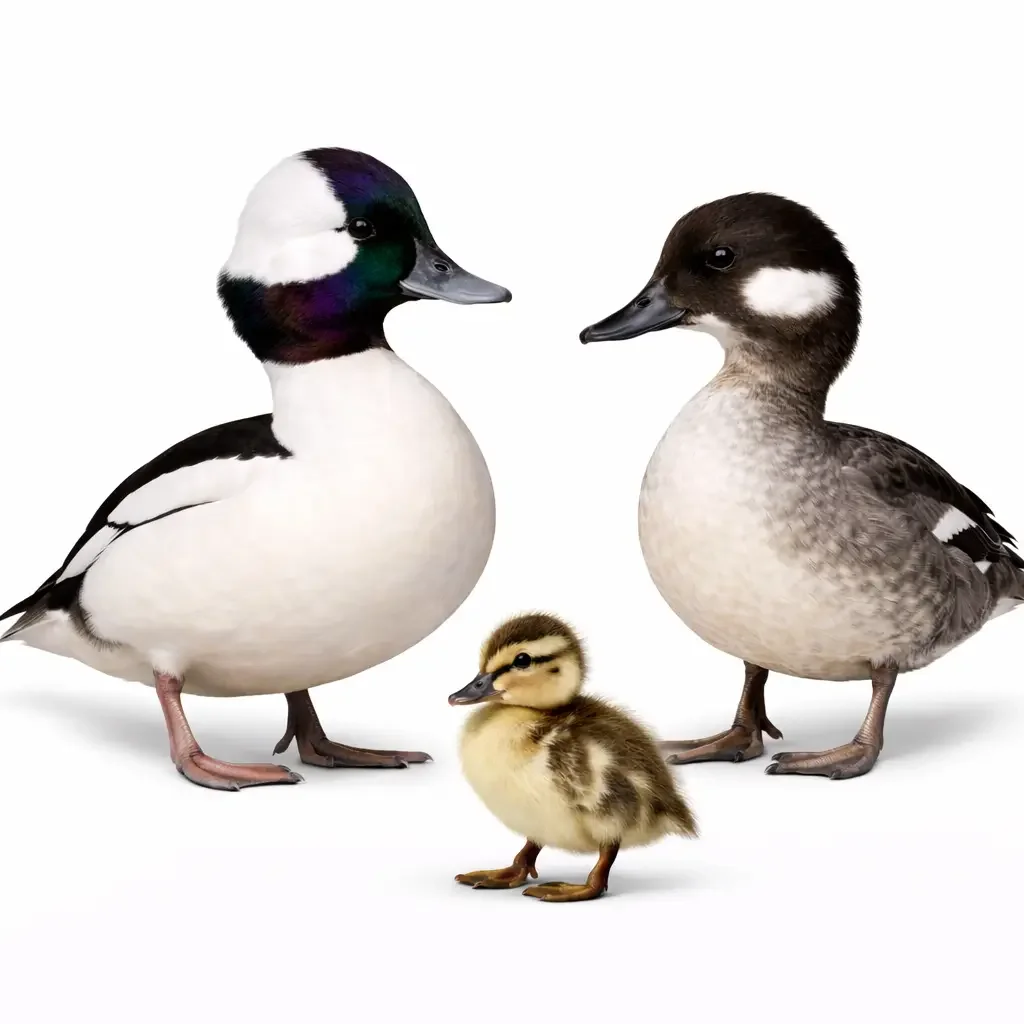
The Bufflehead is the smallest diving duck in North America and one of the most energetic and entertaining waterfowl species a Midwest hunter or homesteader will encounter. Its name comes from buffalo-head, a reference to the male's oversized, puffy, rounded head that gives the bird a comically top-heavy appearance that belies its remarkable agility on the water and in the air. Fast, acrobatic, and found on a wide range of Midwest water bodies from October through early spring, the Bufflehead is a regular part of the late-season diver hunting picture and a cavity-nesting species that responds to nest boxes on appropriate properties.
Quick Facts
Breed Type: Wild Duck
Purpose: Hunting, Wildlife Observation, Nest Box Attraction
Origin: North America only, breeds in boreal forests and aspen parklands of Canada and Alaska
Egg Production: Not applicable (wild species)
Egg Color: Pale buff to cream, laid in small tree cavities or nest boxes near boreal lakes
Adult Weight: Drake 0.9 to 1.3 lbs, Hen slightly lighter
Temperament: Alert and energetic, travels in small groups rarely exceeding fifty birds, quick to flush
Hardiness: Cold hardy, winters on large open water bodies well into late season
Broodiness: Moderate, hens incubate and raise young independently after males depart
Lifespan: Up to 18 years in the wild based on banding records, though average lifespan is considerably shorter
Image Section
Main Image: Bufflehead drake on open water, large white head patch extending from eye to nape visible against iridescent green-purple head, bright white body and black back, 1024x1024, white or transparent background.
Breed Overview
The Bufflehead, known scientifically as Bucephala albeola, is the smallest member of the goldeneye genus and one of the most uniquely adapted ducks in North America. Unlike virtually every other cavity-nesting duck species, the Bufflehead is small enough to use unmodified old nest holes of Northern Flickers without any enlargement, which gives it an abundant and widespread source of nest sites throughout its boreal and aspen parkland breeding range that larger cavity nesters cannot access. This ecological advantage has contributed to a steady population increase since the mid-twentieth century, making the Bufflehead one of the few diving duck species whose numbers have trended upward rather than down.
The drake in breeding plumage is instantly recognizable. His head is the largest relative to body size of any North American duck, giving him the distinctive buffalo-head profile that inspired his common name. The head appears black at a distance but reveals a rich iridescent green and purple gloss in good light, with a large, bold white patch extending from behind and below the eye around the back of the head. His body is clean white on the breast and sides with a black back. The hen is a compact gray-brown bird with a single oval white cheek patch below and behind the eye, distinguishable from the similar-appearing female Hooded Merganser by the smaller head, shorter bill, and white cheek patch position.
The Bufflehead is one of North America's most monogamous ducks. Pairs often maintain their bond across multiple seasons rather than forming new pairs annually like most other duck species. This multi-year pair fidelity, combined with females returning to their natal nest sites year after year, makes established breeding populations on appropriate properties remarkably stable and persistent once established.
The population history is genuinely encouraging. Like many waterfowl species, the Bufflehead was significantly reduced by unregulated market hunting in the late nineteenth and early twentieth centuries. Following protection under the Migratory Bird Treaty Act and subsequent regulated hunting, the population has recovered substantially and is now estimated at approximately 1.4 million birds, a level that supports a healthy regulated harvest while maintaining conservation status of least concern.
Hunting the Bufflehead
Season and Timing
Buffleheads fall under the general duck aggregate bag limit in most Midwest states and are not subject to species-specific restrictions. They count toward the standard six-bird daily total alongside Mallards and other ducks. With an average annual US harvest of approximately 209,000 birds, they are a regularly harvested species across the country.
Fall migration through the Midwest begins in October and continues through November, with birds present on rivers, large lakes, and reservoirs through the winter wherever open water remains. They are among the smaller but consistently available diving ducks throughout the late fall and winter season. Minnesota and Wisconsin consistently rank among the top harvest states in the Mississippi Flyway, reflecting the strong migration traffic through those states.
Where to Hunt
Buffleheads use a wide range of water body types during migration and winter, with a preference for relatively clear, shallow water where their visual underwater foraging is most productive. They appear on large rivers, lakes, reservoirs, ponds, and occasionally flooded fields, showing considerably more habitat flexibility than specialist divers like Canvasbacks. They tend to favor sheltered coves, protected bays, and quieter sections of rivers over fully exposed open water, making them more accessible from shore-based setups than many other diving ducks.
They are commonly encountered in small groups of five to ten birds, rarely in the large rafts that scaup and Canvasbacks form. This social structure means they are more likely to work small, well-placed decoy setups than to require the massive spreads needed for big-water diver hunting.
Difficulty of Hunting
Buffleheads are considered moderately challenging to hunt. Their small size makes them difficult to hit cleanly at distance, and their fast, erratic flight with rapid wingbeats and a characteristic rocking side-to-side pattern in the air makes them more unpredictable shooting than larger, steadier ducks. They can take flight with less running start than most diving ducks due to their small size, which makes them less predictable in their flush angle and direction.
They are less wary than Canvasbacks or late-season Mallards but are quick to detect disturbance and are not reliably decoying birds. Their small group sizes mean a good day of Bufflehead hunting produces numbers through multiple small-group encounters rather than a single massive flock commitment.
Decoys and Calling
A small number of Bufflehead-specific decoys, typically six to twelve birds, placed near a larger diver spread on appropriate water attracts the species effectively. The bold black and white pattern on drake decoys is visible at good distances and builds confidence in approaching birds. Their tendency toward small groups and sheltered water means that modest, well-positioned setups often outperform large open-water spreads for this species specifically.
Buffleheads are not responsive to calling. The drake produces a squeaky whistle during courtship and the hen makes a soft hoarse quack, but neither is practically useful for calling birds to a hunting position. Decoy placement and hunting location selection are the primary tools.
Meat Quality
Bufflehead meat quality is generally considered moderate and variable, comparable to Lesser Scaup and better than mergansers. Their diet of aquatic invertebrates, crustaceans, snails, and aquatic insects produces meat that has more flavor intensity than dabbling ducks but is less fishy than strictly fish-eating species. Birds feeding primarily on aquatic insects in freshwater settings typically produce better-tasting meat than those with heavy crustacean and shellfish diets in coastal or Great Lakes environments.
Their small body size is the most practical limitation. A mature drake Bufflehead yields a very modest amount of breast meat, making them more of a contribution to a mixed bag rather than the centerpiece of a meal. Breasting multiple birds and preparing them together in stews or gumbo is the most practical approach to translating a good day of Bufflehead hunting into a satisfying table result.
Best Preparations
Overnight marinating in citrus or wine-based marinades improves results for any birds with stronger flavor. Combining multiple Bufflehead breasts with other species in stews and gumbo where they contribute to the overall flavor rather than serving as the primary ingredient works well. Duck sausage or ground preparations blended with pork are reliable options for converting variable-quality meat into consistently good eating.
Behavior and Identification
The Bufflehead's flight is immediately distinctive. It is small, fast, and rocks noticeably from side to side in the air with a rapid, whirring wingbeat that is unlike any other diving duck. In a mixed flock, Buffleheads are immediately identifiable by their diminutive size and this characteristic rocking flight pattern. The drake's white head patch is visible at long distance and flashes brightly in good light.
On the water, Buffleheads sit high and compact with the oversized head bobbing slightly on the neck. They dive actively for food, with entire small groups sometimes submerging simultaneously and reappearing nearby seconds later. Dives are typically brief, averaging around thirteen seconds, which is consistent with foraging in the relatively shallow water they prefer.
The species is unusually territorial and aggressive for its size during the breeding season, actively defending feeding territories against Common Goldeneyes and other larger ducks. This surprising assertiveness from one of the continent's smallest ducks adds to the species' entertaining character.
The white head patch position is the most reliable identification mark distinguishing Buffleheads from the similar-appearing Common Goldeneye. On the Bufflehead the white patch wraps around the back of the head from behind and below the eye, while on the Common Goldeneye the circular white patch is positioned between the eye and the bill on the face. This difference is clearly visible at moderate field distances.
Climate and Range
The Bufflehead breeds from western Alaska and the Yukon east across Canada to Quebec, with the core of the breeding range in boreal forests and aspen parklands from British Columbia through northern Alberta and Saskatchewan. It requires small lakes and ponds with Northern Flicker nest cavities or appropriate nest boxes near clear, fishless water where aquatic insects are abundant and competition from fish is minimal.
Fall migration through the Midwest begins in October, with birds present through winter on any open water. They tend to winter as far north as possible, staying through January on Midwest rivers and lakes wherever open water persists. Minnesota and Wisconsin typically rank in the top three or four states nationally for Bufflehead harvest, reflecting strong migration traffic through those states in the Mississippi Flyway.
Homestead Suitability and Pond Management
The Bufflehead has genuine relevance to Midwest homestead pond management in northern portions of the region. Its use of Northern Flicker nest holes for breeding means that any Midwest property with mature aspen or poplar trees near clear-water ponds has potential Bufflehead nesting habitat. Unlike the Common Goldeneye that requires larger cavities and boxes, the Bufflehead can use nest boxes with a smaller entrance hole of approximately two and a half inches in diameter.
Attracting Buffleheads to Your Property
Installing small nest boxes on mature aspen or poplar trees near clear-water ponds or small lakes in the northern Midwest provides breeding habitat for Buffleheads. The entrance hole must be no larger than approximately two and a half inches to match the Northern Flicker holes they naturally use, as a larger opening allows competing species to displace them. Nest boxes should be placed two to ten feet above the ground on trees near water. Adding wood shavings to the bottom of boxes and installing predator guards helps improve nesting success once birds adopt a site.
Maintaining clear water quality in ponds that adjoin aspen or mixed woodland is the other critical habitat element. Buffleheads breed on fishless or low-fish ponds where competition for aquatic insect prey is minimal. Ponds with abundant aquatic insect life and good water clarity in wooded northern settings are the most attractive breeding habitat.
For winter migration, maintaining open water through late fall using pond aerators or other methods extends the period when migrating Buffleheads stop to feed and rest on your property before pushing south.
Female Buffleheads show extremely strong site fidelity, returning to the same nest location year after year. Once a female adopts a nest box on your property, she will almost certainly return annually, making the initial investment in box installation a long-term relationship that pays dividends across many seasons.
Pros and Cons
Pros
The Bufflehead is one of the most visually entertaining small ducks in the Midwest, with a bold plumage, energetic diving behavior, and the characteristic rocking flight pattern that makes it immediately identifiable at distance. Its population is stable and growing, a positive conservation story in a waterfowl world with many concerning trends. It uses nest boxes that are among the smallest and easiest to install of any cavity-nesting waterfowl. The species is present on a wide variety of Midwest water body types during migration, making it accessible without specialized large-water equipment. Its small flock sizes create a more intimate hunting experience than the massive diver rafts associated with Canvasback or scaup hunting.
Cons
Meat yield per bird is minimal due to the small body size, limiting practical food value even with a good day's harvest. Meat quality is variable and generally considered below dabbling ducks, requiring preparation investment for best results. Their small size makes clean shot placement more challenging than with larger ducks. They are not strongly responsive to decoys or calling, making location selection the primary determinant of success. Nest box attraction requires appropriate northern woodland habitat near clear water that is not available on most Midwest interior agricultural properties.
Profitability Note
As a wild and federally protected migratory species, Buffleheads cannot be commercially sold. Their value to homesteaders is primarily in the wildlife observation, hunting opportunity, and the rewarding long-term relationship of managing nest boxes for a returning breeding female. Properties in northern Minnesota, Wisconsin, and Michigan with aspen woodland near clear-water ponds that establish Bufflehead nesting pairs add genuine wildlife value that enhances the overall property quality for conservation and recreational purposes. The profitability section applies fully when this guide series covers domestic duck breeds.
Comparison With Related Species
Bufflehead vs Common Goldeneye
The Common Goldeneye is the closest relative and shares the boreal cavity-nesting habit and clear-water preference. The Goldeneye is significantly larger, requiring bigger nest cavities, and shows a circular white facial spot rather than the broad head wrap-around patch of the Bufflehead. Both species produce the distinctive whistling wing sound in flight, though the Goldeneye's is louder and more prominent given its larger size. Both are moderately acceptable table fare with similar preparation requirements.
Bufflehead vs Hooded Merganser
The Hooded Merganser is similar in size and may be confused with female Buffleheads in the field. The Hooded Merganser has a longer, serrated bill adapted for fish hunting, produces far poorer table fare, and shows the characteristic merganser elongated body shape rather than the compact, rounded Bufflehead profile. Both are cavity nesters that use similar nest boxes in wooded wetland settings.
Bufflehead vs Ruddy Duck
Both are small, compact diving ducks of similar size that occur on Midwest water bodies during late season migration. The Ruddy Duck's upright cocked tail, wide scoop-shaped bill, and general reluctance to fly distinguish it from the active, quick-flushing Bufflehead. Both are considered poor to moderate table fare. The Bufflehead is considerably more energetic and shows much greater willingness to use a variety of water body types.
Final Verdict
The Bufflehead rewards the Midwest hunter and homesteader who gives it genuine attention. It is not the most prestigious game duck and its table value requires work to maximize, but it is a consistently available, visually spectacular, and ecologically interesting species whose population success story is genuinely encouraging. For northern Midwest homesteaders with aspen woodland near clear-water ponds, it is one of the most accessible nest box species available. For hunters working rivers and lakes in the late season, it adds energy and variety to any mixed diver bag.
The Bufflehead's combination of bold plumage, acrobatic flight, and the entertaining underwater foraging behavior visible on any calm autumn lake makes it a species worth knowing thoroughly regardless of how it ranks in a hunting hierarchy.
Frequently Asked Questions
Are Buffleheads good to eat?
Bufflehead is considered moderate table fare, better than mergansers and Long-tailed Ducks but generally below dabbling ducks. Their small body size limits yield per bird, and meat quality varies with diet. Birds from freshwater environments feeding on aquatic insects produce better results than those with heavy crustacean or shellfish diets. Combining multiple breasts in stews and gumbo with bold seasonings is the most practical approach.
Can I attract Buffleheads to my property with nest boxes?
Yes, on properties with mature aspen or poplar trees near clear-water ponds or small lakes in the northern Midwest. The nest box entrance hole should be approximately two and a half inches in diameter to match the Northern Flicker holes they naturally use. Boxes should be placed two to ten feet above the ground on trees near water. Females show strong site fidelity and will return to established boxes year after year.
How do I identify a Bufflehead versus a Common Goldeneye?
The white head patch position is the most reliable field mark. On the Bufflehead it wraps around the back of the head from behind and below the eye. On the Common Goldeneye it is positioned as a circular spot between the bill and the eye on the face. The Bufflehead is also significantly smaller than the Goldeneye, with a more compact, rounded body and a proportionally larger head relative to body size.
When do Buffleheads migrate through the Midwest?
Fall migration begins in October with birds present through the winter wherever open water remains. They winter as far north as possible, staying on Midwest rivers and lakes through January in mild winters before cold temperatures push them south. Minnesota and Wisconsin consistently rank among the top Bufflehead harvest states in the Mississippi Flyway.
Why is the Bufflehead the only diving duck that uses Northern Flicker holes?
The Bufflehead is small enough at roughly one pound to fit through the two and a half inch entrance holes that Northern Flickers excavate in aspen and poplar trees. All other cavity-nesting ducks including Wood Ducks, Common Goldeneyes, and Hooded Mergansers require larger cavities that cannot be entered through a standard Flicker hole. This unique adaptation gives the Bufflehead access to an abundant source of nest sites that is unavailable to competing species throughout its boreal and aspen parkland breeding range.