
Hook Bill Duck
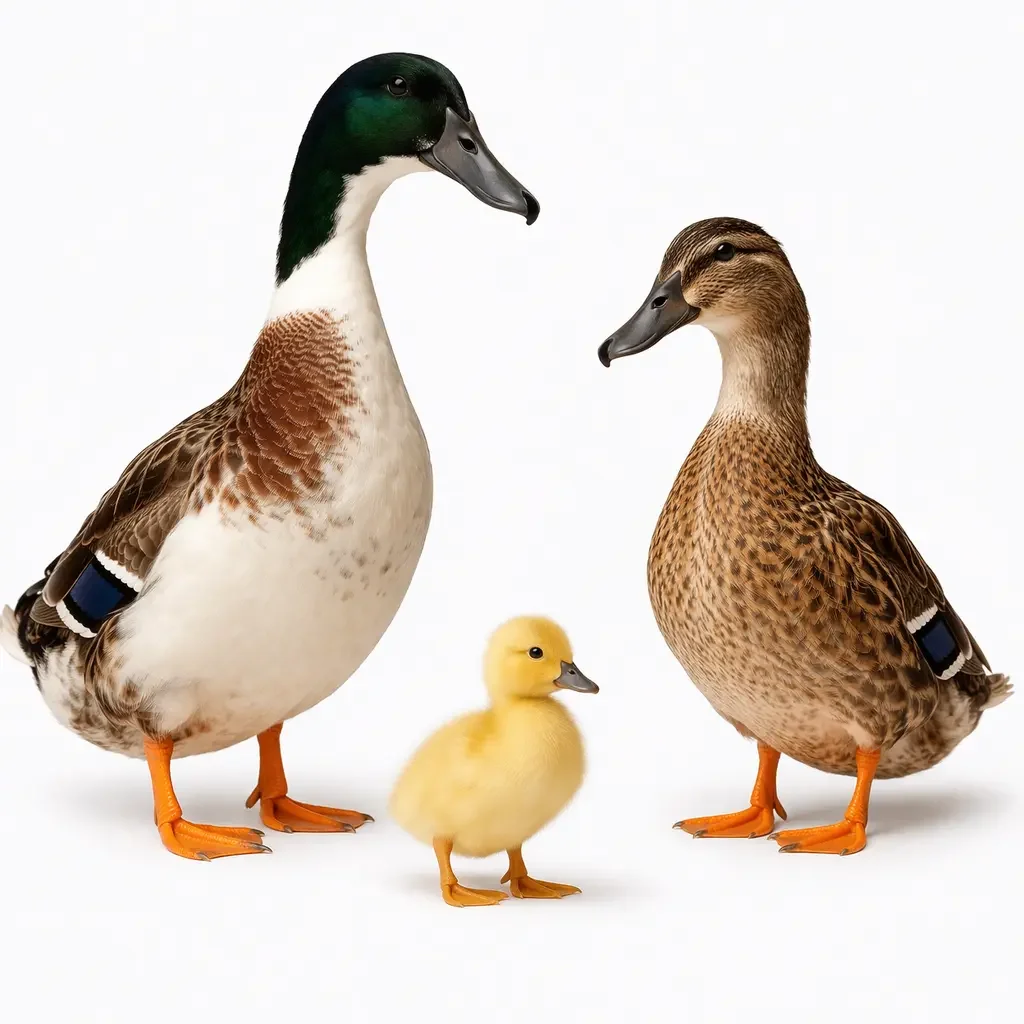
The Hook Bill Duck, also known as the Dutch Hookbill, is the oldest domestic duck breed in Europe with a documented history spanning more than four centuries, and one of the rarest living domestic ducks in the world. Its defining characteristic, a downward-curving bill unlike that of any other domestic or wild waterfowl species, is not merely ornamental: it was the deliberate result of selective breeding in seventeenth-century Netherlands for a purpose as practical as any in agricultural history. It is a breed that nearly vanished entirely by 1980 when only fifteen individuals remained, was pulled back from the edge of extinction through a dedicated Dutch conservation program, and arrived in North America only in 2000. For the Midwest homesteader who wants the most historically significant, biologically distinctive, and conservationally meaningful domestic duck available, the Hook Bill stands apart from every other breed in this directory.
Quick Facts
Class: Lightweight
Weight: Both sexes 4.5 pounds or less; typically 3.5 to 6.5 pounds depending on source and individual
Egg Production: 100 to 225 large eggs per year; individual productive hens from non-inbred lines can exceed this
Egg Color: White, blue, or blue-green; blue and blue-green are associated with genetic purity in heritage lines
Egg Size: Large; approximately 60 grams per egg
Primary Purpose: Eggs; exhibition; ornamental; conservation
Temperament: Docile, calm, curious, and friendly when socialized from young; non-aggressive
Brooding: Moderate; hens show brooding instinct and can be good mothers when given nesting opportunity
Conservation Status: Critical (The Livestock Conservancy); estimated 250 to 400 breeding individuals worldwide
APA Recognition: Not yet admitted to the American Poultry Association Standard of Perfection
Country of Origin: Netherlands (Noord-Holland province); probable East Asian origins
First Documented: 1676, in Francis Willughby's Ornithologiæ Libri Tres
Introduced to the United States: 2000, by Dave Holderread
Sexual Maturity: Approximately 16 weeks; earlier than most domestic duck breeds
Lifespan: 4 to 12 years depending on management
Image Section
Feature image: Hook Bill duck showing the distinctive downward-curving bill and dusky mallard plumageSecondary image: White-bibbed Hook Bill duck on waterThird image: Close-up of the curved bill showing the characteristic hook profile
Breed Overview
The Hook Bill Duck is the oldest domestic duck breed in Europe for which continuous documentation exists. The first known written and illustrated description of the breed appears in Ornithologiæ Libri Tres, published in 1676 by English naturalist Francis Willughby, who described the bird as very much like the common duck except for its bill, which is wide, slightly longer, and bending moderately downward. Dutch court painter Melchior d'Hondecoeter depicted crested Hook Bills in avian landscape paintings from around 1680, and French court artist Nicolas Robert illustrated the breed in watercolor and gouache pieces from the same decade. By the nineteenth century, advertisements for Dutch Hook-billed Ducks were appearing in Irish markets, indicating established trade across northern Europe.
The breed originated in the Noord-Holland province of the Netherlands, though its more distant ancestry is disputed. The most widely accepted hypothesis among historians and breeders is that the Hook Bill descends from early importations of Indian Runner ducks brought to Europe through East Indies trade routes during the Dutch Golden Age, a period of enormous maritime commercial activity in the seventeenth century. This connection is supported by the discovery of pure Hook Bill-type birds among duck populations in East India documented in the twentieth century. The curved bill, which distinguishes the breed from all other waterfowl, is believed to have been selected deliberately by Dutch breeders for a practical reason: it allowed hunters and herders to identify their domesticated Hook Bills visually among the wild ducks that inhabited the same Dutch canals and waterways, preventing the accidental harvest of owned birds by hunters in shared water environments.
In eighteenth-century Holland, the Hook Bill was managed in a system similar to the Southeast Asian herding practices associated with the Indian Runner. Ducks were released in the morning to forage freely in the waterway and canal networks of the Dutch countryside, finding their own food through foraging with minimal supplemental feeding. They were gathered in the evening and provided nesting space during brooding periods. By mid-August each year, birds and ducklings were collected, ducklings' wings were clipped to ensure capture, and the flock was driven to market in Purmerend for sale to duck keepers who would use them for egg production. This annual cycle of managed free-foraging followed by market sale sustained the breed's population at large scale for two centuries.
The twentieth century was nearly catastrophic for the Hook Bill. As industrial agriculture replaced traditional small-scale duck keeping, demand for duck eggs collapsed in favor of commercially produced chicken eggs. The Dutch canals that had served as the breed's habitat and food source became increasingly polluted through industrialization, degrading the waterway environments the birds depended on. By 1980, the breed had been reduced to approximately fifteen individuals. A Dutch conservation program led by Hans van de Zaan collected those final fifteen birds and began a breeding program that slowly rebuilt the population. Dave Holderread of Holderread Waterfowl Farm in Oregon was among the first to import the breed to the United States in 2000, and his documentation of the breed's bill type variation, fertility characteristics, and breeding management laid the foundation for American conservation efforts.
The breed has not yet been admitted to the American Poultry Association Standard of Perfection. The global breeding population is estimated at 250 to 400 individuals, making the Hook Bill one of the most critically rare domestic duck breeds in the world.
The Hooked Bill: Biology and Breeding Implications
The Hook Bill's curved bill is the breed's defining morphological characteristic and the feature that sets it apart from every other domestic or wild duck species in existence. The bill curves downward from the base, creating what is sometimes described as a Roman nose or aquiline profile that gives the bird a distinctive facial character unlike anything else in waterfowl.
Three bill types exist within the breed population: extreme curve, moderate curve, and straight. Dave Holderread's research during the early American establishment of the breed revealed an important fertility relationship among these bill types: birds with extreme curve bills crossed to other extreme-curve birds showed poor egg fertility. The recommended breeding approach is to cross birds with moderately curved bills to each other, or to cross an extreme-curve bird with a straight-billed bird. This management consideration is not intuitive and is not well understood by new keepers, making guidance from experienced Hook Bill breeders essential for homesteaders who want to maintain a productive and genetically healthy breeding flock.
The blue egg color associated with the breed is an indicator of genetic purity in heritage Hook Bill lines. Birds from well-maintained, non-inbred lines with strong heritage purity produce the characteristic blue and blue-green eggs the breed has been associated with for centuries. Inbreeding, which has been a persistent risk given the extremely small founding population of fifteen birds, can reduce both egg production and the blue egg characteristic. The practical implication for homesteaders is that careful sourcing from breeders who document genetic diversity and breeding records is more important for the Hook Bill than for almost any other domestic duck.
Charles Darwin documented the Hook Bill in his own writing, noting the breed's unusual bill structure as a curious example of the variation produced by selective breeding. Darwin kept Hook Bills in his backyard pond at Down House, making them one of the few domestic duck breeds with a documented connection to the history of evolutionary biology.
Egg Production
Hook Bill egg production is variable and strongly influenced by the genetic health of the individual bird's bloodline. Non-inbred birds from well-maintained heritage lines produce 100 to 225 large eggs per year, with productive individual hens capable of exceeding this range. Heavily inbred birds, which represent a real risk given the breed's near-extinction bottleneck of fifteen individuals, may produce considerably fewer eggs and show reduced fertility.
The blue and blue-green egg color of the Hook Bill is one of its most visually distinctive attributes and a practical market advantage in direct-sale contexts where colored duck eggs attract significant customer attention and premium pricing. White eggs are also produced, particularly in lines that have experienced dilution of the heritage blue-egg genetics.
The breed reaches sexual maturity at approximately sixteen weeks, earlier than many other domestic duck breeds, which is an advantage for homesteaders managing a flock for egg production timing.
Hens show a moderate brooding instinct that is greater than many production-focused breeds. The historical Dutch management of the breed specifically included providing nesting sites for brooding hens during the brooding period, and this managed broodiness is documented as part of the breed's working history. Modern Hook Bill hens can go broody and hatch their own eggs when given appropriate nesting conditions, which is an advantage for homesteaders who want a degree of natural flock reproduction.
Foraging Capability
The Hook Bill's foraging capability is one of its most practically significant attributes and reflects both its probable Runner ancestry and its centuries of Dutch canal-management history. The breed was selected over generations specifically for the ability to sustain itself through free foraging with minimal supplemental feeding, a management requirement that directly shaped which birds were kept for breeding.
The downward-curving bill, beyond its role as a visual identification marker, provides a functional advantage in aquatic foraging. The curved bill profile is well-adapted for scooping and filtering through soft substrate, capturing aquatic insects, invertebrates, and plant material from shallow water environments with efficiency that a straight-billed breed cannot replicate. In waterway and canal environments, this bill morphology is a genuine foraging tool.
On dry land, Hook Bills are active and wide-ranging foragers of insects, slugs, snails, weed seeds, and plant material. Their historical management in the Dutch system required them to find essentially all of their own food from April through August with no supplemental feeding, a foraging demand that selected strongly for both foraging drive and feed efficiency. Contemporary keepers confirm that Hook Bills continue to be among the most self-sufficient foraging breeds available, reducing supplemental feed requirements meaningfully on properties with adequate pasture, garden, or wetland access.
Flight and Confinement
The Hook Bill is a capable flier, particularly in younger birds, and this flight capability is a critical management consideration that distinguishes it from most other domestic duck breeds. Dutch farmers historically managed this through wing clipping of ducklings before market dispersal. Contemporary homesteaders must address the same fundamental challenge: Hook Bills that are not wing-clipped or housed in covered runs will potentially take flight from uncovered enclosures to forage independently.
This flight capability is also noted as a predator defense advantage. Hook Bills that sense a threat can achieve elevated positions on rooftops, structures, or trees that place them beyond the reach of ground predators, providing a self-preservation capability that fully grounded breeds lack entirely.
Wing clipping of one wing disrupts flight balance and prevents sustained flight without harming the bird, and must be repeated annually after each wing molt. Covered runs with overhead netting provide an alternative that eliminates the wing clipping maintenance requirement.
Temperament and Behavior
The Hook Bill's temperament is consistently described as docile, curious, calm, and non-aggressive. Well-socialized birds that have had regular calm human handling from duckling age become genuinely friendly companions that are comfortable around their keepers and easy to manage in daily homestead routines. The breed's historical management required birds to be gathered, handled, transported to market, and placed in new flock environments regularly, which selected for adaptability and low reactivity to human handling.
Unsocialized adults or birds purchased without a socialization history can be more reserved and require patient, calm handling to develop comfort with human contact. The investment in early socialization is well worthwhile given the breed's naturally amenable baseline temperament.
Females are generally quieter than many domestic duck breeds, making the Hook Bill suitable for settings where noise management is a consideration.
The breed's curious and active character makes it an engaging presence in the yard or pond. Keepers consistently describe Hook Bills as having genuine personality and character that goes beyond the standard domestic duck experience, possibly reflecting the centuries of managed foraging independence that shaped the breed into a self-sufficient, problem-solving bird.
Climate Adaptability
The Hook Bill was selected across centuries of management in the variable maritime climate of the Dutch Noord-Holland province, which includes cold, wet winters and moderate summers. The breed handles cold and wet conditions well. In North American contexts, the breed is documented as performing adequately across a range of conditions, though the small population size in the United States means regional climate performance data is limited compared to well-established breeds.
For Midwest homesteaders, the breed's Dutch heritage suggests adequate performance across regional winter conditions with appropriate housing. Heat tolerance in the warm, humid Midwest summer requires the same standard management of shade and cool water access that all domestic ducks need.
Housing and Management
Hook Bills require standard domestic duck housing with the specific addition of covered run management or wing clipping to address the breed's flight capability. Housing that is adequate for other domestic ducks is adequate for the Hook Bill in terms of floor space, ventilation, and predator proofing.
Water access is particularly important for this breed given its aquatic foraging heritage and the curved bill's adaptation to water-based feeding. A pond, trough, or stock tank large enough for full bill and head immersion supports both the breed's welfare and its natural foraging behavior in ways that cannot be replicated with drinking-only water access.
Nesting opportunities during the breeding season support the breed's documented brooding tendency and can reduce the incubator dependence required by non-broody breeds.
Breeding Considerations
The Hook Bill's Critical conservation status and the genetic legacy of its fifteen-individual founding population create specific breeding management responsibilities for any homesteader who keeps the breed.
Maintaining records of individual bird origins and preventing excessive inbreeding within the small North American population requires coordination with other Hook Bill breeders and active participation in conservation networks. The Livestock Conservancy and Dave Holderread's foundational documentation provide the framework, but the practical responsibility falls on individual breeders to avoid the inbreeding that reduces fertility, egg production, and blue egg expression in the breed's gene pool.
The bill-type breeding guidelines established by Holderread, specifically the recommendation to cross moderate-curve birds together or to cross extreme-curve birds with straight-billed birds rather than crossing extreme-curve to extreme-curve, are essential management knowledge for any Hook Bill breeding program.
Pros and Cons
Pros
The oldest documented domestic duck breed in Europe with a history of more than four centuries
Unique downward-curving bill found in no other domestic or wild duck species; unmistakable visual character
Blue and blue-green egg production adds direct market value at premium pricing
Outstanding natural forager with centuries of selection for self-sufficient food acquisition
Early sexual maturity at approximately sixteen weeks
Docile, curious, calm temperament suitable for families and beginning homesteaders once socialized
Flight capability provides meaningful predator defense advantage
Moderate brooding instinct supports natural flock reproduction
Keeping quality Hook Bills contributes directly to conservation of one of the world's rarest domestic duck breeds
Charles Darwin documented and kept the breed; a historically significant animal with genuine scientific heritage
Cons
Critical conservation status; among the rarest domestic duck breeds in existence with 250 to 400 breeding individuals globally; sourcing quality birds is exceptionally difficult
Not yet admitted to the APA Standard of Perfection in the United States
Flight capability requires wing clipping or covered runs for reliable confinement
Breeding management is complex: bill type fertility interactions require specific pairing strategies
Inbreeding risk from small founding population requires active breeding record management
Egg production is variable and strongly affected by genetic health of individual bloodlines
Limited North American breeder network makes ongoing flock management more isolated than with common breeds
Profitability
The Hook Bill's profitability rests primarily on the premium value of its blue and blue-green eggs and the exceptional scarcity of quality breeding stock. Blue duck eggs from the Hook Bill carry the highest visual novelty and market distinction of any egg in the domestic duck category, and informed buyers at farmers markets and in direct sales consistently show interest in colored eggs that justify premium pricing above standard white duck eggs.
Hatching eggs and ducklings from genetically documented, well-managed Hook Bill bloodlines are among the most difficult domestic duck genetics to source in North America, creating genuine seller's market conditions for breeders who maintain quality flocks with documented ancestry. The breed's Critical status means that responsible breeders are in short supply relative to demand from conservation-minded buyers and homesteaders who understand the breed's significance.
The conservation narrative itself is a direct marketing asset. The Hook Bill's story, from near-extinction at fifteen birds to gradual recovery, has genuine resonance with buyers who understand and care about heritage breed preservation, and this story can be communicated effectively through farmers market presence, farm tours, and online direct sales.
Comparison With Related Breeds
Indian Runner Duck: The most probable ancestral cousin of the Hook Bill, sharing probable East Asian origins and a similar foraging orientation. The Runner is far more common, widely available, better documented in production terms, and established in the APA Standard. The Hook Bill offers the Runner's foraging capability in a calmer, less high-strung body with the added distinction of its unique curved bill and blue egg production. For homesteaders who want Runner-like foraging with greater docility and maximum conservation significance, the Hook Bill is the more meaningful choice.
Magpie Duck: Another rare, Threatened breed with a foraging-focused dual-purpose profile in a lightweight body. Both breeds offer distinctive visual character, quality egg production, and conservation significance. The Magpie is more widely available in North America, has APA recognition, and produces more eggs in quality-bred flocks. The Hook Bill is rarer, produces blue eggs, and carries a more dramatic conservation story. Both are excellent choices for conservation-minded homesteaders; the Hook Bill represents a deeper commitment to a more critically endangered breed.
Khaki Campbell: The Campbell is the straightforward high-volume egg producer for homesteaders who want maximum production without conservation complexity. It outproduces the Hook Bill in eggs per year reliably and consistently, is widely available, and requires no specialized breeding management. For homesteaders whose primary goal is egg volume, the Campbell is the practical choice. For those who want blue eggs, foraging self-sufficiency, conservation significance, and the most historically interesting domestic duck available, the Hook Bill delivers what the Campbell cannot.
Welsh Harlequin: The Welsh Harlequin is another Watch or Threatened dual-purpose breed with beautiful plumage and solid production numbers. It is considerably more available than the Hook Bill, has APA recognition, and delivers more consistent egg production. The Hook Bill is dramatically rarer, produces blue eggs, and carries a conservation responsibility that the Welsh Harlequin, despite its Watch status, does not match in urgency. Both are excellent breeds; the Hook Bill is the more demanding and more significant conservation choice.
Final Verdict
The Hook Bill Duck is the most historically significant domestic duck breed in Europe and one of the most critically rare in the world. Keeping it is an act of genuine conservation significance. Its blue eggs are unlike those of any other common domestic duck. Its four-century documented history connects the modern homesteader directly to seventeenth-century Dutch agricultural practices and to Charles Darwin's backyard pond. And its foraging capability, shaped by centuries of managed canal-side self-sufficiency, makes it a genuinely functional working bird despite its rarity and ornamental distinction. For homesteaders who are ready to accept the responsibility of sourcing quality birds, managing breeding records, and participating in the continued survival of a breed that nearly disappeared entirely within living memory, the Hook Bill Duck is the most meaningful and rewarding domestic duck in this entire directory.
Frequently Asked Questions
Why does the Hook Bill duck have a curved bill? The curved bill was deliberately selected by Dutch breeders in the seventeenth century as a visual identification marker that allowed hunters and herders to distinguish domesticated Hook Bills from wild ducks in the shared waterway environments of the Dutch countryside. It also provides a functional advantage for aquatic foraging in shallow water and soft substrate environments.
What color eggs do Hook Bill ducks lay? Blue and blue-green eggs in heritage lines with strong genetic purity. White eggs in lines that have experienced inbreeding or dilution of the heritage genetics. The blue egg color is considered an indicator of genetic health in the breed.
How rare is the Hook Bill duck? Extremely rare. The global breeding population is estimated at 250 to 400 individuals. The breed was reduced to fifteen individuals by 1980. It holds Critical status from The Livestock Conservancy and has not been admitted to the APA Standard in the United States.
Can Hook Bill ducks fly? Yes, particularly younger birds. Hook Bills are capable fliers and require wing clipping or covered runs for reliable confinement, unlike most other domestic duck breeds.
Who brought Hook Bill ducks to the United States? Dave Holderread of Holderread Waterfowl Farm in Oregon was among the first to import the breed to the United States in 2000. His documentation of the breed's bill types, fertility characteristics, and breeding management established the foundation for American conservation efforts.
What is the correct breeding approach for Hook Bill ducks? Cross birds with moderately curved bills together, or cross extreme-curve-billed birds with straight-billed birds. Crossing two extreme-curve birds together produces poor egg fertility. Avoiding inbreeding through active breeding record management and coordination with other Hook Bill breeders is essential given the breed's extremely small founding population.