
Indian Runner
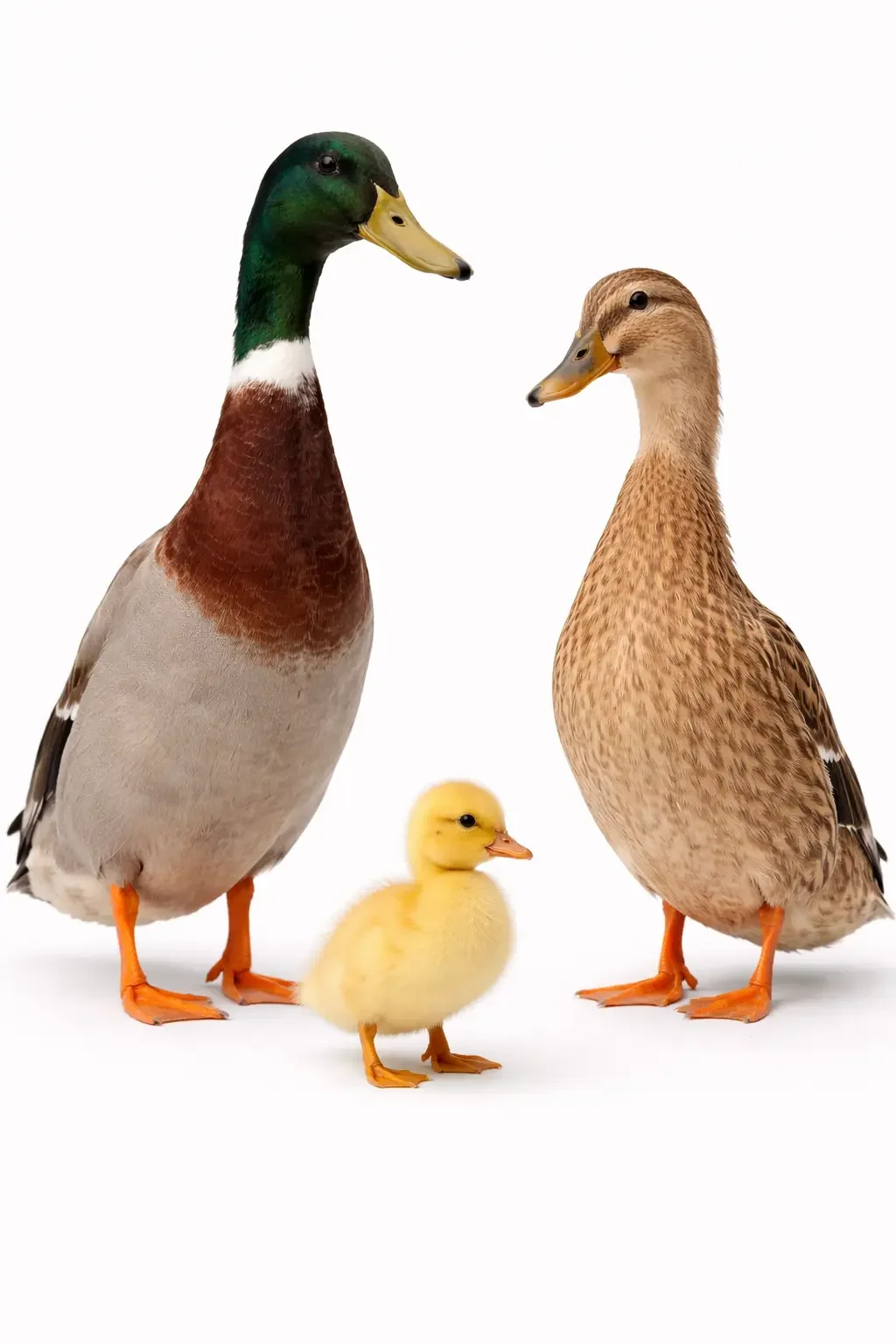
The Indian Runner Duck is the most distinctive-looking domestic duck in the world and the breed whose working history is the most thoroughly documented of any domestic waterfowl. It does not waddle. It runs. Its upright, bottle-shaped body, held at angles from forty-five to ninety degrees above horizontal, moves through a field or garden at a speed that surprises people who have only seen the waddling gait of other domestic ducks. It was shaped over centuries of managed herding in the rice paddies and trade routes of Southeast Asia into the most active forager, the most efficient walker, and among the most prolific egg layers in the domestic duck world. The Khaki Campbell, which holds the title of the world's premier egg-laying duck, was created from Runner foundation stock. The Indian Runner is the Leghorn of the duck world: lean, energetic, highly productive, and not particularly cuddly, but almost impossible to match for sheer egg output and foraging capability per pound of feed consumed. For Midwest homesteaders who want a working flock that earns its keep in the garden and the egg basket without demanding the management resources of larger breeds, the Indian Runner deserves serious consideration.
Quick Facts
Class: Lightweight
Weight: Drakes 3.5 to 5 pounds; hens 3 to 4.5 pounds
Egg Production: 100 to 250 eggs per year depending on strain; top laying strains exceed 300 annually
Egg Color: White; some strains produce blue or green eggs
Egg Size: Large; approximately 3 ounces per egg
Primary Purpose: Eggs; pest control; exhibition; herding dog training
Temperament: Alert, active, nervous when startled, strong flock instinct; can become friendly with calm daily handling from duckling age
Brooding: Poor; broodiness largely absent; incubator or surrogate broody required for hatching
Conservation Status: Not on Livestock Conservancy priority lists; widely available globally
APA Recognition: 1898; one of the earliest duck breeds recognized by the APA
Country of Origin: Southeast Asia (Malaysia, Indonesia); Bali, Java, Lombok documented as early centers
Earliest Documentation: Seventeenth-century Dutch paintings; written European records from the 1840s and 1850s
Lifespan: 8 to 12 years
Image Section
Feature image: Fawn and White Indian Runner duck showing the distinctive upright, bottle-shaped stanceSecondary image: Flock of Indian Runners foraging across a garden in characteristic running formationThird image: Multiple Runner color varieties side by side showing the breed's wide color range
Breed Overview
The Indian Runner Duck is among the oldest domesticated duck breeds with documented working history. Ancient temple carvings in Java depict upright-standing ducks that closely resemble modern Indian Runners, and the breed's use in managed rice paddy agriculture is documented from at least the seventeenth century in Dutch East Indies trading records, where the birds were noted as stored food supplies on ships under the name Baly Soldiers or Penguin Ducks.
The working system that shaped the breed over many generations was specific and demanding. Herders in Malaysia, Indonesia, and neighboring regions walked large flocks of ducks, sometimes numbering in the hundreds, along road corridors and out to rice paddies each morning. The flock foraged through the day under the herder's guidance, directed by a long bamboo pole with cloth strips attached to one end. The ducks consumed fallen rice grains, weed seeds, insects, snails, slugs, small reptiles, and any other edibles available in the paddy environment. In the evening the flock was walked back to a bamboo or clay enclosure for the night, where eggs were collected the following morning before the flock was sent out again. This cycle, repeated across generations, selected powerfully for exactly the traits that define the modern Indian Runner: exceptional walking ability, long-ranging foraging energy, flock cohesion, and high egg production. Birds that could not walk, would not forage, or did not lay were not productive enough to sustain themselves in this system.
The breed reached Britain around 1850 when a sea captain returning from what he described as India, almost certainly the East Indies, brought several upright-standing ducks back to farmer friends in Cumberland in northwest England. The breed spread through Scotland and into the rest of Britain after appearing at the 1896 Kendal Show, and was admitted to the American Poultry Association Standard of Perfection in 1898, making it one of the earliest domestic duck breeds formally recognized in the United States.
The name Indian Runner reflects the historical confusion between India proper and the East Indies in European geographic understanding of the period. The breed has no documented origin in India. It comes from the island chains of Southeast Asia, principally the Indonesian archipelago.
Plumage and Appearance
The Indian Runner's most immediately distinctive characteristic is its body posture. Unlike all other domestic ducks, which carry their bodies at a roughly horizontal angle and move with the characteristic side-to-side waddling gait produced by legs set midway along the body, the Indian Runner carries its body at forty-five to ninety degrees above horizontal, with legs set far back on the body and an elongated thighbone that forces the torso upright. The result is a bird that stands and moves more like a penguin than a duck, which explains the Penguin Duck nickname that followed the breed from its earliest introduction to European observers.
When agitated or excited, some Runners stand nearly fully vertical, with neck and body forming an almost straight line from bill to tail. This extreme upright posture is particularly associated with exhibition-bred European strains. North American strains tend toward a somewhat less extreme angle, carrying at forty-five to seventy-five degrees in relaxed foraging posture with the ability to go more upright when alert or disturbed.
The body is slim, long, and streamlined: a shape often described as a wine bottle, a soda water bottle, or a bowling pin set at an angle. The head is slender and narrow with eyes set high. The bill is straight and can be yellow, orange, or black depending on color variety. The neck is long and carries naturally upright. The tail is held relatively low and flat rather than the upward-cocked angle of some breeds.
Indian Runners come in more color varieties than any other domestic duck breed. APA-recognized varieties in the United States include Fawn and White, White, Penciled, Black, Buff, Chocolate, Cumberland Blue, and Gray. Additional varieties including Trout, Silver, and various combinations exist in European exhibition circles. The Fawn and White is the most historically prominent and widely recognized color, with a clean white body and warm fawn-colored head, neck, and wing markings. The Black variety is one of the most striking, with richly iridescent dark plumage. The Penciled variety shows delicate feather detailing reminiscent of Rouen hen penciling in a lighter-weight package.
Egg Production
The Indian Runner's egg production is the breed's most celebrated attribute and the trait that shaped its entire development over centuries of Southeast Asian managed herding. Top laying strains produce more than 300 eggs per year, placing the breed alongside or above the Khaki Campbell, which descends directly from Runner foundation genetics. Well-managed quality strains reliably deliver 250 or more eggs annually. Hatchery and show strains that have been selected primarily for conformation and color rather than production can fall significantly below this, producing 100 to 180 eggs per year, which is decent for a lightweight breed but a considerable drop from the breed's true production potential.
This strain variation is the most important practical consideration for homesteaders who acquire Indian Runners expecting world-class egg production. The difference between a production-focused Runner strain and a show-focused one can be more than 150 eggs per bird per year, a difference large enough to change the breed's economics entirely. Sourcing from breeders who document and select for laying performance rather than conformation alone is the essential step for homesteaders who want the production capability the breed is historically famous for.
Eggs are large, typically white, and weigh approximately three ounces each. Some strains produce blue or green eggs, a characteristic that some keepers prize for market appeal. The green egg production tendency is particularly noted among certain color varieties and can be one of the highest percentages of any domestic duck breed. Eggs are suitable for all culinary applications and particularly valued in baking for the same reasons as all large duck eggs: higher fat content produces lighter, fluffier baked goods than chicken eggs.
Broodiness has been almost entirely eliminated through centuries of production-focused selection. A Runner hen that goes broody stops laying, and a duck that stops laying was not useful to the rice paddy herder. The breed's egg production orientation means incubators or surrogate broodies from naturally brooding breeds such as Muscovy are required for hatching.
Pest Control and Foraging
The Indian Runner is the most active and wide-ranging forager in the domestic duck category. Its working history as a field-herded pest control duck across rice paddies and agricultural landscapes is the literal origin of the breed's physical form: the upright body, long legs, and rear-set thighs are adaptations to walking long distances efficiently. A Runner covering a garden or pasture area covers more ground, more systematically, and with more intensity than any other domestic duck at the same body weight.
In practical homestead applications, Runner ducks are remarkable slug, snail, and insect hunters. They work through garden areas with focused precision, investigating every corner, under every leaf, and along every edge where slugs and snails shelter. Their low body weight, typically three to four and a half pounds for hens, means they cause minimal soil compaction and very limited plant damage when foraging in active growing areas compared to heavier breeds. This lightweight-forager combination is specifically why Indian Runners and Magpie ducks are the recommended breeds for vegetable garden integration.
The breed's strong flock instinct, developed through centuries of herded management, means a Runner flock moves and behaves as a coordinated group rather than scattering unpredictably. This flock cohesion makes them easy to move, easy to direct toward a specific area of the property, and straightforward to herd back to housing at the end of the day. This herding ease is sufficiently reliable and interesting that Indian Runners are used in herding dog training competitions as a substitute for sheep, where the flock's cohesive movement replicates the challenge of livestock herding in a smaller and more accessible animal.
Temperament and Behavior
The Indian Runner's temperament is energetic, alert, and naturally nervous in the presence of unfamiliar stimuli, a character that reflects its centuries of working life in open-field environments where alertness to predators was a survival trait. The breed's default response to sudden movement, unfamiliar sounds, or new objects in their environment is rapid movement as a flock, which can look like panic to keepers unfamiliar with the breed.
Handled calmly and consistently from duckling age, Runners can become comfortable around their keepers, responsive to routine, and genuinely personable in the way active, curious birds often are. The key word is calm: abrupt movements, sudden approach, and loud sounds around Runners produce stress responses that undermine the bonding process. Keepers who move slowly, speak quietly, and allow birds to approach on their own timeline develop better-adjusted, more tractable flocks.
The breed is not naturally cuddly or physically affectionate in the way that some calm heavyweight breeds are. It is not a lap duck. But a well-handled Runner is an engaged, responsive bird that recognizes its keeper, participates in daily routines with evident interest, and delivers entertainment through its uniquely comical movement style that no other domestic duck replicates.
Drakes have a notably high libido, consistent with the breed's production-focused selection history. A ratio of one drake to six or seven hens is recommended to avoid overbreeding stress on individual females.
Color Varieties and Exhibition
The Indian Runner offers more color variety than any other domestic duck breed, with eight APA-recognized varieties in the United States and additional varieties recognized in European standards. This color breadth makes the breed a particularly interesting exhibition subject, and show circles around the breed have maintained active engagement in both the United Kingdom and the United States since the late nineteenth century.
The exhibition history of the Indian Runner has, however, created a tension with production performance that is worth understanding. In the early twentieth century, exhibition breeders focused increasingly on achieving the most extreme vertical posture and the most precisely defined color markings rather than on maintaining laying performance. The result was that many exhibition lines developed dramatically reduced egg production relative to the production-focused working strains. Dave Holderread and others have documented this divergence extensively, and the Indian Runner Duck Club in Britain has recognized and addressed it as a priority conservation issue for the breed's working heritage.
For homesteaders, the practical implication is simple: source from production-focused breeders rather than show-focused ones if egg production is the primary goal, and ask specifically about laying records for the parent flock before purchasing.
Climate Adaptability
The Indian Runner is one of the most climate-adaptable domestic duck breeds available. The Livestock Conservancy documents the breed's successful performance in environments ranging from arid desert conditions at one hundred degrees Fahrenheit through tropical rainforests with more than two hundred inches of annual precipitation to cold northern regions where temperatures remain below zero for extended periods. This exceptional adaptability is a direct product of the breed's managed working history across the climatic diversity of Southeast Asian and British agricultural environments.
For Midwest homesteaders, the breed handles the full range of regional conditions from hot, humid Midwest summers through cold, snow-covered winters with standard management support: shade and cool water access in heat, wind-protected housing and unfrozen water access in cold.
Housing and Management
Indian Runners require housing with sufficient ceiling height to allow full upright posture, which distinguishes them from breeds that sleep horizontally. A minimum ceiling height of three feet, and ideally four, accommodates the breed's natural stance without forcing birds to hunch or lower their posture uncomfortably during extended confinement. Floor space of four square feet per bird is adequate, but the breed's active character means more space consistently produces better welfare outcomes.
The breed is particularly intolerant of small, cramped runs. Runners that are confined to inadequate outdoor space become vocal and restless, expressing their displeasure loudly and persistently. Providing a large outdoor foraging area is the most effective management tool for maintaining flock calm and productivity.
Water access for drinking and bill washing is essential. Swimming access is appreciated but not required for welfare, and Runners use swimming water less intensively than more water-oriented breeds. The breed does not require deep pond access and performs well with a simple trough or stock tank for bathing.
The breed is non-flying. Legs set far back on the body and the upright body structure make sustained flight impossible, and standard fencing without netting is adequate for confinement.
Pros and Cons
Pros
Among the highest egg producers in the domestic duck category; top strains exceed 300 eggs per year
The most active and wide-ranging forager of any domestic duck breed
Lightweight body causes minimal soil compaction and plant damage in garden foraging
Strong flock cohesion makes herding, movement, and daily management straightforward
More color varieties than any other domestic duck breed; exceptional exhibition diversity
Exceptional climate adaptability documented across tropical, arid, and subarctic environments
Non-flying; standard fencing provides reliable confinement
Lower feed cost per egg produced than any heavier dual-purpose breed
Used for herding dog training; versatile working animal beyond standard poultry roles
Cons
Naturally nervous and alert; high-strung response to startling stimuli requires calm, consistent management
Production strains and show strains vary dramatically in egg output; sourcing matters enormously
Poor broodiness; incubator or surrogate broody required for all hatching
Not a meat breed; lean body provides minimal carcass at four to five pounds
Requires adequate space; small runs produce vocal, stressed, unproductive birds
Not naturally cuddly or physically affectionate; not the best choice for keepers seeking a lap duck
High drake libido requires careful flock ratio management at one drake to six to seven hens
Profitability
The Indian Runner's profitability rests almost entirely on egg production, and it is one of the most feed-efficient egg producers available at any weight class. Feed cost per egg produced from a quality Runner strain is lower than almost any other domestic duck because the bird converts feed to eggs rather than body mass, and forages enough during warm seasons to meaningfully reduce supplemental feed requirements.
Duck eggs from Runner hens sell at premium prices through farmers markets and direct sales channels, typically two to three times the price of chicken eggs. The breed's distinctive upright appearance and wide color variety also attract customer interest at point of sale, making the birds themselves a conversation-starting part of the farm brand. Blue and green eggs from strains that produce them carry additional visual novelty that supports premium pricing.
Hatching eggs and ducklings from quality production-documented Runner strains sell consistently to homesteaders and backyard keepers. The breed's herding dog training use creates a specific niche market for trained or naturally cohesive Runner flocks that commands premium pricing from herding enthusiasts and dog trainers.
Comparison With Related Breeds
Khaki Campbell: The Khaki Campbell was developed directly from Indian Runner foundation genetics crossed with Rouen and Mallard, producing a bird with the Runner's egg production potential in a heavier, calmer, less anxious body. The Campbell is more docile, less high-strung, and produces slightly more body mass for dual-purpose utility. The Runner is the more active forager and the more interesting exhibition bird. For homesteaders who want maximum egg production in the most manageable package, the Campbell is often preferred. For those who want the Runner's unique foraging character and visual distinctiveness, the Runner is irreplaceable.
Magpie Duck: The Magpie is likely descended in part from Indian Runner foundation genetics and shares the Runner's active foraging drive, production-focused orientation, and lighter body weight. The Magpie is somewhat calmer and less high-strung than the Runner and carries a dramatically more visually appealing pied plumage. Both are excellent garden foragers. The Magpie is the better choice for homesteaders who want Runner-like production in a less anxious bird with exhibition and ornamental value. The Runner is the better choice for maximum foraging coverage and egg production from the breed with the deepest working heritage.
Welsh Harlequin: The Welsh Harlequin is the Welsh counterpart to the Runner in the egg-focused lightweight dual-purpose category: calm, beautiful, productive, and well-suited to managed homestead environments. The Harlequin is considerably calmer and more docile than the Runner and adds meaningful meat utility at five and a half pounds. The Runner outperforms it in foraging energy and egg production per pound of feed consumed. The choice depends on whether foraging intensity or temperament ease is the higher priority.
Muscovy Duck: The Muscovy is the Runner's opposite in almost every dimension: heavy, calm, a poor layer but exceptional brooding mother, a premium meat producer, and a reliable pest hunter of a different character than the Runner's wide-ranging foraging style. A mixed flock that includes both Muscovy and Indian Runner benefits from the Runner's egg production and foraging coverage and the Muscovy's self-sufficient brooding and meat production, with Muscovy hens available to incubate and hatch Runner eggs.
Final Verdict
The Indian Runner Duck is the working duck in its purest form, shaped over centuries into an animal optimized for exactly the tasks that Midwest homesteaders most often need a duck to perform: covering ground, hunting insects and slugs, laying eggs reliably, and doing so with a feed efficiency and lightweight footprint that makes the operation economically sensible. It is not the most cuddly, not the most visually obvious beauty in the duck yard, and not the easiest breed to manage for keepers who want a placid, hands-off flock. But for homesteaders who want the most productive forager and egg layer available in a lightweight package, and who are willing to provide the space and calm management the breed needs to express its potential, the Indian Runner is one of the most rewarding domestic ducks in the directory.
Frequently Asked Questions
How many eggs do Indian Runner ducks lay per year? Top production strains lay 250 to 300 or more eggs per year. Average strains produce 150 to 200. Show strains that have been selected for extreme posture rather than production can fall well below this. Asking breeders about documented laying records before purchasing is essential.
Why does the Indian Runner stand upright instead of waddling? The upright posture and running gait developed over centuries of managed herding in Southeast Asian rice paddies, where birds were walked long distances daily. The elongated thighbone and rear-set leg position that produce the upright stance are adaptations to efficient long-distance walking rather than swimming.
Do Indian Runner ducks go broody? Rarely. Broodiness has been selected against through production-focused breeding for centuries. Most Runner hens will not reliably sit and hatch eggs. An incubator or a naturally broody breed such as Muscovy is needed for hatching.
Are Indian Runner ducks good for beginners? They are manageable but not the most forgiving beginner breed. Their nervous, alert temperament requires calm, consistent handling from duckling age. Beginners who can provide this will succeed with them. Those who prefer a more placid, laid-back breed may find the Buff Orpington Duck, Welsh Harlequin, or Rouen a more comfortable starting point.
Can Indian Runner ducks fly? No. Their upright body structure and rear-set legs make sustained flight impossible. Standard fencing without netting is adequate for confinement.
What color eggs do Indian Runners lay? Primarily white, with some strains producing blue or green eggs. The green egg tendency is particularly noted in certain color varieties and can be quite high in percentage terms compared to other domestic duck breeds.