
Mallard
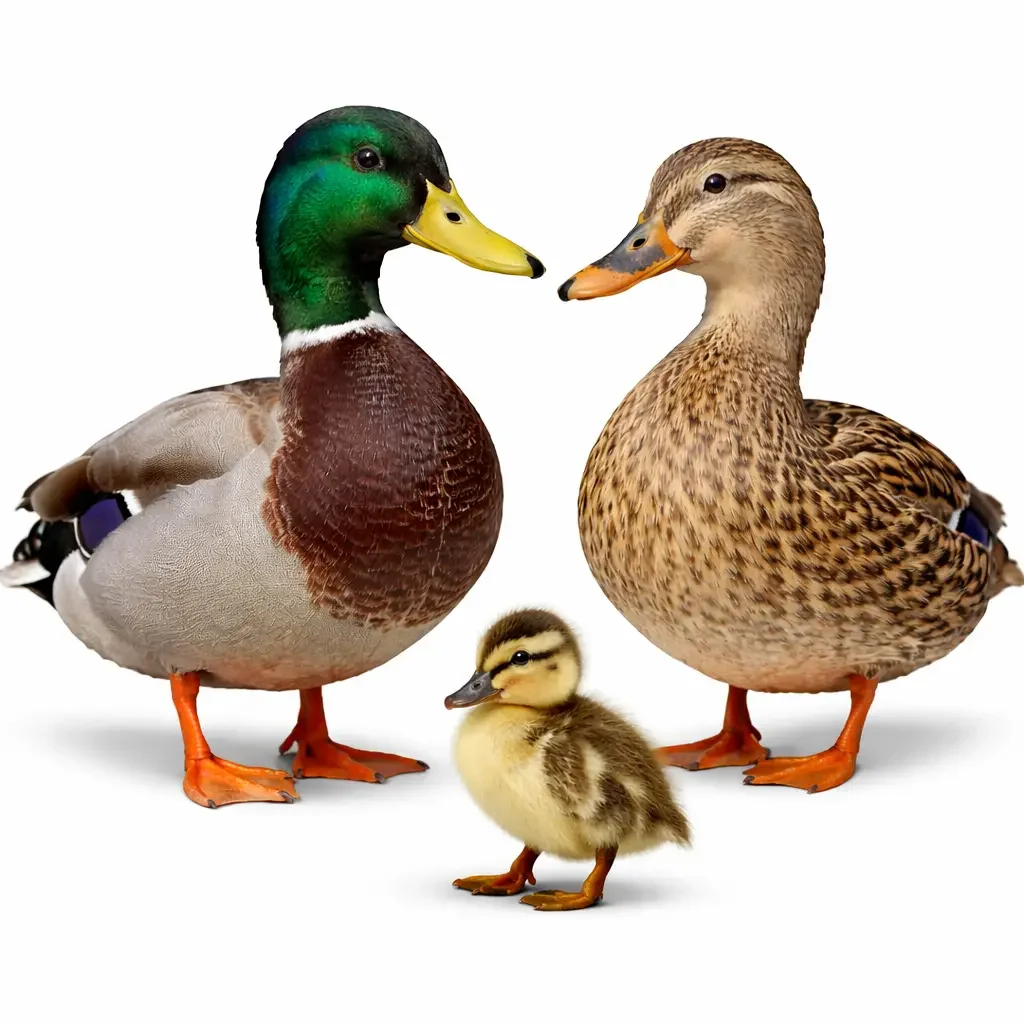
The Mallard is the most important duck in North America by almost every measure. It is the most abundant, the most widely hunted, the most recognized, and the ancestor of nearly every domestic duck breed raised on homesteads around the world. For Midwest hunters and homesteaders, the Mallard is the benchmark against which every other duck species is measured, the bird most likely to be on your pond in September and still in the decoys in January. No waterfowl education is complete without a thorough understanding of this species.
Quick Facts
Breed Type: Wild Duck
Purpose: Hunting, Wildlife Observation, Pond Management, Ancestral Domestic Breed
Origin: North America and Eurasia, breeds throughout the Northern Hemisphere
Egg Production: Not applicable (wild species, though domestic descendants are prolific layers)
Egg Color: Pale greenish-buff, laid in ground nests with down lining
Adult Weight: Drake 2.5 to 3 lbs, Hen 2.0 to 2.5 lbs
Temperament: Adaptable and intelligent, becomes wary under hunting pressure, tame in parks
Hardiness: Extremely cold hardy, one of the most adaptable birds in the world
Broodiness: Moderate, hen incubates and raises young independently
Lifespan: 5 to 10 years in the wild, oldest recorded was 27 years 7 months
Image Section
Main Image: Mallard drake and hen pair on calm water, iridescent green head of the drake and violet-blue speculum visible, 1024x1024, white or transparent background.
Breed Overview
The Mallard, known scientifically as Anas platyrhynchos, is the most widely distributed and abundant duck in the Northern Hemisphere. It breeds across virtually the entire temperate and boreal zone of North America, Europe, and Asia, winters throughout most of the United States and Mexico, and has established feral populations on every inhabited continent. Its North American breeding population is estimated at approximately 19 million birds, and it accounts for roughly one of every three ducks shot by hunters in the United States each year.
The drake in breeding plumage is arguably the most recognized bird in the world. His iridescent emerald green head, white neck ring, chestnut breast, gray flanks, and black tail curl are the universal image of a duck in human culture. The hen is a mottled brown bird with an orange-marked bill, white tail feathers, and the same violet-blue speculum bordered by white that both sexes display in flight. The speculum is one of the most reliable field marks at any distance and in any lighting condition.
Beyond its cultural familiarity, the Mallard holds a singular biological importance in waterfowl history. It is the ancestor of nearly all domestic duck breeds raised on farms and homesteads around the world, with the sole exception of the Muscovy Duck. Every domestic duck breed covered in the domestic section of this guide series, from the Pekin to the Khaki Campbell to the Rouen, traces its ancestry directly to the wild Mallard. Understanding the wild bird is therefore essential context for understanding the domestic breeds that descend from it.
The Mallard is also the most heavily managed waterfowl species in North America. Annual breeding population surveys, habitat assessments, and harvest monitoring conducted by the US Fish and Wildlife Service and Canadian Wildlife Service form the foundation of the entire North American waterfowl management system. Mallard population data drives the regulatory framework for duck hunting seasons and bag limits across the continent.
Hunting the Mallard
Season and Timing
Mallards are subject to a species-specific daily bag limit in most Midwest states, typically four birds per day with no more than two hens. This hen restriction reflects the importance of protecting breeding females to maintain population productivity. Mallards are present throughout the entire regular duck season from early October through January in most Midwest states, making them the most consistently available target from opening day through the season's end.
Early season birds are often local breeders and summer residents that have not yet been educated by hunting pressure. These birds decoy readily and respond aggressively to calling. As the season progresses and northern migrants push south ahead of cold fronts, the birds that arrive in November and December are often significantly warier, having survived weeks of hunting pressure across the flyway. The best Mallard hunting of the late season often coincides with cold weather events that push birds off frozen northern water onto whatever open water remains further south.
Where to Hunt
Mallards are the most habitat-versatile dabbling duck in North America. They use virtually every type of wetland from beaver ponds and woodland sloughs to prairie potholes, large reservoirs, flooded crop fields, moist soil impoundments, and river backwaters. Research indicates that wintering Mallards are most abundant in landscapes combining flooded cropland, forested wetlands, permanent open water, and moist-soil wetlands within a relatively compact area.
Flooded corn and grain fields are among the most productive Mallard hunting locations in the Midwest, particularly when water conditions allow birds to feed directly on waste grain. River bottoms with flooded timber attract large concentrations of Mallards in the Mississippi Flyway states of Missouri, Arkansas, Tennessee, and Illinois, where some of the highest Mallard harvest numbers in the country are recorded. On homestead-scale properties, any combination of open water, food, and shelter will attract and hold Mallards throughout the season.
Difficulty of Hunting
Mallard hunting difficulty exists on a wide spectrum. Early season local birds can be among the easiest ducks to hunt, decoying readily to modest spreads with straightforward calling. Late-season birds that have survived weeks of hunting pressure across multiple states can be among the most challenging birds in North America to consistently decoy, refusing to commit to spreads, flaring at the slightest movement or imperfection, and circling for extended periods before either landing or departing.
This range of difficulty is part of what makes Mallard hunting so engaging across an entire season. The challenge escalates naturally as the season progresses, rewarding hunters who adapt their calling, spread design, and concealment to the increasingly educated birds that push through in November and December.
Decoys and Calling
The Mallard is the standard against which all duck decoy spreads are designed. A spread of twelve to four dozen Mallard decoys in a J, U, or fishhook configuration with a landing zone upwind of the blind is the foundational setup for Midwest dabbler hunting. Adding motion through spinning-wing decoys, jerk rigs, or water-agitating devices significantly improves early season results. Later in the season, many experienced hunters reduce motion and spread size to avoid spooking educated birds that have been pressured all season.
Hen Mallard calling is the foundational skill of North American duck hunting. The five-note hail call used to attract distant birds, the feeding chuckle used to build confidence in approaching birds, and the single greeting note used to respond to circling ducks are the core vocabulary every serious hunter needs. Aggressive calling with volume and frequency works early in the season and on windy days. Softer, more subtle calling works better on calm days and with pressured late-season birds. The single biggest calling mistake most hunters make is overcalling when birds are already working toward the spread.
Meat Quality
The Mallard is the standard of excellence for wild duck table fare in North America. Their diet of waste grain, aquatic plant seeds, invertebrates, and agricultural residue produces dark, rich, flavorful meat with enough fat to support a wide variety of cooking methods. Drake Mallards are larger birds than most other dabbling ducks and produce a substantial breast meat yield that compares favorably to domestic duck in both quantity and flavor.
Birds feeding heavily on corn and grain fields in the Midwest produce some of the finest wild duck meat available anywhere. The combination of calorie-rich grain diet, cool fall temperatures that preserve meat quality in the field, and the bird's size makes October and November Mallards among the most desirable table ducks in the country.
Best Preparations
Whole-roasted Mallard is the traditional and most celebrated preparation, allowing the fat to baste the bird through the cooking process. Pan-seared breast cooked medium-rare with simple seasoning is the most popular everyday preparation and consistently impressive. Duck confit made with Mallard legs is a classic French-derived preparation that produces extraordinarily tender, rich meat. Duck gumbo, duck and wild rice, and Mallard in stews or braised preparations are all excellent and practical for homestead cooking. Mallard fat rendered from the skin is a premium cooking fat worth saving and using in place of butter or oil in any recipe.
Behavior and Identification
The Mallard is the easiest duck in North America to identify and the standard against which all other dabbling ducks are compared. The drake's emerald green head with white neck ring is unmistakable in breeding plumage. The hen's mottled brown plumage with orange-marked bill and white tail is the benchmark brown duck against which all other hen dabbling ducks are compared and often confused.
Both sexes produce the violet-blue speculum bordered by white bands on both the leading and trailing edges, visible at distance in flight. The hen Mallard's loud, descending quack is the stereotypical duck call known to virtually every person who has visited a park pond. The drake's vocalization is a quieter, softer rasp that is much less familiar to the general public.
Mallards are highly intelligent birds that learn and adapt rapidly to hunting pressure. In areas with sustained hunting pressure they become genuinely challenging to decoy, adopting high-altitude reconnaissance, extended circling patterns, and reluctance to commit to landing zones that can frustrate even experienced hunters.
Climate and Range
The Mallard breeds across the entire Prairie Pothole Region of the Midwest and Canada, with the highest breeding densities in Montana, North Dakota, and the Canadian prairie provinces. It is also a common breeder throughout Minnesota, Wisconsin, Iowa, and Nebraska. The North American breeding population cycles between roughly five million and nineteen million birds depending on wetland conditions in the prairie pothole region, with wet years producing substantially higher populations than drought years.
Fall migration through the Midwest begins in earnest in October and continues through December as birds push ahead of freezing temperatures. The Mississippi Flyway states of Missouri, Arkansas, Tennessee, and Illinois hold the largest winter concentrations of Mallards in North America. In mild years significant numbers overwinter in the northern Midwest wherever open water is available.
Homestead Suitability and Pond Management
The Mallard is the most practical and rewarding wild duck species to attract and manage on a Midwest homestead. It uses a wider range of habitat types than any other dabbling duck, responds to basic habitat improvements, and will use any water body from a small farm pond to a large reservoir. No other species offers the same combination of abundance, accessibility, and quality as a target for homestead wildlife management.
Attracting Mallards to Your Property
Maintaining open water through late fall and into winter, even a small area kept ice-free by a pond aerator or livestock waterer, creates a significant attraction for Mallards when surrounding water bodies freeze. Planting food plots of corn, milo, or buckwheat adjacent to water provides the grain and seed resources that draw birds in fall migration. Establishing moist-soil vegetation including smartweed, wild millet, and native grasses around pond margins creates food and cover that Mallards use throughout the season.
Managing water levels to expose mudflats and shallow areas with submergent vegetation in September and October attracts early season birds before hunting pressure builds. Leaving standing corn or other grain crops unharvested adjacent to water through the fall is one of the most powerful tools available to homestead habitat managers, consistently producing excellent Mallard use well into late season.
Nest boxes placed over water, which are essential for Wood Ducks, will also be used by Mallards. Ground nesting cover in the form of undisturbed grass and brush within a quarter mile of water supports successful Mallard nesting on your property during spring and summer.
Pros and Cons
Pros
The Mallard is the most abundant and widely available game duck in the Midwest, providing consistent hunting opportunities from opening day through late season. Meat quality is outstanding and widely regarded as the benchmark for wild duck table fare. The species responds to basic habitat management on homestead properties, making it the most practical wild duck species to actively manage for. Its extreme adaptability means it uses a broader range of habitat types than any other dabbling duck. The drake is one of the most striking and recognizable birds in the natural world. As the ancestor of nearly all domestic duck breeds, understanding the wild Mallard provides essential context for the entire domestic duck portion of this guide series.
Cons
Late-season birds educated by hunting pressure can be among the most challenging ducks to consistently decoy, requiring constant adaptation of tactics and setups. The four-bird daily bag limit with no more than two hens requires careful species and sex identification, particularly early in the season when drake plumage is incomplete. Heavily pressured Mallards on public land can be nearly impossible to decoy consistently without access to unhunted or lightly hunted property. Hybridization with domestic and feral ducks near urban areas creates identification challenges and conservation concerns for wild population genetics.
Profitability Note
As a wild and federally protected migratory species, wild Mallards cannot be commercially sold. However, the Mallard's role in homestead profitability is significant through a different pathway. Every domestic duck breed raised commercially for eggs, meat, or breeding stock on homesteads and farms traces its ancestry to the wild Mallard. The Pekin duck that produces your duck eggs, the Rouen that provides your table birds, and the Khaki Campbell that lays 300 eggs per year are all domesticated Mallards selectively bred for specific traits. Understanding the wild ancestor gives homesteaders deeper knowledge of the domestic breeds they raise and sell.
For hunting lease purposes, homestead properties in the Midwest with quality Mallard habitat including flooded grain fields, open water, and diverse wetland types can command premium lease rates throughout the duck season, particularly in areas with consistent migration traffic.
Comparison With Related Species
Mallard vs Northern Pintail
The Pintail is widely regarded as the most elegant dabbling duck and comparable table fare to the Mallard. The Pintail is significantly more wary, subject to stricter bag limits due to population concerns, and favors more open, exposed water than the Mallard. Both species frequently share flooded field and prairie wetland habitat during migration and can be hunted simultaneously with the same setup.
Mallard vs Gadwall
The Gadwall is the closest ecological competitor to the Mallard in Midwest wetlands, sharing similar habitat, similar diet, and similar season timing. Gadwall are considered excellent table fare. The drake Gadwall's subtle gray plumage and the species' general wariness make them a rewarding target, and experienced hunters often pursue them specifically rather than treating them as incidental birds in a Mallard spread.
Mallard vs American Black Duck
The American Black Duck is the eastern counterpart to the Mallard, occupying similar habitat in the eastern United States and Canada. It is darker in plumage, generally warier than Mallards, and considered equal or superior table fare. Hybridization between the two species is a significant conservation concern in the eastern United States, where Mallard range expansion has put pressure on Black Duck genetic integrity.
Final Verdict
The Mallard is the foundation of North American waterfowl hunting and the cornerstone species for any Midwest homestead wildlife program. Its abundance, adaptability, outstanding table quality, and deep connection to both wild and domestic duck history make it irreplaceable as both a hunting target and a wildlife management focus. Every other species in this wild duck guide series is in some way understood relative to the Mallard, whether by comparison of habitat, hunting difficulty, meat quality, or biological relationship.
For Midwest homesteaders, no single investment in habitat improvement pays more consistent dividends than work done to attract and hold Mallards through fall and winter. For hunters, no species offers the same combination of seasonal availability, sporting challenge, and reward at the table. The Mallard is not just the most common duck in North America. It is, for most practical purposes, the duck.
Frequently Asked Questions
How many Mallards can I shoot per day in the Midwest?
The daily bag limit for Mallards in most Midwest states is four birds, of which no more than two may be hens. This sex-based restriction protects breeding females and is enforced through the requirement to leave an identifying wing attached to harvested birds during transport. Always verify your specific state regulations as limits can vary slightly by zone and season.
How do I attract Mallards to my homestead pond?
The most effective steps are maintaining open water through late fall and winter, establishing food sources including grain crops or moist-soil plantings adjacent to the water, and managing water levels to create shallow mudflat areas in early fall. Even a small farm pond with some open water, nearby grain, and undisturbed ground cover will attract Mallards during fall migration in the Midwest.
Are Mallards good to eat?
Yes, Mallard is consistently ranked among the finest wild ducks for table fare. Grain-fed birds from the Midwest in October and November produce dark, rich, flavorful meat that holds up to a wide variety of preparations from simple seared breasts to whole-roasted birds. Mallard fat is a premium cooking ingredient worth saving.
Why are Mallards so much easier to hunt early in the season?
Early season birds are typically local breeders and summer residents that have not yet experienced hunting pressure. They are naive to decoys and calls and respond aggressively. As the season progresses, birds surviving hunting pressure across the flyway become significantly more educated, requiring better concealment, more refined calling, and more realistic spread design to consistently decoy.
How does the wild Mallard relate to domestic ducks?
The wild Mallard is the ancestor of virtually every domestic duck breed in the world except the Muscovy. Over centuries of selective breeding, humans developed breeds from the wild Mallard that specialize in egg production, meat production, or ornamental qualities. Every breed in the domestic duck section of this guide series, including the Pekin, Khaki Campbell, Rouen, Cayuga, and Welsh Harlequin, is a domesticated form of the wild Mallard.
What is the best calling sequence for Mallards?
The fundamental sequence starts with a loud five-note hail call to attract distant birds, transitions to a feeding chuckle as birds approach to build confidence, and finishes with single soft quacks or silence as birds circle close. The most common mistake is overcalling birds that are already working. Once birds are circling low and looking at the spread, less calling is almost always better than more.