
Brahman
Overview
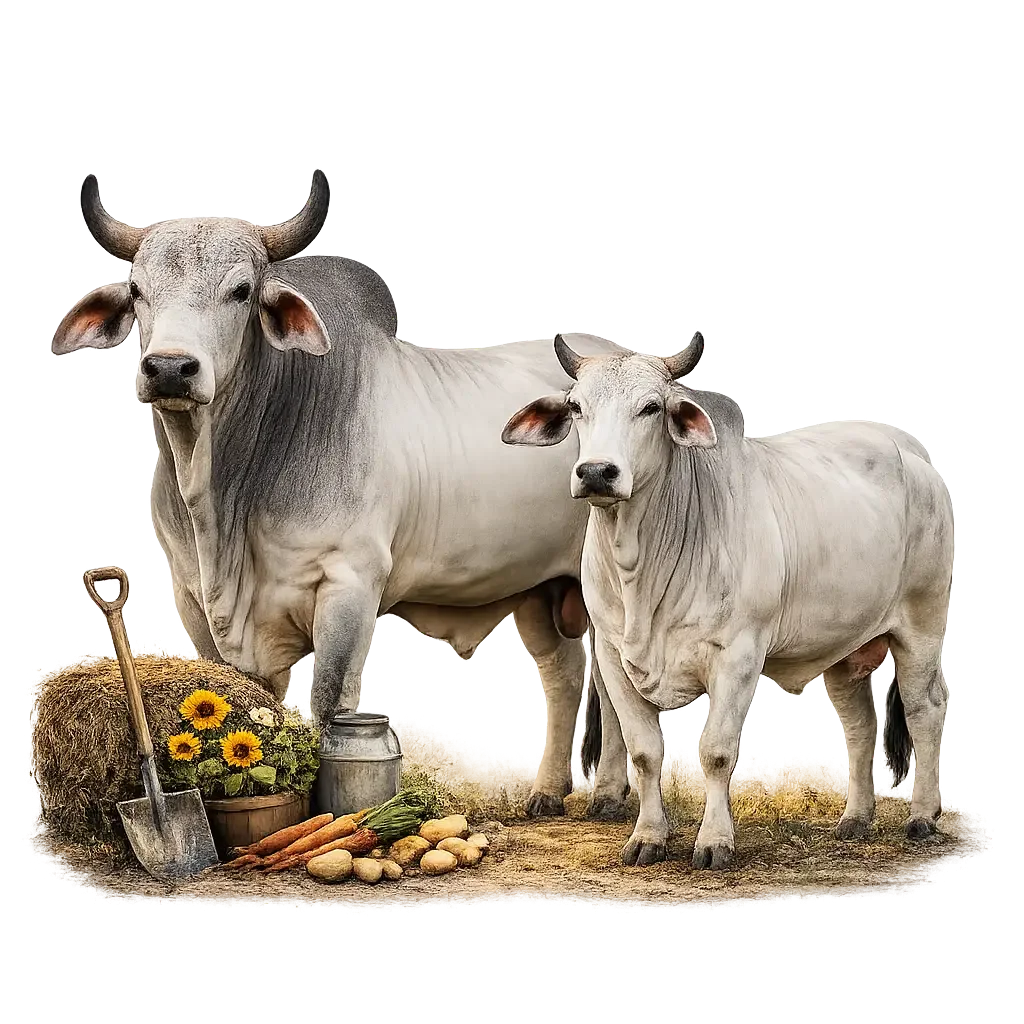
The Brahman is one of the most distinctive and influential beef cattle breeds in the world, serving as the foundation for heat tolerance in American beef production. Instantly recognizable by their large hump, drooping ears, and loose pendulous skin, Brahmans are uniquely adapted to hot, humid climates where European cattle struggle to survive. Developed in the United States from Indian Zebu cattle, Brahmans have revolutionized beef production in tropical and subtropical regions worldwide.
Related Reading: If you love the unique look and hardiness of the Brahman but have limited acreage, explore the Miniature Zebu-the naturally small breed that shares this ancient heritage.
Origin & History
Origin: Developed in United States from Indian Zebu breeds
Development Period: Late 1800s - early 1900s
Foundation Breeds: Guzerat (Kankrej), Nelore, Gir, and Krishna Valley from India
Key Development Areas: Gulf Coast states - Texas, Louisiana, Florida
Recognition: American Brahman Breeders Association formed 1924
Influence: Foundation for numerous composite breeds including Brangus, Santa Gertrudis, Beefmaster
Physical Characteristics
Color: Light gray to dark gray, red, or black; bulls often darken with age
Build: Large-framed with distinctive hump over shoulders
Weight: Bulls 1,600-2,400 lbs; Cows 1,000-1,400 lbs
Height: Bulls 5-5.5 feet at shoulder; Cows 4.5-5 feet
Distinctive Features:
Large muscular hump over shoulders (8-10 inches in bulls)
Large, drooping ears (8-12 inches long)
Loose, thin, pendulous skin with folds and wrinkles
Large dewlap extending from jaw to brisket
Short, glossy coat with minimal insulation
Pigmented skin for sun protection
Reproduction & Breeding
Gestation Period: Approximately 292 days (9-12 days longer than British breeds)
Breeding Age: Heifers typically bred at 24-28 months (later maturity than British breeds)
Calving: Generally easy calving with moderate assistance needs
Calf Birth Weight: 70-90 lbs
Calving Interval: 12-13 months optimal
Fertility: Excellent heat stress fertility - breeds successfully when other cattle become infertile
Breeding Season: Year-round capability, particularly valuable for summer breeding
Sexual Maturity: Bulls mature at 18-24 months (later than British breeds)
Lifespan & Productivity
Average Lifespan: 15-20+ years
Productive Life: Cows regularly produce into late teens (15-18 years)
Prime Production Years: 4-12+ years of age
Longevity: Exceptional durability and extended productive life
Milk Production
Purpose: Beef breed - milk primarily for calf rearing
Daily Production: 10-15 lbs per day (adequate for calf growth)
Lactation Period: 7-9 months
Maternal Ability: Excellent mothers with strong protective instincts
Butterfat Content: Moderate to high for beef cattle
Note: Not used for commercial dairy production
Calf Growth & Development
Weaning Weight: 450-550 lbs at 7-8 months
Daily Gain: 2-2.5 lbs per day on good feed (moderate compared to British breeds)
Market Weight: 1,100-1,300 lbs at 18-24 months (slower to finish than British breeds)
Feed Efficiency: Excellent on low-quality forage; moderate on grain-based diets
Vigor: Calves are vigorous at birth with strong survival rates
Temperament
Brahman temperament varies significantly between bloodlines and handling. They are highly intelligent and keenly aware of their surroundings, with excellent memory for places, people, and experiences. Well-raised Brahmans from docile bloodlines with consistent, gentle handling can be calm and manageable. However, they tend to be more alert and reactive than British breeds, requiring experienced handlers who understand bovine behavior.
Brahman cows are excellent mothers with strong protective instincts, often becoming aggressive when defending calves. Early, gentle handling from birth is essential for developing tractable animals. Bulls require respect and careful management, particularly during breeding season. The breed responds well to patient, consistent handling but remembers rough treatment and may become difficult to manage.
Meat Quality
Marbling: Lean with less marbling than British breeds
Flavor: Flavorful and distinctive when properly aged
Tenderness: Tender when properly aged and prepared
Grading: Typically grades Select; achieving Choice is difficult
Dressing Percentage: 58-62%
Fat Distribution: Tends to deposit fat externally before marbling
Market Appeal: Strong markets in tropical regions; some resistance in marbling-focused markets
Best Use: Crossbreeding to add heat tolerance while maintaining beef quality
Feeding & Nutrition
Grazing: Excellent foragers on low-quality, mature tropical grasses
Feed Requirements: Very efficient on poor forage; moderate efficiency on high-quality feed
Finishing: Require longer feeding period and heavier weights than British breeds
Water: 10-20 gallons per day (efficient water utilization in heat)
Mineral Needs: Standard beef cattle mineral supplementation
Browse Utilization: Consume weeds, brush, and vegetation other cattle ignore
Drought Tolerance: Maintain condition during drought on sparse forage
Health & Care
Hardiness: Exceptionally hardy and disease-resistant in tropical conditions
Common Issues: Generally very healthy; occasional cancer eye in unpigmented animals
Vaccinations: Standard cattle vaccination protocols
Parasite Control: Superior natural resistance to internal and external parasites
Hoof Care: Minimal trimming needed; naturally sound feet
Climate Adaptation: Exceptional in hot, humid climates; poor in cold northern climates
Disease Resistance: Natural resistance to anaplasmosis, babesiosis, and tropical diseases
Tick Resistance: Lower tick counts than European breeds
Heat Tolerance & Adaptations
Sweating Efficiency: More and larger sweat glands than European breeds
Temperature Regulation: Maintain body temperature 2-3 degrees lower in heat stress
Skin Adaptations: Loose, thin skin increases surface area for cooling
Coat: Short, glossy coat with minimal insulation allows heat dissipation
Ear Size: Large ears provide additional surface for heat loss
Performance: Maintain feed intake, weight gain, and fertility during heat stress
Survival: Thrive in temperatures exceeding 100°F that devastate European cattle
Advantages
Exceptional heat tolerance unmatched by European breeds
Superior parasite and disease resistance
Efficiently utilize low-quality forage and marginal land
Excellent longevity with cows producing into late teens
Strong hybrid vigor in crossbreeding programs
Maintain fertility and production during heat stress
Hardy and durable in challenging environments
Excellent maternal instincts and protective behavior
Adapt to various climates and management systems
Foundation for numerous successful composite breeds
Disadvantages
Mature later than British breeds requiring longer feeding periods
Slower growth rates on high-quality feed
Produce leaner beef with less marbling
Require more experienced handling due to intelligence and temperament
May have more excitable dispositions than British breeds
Take longer to finish for slaughter increasing costs
Face market discrimination in some regions favoring British breeds
Perform poorly in cold climates
Bulls can be aggressive and challenging to manage
Best Suited For
Hot, humid climates of Gulf Coast, Southeast, and tropics
Subtropical and tropical regions worldwide
Operations with high parasite pressure
Ranches with marginal forage or rough country
Areas with extreme summer heat stress
Crossbreeding programs in warm climates
Operations prioritizing cow longevity and efficiency
Developing tropical countries
Extensive range operations in hot regions
Economic Considerations
Initial Cost: Moderate to high for quality breeding stock
Return on Investment: Excellent due to longevity and low death losses in hot climates
Market Demand: Strong in tropical regions; variable in temperate areas
Crossbreeding Value: High value for adding heat tolerance to British breeds
Maintenance Costs: Lower than British breeds in tropical environments
Veterinary Costs: Reduced due to disease resistance
Resale Value: Strong market for breeding stock in appropriate climates
Fun Facts
Brahman cattle can maintain body temperature 2-3 degrees lower than European breeds in identical heat
The distinctive hump is muscle, not fat, and can weigh 30-40 pounds in large bulls
Brahmans were developed entirely in the United States despite their Indian ancestry
Their loose skin can increase surface area by 50% for cooling without adding body mass
Brahman genetics are found in over 50 composite and crossbred cattle populations worldwide
They can thrive on forage so poor that British breeds would starve
The first Zebu cattle were imported to South Carolina in 1849
Brahman influence dominates beef production in Brazil, the world's largest beef exporter
Their tick resistance can reduce parasite loads by 40-50% compared to European breeds
Some Brahman cows have remained productive past 20 years of age
With a unique physiology, Brahman beef has distinct characteristics; see how it fits into the 8 primal beef cuts.