
Hooded Merganser
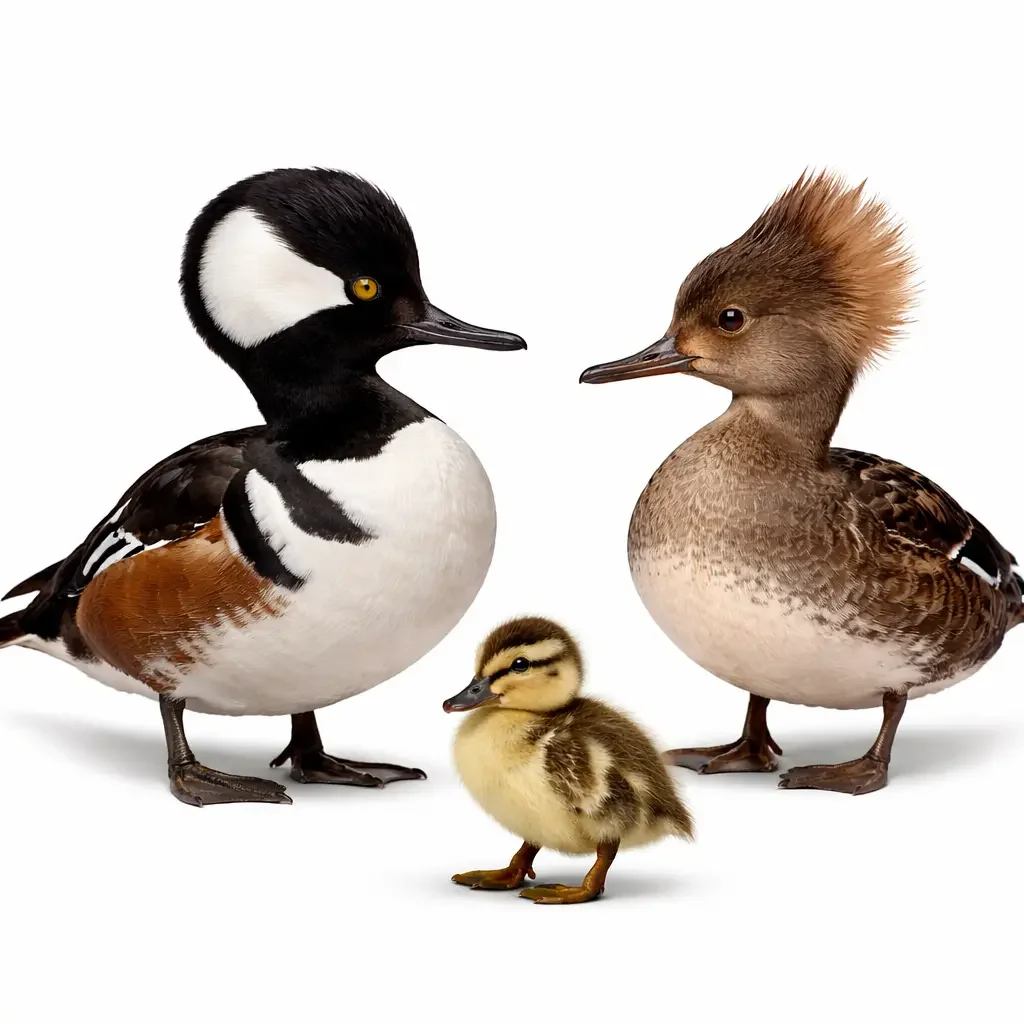
The Hooded Merganser is one of the most visually spectacular ducks in North America, a small cavity-nesting diver that inhabits the same wooded wetland corridors as the Wood Duck and shares the same nest boxes on Midwest homestead properties. The drake's fan-shaped white crest bordered in black, which can be raised to an almost perfectly circular display or flattened against the head depending on mood, makes it one of the most distinctive birds on the continent. For Midwest homesteaders, the Hooded Merganser is a genuinely exciting bird to attract to your property, observe, and in many cases hunt as part of a mixed bag of wooded wetland ducks.
Quick Facts
Breed Type: Wild Duck (Merganser)
Purpose: Hunting, Wildlife Observation, Nest Box Management
Origin: North America, the only merganser species restricted entirely to North America
Egg Production: Not applicable (wild species)
Egg Color: White, nearly spherical with unusually thick shells, laid in tree cavities or nest boxes
Adult Weight: Drake 1.1 to 1.5 lbs, Hen slightly lighter
Temperament: Alert and wary, typically found in pairs or small groups, highly visual predator
Hardiness: Short-distance migrant, fairly cold hardy in open water settings
Broodiness: Moderate, hens incubate independently after male abandons the nest
Lifespan: Up to 14 years in the wild based on banding records
Image Section
Main Image: Hooded Merganser drake with crest fully raised on clear woodland pond water, white fan crest and chestnut flanks visible, 1024x1024, white or transparent background.
Breed Overview
The Hooded Merganser, known scientifically as Lophodytes cucullatus, is the smallest of the three merganser species in North America and the only one whose native range is entirely within North America. It occupies a unique ecological niche as a small, cavity-nesting diving predator of wooded wetlands, rivers, and forested ponds, sharing habitat and even nest boxes with the Wood Duck throughout much of the eastern United States and the Midwest.
The drake in breeding plumage is unmistakable. The large white crest patch, bordered in black, can be raised into a nearly circular fan shape during display or flattened so that it streams back from the head in a more streamlined posture. The head and neck are black when the crest is depressed, with the white patch reduced to a thin white line behind the eye. The breast is white with two bold black bars on each side, the flanks are rich chestnut brown, and the back is black with long white and black tertial feathers. The bill is narrow, dark, and serrated, adapted for grasping slippery fish underwater. The hen is a subdued brownish-gray overall with a reddish-brown crest, a white belly, and the same narrow serrated bill.
Unlike the other two merganser species in North America, Common and Red-breasted Mergansers, which are larger and primarily associated with coastal or larger water systems, the Hooded Merganser is specifically adapted for small wooded water bodies. It is found on beaver ponds, forested creeks and rivers, small woodland lakes, and any clear-water wetland surrounded by mature trees that provide potential nest cavity sites.
The Hooded Merganser population has increased approximately 5 percent per year between 1966 and 2019, one of the more impressive growth trends among North American waterfowl species. This recovery reflects both the rebound from early twentieth century overhunting and the significant benefit the species has received from nest box programs originally installed for Wood Ducks. The two species use the same nest box specifications and frequently nest in close proximity to each other on well-managed properties.
The species has one of the most unusual visual adaptations in waterfowl. It possesses a transparent inner eyelid called a nictitating membrane that functions like built-in goggles, allowing it to see clearly while diving underwater to chase fish. This adaptation reflects the species' complete dependence on visual predation underwater, unlike dabbling ducks that locate food primarily by touch and taste.
Hunting the Hooded Merganser
Season and Timing
Hooded Mergansers are included in the merganser aggregate bag limit in most Midwest states, typically five mergansers per day with no more than two Hooded Mergansers counted toward that total. The two-bird Hooded Merganser restriction within the merganser aggregate is consistent across most Midwest states and reflects management attention to the species despite its improving population trend. Always verify your specific state regulations before hunting.
Migration through the Midwest is relatively late in fall, with birds moving south as wooded water bodies freeze through October and November. Hooded Mergansers are short-distance migrants and many birds from southern portions of the breeding range winter in place wherever open water remains available. In mild winters, resident birds may be present throughout the Midwest into January and February.
Where to Hunt
Hooded Mergansers are birds of wooded wetland settings. They strongly prefer small ponds, beaver flowages, forested creeks and rivers, and any clear-water wetland surrounded by mature trees. This habitat preference creates a significant overlap with Wood Duck hunting setups, and the two species are frequently encountered in the same locations and harvested in mixed bags by hunters working wooded river systems and beaver ponds in October and early November.
Unlike larger diving ducks that concentrate on big, open water, Hooded Mergansers work through smaller, more intimate water features and are therefore accessible to hunters without boats or open-water setups. A wooded river corridor, a beaver pond complex, or a woodland lake with forested margins are all productive locations during fall migration.
Difficulty of Hunting
Hooded Mergansers are considered moderately challenging to hunt. They are wary and alert birds that flush quickly when approached, and their fast, choppy wingbeat style makes them difficult to intercept on crossing shots in tight wooded settings. They fly with their head, neck, body, and tail held in a flat, horizontal line, distinguishing them from other ducks in flight. The fast, whirring wingbeat is distinctive and gives the impression of a much faster bird than the actual flight speed.
They decoy modestly when diving duck decoys are placed on their preferred wooded water habitat, though they are less reliably attracted to decoys than most dabbling ducks. The combination of small size, fast wingbeats, and tight wooded hunting settings makes them a sporting and challenging target.
Decoys and Calling
Hooded Mergansers are not strongly decoy-driven birds and do not respond well to calling. Placing a small number of diving duck decoys or even bufflehead decoys on the water in the appropriate wooded wetland habitat will attract some incidental birds, but specific merganser decoys are rarely used. The most productive approach is hunting the right habitat at the right time, positioning in wooded blind setups along rivers and beaver pond systems where birds naturally move through during early morning flights.
The male Hooded Merganser produces a low, froglike croak during courtship displays, and the female makes a hoarse gack call. Neither of these vocalizations is used effectively to attract birds for hunting purposes.
Meat Quality
The Hooded Merganser's reputation for table fare reflects its almost entirely fish-based diet. Fish make up 44 to 81 percent of the diet in most studies, with aquatic insects, crayfish, and other invertebrates comprising the remainder. This fish-heavy diet produces meat with a strong, fishy flavor that most hunters describe as genuinely poor. The serrated-bill merganser family as a whole is considered the worst table fare among North American waterfowl, and the Hooded Merganser, despite being the most visually appealing of the three merganser species, does not escape this reputation.
Most experienced hunters pass on Hooded Mergansers for the table or, when harvested incidentally alongside Wood Ducks, prepare them in heavily spiced slow-cooked stews or grind the meat for sausage blended with pork and strong seasonings that effectively mask the fishy character. Birds taken from clear-water streams and beaver ponds feeding on crayfish and aquatic insects rather than fish-heavy environments sometimes produce more acceptable meat, but the merganser's table reputation is generally well-earned.
Best Preparations if Harvested
Removing all fat and skin immediately after harvest reduces the fishy flavor component significantly, as the fat carries the most concentrated fish taste. Overnight soaking in salted water or buttermilk helps further. Grinding the breast meat for heavily seasoned duck sausage or duck and venison blends produces the most consistently palatable results. Slow cooking in strongly flavored stew with bold spices and aromatics is another approach that accommodates the flavor. Pan-searing without prior processing is the least forgiving method and is generally not recommended.
Behavior and Identification
The Hooded Merganser's courtship display is one of the most elaborate and distinctive in North American waterfowl. The drake raises his crest to the fully circular fan position, then performs rapid head-throw displays in which he jerks his head backward to touch his back while producing a low froglike croak. Multiple drakes frequently display simultaneously around a single hen, creating an animated spectacle on small woodland ponds in late fall and early spring.
The species possesses a unique ability among North American mergansers to spring directly off the water surface for takeoff rather than requiring a running start. This spring-launch capability, combined with the fast, choppy wingbeat, produces an explosive flush similar to a Wood Duck rather than the lumbering takeoff of Common Mergansers. In flight the bird holds its head, neck, and body in a flat horizontal line with the long thin bill extended forward.
Hooded Mergansers are visual predators that use a transparent inner eyelid to see clearly underwater while diving. They hunt by sight rather than touch, chasing small fish, crayfish, and aquatic insects in clear water. Their serrated bill with a hooked tip helps secure slippery prey once caught.
Climate and Range
The Hooded Merganser breeds throughout the eastern half of North America from southern Canada south through the Great Lakes states, the Mississippi drainage, and the southeastern United States, with a separate population in the Pacific Northwest. In the Midwest, it breeds in forested wetland systems throughout Minnesota, Wisconsin, Michigan, Iowa, Missouri, and Indiana wherever mature trees with cavities or nest boxes near water are available.
It is a short-distance migrant that moves south only as far as necessary to find ice-free open water. Many birds from the central and southern portions of the breeding range are essentially year-round residents wherever mild winters allow. In the northern Midwest, migration begins in October and most birds depart by December, returning in February and March as water opens.
Homestead Suitability and Pond Management
The Hooded Merganser is one of the most rewarding wild ducks to attract to a Midwest homestead with wooded water. Its use of Wood Duck nest boxes means that any property already managing nest boxes for Wood Ducks is simultaneously providing potential nesting habitat for Hooded Mergansers at no additional cost or effort. The two species frequently share nest box programs and are often found nesting in adjacent boxes on the same water body.
Attracting Hooded Mergansers to Your Property
Installing Wood Duck nest boxes on poles over water or on trees adjacent to ponds and wooded wetlands is the single most effective step. The standard Wood Duck box specifications with a 4 by 3 inch oval entrance hole and wood shavings in the bottom work equally well for Hooded Mergansers. Maintaining mature trees with natural cavities near your water features provides natural nest sites that complement the box program.
Maintaining clear water quality in your woodland pond or creek is important for Hooded Mergansers, which hunt by sight and require visibility to chase prey underwater. Ponds with turbid, murky water are far less attractive to this species than clear-water settings. Leaving woody debris, fallen logs, and natural shoreline features around your pond creates the habitat structure that Hooded Mergansers use for loafing and foraging access.
Avoiding disturbance during the February through May nesting period gives breeding pairs the quiet they need to establish territories and raise broods successfully on your property.
Pros and Cons
Pros
The Hooded Merganser is one of the most visually spectacular wild ducks in North America and is genuinely exciting to observe on a homestead pond. The drake's fan crest display during courtship in late fall and early spring is among the most memorable wildlife spectacles in Midwest waterfowl. The species responds readily to nest boxes, allowing homesteaders to actively attract and support breeding pairs. Its population is growing, making it a conservation success story worth knowing. It shares habitat with Wood Ducks, creating mixed-bag hunting opportunities in wooded wetland settings without requiring separate habitat management.
Cons
Meat quality is genuinely poor due to the fish-heavy diet, making it a challenging and largely unrewarding table bird. The two-bird daily limit within the merganser aggregate restricts harvest. Hunting the species effectively in tight wooded settings requires more skill and situational shooting ability than open-water duck hunting. Some fish farmers and anglers view the species negatively due to predation on fish populations, though its impact on fish communities is generally modest and localized. Like Wood Ducks, it requires mature trees or installed nest boxes for nesting, limiting its use of open-country habitats without woody cover near water.
Profitability Note
As a wild and federally protected migratory species, Hooded Mergansers cannot be commercially sold. Their primary homestead value is wildlife habitat quality and the visual reward of having breeding pairs on your property. For properties already installing and maintaining Wood Duck nest boxes, Hooded Merganser nesting is essentially a free bonus species that requires no additional management investment. The profitability section applies fully when this guide series covers domestic duck breeds.
Comparison With Related Species
Hooded Merganser vs Wood Duck
The Wood Duck is the most ecologically similar species, sharing the same wooded wetland habitat, the same nest boxes, and a similar cavity-nesting life history. Wood Ducks are significantly better table fare due to their plant and acorn-based diet. The Wood Duck drake's iridescent multi-colored plumage competes with the Hooded Merganser drake for the title of most beautiful duck in North America, though the two birds are very different in appearance once observed at close range. In flight Hooded Mergansers are slimmer, faster-wingbeating, and show more white on the wings than Wood Ducks.
Hooded Merganser vs Common Merganser
The Common Merganser is significantly larger with a green head on the drake, a red bill, and a preference for larger rivers and open water rather than the small wooded ponds that Hooded Mergansers favor. Common Mergansers are exclusively fish eaters and considered even poorer table fare than Hooded Mergansers by most hunters. The two species rarely overlap closely in preferred habitat.
Hooded Merganser vs Bufflehead
The Bufflehead is a small diving duck that can be confused with the Hooded Merganser at distance due to the bold white head patches on both male species. The Bufflehead has a rounder head, shorter bill, white flanks rather than chestnut, and a very different flight style. Buffleheads prefer more open water habitats and are considered significantly better table fare than Hooded Mergansers.
Final Verdict
The Hooded Merganser is one of the most compelling and rewarding wild ducks for Midwest homesteaders to know and manage for. Its visual beauty, its willingness to use nest boxes already installed for Wood Ducks, and its increasing population trend make it a genuine asset to any wooded homestead with suitable water. For hunters, it offers a challenging and visually spectacular addition to a mixed bag of wooded wetland ducks in October and November, even if most serious hunters pass on it for the table.
Its true value on the homestead is not in the hunting harvest but in the experience of watching a drake fan his spectacular white crest on a still autumn pond and knowing that your nest box management directly contributed to that bird being on your property.
Frequently Asked Questions
How many Hooded Mergansers can I shoot per day?
Most Midwest states allow up to five mergansers per day total, of which no more than two may be Hooded Mergansers. The species counts within the merganser aggregate limit rather than the general duck aggregate in most regulatory frameworks. Verify your specific state regulations before hunting.
Can I attract Hooded Mergansers to my homestead with nest boxes?
Yes. Hooded Mergansers readily use the same nest box specifications as Wood Ducks, with a 10 by 10 inch interior floor, 24 inch depth, and 4 by 3 inch oval entrance hole. If you already have Wood Duck boxes installed over or near water on your property, Hooded Mergansers may use them with no modification needed. Adding wood shavings to the bottom of boxes and installing predator guard baffles on mounting poles improves success.
Are Hooded Mergansers good to eat?
Generally no. Their primarily fish-based diet produces strong, fishy-flavored dark meat that most hunters describe as poor. Some hunters prepare them acceptably through aggressive marinating, slow cooking in stews, or grinding for sausage blended with pork. They are widely considered the most challenging waterfowl species to prepare palatably in the Midwest.
How do I identify a Hooded Merganser in flight?
Look for the flat horizontal body posture with head, neck, and body all held in line, the narrow thin bill extended forward, and the fast, choppy wingbeat style that distinguishes mergansers from most other ducks. The drake shows extensive white on the inner wings in flight. The slender silhouette and rapid wingbeat in a wooded wetland setting are the most practical field identification cues.
When do Hooded Mergansers nest on Midwest homestead properties?
Nesting begins in February and March in the southern Midwest and March through April in the northern Midwest. The female selects a cavity, lays 10 to 12 white eggs, and incubates for approximately 33 days. Ducklings leave the nest within 24 hours of hatching by leaping from the cavity entrance to the ground or water below, following the hen's calls.
Is the Hooded Merganser population healthy?
Yes. The Hooded Merganser population has increased approximately 5 percent per year since 1966, one of the strongest positive trends among North American waterfowl species. The recovery reflects the benefit of nest box programs, reforestation, and reduced hunting pressure compared to the early twentieth century. The species is not currently a conservation concern.