
Greater Scaup
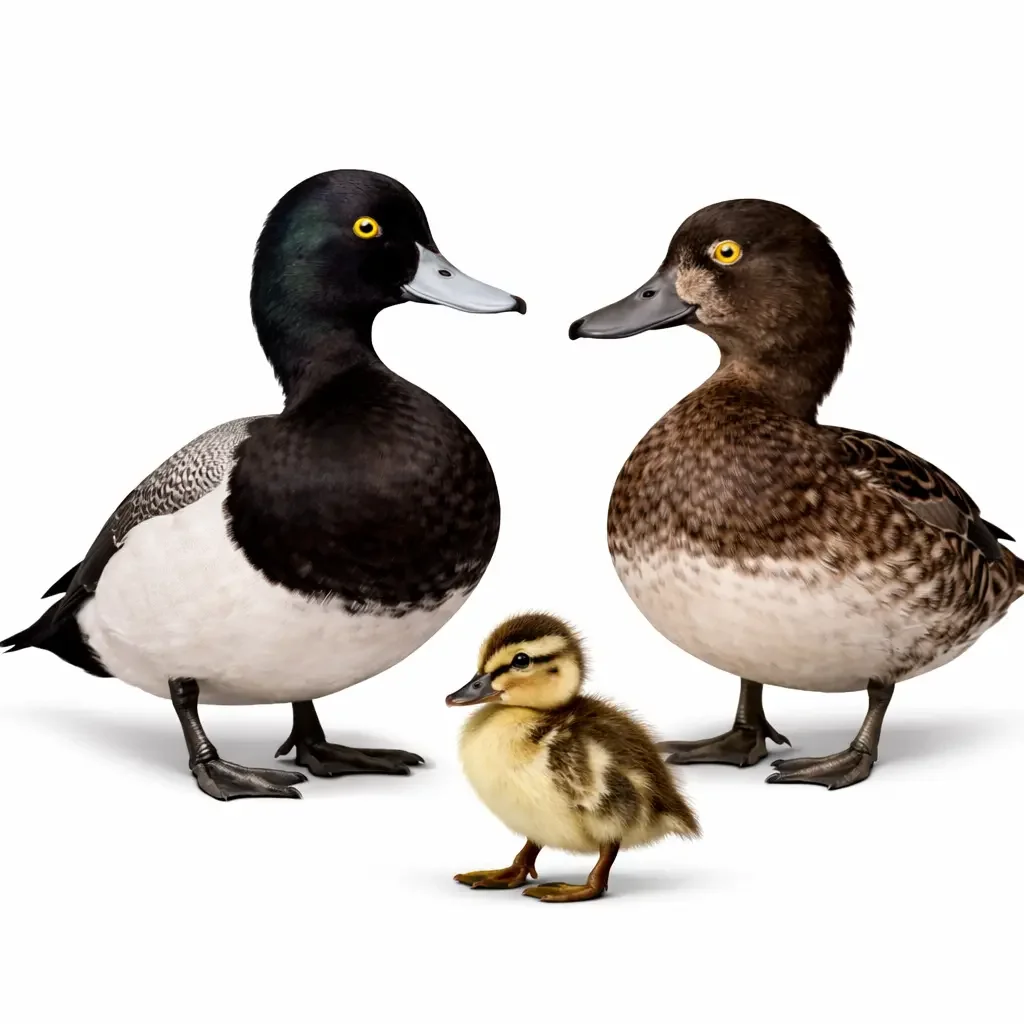
The Greater Scaup is the larger and more northerly of the two scaup species in North America, a circumpolar diving duck that winters primarily on coastal bays, estuaries, and the Great Lakes. For Midwest hunters and homesteaders, it is most relevant as a Great Lakes wintering species and as the species-identification challenge that every duck hunter needs to master when hunting the combined scaup aggregate. Though often confused with the more abundant Lesser Scaup, the Greater Scaup has its own distinctive biology, conservation story, and role in North American waterfowl management that rewards careful study.
Quick Facts
Breed Type: Wild Duck
Purpose: Hunting, Wildlife Observation, Great Lakes and Coastal Reference
Origin: Circumpolar, breeds on Arctic and subarctic tundra across North America, Europe, and Asia
Egg Production: Not applicable (wild species)
Egg Color: Olive-buff, laid in ground nests near northern lakes and tundra wetlands
Adult Weight: Drake 1.8 to 2.5 lbs, Hen slightly lighter
Temperament: Gregarious and social, forms large open-water flocks, moderately wary
Hardiness: Highly cold hardy, prefers large exposed water bodies including coastal bays and Great Lakes
Broodiness: Low, hens incubate and raise young independently
Lifespan: Estimated up to 18 to 20 years based on banding data
Image Section
Main Image: Greater Scaup drake in breeding plumage on open water, rounded head and green iridescence visible, white wing stripe extending into primaries shown in half-raised wing, 1024x1024, white or transparent background.
Breed Overview
The Greater Scaup, known scientifically as Aythya marila, is a medium-sized diving duck with a circumpolar breeding distribution across Arctic and subarctic tundra from Alaska through northern Canada, Iceland, Greenland, Scandinavia, and Russia east to Siberia. It is closely related to the Lesser Scaup and the two species present one of the most challenging identification problems in North American waterfowl, requiring careful attention to head shape, bill size, wing stripe extent, and habitat preference to separate reliably.
The drake in breeding plumage is a bold black and white bird with a rounded, smoothly domed head that is the primary field mark separating him from the Lesser Scaup. His head iridescence tends toward green rather than the purple more common on the Lesser Scaup, though lighting conditions significantly affect the apparent color and this mark alone is unreliable. His bill is wider and more spatulate than the Lesser Scaup's, with a larger black nail at the tip. In flight the white wing stripe extends clearly through both the secondary and primary feathers, creating a longer, bolder white stripe than the Lesser Scaup shows. The hen is brown with a white belly and a conspicuous white patch at the base of the bill, larger than the equivalent patch on a hen Lesser Scaup.
The Greater Scaup comprises only about 11 percent of the combined scaup population counted in aerial surveys, with the remaining 89 percent being Lesser Scaup. This minority status within the scaup population, combined with the inability to distinguish the two species during aerial surveys, makes accurate population management challenging. Available data suggest the Greater Scaup population has declined from an estimated seven million combined scaup in the early 1980s to approximately four million today, with the Greater Scaup showing particularly significant declines in its core wintering areas along the urbanized northeast Atlantic Coast.
A notable ecological development in recent decades is the proliferation of invasive zebra mussels in the Great Lakes, which has created a significant new food resource for Greater Scaup wintering there. Warmer winters and abundant zebra mussel populations have led some Greater Scaup to winter longer and in larger numbers on the Great Lakes than historical patterns would predict, as the abundant invertebrate food source proves attractive despite the birds' traditional preference for coastal bays.
Midwest Relevance
The Greater Scaup has meaningful but limited relevance to Midwest hunters and homesteaders. The Great Lakes, particularly the western Lake Erie, Lake St. Clair, Detroit River corridor, and Saginaw Bay, serve as important migration staging and wintering areas for Greater Scaup moving from Arctic breeding grounds toward their primary wintering areas on the northeast Atlantic Coast. Michigan is the most significant Midwest state for Greater Scaup encounters given its extensive Great Lakes shoreline.
For hunters working large open-water Great Lakes situations, Greater Scaup are present alongside Lesser Scaup and other diving ducks from fall through early winter. On Midwest interior lakes and reservoirs away from the Great Lakes, Greater Scaup are far less common than Lesser Scaup, as the Greater shows a much stronger preference for coastal and large-lake water bodies over inland freshwater systems.
Hunting the Greater Scaup
Season and Bag Limits
Greater and Lesser Scaup are managed under a combined daily bag limit in all Midwest and flyway states, reflecting the inability to reliably distinguish them at harvest management levels during aerial breeding population surveys. The combined scaup limit has varied between one and two birds per day in recent seasons, applied to both species in aggregate. Hunters count any scaup harvested toward this combined limit regardless of which species it is.
The combined limit reflects genuine conservation concern about declining scaup populations and is among the most carefully managed bag limits in the duck hunting regulatory framework. Always verify your specific state regulations before hunting as scaup limits are subject to change based on annual population assessments.
Where to Hunt
Greater Scaup are more consistently associated with large, exposed water bodies than Lesser Scaup, showing a stronger preference for coastal bays, estuaries, and the open Great Lakes over inland freshwater lakes and reservoirs. In the Midwest, hunters working the Great Lakes shoreline, major bay systems, and connecting waters including the Detroit River corridor and western Lake Erie have the most consistent Greater Scaup opportunities.
On the Great Lakes, Greater Scaup concentrate in sheltered bays and nearshore areas during the day and move to deeper offshore water at night. Hunters working layout boat setups on the open lake, or shore-based positions near jetties, harbor entrances, and bay margins, encounter the most birds. The combination of large open water, cold late-season conditions, and the need for boat or layout hunting setups places this species in the advanced waterfowl hunting category for Midwest hunters.
Difficulty of Hunting
Greater Scaup hunting on the Great Lakes is considered moderately to highly challenging due to the access requirements and weather conditions involved rather than the wariness of the birds themselves. The species decoys reasonably well in large spreads on open water and does not have the extreme caution of late-season Mallards or Northern Pintail. The main challenge is accessing and hunting productively on large, exposed water bodies in cold, often rough late-fall and winter conditions.
Identification in the field is a genuine challenge, particularly for hunters working mixed scaup flocks on large water. Careful attention to head shape, the smooth dome versus the peaked crown, and whenever possible the wing stripe length in flight, are the most practical identification tools. In mixed flocks, side-by-side comparison of head shapes is the most reliable approach.
Decoys and Calling
Large spreads of diving duck decoys on open water, similar to setups used for Lesser Scaup, produce consistent results. Greater Scaup are not particularly responsive to calling. Large spreads of fifty or more decoys positioned on open water with a landing zone on the downwind side attract the social flocking instinct of both scaup species effectively. Adding canvasback or redhead decoys to the spread increases visibility and can draw mixed-species rafts of diving ducks that include Greater Scaup.
Meat Quality
Greater Scaup meat quality is similar to Lesser Scaup, occupying a middle tier of wild duck table fare. Their diet of aquatic invertebrates, mollusks, mussels, and clams produces meat that is more strongly flavored than dabbling ducks but less intensely fishy than mergansers. Birds feeding heavily on zebra mussels in the Great Lakes may have a distinctive flavor profile reflecting that diet.
Birds taken from Great Lakes environments feeding on a mix of invertebrates and aquatic plants generally produce acceptable to moderate quality meat with proper preparation. Strong marinades, slow cooking in stews and gumbo, and grinding for duck sausage blended with pork are the most reliable preparation approaches. The conservation-minded approach of harvesting within strict combined limits means that most Midwest hunters who encounter Greater Scaup in the field take them as part of a small, carefully managed harvest rather than specifically targeting large numbers of birds.
Best Preparations
Overnight marinating in red wine, citrus, or soy-based marinades significantly improves results. Duck gumbo and slow-cooked stews with bold Cajun or Southern-influenced seasoning work well. Grinding for duck sausage blended with pork produces consistently good results regardless of individual bird flavor variation.
Behavior and Identification
The rounded, smoothly domed head of the Greater Scaup, with the highest point toward the front of the crown rather than toward the back as on the Lesser Scaup, is the single most important field mark. This head shape difference is subtle and requires practice to use reliably, particularly from a distance or in poor light. When both species are present in the same flock the comparison becomes much easier, as the round dome versus peaked head is immediately apparent in direct comparison.
The wing stripe extending into the primaries is the most reliable in-flight mark. On the Greater Scaup the white is clearly visible through the primary flight feathers all the way to near the wingtip. On the Lesser Scaup the white fades noticeably to gray at the primary feathers, shortening the apparent white stripe length. This mark is visible in flight from reasonable distances in good light and is the most consistently useful separator under field conditions.
Head iridescence, the green tones more common on Greater versus the purple more common on Lesser, is a useful supplementary mark in ideal lighting but is too light-dependent to use as a primary identification feature. Bill width, with the Greater's wider, more spatulate bill and larger black nail, is visible at close range but impractical at typical field distances on the water.
Greater Scaup are highly gregarious and form very large flocks, sometimes numbering in the thousands, on coastal bays and large lakes. They show stronger preference for exposed, open-water settings than Lesser Scaup and are more regularly found on saltwater in coastal areas, while Lesser Scaup tends to stay on freshwater wherever it is available.
Climate and Range
The Greater Scaup has the most northerly breeding range of any North American Aythya duck, nesting on coastal tundra across western Alaska, northern Canada, and extending through Iceland, Greenland, and Russia. An estimated 75 percent of the North American breeding population nests in Alaska. Fall migration routes funnel birds southeastward across North America, with the Great Lakes serving as an important staging area before birds continue to primary wintering grounds on the northeast Atlantic Coast.
Up to 80 percent of the Greater Scaup population winters in the urbanized northern portion of the Atlantic Flyway, particularly in Long Island Sound and associated bays, making this one of the most concentration-dependent waterfowl species in North America in terms of wintering habitat use. Smaller numbers winter on the Pacific Coast from British Columbia south to San Francisco Bay and on the Great Lakes.
Homestead Suitability and Pond Management
The Greater Scaup has essentially no relevance to small homestead pond management in the Midwest interior. It requires large, open water bodies and has almost no use for the small farm ponds, beaver flowages, or sheltered marsh edges that attract Mallards, teal, and Ring-necked Ducks. For homesteaders located along the Great Lakes shoreline, it is a visible component of the fall and winter waterfowl community but is not a species that can be attracted through habitat management.
Pros and Cons
Pros
The Greater Scaup is the foundation of advanced Great Lakes open-water diving duck hunting, offering genuine sporting challenge in dramatic open-water settings. Its circumpolar distribution makes it one of the most widely ranging ducks in the world, with a natural history spanning multiple continents and ocean systems. For birders and wildlife observers visiting the Great Lakes in late fall and winter, large scaup rafts are a memorable and easily accessible spectacle near harbor entrances and bay margins. The identification challenge between Greater and Lesser Scaup sharpens field skills that transfer to all diving duck identification.
Cons
The combined scaup bag limit is among the most restrictive in Midwest duck hunting, limiting harvest regardless of which species is targeted. Population decline from seven million to four million combined scaup is a genuine conservation concern that may lead to further restrictions. Access to productive Greater Scaup habitat requires Great Lakes shoreline or large coastal water access that most Midwest interior hunters do not have. Meat quality requires significant preparation investment to produce its best results. The species has essentially no homestead pond management relevance. Reliable identification from Lesser Scaup requires experience and skill that beginners often lack.
Profitability Note
As a wild and federally protected migratory species, Greater Scaup cannot be commercially sold. Their value to Midwest hunters and homesteaders is primarily in the Great Lakes hunting experience and in completing thorough waterfowl identification knowledge. The profitability section applies fully when this guide series covers domestic duck breeds.
Comparison With Related Species
Greater Scaup vs Lesser Scaup
The species pair most commonly confused in North American waterfowl identification. The Greater is slightly larger, has a rounded rather than peaked head, shows white in the primaries in flight, and prefers large open and coastal water over inland freshwater. The Lesser is far more abundant, comprising about 89 percent of combined scaup, and is the species most Midwest hunters encounter on interior lakes and reservoirs. Both count toward the combined scaup bag limit.
Greater Scaup vs Canvasback
Both are open-water diving ducks of similar size that share Great Lakes and large-lake migration habitat. The Canvasback is far more wary, has a distinctive sloping head profile, and is considered superior table fare. The Canvasback is subject to its own species-specific bag limit rather than the combined scaup limit.
Greater Scaup vs Common Goldeneye
The Common Goldeneye is another Great Lakes winter diving duck with a more compact body, bold white circular facial patch on the drake, and whistling wings audible at considerable distance. Goldeneyes are more commonly encountered on Midwest interior water bodies than Greater Scaup and are considered slightly better table fare.
Final Verdict
The Greater Scaup belongs in every Midwest waterfowler's knowledge base even if most hunters will encounter it far less frequently than the Lesser Scaup. Its identification challenge, its Great Lakes relevance, and its conservation story as the more significantly declining of the two scaup species make it an important subject for anyone building thorough waterfowl expertise. For hunters working Great Lakes open water situations, being able to confidently distinguish it from Lesser Scaup in the field is both a regulatory requirement given the combined bag limit and a mark of genuine waterfowl competence.
Its declining population and the ongoing research challenges created by the near-impossibility of separating it from the Lesser Scaup in aerial surveys are compelling conservation stories that underscore the complexity of managing closely related species with overlapping ranges and nearly identical appearances.
Frequently Asked Questions
How do I tell a Greater Scaup from a Lesser Scaup?
The rounded, smoothly domed head with the highest point toward the front of the crown on the Greater Scaup versus the peaked angular head with the highest point toward the back on the Lesser Scaup is the most reliable resting field mark. In flight, the white wing stripe extends clearly through the primary feathers on the Greater but fades to gray at the primaries on the Lesser. Head iridescence tends toward green on Greater and purple on Lesser but is too light-dependent to use alone.
How many Greater Scaup can I shoot per day?
Greater and Lesser Scaup are managed under a combined daily bag limit that has varied between one and two birds per day in recent seasons. Any scaup taken counts toward this combined total regardless of species. Always verify your specific state regulations before hunting.
Are Greater Scaup more common than Lesser Scaup in the Midwest?
No. Lesser Scaup comprise approximately 89 percent of the combined scaup population and are far more commonly encountered on Midwest interior lakes and reservoirs. Greater Scaup are most reliably found on Great Lakes water bodies and are uncommon on smaller inland freshwater systems.
Why is the scaup population declining?
The combined scaup population has declined from an estimated seven million in the early 1980s to approximately four million today. Contributing factors include habitat degradation in the Western Boreal Forest breeding range, reduced food availability during spring migration, exposure to contaminants particularly organochlorides and heavy metals in wintering areas, lower female survival rates, and climate-driven changes to Arctic breeding habitat. The exact relative importance of each factor remains a subject of active research.
Do Greater Scaup use the Great Lakes?
Yes, the Great Lakes serve as an important migration staging and wintering area for Greater Scaup moving from Arctic breeding grounds toward primary wintering areas on the northeast Atlantic Coast. Western Lake Erie, Lake St. Clair, the Detroit River, and Saginaw Bay are Michigan priority areas for scaup management. The proliferation of invasive zebra mussels in the Great Lakes has made the region increasingly attractive as a food resource for Greater Scaup.