
Redhead Duck
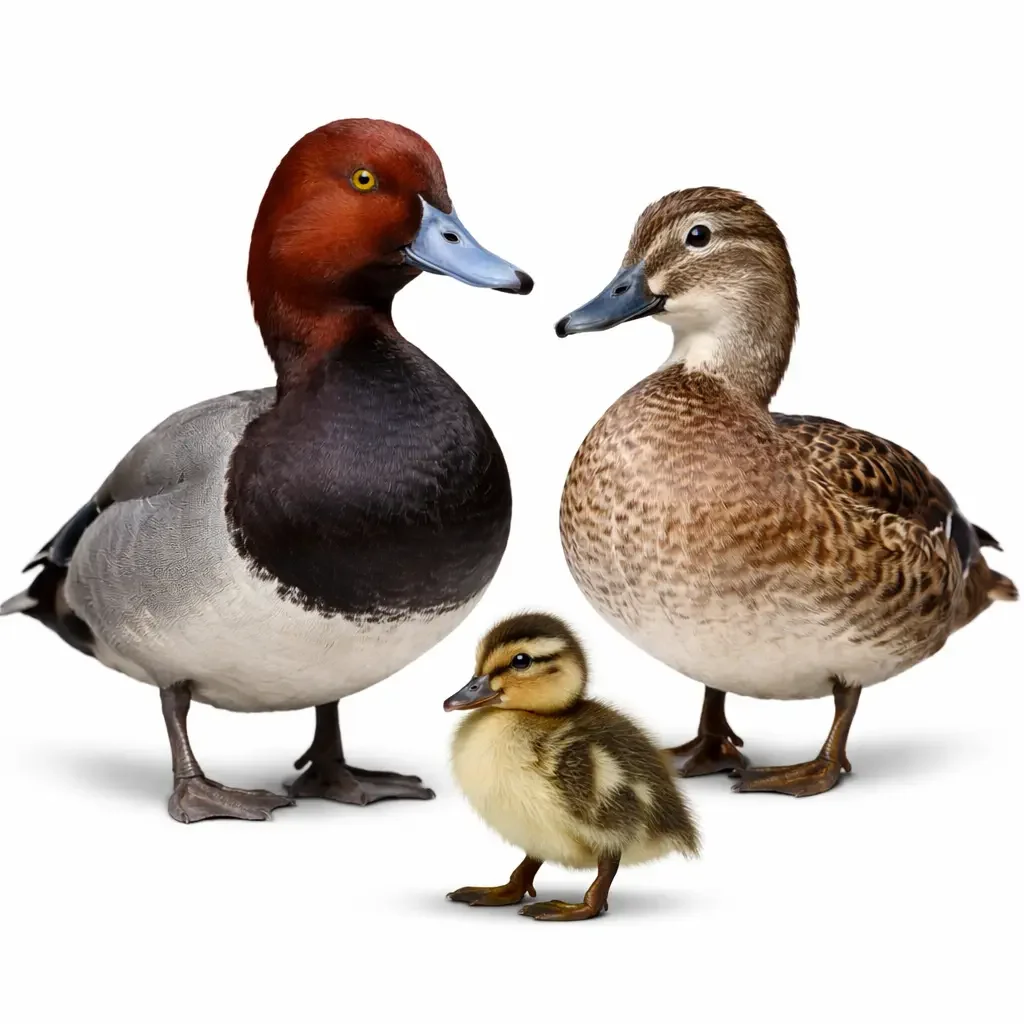
The Redhead is one of the most handsome and highly regarded diving ducks in North America, instantly recognized by the drake's rich chestnut-red head, black breast, and clean gray body. It breeds primarily in the Prairie Pothole Region of the Midwest and Canada, making it a bird with genuine connections to the Midwest landscape from breeding grounds through to fall migration. For hunters and homesteaders in the region, the Redhead is a rewarding bird to understand, a regulated species that requires careful identification in the field, and solid table fare when properly prepared.
Quick Facts
Breed Type: Wild Duck
Purpose: Hunting, Wildlife Observation, Pond and Wetland Awareness
Origin: North America, core breeding range in the Prairie Pothole Region
Egg Production: Not applicable (wild species)
Egg Color: Pale olive-gray to buff, laid in dense emergent vegetation or parasitically in other species' nests
Adult Weight: Drake 2.2 to 2.4 lbs, Hen 2.0 to 2.2 lbs
Temperament: Gregarious and social, decoys readily, erratic and fast in flight
Hardiness: Adaptable across a broad range of freshwater and coastal wetland types
Broodiness: Variable, females range from full nesters to partial or complete nest parasites
Lifespan: Up to 22 years in the wild, though most birds live considerably shorter lives
Image Section
Main Image: Redhead Duck drake in full breeding plumage on calm open water, chestnut-red head and black breast clearly visible, 1024x1024, white or transparent background.
Breed Overview
The Redhead, known scientifically as Aythya americana, is a large diving duck found exclusively in North America. It belongs to the same genus as the Canvasback, Ring-necked Duck, and scaup, and shares with those species the diving duck body plan of small wings relative to body weight, legs set far back on the body, and a strong preference for open water habitats.
The drake is a genuinely striking bird. His chestnut-red head is rounded and smooth with a steep forehead, distinguishing him at a glance from the longer, sloped profile of the similar Canvasback. His bill is bluish-gray with a whitish band near the tip and a dark gray or black tip, a useful close-range field mark. The black breast and gray back and sides complete a clean, bold plumage. The hen is brownish-gray overall with a buffy face, a white belly, and a similar bluish-gray bill pattern. Both sexes show a gray wing stripe in flight, unlike the white wing stripe of scaup.
One of the most ecologically fascinating aspects of the Redhead is its egg-laying strategy. Female Redheads practice a range of nesting behaviors from building their own nest and raising a full clutch independently, to laying some eggs in their own nest while parasitically depositing others in the nests of neighboring ducks, to abandoning nesting entirely and laying all eggs in other birds' nests. This flexibility makes them behaviorally unusual among North American waterfowl and contributes to the challenge of accurately counting breeding populations.
An estimated 80 percent of the North American Redhead population winters in the Laguna Madre, a hypersaline lagoon stretching along the southern Texas and northeastern Mexico coastline. This extraordinary concentration makes the Laguna Madre one of the most critical single waterfowl wintering sites on the continent. During migration, Redheads move through the Midwest in significant numbers, staging on large lakes, reservoirs, and the Great Lakes before continuing south.
Hunting the Redhead
Season and Timing
Redheads are subject to a specific daily bag limit of two birds in most Midwest and flyway states, separate from and in addition to the general six-duck aggregate. This restricted limit reflects management attention to the species, as populations fluctuate with wetland conditions in the Prairie Pothole breeding range. Always verify your specific state regulations each season, as redhead limits can change year to year based on breeding population surveys.
Fall migration through the Midwest begins in September and extends through November, with peak numbers of migrating Redheads moving through the Great Lakes region and larger Midwest lakes in October and into early November. In North Dakota and Minnesota, which consistently rank among the top states for Redhead harvest, birds can be encountered from the earliest days of the regular duck season through late season.
Where to Hunt
Redheads are birds of larger open water during migration and winter. They favor large lakes, reservoirs, river impoundments, and the Great Lakes. Unlike Ring-necked Ducks, they rarely drop into small woodland ponds or shallow marsh edges. Look for them in large rafts on open water, often in company with Canvasbacks, Lesser Scaup, and other diving ducks. On the breeding grounds in the Prairie Pothole Region they use semi-permanent wetlands with abundant emergent vegetation, but migrating birds shift strongly toward larger, more open water.
In the Midwest, the Great Lakes, large impoundments along the Mississippi River corridor, and major reservoir systems in the Dakotas and Minnesota offer the most consistent Redhead hunting opportunities. They are far less likely to use the small ponds and beaver flowages where ringnecks are so commonly found.
Difficulty of Hunting
Redheads are considered a moderately challenging bird to hunt. Their flight is fast, erratic, and characterized by rapid, shallow wingbeats that give them an almost stuttering appearance in the air compared to the smooth, powerful flight of a Canvasback. This erratic flight pattern can make leads difficult to judge accurately for hunters used to puddle ducks or slower-moving divers.
On the positive side, Redheads are gregarious and decoy readily. Their strong social instincts mean that a well-placed spread on productive open water can pull birds from a considerable distance. They are not as wary or suspicious of decoy spreads as Canvasbacks tend to be, making a proper setup more consistently productive.
A critical identification note for Midwest hunters: the female Redhead closely resembles the female Canvasback and female scaup at a distance. Careful identification before shooting is essential given the separate bag limit on Redheads and the even stricter limits on Canvasbacks.
Decoys and Calling
Large decoy spreads on open water work well for Redheads, taking advantage of their gregarious nature. A spread of several dozen diving duck decoys placed in a hook or J-pattern to create a landing zone produces consistent results. Including Canvasback decoys in the spread can add confidence to circling birds, as Redheads regularly associate with Canvasbacks in the field.
Calling is not a primary tactic for Redheads but can be useful. A low burring or purring sound made into a standard mallard call or a dedicated diver call mimics the low vocalizations of diving ducks in a feeding flock. The male Redhead produces a distinctive cat-like, wheezy meow call during courtship, but this is not a call hunters typically replicate in the field.
Meat Quality
Redhead is considered good to very good table fare, ranking below the Canvasback and Mallard in most hunters' estimation but well above fish-eating divers like mergansers and scaup. Their predominantly plant-based diet during migration and winter, which includes pondweed, wild celery, bulrushes, water lilies, and shoalgrass, gives the meat a clean, mild flavor. Birds feeding on invertebrates or in areas with strong algae growth can have a noticeably stronger flavor, so diet and habitat significantly influence meat quality.
The Redhead is a medium-large bird and produces a respectable breast meat yield per bird, larger than a ringneck or bufflehead though smaller than a Mallard or Canvasback. Most hunters breast the birds rather than plucking them whole due to the tough skin common to most diving ducks.
Best Preparations
Seared medium-rare breast with simple seasoning showcases the mild, clean flavor well. Slow roasting the whole bird with aromatics and root vegetables produces excellent results when the bird has been feeding on aquatic vegetation. Duck gumbo or jambalaya prepared with Redhead breast meat is a southern tradition that translates well to Midwest kitchens. Marinating in red wine, garlic, and herbs before grilling is a reliable approach that accommodates any variation in flavor between individual birds.
Behavior and Identification
The Redhead's rounded head with a steep forehead is the primary field mark distinguishing it from the Canvasback, which has a characteristic long sloping profile from bill tip to crown. At distance on the water, a group of Redheads appears as compact, round-headed ducks with bright chestnut heads on the drakes. In flight, both sexes show a gray wing stripe, which is lighter than the body but less bold than the white wing stripe of scaup.
The erratic, rapid wingbeat mentioned by most hunters is a useful in-flight identification cue. Redheads beat their wings faster and with a shallower stroke than Canvasbacks, giving them a busier, less powerful look in the air. They often fly in tight, fast-moving flocks that break apart and reform as the birds circle a decoy spread, which can make shot selection and identification challenging simultaneously.
Redheads are vocal compared to most diving ducks. The drake's wheezy, cat-like meow call, produced during courtship, is unlike any other duck vocalization and immediately distinctive once heard. The hen produces a softer, more traditional quacking sound.
Climate and Range
The Redhead breeds across a broad arc of North America from central Alaska and the Canadian prairie provinces through the northern Great Plains states of the Dakotas, Minnesota, and Nebraska, with smaller breeding populations in the intermountain west. The Prairie Pothole Region accounts for the largest concentration of breeding birds, where semi-permanent wetlands with emergent vegetation provide ideal nesting habitat.
Fall migration begins in September, with the main push through the Midwest occurring in October and November. An extraordinary 50 to 80 percent of the total North American population concentrates on the Laguna Madre of Texas and Mexico each winter, making that single ecosystem critical to the species' long-term survival. The remainder winters on the Great Lakes, Atlantic Coast, Gulf Coast, and interior freshwater lakes and reservoirs.
For Midwest homesteaders, Redheads are more commonly seen as migrants passing through in October and November than as birds that linger long in the region. North Dakota and Minnesota consistently produce the highest Midwest harvest numbers, with the Central Flyway accounting for 40 to 50 percent of the total national harvest.
Homestead Suitability and Pond Management
Redheads are unlikely to use small homestead ponds during migration due to their strong preference for large open water. However, homesteaders with larger water bodies such as farm ponds of several acres, stock ponds, or access to larger lakes and reservoirs will encounter migrating Redheads alongside other diving ducks in October and November.
Their primary relevance to Midwest homesteaders in the Prairie Pothole states is as a breeding bird. The Prairie Pothole wetlands on and around Midwest farms and ranches are critical Redhead nesting habitat. Maintaining or restoring wetland basins with emergent vegetation on your property directly supports breeding Redheads, along with a broad suite of other waterfowl species.
Supporting Redhead Breeding Habitat
Preserving semi-permanent wetlands that hold water through the summer is the most important habitat action a Midwest landowner can take for Redheads. These wetlands need to be at least 28 inches deep to allow diving, and they benefit from robust stands of cattail, bulrush, and other emergent vegetation that provide nest concealment. Avoiding drainage of seasonal and semi-permanent wetland basins preserves the habitat on which Redheads and dozens of other species depend. Working with programs like the Wetland Reserve Easement through USDA or Ducks Unlimited habitat programs can provide financial support for wetland protection and restoration on private land.
Pros and Cons
Pros
The Redhead is a handsome, distinctive bird that is genuinely exciting to encounter on large open water during fall migration. It decoys readily due to its gregarious social nature, rewarding hunters who set up proper large-water spreads. Meat quality is good to very good, particularly from birds feeding on aquatic vegetation. It is a medium-large duck that produces a respectable amount of breast meat per bird. Its connection to Prairie Pothole breeding habitat gives Midwest landowners a direct role in supporting the species through wetland conservation. Breeding population data is well tracked, and hunting regulations are carefully managed to reflect current population status.
Cons
The two-bird daily bag limit is more restrictive than the general aggregate limit for most species, requiring hunters to count Redheads carefully against their total harvest. Female identification in mixed diving duck flocks requires careful attention, particularly when distinguishing hens from female Canvasbacks and scaup. Their preference for large open water limits hunting opportunities on smaller properties. Meat quality varies significantly with local diet, and birds from certain wintering areas feeding heavily on shoalgrass or invertebrates can have a stronger flavor than expected. The erratic, fast wingbeat can make consistent shooting more difficult than with dabbling ducks or slower divers.
Profitability Note
As a wild and federally protected migratory species, Redheads cannot be commercially sold. For the homestead, their value lies in two areas. First, hunting access on properties near large Midwest lakes or in the Prairie Pothole states during migration supports recreational value and potential lease income on properties with quality large-water habitat. Second, and perhaps more significantly for the broader homestead mission, Prairie Pothole wetland conservation on working farms and ranches directly supports Redhead breeding populations, which can qualify for conservation program payments through USDA and wildlife agency cost-share programs. The profitability section applies fully when this guide series covers domestic duck breeds.
Comparison With Related Species
Redhead vs Canvasback
The Canvasback is the most prestigious diving duck in North America and the species most commonly confused with the Redhead at a distance. The Canvasback drake has a darker, more brick-red head, a distinctive long sloping bill-to-crown profile, a white rather than gray body, and is considered superior table fare when feeding on wild celery. The Canvasback is subject to even stricter bag limits than the Redhead and is a faster, more powerful flier. Careful identification between the two species is essential in the field.
Redhead vs Lesser Scaup
The Lesser Scaup is a smaller, more abundant diving duck that shares large open-water habitat with Redheads during migration. The scaup has a rounded rather than steep-foreheaded profile, a white wing stripe rather than gray, and lacks the warm chestnut head color of the male Redhead. Scaup are subject to their own specific bag limits and are among the more conservation-managed species in the duck hunter's bag.
Redhead vs Ring-necked Duck
The Ring-necked Duck is a smaller relative that often shares similar migration timing but uses far shallower and more sheltered wetland habitats than the Redhead. Ringnecks are more versatile in their habitat use, decoy in smaller more intimate setups, and are considered by many hunters to be the best-tasting diver in the Midwest. The two species rarely compete for the same specific hunting locations despite being encountered in the same general region during fall.
Final Verdict
The Redhead is an important and rewarding species for any Midwest hunter and homesteader to know well. Its connection to the Prairie Pothole landscape runs deep, from the wetland basins on working farms where it breeds in summer to the large lakes and reservoirs where it stages during fall migration. For hunters, it offers genuine sporting quality, good table fare, and the satisfaction of successfully identifying and taking a regulated species that requires careful attention in the field. For homesteaders in the Dakotas, Minnesota, Iowa, and Nebraska, the Redhead is a bird whose presence on your land is a direct reflection of the wetland habitat quality you maintain.
Anyone hunting large Midwest lakes and reservoirs for diving ducks, anyone managing Prairie Pothole wetlands on working farm or ranch land, and anyone building a serious foundation of waterfowl knowledge for the region will benefit from understanding this species thoroughly.
Frequently Asked Questions
How many Redheads can I shoot per day?
The daily bag limit for Redheads is two birds in most Midwest and flyway states, counted within the general six-duck daily aggregate. This species-specific restriction reflects the managed status of the population. Always verify your specific state regulations before hunting, as limits can change from season to season based on annual breeding population surveys.
How do I tell a Redhead from a Canvasback?
The head profile is the most reliable field mark. The Redhead has a rounded head with a steep forehead, while the Canvasback has a long sloping profile from the tip of the bill to the top of the crown. The Canvasback drake also has a much whiter body compared to the gray body of the Redhead drake. At distance on the water, the rounded head versus the wedge-shaped head of the Canvasback is consistently the clearest distinguishing feature.
Are Redheads good to eat?
Yes, Redhead is considered good to very good table fare. Their predominantly plant-based diet of aquatic vegetation gives the meat a mild, clean flavor that holds up well to a variety of preparations. Meat quality varies with local diet, and birds feeding on diverse aquatic plants in clean freshwater environments are consistently the best table birds.
When do Redheads migrate through the Midwest?
The main fall migration through the Midwest occurs in October and early November, with peak numbers on large lakes and reservoirs during that window. North Dakota and Minnesota see the heaviest migration traffic. By late November most birds have pushed south toward the Gulf Coast and the Laguna Madre wintering grounds.
Why do Redheads lay eggs in other birds' nests?
Redheads practice a behavior called nest parasitism or brood parasitism in which females lay eggs in the nests of other ducks rather than building their own. This flexible strategy allows a female to potentially produce more offspring than she could raise on her own, though parasitically laid eggs often fail to hatch if added after incubation has already begun in the host nest. The behavior ranges from occasional supplemental egg laying to complete nest abandonment depending on individual birds and conditions.
Where do most Redheads winter?
An estimated 50 to 80 percent of the total North American Redhead population concentrates on the Laguna Madre, a hypersaline lagoon along the southern Texas and northeastern Mexico coast. This single wintering area makes conservation of the Laguna Madre's shoalgrass beds critically important to the long-term health of the species. The remainder of the population winters on the Great Lakes, Atlantic and Gulf Coast areas, and interior freshwater lakes and reservoirs.