
Gadwall
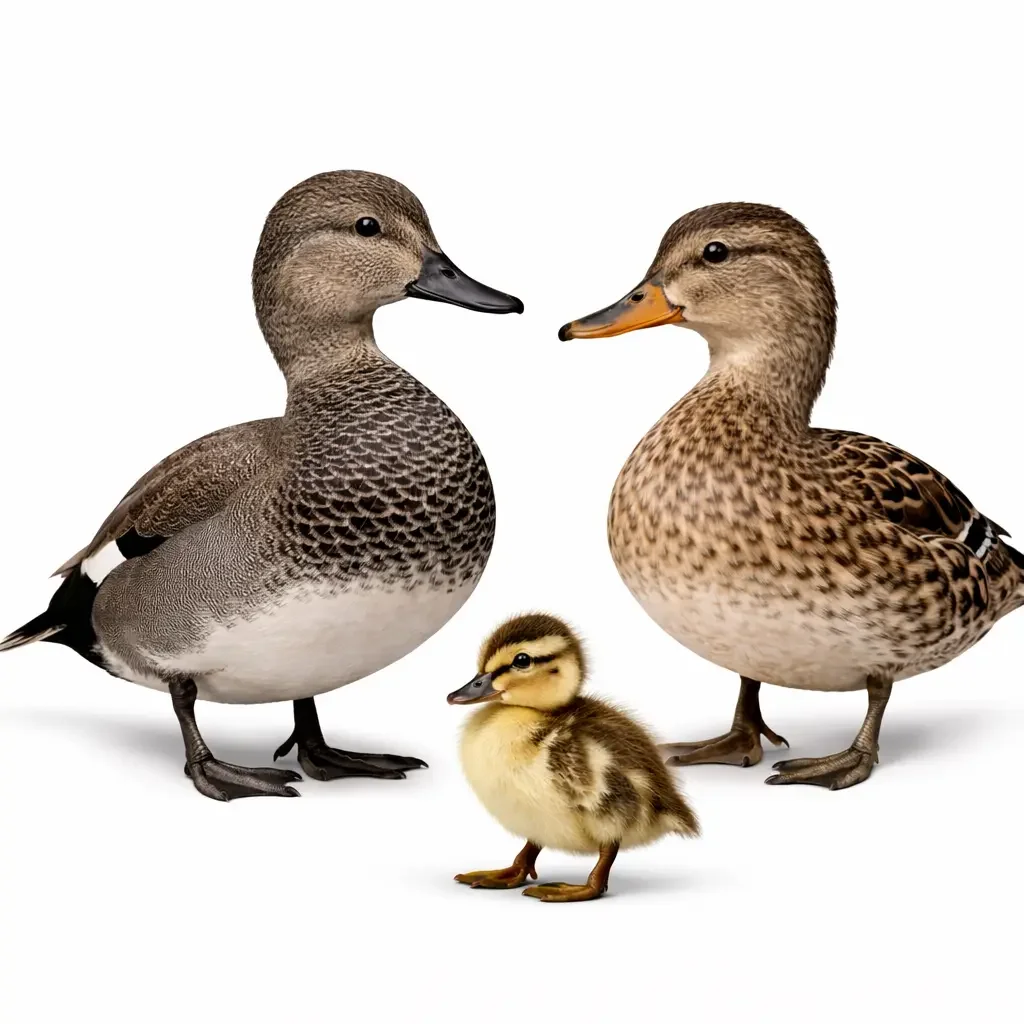
The Gadwall is the most underappreciated dabbling duck in North America. Known to hunters as the gray duck, it is a bird whose subtle beauty rewards careful attention, whose table quality rivals the Mallard, and whose willingness to decoy and use a wide variety of wetland habitats makes it one of the most huntable and homestead-relevant dabbling ducks in the Midwest. Despite being the third most harvested duck in the United States with nearly one million taken annually, the Gadwall rarely receives the recognition it deserves compared to the Mallard and Pintail that dominate waterfowl culture.
Quick Facts
Breed Type: Wild Duck
Purpose: Hunting, Wildlife Observation, Pond Management
Origin: Circumpolar, breeds across the Prairie Pothole Region, Great Plains, and parts of Europe and Asia
Egg Production: Not applicable (wild species)
Egg Color: White to cream, laid in ground nests in dense upland vegetation near water
Adult Weight: Drake 1.8 to 2.4 lbs, Hen slightly lighter
Temperament: Moderately wary, pairs early in the season, responds well to decoys and calling
Hardiness: Adaptable to a broad range of wetland types, not an extreme long-distance migrant
Broodiness: Moderate, hens incubate and raise young independently after males depart
Lifespan: Up to 19 years in the wild based on banding records
Image Section
Main Image: Gadwall drake in full breeding plumage showing intricate gray vermiculation, black rump, and white speculum, 1024x1024, white or transparent background.
Breed Overview
The Gadwall, known scientifically as Mareca strepera, is a medium-sized dabbling duck with a nearly worldwide distribution across the temperate regions of the Northern Hemisphere. In North America it breeds primarily in the Prairie Pothole Region of the northern Great Plains, the intermountain west, and parts of the Great Lakes region, and winters across the southern United States and into Mexico. It has dramatically increased in numbers since the 1980s, benefiting significantly from conservation programs including the Conservation Reserve Program and the North American Waterfowl Management Plan that have protected and restored breeding habitat across the prairie.
The drake Gadwall is often dismissed at first glance as a plain brown duck, but careful observation reveals one of the most intricately beautiful plumages in the dabbling duck world. His gray body feathers are finely vermiculated with narrow dark barring visible up close, giving him an elegantly detailed appearance that rewards observation. His head is a warm brownish-gray, his chest finely scaled in brown and gray, and his stern is a bold black that contrasts sharply with his white belly. The white speculum, formed by the inner secondary feathers, is the most reliable field mark for both sexes and is bold and immediately visible in flight. The hen is mottled brown and closely resembles a hen Mallard, but can be distinguished by the white speculum, white belly, thinner bill, and the orange stripe along the edge of her darker bill.
One of the most behaviorally distinctive aspects of the Gadwall is its habit of stealing food from diving ducks and American Coots. Rather than diving for submerged vegetation itself, the Gadwall waits at the surface as coots and diving ducks surface, then aggressively snatches food items from them before they can consume it. This kleptoparasitic behavior is unusual among dabbling ducks and reflects the Gadwall's strong preference for submerged aquatic vegetation that it typically cannot reach by its own diving ability.
Gadwall are among the earliest-pairing ducks in North America, with over 90 percent of birds paired by November, four to five months before breeding begins. This early pair formation is unusual among dabbling ducks and gives the Gadwall a head start on the breeding season relative to most other species.
Hunting the Gadwall
Season and Timing
Gadwall fall under the general dabbling duck aggregate bag limit in Midwest states, typically counted alongside Mallards and other puddle ducks within the six-bird daily total. They are not subject to species-specific bag restrictions in most states, making them a freely available target throughout the regular duck season. Fall migration through the Midwest begins in September and October, with the species present through December and into January in areas with open water.
Gadwall are not extreme long-distance migrants and tend to be more tolerant of cold conditions than early-departing species like Blue-winged Teal. They remain available in the Midwest later into the season than many other dabbling ducks and are frequently among the last puddle ducks present on open water in the northern Midwest before freeze-up drives them south.
Where to Hunt
Gadwall are strongly associated with submerged aquatic vegetation and prefer wetlands with abundant pondweed, naiad, widgeongrass, milfoil, and similar plants they feed on at or just below the surface. They tend to use slightly deeper water than most other dabbling ducks, often feeding in areas where the water is deep enough to require tip-up feeding or where they can steal from diving species. Marshes, sloughs, ponds, lakes, reservoirs, and flooded agricultural areas with abundant aquatic vegetation all attract Gadwall.
In the Midwest, Gadwall are commonly found on larger ponds and impoundments with good aquatic vegetation growth, river sloughs and backwaters, and any wetland with submerged plant communities. They regularly associate with American Coots and diving duck species on vegetated lakes and impoundments where their food-stealing behavior is most productive.
Difficulty of Hunting
Gadwall are considered moderately wary and among the more challenging dabbling ducks to consistently decoy late in the season. Early in the season, birds fresh off breeding areas respond readily to standard mallard spreads and hen mallard calls. As hunting pressure builds through October and November, Gadwall become increasingly selective and cautious, circling spreads multiple times before committing or passing entirely.
Their flight is strong and direct with relatively narrow wings compared to Mallards, giving them a slightly different profile in the air that experienced hunters learn to recognize. They spring directly off the water for takeoff without the running start required by diving ducks.
Decoys and Calling
Gadwall respond well to standard dabbling duck decoy spreads and do not require species-specific Gadwall decoys to attract reliably. Adding a few Gadwall decoys to a predominantly Mallard spread increases realism and builds confidence in circling birds, but Mallard decoys alone work effectively. The white speculum of Gadwall decoys is visible at distance and adds visual variety to the spread that helps attract birds.
Calling for Gadwall follows the same general principles as Mallard calling but with some adjustments. The hen Gadwall produces a nasal, higher-pitched quack distinct from the deeper hen Mallard call, and some experienced hunters specifically use gadwall calls alongside standard mallard calls for better realism. The drake makes a short, burping or reedy call that can be replicated with a specialized Gadwall call. Soft, subtle calling tends to produce better results than aggressive calling sequences, particularly later in the season.
Meat Quality
Gadwall is consistently ranked among the finest-tasting dabbling ducks in North America, comparable to Mallard and generally considered superior to most other species. Their almost entirely plant-based diet of submerged aquatic vegetation produces meat that is clean, mild, slightly rich, and free of the fishy or strong flavors associated with invertebrate-heavy diets. The predominantly herbivorous diet year-round gives Gadwall meat a consistently reliable quality that does not vary as significantly with local feeding conditions as some other species.
The Gadwall's reputation as table fare has grown significantly as hunters have moved away from the old hierarchy that placed only Mallards and Pintails at the top. Many experienced waterfowlers now rank Gadwall alongside or above Mallard for everyday table quality, noting that its mild flavor and reliable texture make it one of the most versatile and consistently excellent wild ducks available.
Best Preparations
Simple preparations that let the clean, mild flavor speak for itself produce the best results. Pan-seared Gadwall breast cooked to medium-rare with minimal seasoning is outstanding. Whole-roasted Gadwall with herbs and root vegetables is a rewarding preparation given the bird's good size and fat content relative to teal. Duck gumbo and other slow-cooked preparations work excellently with Gadwall. Its flavor profile is mild enough that even preparations designed for domestic duck translate well to this wild bird with minimal modification.
Behavior and Identification
The white speculum is the essential Gadwall field mark, visible at considerable distance in flight on both sexes. No other North American dabbling duck consistently shows a bold white speculum on both male and female, making it the most reliable quick identification feature in the field. The male's black rump and stern, contrasting with white belly, is a useful secondary mark visible at rest and in flight. The female's orange-sided dark bill distinguishes her from the similar hen Mallard at close range.
Gadwall are more likely to feed in slightly deeper water than most dabbling ducks, and their food-stealing behavior from coots and diving ducks is a distinctive behavioral trait that can be observed on any wetland where coots are present. Watching a Gadwall harry an American Coot at the surface is one of the more entertaining behavioral spectacles in Midwest waterfowl watching.
The species is among the most strongly monogamous of the dabbling ducks, with pairs forming in late fall and maintaining strong bonds through the winter. Hunters often encounter Gadwall in pairs or small groups throughout the season rather than in the large flocks typical of Mallards.
Climate and Range
The Gadwall breeds primarily in the Prairie Pothole Region of North Dakota, South Dakota, Minnesota, Montana, and the Canadian prairie provinces, with significant breeding populations in the intermountain west and California. The population has increased dramatically since the 1980s, more than doubling from historical lows, driven by conservation programs that have protected prairie wetlands and adjacent upland nesting cover.
Fall migration through the Midwest occurs from September through November, with birds wintering across the southern United States from California to the Atlantic Coast and into Mexico. Arkansas, Texas, and Louisiana consistently rank as the top harvest states, reflecting the large winter concentrations in those areas. In the Midwest, Gadwall are primarily a fall migration species encountered from September through early winter, though some birds overwinter in areas with sufficient open water.
Homestead Suitability and Pond Management
The Gadwall is one of the most practical and rewarding wild ducks to manage for on a Midwest homestead. It uses a wider variety of wetland sizes and types than many species, responds to basic habitat improvements, and is accessible to hunters without specialized equipment or large water bodies.
Attracting Gadwall to Your Property
The most important habitat feature for Gadwall is abundant submerged aquatic vegetation. Ponds and wetlands where pondweed, coontail, naiad, widgeongrass, or milfoil grow in the shallows are significantly more attractive to Gadwall than ponds with sparse or absent submergent vegetation. Managing water quality to support aquatic plant growth and maintaining moderate water depths of one to three feet in pond margins creates ideal Gadwall feeding habitat.
Gadwall show a strong preference for nesting on islands within marshes, which provides natural predator protection. Properties with small islands in ponds or marshes surrounded by dense nesting cover provide excellent breeding habitat that can support resident Gadwall pairs during the spring and summer. Managing upland nesting cover around wetlands with unmowed grass and brush benefits Gadwall along with other ground-nesting waterfowl.
Pros and Cons
Pros
Gadwall produce outstanding table fare consistently ranked among the finest wild ducks available to Midwest hunters. Their population is healthy and growing, offering genuine reasons for optimism in the waterfowl hunting world. They respond well to standard dabbling duck decoy spreads and calling, making them huntable with the same setups used for Mallards. Their preference for submerged aquatic vegetation means properties with good pond management can attract and hold Gadwall during fall migration. Early pair formation makes them a visible and entertaining species to observe throughout fall and winter. They are present in the Midwest later in the season than many early-migrating species.
Cons
The drake's subdued plumage means Gadwall are frequently overlooked or passed over by hunters targeting more visually striking species, leaving available birds unharvested. Their preference for slightly deeper water with submerged vegetation means they are less likely to use very shallow mudflat areas that attract teal and pintails. Late-season birds that have survived hunting pressure become increasingly selective and challenging to decoy. Female Gadwall closely resemble hen Mallards, requiring careful identification to avoid misidentifying species in mixed flocks.
Profitability Note
As a wild and federally protected migratory species, Gadwall cannot be commercially sold. Their value to Midwest homesteaders is primarily through the quality hunting experience and food they provide, and through the habitat management investments that attract them during migration. Properties with quality prairie wetland habitat that supports fall Gadwall use also benefit from the same management investments that attract Mallards, Teal, and other valuable dabbling ducks simultaneously. The profitability section applies fully when this guide series covers domestic duck breeds.
Comparison With Related Species
Gadwall vs Mallard
The Mallard is larger, more boldly patterned on the drake, and the most abundantly hunted dabbling duck in North America. Both species produce excellent table fare with the Gadwall often considered the more consistently mild and clean-flavored of the two. Both respond to the same decoy setups and calling approaches, and they regularly share the same wetland habitats throughout the Midwest. The Gadwall's white speculum distinguishes it from the Mallard's violet-blue speculum at a glance in flight.
Gadwall vs American Wigeon
The American Wigeon shares similar habitat preferences with Gadwall, particularly the use of slightly deeper water with submerged vegetation, and the food-stealing behavior from diving ducks. The Wigeon's distinctive white forehead patch on the drake and its whistling call distinguish it clearly from the Gadwall in the field. Both species are considered excellent table fare and respond to similar hunting setups.
Gadwall vs Northern Pintail
The Pintail is more elegant, more wary, more strictly bag-limited, and considered by some hunters to be the finest-tasting dabbling duck. Gadwall are considerably more abundant and easier to consistently hunt than the declining Pintail population. Both species produce clean, mild meat that rewards simple preparations.
Final Verdict
The Gadwall deserves far more recognition than it typically receives in Midwest waterfowl culture. It is a consistent, reliable, and outstanding bird across every dimension that matters to hunters and homesteaders, from its excellent table quality to its responsive decoying behavior to its compatibility with basic homestead wetland management. Any hunter who has dismissed the Gadwall as a drab, second-tier duck owes it a second look, and any homesteader managing prairie wetlands for waterfowl who is not specifically cultivating conditions for Gadwall is leaving real opportunity on the table.
The Gadwall's population growth since the 1980s is one of the most positive stories in Midwest waterfowl management, demonstrating that targeted habitat conservation programs can reverse population declines and create genuine abundance for hunters and wildlife managers alike.
Frequently Asked Questions
Are Gadwall good to eat?
Yes, Gadwall is widely considered one of the finest-tasting dabbling ducks in North America, comparable to Mallard and often ranked above it for consistency of mild, clean flavor. Their predominantly plant-based diet produces reliably mild meat that requires minimal preparation effort to be outstanding.
Why is the Gadwall called the gray duck?
The nickname gray duck refers to the overall gray-brown plumage of both sexes, which lacks the bold colors of drakes in most other dabbling duck species. The male's intricate gray vermiculation and subdued color palette inspired this regional nickname that persists among hunters across the Midwest and South.
How do I identify a Gadwall in flight?
The bold white speculum, visible on both males and females, is the most reliable in-flight identification mark. No other North American dabbling duck consistently shows white in the speculum on both sexes. The male's black rump and stern contrasting with white belly is also visible at distance in flight.
When do Gadwall migrate through the Midwest?
Fall migration begins in September and October with birds present through December and into January wherever open water remains. Gadwall are not extreme long-distance migrants and tend to linger later in the season than early-departing species. They are among the last puddle ducks present in the northern Midwest before freeze-up.
Can Gadwall be attracted to homestead ponds?
Yes, particularly on ponds with abundant submerged aquatic vegetation. Managing water quality and depth to support pondweed, coontail, and similar submerged plants in pond margins is the most effective step. Gadwall show a strong preference for wetlands with good submergent plant communities and are significantly more likely to use vegetated ponds than those with sparse aquatic plant growth.
Why do Gadwall steal food from coots and diving ducks?
Gadwall are primarily surface and tip-up feeders that prefer submerged aquatic vegetation but cannot dive deeply enough to reach it consistently on their own in deeper water. When coots and diving ducks surface with vegetation they have gathered from the bottom, the Gadwall's food-stealing behavior allows it to exploit deeper-water food resources that would otherwise be inaccessible, a behavioral adaptation that has been well documented across its range.