
Northern Pintail
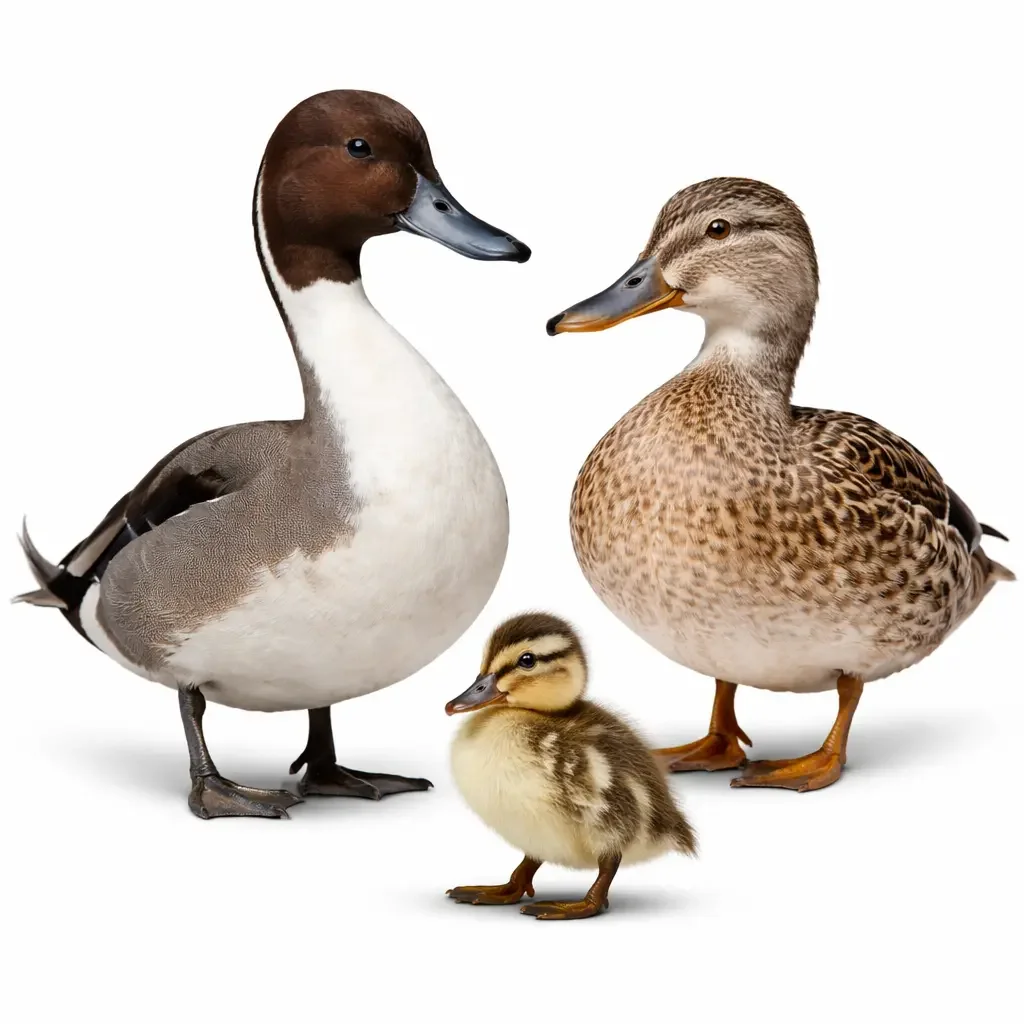
The Northern Pintail is widely considered the most elegant duck in North America, a bird that earns genuine admiration from hunters and wildlife observers alike. Known to waterfowlers simply as the sprig or bull sprig, the drake pintail combines a long slender silhouette, a chocolate-brown head, a bold white neck stripe, and a pair of long pointed central tail feathers into a package that many hunters rank as the most beautiful duck on the continent. It is also a bird of real conservation concern, with populations declining significantly over recent decades, making it one of the most carefully regulated dabbling ducks in North America.
Quick Facts
Breed Type: Wild Duck
Purpose: Hunting, Wildlife Observation, Wetland Awareness
Origin: North America, breeds across Alaska, Canada, and the Prairie Pothole Region
Egg Production: Not applicable (wild species)
Egg Color: Pale olive, laid in ground scrapes in open country with low vegetation
Adult Weight: Drake 1.9 to 2.5 lbs, Hen slightly lighter
Temperament: Wary and alert, one of the more challenging dabbling ducks to decoy consistently
Hardiness: Highly adaptable across open wetland, agricultural, and coastal habitats
Broodiness: Moderate, female incubates independently and broods young through early development
Lifespan: Up to 22 years in the wild, though most birds live considerably shorter lives
Image Section
Main Image: Northern Pintail drake in full breeding plumage on calm shallow water, long pointed tail feathers and white neck stripe clearly visible, 1024x1024, white or transparent background.
Breed Overview
The Northern Pintail, known scientifically as Anas acuta, is a large, slender dabbling duck with one of the widest geographic distributions of any bird in the world. It breeds across the northern portions of North America, Europe, and Asia, and winters as far south as the equator in some parts of its range. In North America, the core breeding population is concentrated in Alaska and the Prairie Pothole Region of the northern Great Plains, with the Midwest representing both breeding habitat and a key migration corridor.
The drake in breeding plumage is unmistakable. His chocolate-brown head contrasts with a clean white breast and a bold white stripe running up the side of the neck. His back and flanks are intricately patterned in gray, and his long black central tail feathers, which can extend several inches beyond the body, give the species its name. Both sexes have blue-gray bills and gray legs. The hen is a mottled brown bird with the same long-necked, slender elegance that defines the species, lacking only the bold patterning of the male.
The pintail is one of the earliest migrating ducks in both spring and fall. It is among the first species to depart breeding areas in late summer and is often one of the first dabbling ducks to appear on Midwest wetlands in early fall. This early migration timing means pintails are accessible to hunters from the first days of the regular duck season in many states.
Northern Pintail populations have experienced a dramatic and sustained decline over recent decades. Populations that once exceeded ten million birds in North America have fallen to roughly three million in some survey years, driven primarily by poor nesting success in Prairie Pothole croplands and the loss of grassland and wetland habitat. This decline has led to restricted bag limits that currently stand at one to three birds depending on the season and regulatory framework, making the pintail one of the most carefully managed dabbling ducks on the continent.
Hunting the Northern Pintail
Season and Timing
The Northern Pintail is subject to a species-specific daily bag limit separate from the general duck aggregate in most Midwest and flyway states. The limit has varied between one and three birds in recent seasons depending on breeding population surveys conducted each spring. Always verify your specific state regulations before hunting, as pintail limits are among the most likely to change from season to season based on population data.
Pintails are early migrants. Fall movement through the Midwest begins in August and September, well before many other dabbling ducks arrive in significant numbers. This makes them a genuine early-season opportunity for Midwest hunters who are set up and scouting before the main migration push. By late October most pintails have pushed through the northern Midwest and continue south toward wintering grounds in California, Texas, Mexico, and Central America.
Where to Hunt
Northern Pintails favor open, shallow wetlands with low surrounding vegetation. They are birds of wide-open spaces and prefer areas with good visibility from which they can spot potential threats at a distance. Large marshes, open prairie potholes, flooded agricultural fields, shallow lakeshores, and sheet water areas are their preferred habitats during migration. They are less likely to use tight, wooded, or sheltered wetlands that suit species like Wood Ducks and ringnecks.
In the Midwest, flooded harvested grain fields are among the most productive pintail hunting locations during fall migration. Pintails are drawn to waste grain and will use agricultural fields heavily when water conditions allow access to flooded crop stubble. Large open prairie wetlands and shallow reservoir flats also hold migrating birds, particularly during peak October movement.
Difficulty of Hunting
The Northern Pintail has a well-earned reputation as one of the wariest dabbling ducks in North America. They are acutely sensitive to any disturbance in the decoy spread or hunting setup and will flare at the slightest sign that something is wrong. Poor concealment, a hunter who moves at the wrong moment, a dog that fidgets, or a spread with decoys that sit unnaturally are all enough to send pintails banking away out of range after multiple circles.
Sunken blinds or layout blinds that place hunters at or below the surrounding landscape level are particularly effective for pintails, who use their height advantage during approach to scan the area thoroughly before committing. On cloudy days pintails are often more cautious than on sunny days, but they frequently lose their wariness and decoy readily during snowfall, which is one of the more reliable windows for consistent pintail hunting.
Their flight is fast, elegant, and slightly swept-back, with wings that angle back from the body rather than extending straight out the way most duck species fly. This swept-wing profile combined with their long neck and pointed tail produces a silhouette that is identifiable at long distance once you know what to look for.
Decoys and Calling
Pintails respond best to spreads that include pintail-specific decoys placed on the outer edges of the setup near the intended landing zone. They tend to prefer landing with birds of their own species rather than crossing over a large mallard spread to reach the landing zone, so positioning pintail decoys where they are clearly visible from a distance and approachable without crowding other species is important.
Total spread size can range from a few dozen to seventy-five or more decoys for dedicated pintail setups. Adding feeding-posture pintail decoys, which simulate birds tipping up to reach bottom food, adds realism and confidence to the spread. The white on drake pintail decoys is visible from a considerable distance and helps attract birds that are still scanning the area from high altitude.
Calling is a significant part of pintail hunting but requires a very different approach than mallard calling. Pintails rarely respond to aggressive calling and will often flare from loud or repetitive sequences. The drake pintail produces a soft, two-note flute-like whistle that carries well and draws approaching birds closer. A pintail whistle call is a worthwhile investment for any serious pintail hunter. Soft, infrequent sequences timed to when birds are facing away or quartering away produce the best results. Allowing other ducks that are already working to settle into the spread first can help convince wary pintails that conditions are safe enough to commit.
Meat Quality
The Northern Pintail is consistently ranked among the top three dabbling ducks for table fare by hunters across North America, alongside teal and mallard. Their diet of seeds, waste grain, aquatic plant material, and roots gives the meat a clean, mild, slightly rich flavor that holds up to simple preparations without requiring strong marinades or bold spicing to mask any off flavors.
The pintail is a larger bird than teal but leaner in build than a mallard, producing a good yield of dark breast meat per bird. Most hunters describe the flavor as mild and clean, comparable to a mallard but with a slightly more delicate texture. Birds feeding on waste grain in agricultural areas are considered the finest table birds of the season, with those from coastal or invertebrate-heavy environments occasionally showing stronger flavor.
Best Preparations
Simple preparations showcase pintail best. A pan-seared breast cooked to medium-rare with salt, pepper, and butter needs nothing more. Whole roasted pintail with herbs and root vegetables is a traditional preparation that takes advantage of the bird's balanced fat content. Pintail works well in wild rice dishes, duck and mushroom preparations, and any recipe that suits mallard without modification. Because the flavor is mild and clean, overcooking is the most common mistake, which toughens the meat and eliminates the subtle flavor that makes pintail worth seeking out.
Behavior and Identification
The pintail's silhouette is one of the most distinctive of any North American duck. The long neck, slender body, and pointed tail of the drake create a profile that experienced hunters recognize at remarkable distance, even in low light. In flight the swept-back wing angle and the elongated tail produce an aerodynamic, almost falcon-like shape unlike any other dabbling duck.
Pintails are gregarious outside the breeding season and mix readily with other duck species, particularly mallards, wigeon, and teal. They are often among the highest-flying ducks when first approaching a hunting location, using their altitude to scan for danger before deciding whether to commit. This habit of high circling is both their protection and their tell, as a group of high-flying, circling ducks with long necks and pointed tails is almost certainly pintails.
They are among the earliest birds to pair up, often forming pair bonds on the wintering grounds before spring migration begins. They are also among the earliest nesters on the breeding grounds, arriving as soon as ice retreats from prairie wetlands and beginning nest construction in March and April.
Climate and Range
The Northern Pintail breeds across one of the largest ranges of any North American duck, from Alaska across northern Canada and through the Prairie Pothole Region. They begin fall migration earlier than most species, with drakes leaving breeding areas as early as late June before hens and juveniles follow in July and August. By September, significant numbers are moving through the Midwest, and most birds have cleared the northern states by late October.
Wintering concentrations in California's Central Valley and Sacramento Valley represent the largest single aggregation of pintails in North America, with the Texas Gulf Coast and coastal Mexico also holding significant numbers. In the Midwest, pintails are primarily a fall migration species encountered from September through October, with some birds lingering into November in southern portions of the region during mild years.
The ongoing population decline is a genuine conservation concern. From historic highs above ten million birds, the North American population has fallen to roughly three to five million in recent years. Agricultural nest destruction, habitat loss in the Prairie Pothole Region, and drought are the primary drivers. Conservation organizations including Ducks Unlimited are actively working on breeding habitat protection and restoration in the key prairie nesting areas.
Homestead Suitability and Pond Management
Northern Pintails are open-country birds that prefer large, shallow, open water bodies with minimal surrounding vegetation. They are less likely to use small, wooded, or sheltered homestead ponds than species like Wood Ducks, mallards, or ringnecks. However, homesteaders with larger open ponds, prairie wetlands, or access to flooded grain fields in open agricultural landscapes can realistically attract migrating pintails during September and October.
Supporting Pintail Habitat on Your Property
Maintaining shallow, open water areas with minimal tall emergent vegetation around the margins creates the most attractive conditions for pintails. They prefer to land in open water where they can see in all directions, so a large open pond with a mowed or grazed shoreline is more appealing than one ringed with dense cattails. Allowing grain fields adjacent to water to flood naturally after harvest creates excellent pintail feeding habitat and is one of the most reliable ways to attract early-season birds on agricultural properties.
For homesteaders in the Prairie Pothole states, preserving any existing grassland surrounding seasonal and semi-permanent wetland basins directly supports pintail nesting, as pintails are one of the most grassland-dependent nesting waterfowl species. Avoiding cultivation right to the edge of wetland basins and maintaining a buffer of undisturbed grass around pond margins provides the short-grass nesting cover that pintails require.
Pros and Cons
Pros
The Northern Pintail is one of the most beautiful and prized game birds in North America, with a drake in full breeding plumage representing one of the finest trophies in waterfowl hunting. Meat quality is outstanding, consistently ranking with teal and mallard as the finest table duck available to Midwest hunters. Early migration timing provides hunting opportunities in September and October before the main duck season activity peaks. Their willingness to use flooded grain fields alongside mallards and wigeon creates mixed-bag opportunities on agricultural properties. The challenge of decoying wary pintails in open country makes each successful hunt genuinely rewarding.
Cons
The species-specific bag limit of one to three birds significantly restricts harvest and requires hunters to count pintails carefully against a separate limit. Population decline is a genuine conservation concern that may lead to even more restrictive regulations in coming seasons. Their wariness and preference for open water with wide visibility make them one of the more difficult dabbling ducks to consistently decoy. They favor large open water and flooded fields over small homestead ponds, limiting opportunities on smaller properties. Their early migration means the window for hunting them in the northern Midwest is relatively compressed compared to species that migrate later in the season.
Profitability Note
As a wild and federally protected migratory species subject to population management, Northern Pintails cannot be commercially sold. Their real value to the Midwest homesteader is in the quality of the hunting experience and the wildlife conservation connection. Properties in the Prairie Pothole states that maintain grassland buffers around wetlands and preserve shallow open water habitat support pintail nesting and migration, which may qualify for conservation program payments through USDA and waterfowl conservation organizations. Hunting leases on properties with quality open prairie and flooded grain field habitat that attracts early-season pintails can command premium rates in the Dakotas and Minnesota. The profitability section applies fully when this guide series covers domestic duck breeds.
Comparison With Related Species
Northern Pintail vs Mallard
The Mallard is the most abundant and widely hunted dabbling duck in North America and the species pintails most commonly associate with during migration. Mallards are considerably less wary and more tolerant of imperfect decoy setups, making them easier to hunt consistently. Both species produce outstanding table fare, with pintail generally considered slightly more delicate in flavor. Mallards are not subject to the species-specific bag restrictions that apply to pintails.
Northern Pintail vs American Wigeon
The American Wigeon shares open-water and flooded field habitat with pintails during migration and often flies with pintail flocks. The wigeon is similarly elegant but considerably smaller, with a rounded head and short bill that contrasts with the pintail's long, slender profile. Wigeon are somewhat less wary than pintails and respond well to wigeon whistle calls. Both are considered excellent table fare.
Northern Pintail vs Green-winged Teal
Green-winged Teal are the smallest dabbling duck in the pintail's migration window and share shallow wetland habitat during early fall. Teal are considerably faster in flight and less wary, decoying readily into most setups. Both species produce outstanding meat, with teal widely considered the finest-tasting dabbling duck and pintail close behind. The two species often share the same flooded fields and shallow marsh habitats during early fall migration.
Final Verdict
The Northern Pintail is one of the crown jewels of Midwest waterfowl hunting. Its beauty, wariness, early arrival on fall wetlands, and exceptional table quality combine to make it a bird that any serious waterfowler should prioritize learning and pursuing. The declining population and restricted bag limit make every pintail a meaningful harvest, and the challenge of consistently decoying these alert, open-country birds in properly set-up large spreads represents some of the most satisfying and skillful hunting that Midwest dabbler hunting has to offer.
For homesteaders, the pintail's connection to Prairie Pothole breeding habitat means that maintaining grassland and open shallow wetlands on working farms directly contributes to this species' recovery. That connection between agricultural land management and one of the continent's most admired game birds gives the pintail special significance for anyone serious about both hunting and land stewardship in the Midwest.
Frequently Asked Questions
How many Northern Pintails can I shoot per day?
The daily bag limit for Northern Pintails is subject to species-specific restrictions and has varied between one and three birds in recent seasons depending on annual breeding population surveys. Always verify your specific state and flyway regulations before hunting, as this is one of the limits most likely to change from season to season.
Why have Northern Pintail populations declined so much?
The primary drivers of the long-term population decline are poor nesting success in Prairie Pothole agricultural lands, where 34 to 57 percent of pintail nests are placed in cultivated fields and destroyed by spring farming operations, and the loss of grassland and wetland habitat to agricultural conversion. Drought on the northern prairie further reduces nesting success during dry years. Conservation efforts focus on protecting and restoring grassland buffers around wetlands and improving nesting habitat conditions on working agricultural lands.
How do I identify a Northern Pintail in flight?
The drake pintail has one of the most distinctive silhouettes of any North American duck. The long neck, slender body, swept-back wing angle, and long pointed tail create a profile that experienced hunters recognize at considerable distance. The bold white neck stripe is visible at long range on drake birds. Both sexes show a slender, elongated shape compared to the rounder profile of most other dabbling ducks.
Are Northern Pintails good to eat?
Yes, Northern Pintail is consistently ranked among the finest table ducks in North America alongside teal and mallard. Their diet of seeds, waste grain, and aquatic plant material produces clean, mild, slightly rich dark meat that needs no aggressive preparation to be outstanding. Simple preparations including pan-searing to medium-rare are the most popular and showcase the flavor best.
When do Northern Pintails migrate through the Midwest?
Pintails are early migrants, with fall movement beginning in August and September in the northern Midwest. Peak migration through the Dakotas, Minnesota, and Iowa typically occurs in September and early October. By late October most birds have moved through the northern states toward wintering grounds in California, Texas, and Mexico. This early migration window gives Midwest hunters an opportunity at pintails before many other species arrive in significant numbers.
How do I decoy Northern Pintails effectively?
Pintail-specific decoys placed on the outer edges of the spread near the landing zone are the most important setup element. Total spread size of two to four dozen or more decoys with a visible concentration of pintail silhouettes helps attract high-circling birds. Soft, infrequent calling with a pintail whistle timed to when birds are facing away produces better results than aggressive calling. Excellent concealment is critical, as pintails are quick to flare from any movement or imperfection in the setup.