
Mexican Duck
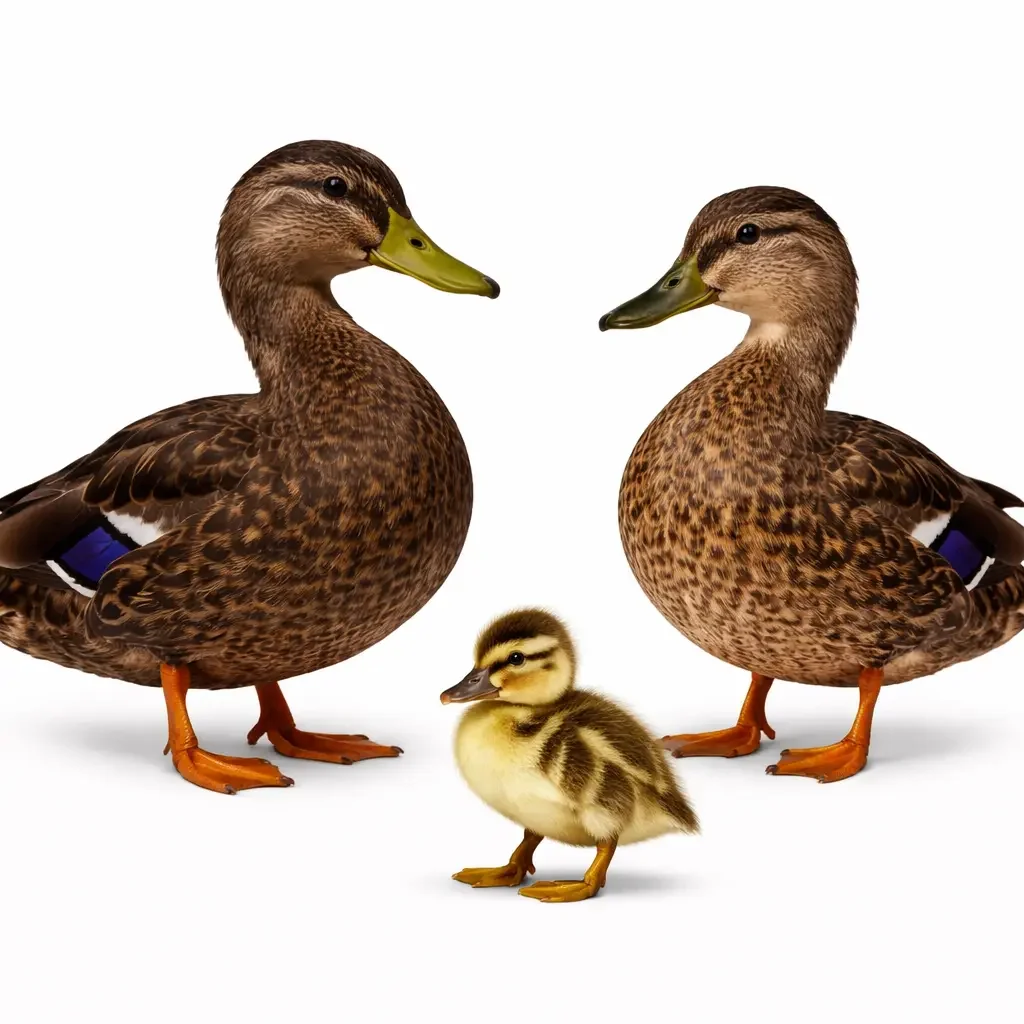
The Mexican Duck is one of the least known members of the Mallard super-species complex and one of the most taxonomically complicated ducks in North America. Reclassified as a full species by the American Ornithological Society in 2020 after nearly five decades as a Mallard subspecies, it occupies a narrow and ecologically challenging range across the arid highlands of Mexico and the southwestern United States. For Midwest readers, the Mexican Duck is not a hunting target or a local resident, but understanding it completes the picture of the Mallard's closest relatives in North America and provides useful context for the broader conversations about hybridization and species conservation that run through the wild duck series.
Quick Facts
Scientific Name: Anas diazi
Class: Aves
Order: Anseriformes
Family: Anatidae
Average Length: 20 to 22 inches
Conservation Status: Least Concern (IUCN); population declining; total U.S. and Mexico population estimated under 80,000 birds
Primary Range: Central Highlands of Mexico; southern Arizona, New Mexico, and southwestern Texas in the United States
Taxonomy Note: Reclassified as a full species in 2020 after being treated as a Mallard subspecies from 1973 to 2020
Closest Relatives: Mottled Duck and American Black Duck (genomic data); Mallard (historically assumed closest, now revised)
U.S. Endangered Species History: Listed as endangered in 1967; delisted in 1978
Image Section
Feature image: Mexican Duck drake on a desert pond, showing dark brown body and olive-yellow billSecondary image: Pair of Mexican Ducks in typical arid highland wetland habitatThird image: Mexican Duck in flight, white underwings contrasting with dark body
Species Overview
The Mexican Duck has had one of the more complicated taxonomic histories of any North American waterfowl. It was described scientifically as a distinct species in 1886 and held that status for nearly a century, during which time it was considered one of three North American members of the broader black duck group alongside the American Black Duck and Mottled Duck. In 1973 the American Ornithologists' Union reclassified it as a subspecies of the Mallard, a decision driven largely by the extent of hybridization observed along the species' northern range where it overlaps with Mallard populations. That classification held until 2020, when the American Ornithological Society restored full species status based on genomic data showing the Mexican Duck is as genetically distinct from the Mallard as the American Black Duck and Mottled Duck, both of which retained full species recognition throughout the debate.
The species carries approximately 98 percent of its global population within Mexico, concentrated in the Central Highlands. The U.S. population in southern Arizona, New Mexico, and southwestern Texas is small and fragmented. Vagrant birds have been recorded as far north as Colorado, Utah, Wyoming, Nebraska, and Montana, and there is some evidence the species may be slowly expanding its range northward, though documenting this expansion is complicated by the difficulty of identifying Mexican Ducks in areas where hybridization with Mallards is common.
Both sexes resemble a female Mallard in general body plan and coloration. The body is a rich dark brown, notably darker than a typical Mallard hen. The head is tan to buffy with faint dark streaking and a darker brown crown. The bill in males is dull olive-yellow, similar to the American Black Duck, while females carry a mottled orange and black bill similar to a Mallard hen. In flight, brilliant white underwings contrast sharply with the dark body, matching the flight pattern of the American Black Duck. The speculum is blue to blue-green with a white trailing edge but lacks the bold white leading edge seen on the Mallard, a detail useful for identification in areas of range overlap. The tail is brown rather than white, which is a useful separation from Mallard.
One of the Spanish names for the Mexican Duck is pato garbancero, a reference to its well-documented fondness for garbanzo beans and other agricultural crops.
Habitat and Range
The Mexican Duck is adapted to the arid and semi-arid conditions of the Mexican Central Highlands, a habitat profile quite different from any other member of its species complex. It breeds in temporary rainy-season wetlands, river systems, shallow lakes, playa lakes, and constructed irrigation basins across this high-elevation landscape. The species depends heavily on seasonal water availability, concentrating on permanent wetlands during the dry season and spreading into temporary water sources during the rainy season.
In the United States, the core population occupies river corridors, ponds, irrigation ditches, and constructed wetlands in the Rio Grande Valley of southwestern Texas, the borderlands of southern New Mexico, and portions of central and southeastern Arizona. At Sweetwater Wetlands Park in Tucson, Arizona, Mexican Ducks can outnumber Mallards during winter. The species performs limited local seasonal movements rather than true long-distance migration. Most northern birds make short southward movements in winter rather than any sustained flyway migration.
The species also uses agricultural habitat extensively, foraging at night in irrigated fields for waste grain, alfalfa shoots, and legumes including garbanzo beans. This agricultural adaptation has partially offset wetland losses in portions of its range, though the net effect on the population has not reversed the overall declining trend.
Hunting
The Mexican Duck is a legal game bird in both the United States and Mexico where it occurs. In the U.S., it falls under standard migratory bird regulations and is included in the general duck bag limit in the states where it is present. Because the U.S. population is small and concentrated in the Southwest, harvest numbers are very low and not separately tracked by the U.S. Fish and Wildlife Service.
For Midwest hunters, the Mexican Duck has no practical hunting relevance. It does not migrate through the flyways that connect the Midwest to its breeding grounds, and it is not present in any meaningful numbers north of its core southwestern range except as an occasional vagrant. The guide is included in this series as a reference entry to complete the Mallard super-species complex rather than as an active hunting target for the Midwest audience.
Hunters in southern Arizona, New Mexico, and southwestern Texas who encounter Mexican Ducks in mixed Mallard flocks face the same identification challenges that make American Black Duck identification difficult in the East: the bird blends visually into Mallard flocks, particularly into female Mallards, and requires a careful second look to confirm. The dark body, brown tail, single white speculum border, and olive-yellow male bill are the most useful in-hand and close-range field marks.
Behavior and Identification
Mexican Ducks are social birds that associate readily with Mallard flocks throughout their range, which contributes significantly to both identification difficulty and hybridization pressure. They are described as wary in most areas of their natural range, though individuals in urban parks and city ponds in portions of Arizona and Texas have become quite approachable.
The diet is broadly omnivorous, consisting of aquatic and terrestrial plant material, seeds, invertebrates, and agricultural crops. The species feeds by dabbling in shallow water, tipping up to reach submerged vegetation, and grazing on dry ground. Agricultural field use is a notable behavioral trait not strongly associated with most other members of its species complex.
Hybridization with Mallards is pervasive in the northern portions of the Mexican Duck's range and represents the primary conservation concern for the species. In the borderlands of the southwestern U.S., finding a phenotypically pure Mexican Duck in a Mallard flock requires careful scrutiny, and many individuals show intermediate characteristics that make definitive identification impossible in the field. Genetic analysis through programs like the DuckDNA project is now the most reliable method for assessing the degree of Mallard introgression in individual birds.
Conservation
The Mexican Duck has a complex and instructive conservation history. It was listed as an endangered species by the U.S. Fish and Wildlife Service in 1967, primarily due to hybridization pressure from expanding Mallard populations and loss of wetland habitat across its range. The listing was removed in 1978 as populations appeared to stabilize and the hybridization threat was reassessed.
The current population is estimated at under 80,000 birds total across the U.S. and Mexico, making it one of the smaller-population dabbling ducks in North America. The IUCN classifies it as Least Concern due to its large geographic range, but the total number of genetically pure individuals is considerably lower than overall population counts suggest, given the extent of Mallard hybridization in border areas.
Climate change presents a significant long-term threat. The species' core range in the Mexican Central Highlands and the arid southwestern U.S. is projected to become warmer and drier under most climate scenarios, reducing the temporary and seasonal wetland habitat the species depends on for breeding. Irrigation agriculture has partially buffered this threat by creating artificial wetland habitats, but agricultural water use in arid regions is itself subject to increasing constraints as water availability declines.
Wetland preservation and preferential hunting of drake Mallards rather than Mexican Ducks in overlap zones are among the conservation measures identified as most beneficial for maintaining the species' genetic integrity.
Homestead and Wildlife Context
The Mexican Duck has no practical relevance as a homestead species for Midwest readers. It cannot be legally kept without federal permits, and its range does not overlap with the Midwest in any meaningful way.
For readers in southern Arizona, New Mexico, or southwestern Texas, the species may appear on managed water features, irrigation ponds, and riparian corridors. Creating and maintaining shallow freshwater habitat in these areas supports Mexican Ducks along with a broad range of Sonoran Desert and Chihuahuan Desert wetland wildlife. Reporting confirmed Mexican Duck sightings to eBird and submitting samples from harvested birds to genetic monitoring programs contributes to conservation data in a region where population tracking is genuinely difficult.
Pros and Cons
Pros
Full species recognition restored in 2020 based on solid genomic evidence
Fascinating conservation and taxonomy story that illustrates broader principles of speciation and hybridization
Completing the Mallard super-species complex provides a more thorough understanding of North American waterfowl diversity
Adapted to arid highland conditions not used by other dabbling ducks, filling a unique ecological niche
Range appears to be slowly expanding northward, increasing encounter opportunities for birders and hunters in the Southwest
Cons
No Midwest relevance as a hunting target or resident species
Total population under 80,000 birds with a declining trend
Hybridization with Mallards makes identification difficult across much of the U.S. range
Highly vulnerable to climate-driven aridification of its core range in Mexico
Among the least-studied dabbling ducks in North America, with significant gaps in basic biological knowledge
Profitability Note
Wild Mexican Ducks cannot be commercially harvested or sold. All value from the species is recreational and ecological. The species has no meaningful hunting lease or harvest value for Midwest landowners. In its core range in the Southwest, it contributes to general waterfowl hunting activity but is not separately tracked or targeted as a harvest species.
Comparison With Related Species
Mallard: The Mallard is the Mexican Duck's most visually similar relative and the species it hybridizes with most extensively. The two were classified as a single species for nearly five decades. Separation in the field requires attention to tail color (brown in Mexican Duck, white in Mallard), speculum border pattern (single white trailing border in Mexican Duck, white borders on both sides in Mallard), and male bill color (dull olive-yellow in Mexican Duck, bright yellow in Mallard). See the Mallard guide for a full comparison.
American Black Duck: Genetic analysis places the Mexican Duck most closely related to the Mottled Duck, with American Black Duck as the next closest relative, rather than the Mallard. All three share white underwings, dark body plumage, and the challenge of hybridization with expanding Mallard populations. The American Black Duck is an eastern North American species with no range overlap with the Mexican Duck. See the American Black Duck guide for a full comparison.
Mottled Duck: The Mottled Duck is the Mexican Duck's closest genetic relative and occupies an analogous ecological niche on the Gulf Coast of Texas, Louisiana, and Florida, serving as the resident non-migratory Mallard counterpart in that region. Both species face hybridization pressure from expanding Mallard populations and carry restricted, regionally specific ranges compared to the continent-wide Mallard. See the Mottled Duck guide for a full comparison.
Final Verdict
The Mexican Duck is a species that demands more attention than it typically receives from North American waterfowl hunters and wildlife observers. Its taxonomic saga from full species to subspecies and back to full species over the course of a century reflects how rapidly genetic science has reshaped our understanding of closely related waterfowl. Its conservation situation, involving a small population, extensive hybridization pressure, and a core range facing significant climate risk, places it among the more ecologically vulnerable ducks on the continent despite its current Least Concern listing. For Midwest readers, it completes the picture of the Mallard and its nearest relatives and provides useful context for the hybridization discussions that appear throughout the wild duck series.
Frequently Asked Questions
Is the Mexican Duck the same as a Mallard? No. The Mexican Duck was classified as a Mallard subspecies from 1973 to 2020, but the American Ornithological Society restored it to full species status in 2020 based on genomic evidence showing it is as genetically distinct from the Mallard as the American Black Duck and Mottled Duck.
Where can I see a Mexican Duck in the United States? Southern Arizona, New Mexico, and southwestern Texas are the most reliable areas. Sweetwater Wetlands Park in Tucson, Arizona is one of the more accessible locations where Mexican Ducks occur regularly and may outnumber Mallards in winter. Look for them in mixed Mallard flocks at ponds, wetlands, and river corridors in the borderlands region.
How do I tell a Mexican Duck from a female Mallard? Key marks include the darker, richer brown body coloration, a brown tail rather than white, a single white border on the trailing edge of the speculum rather than white borders on both sides, and an olive-yellow bill on males. In flight, the white underwing flash is shared with the American Black Duck and is brighter and more extensive than on a female Mallard. Many individuals in the northern U.S. range are hybrids and cannot be definitively identified by plumage alone.
Can I hunt Mexican Ducks? Yes, in the states where they occur they are included in general duck bag limits under standard migratory bird regulations. For Midwest hunters, the species has no practical hunting relevance as it does not occur in the region.
Why is the Mexican Duck declining? Habitat loss in the Mexican Central Highlands, overhunting historically, and ongoing hybridization with Mallards are the primary documented causes of decline. Climate-driven aridification of the species' core range is an increasing long-term concern.