
American Black Duck
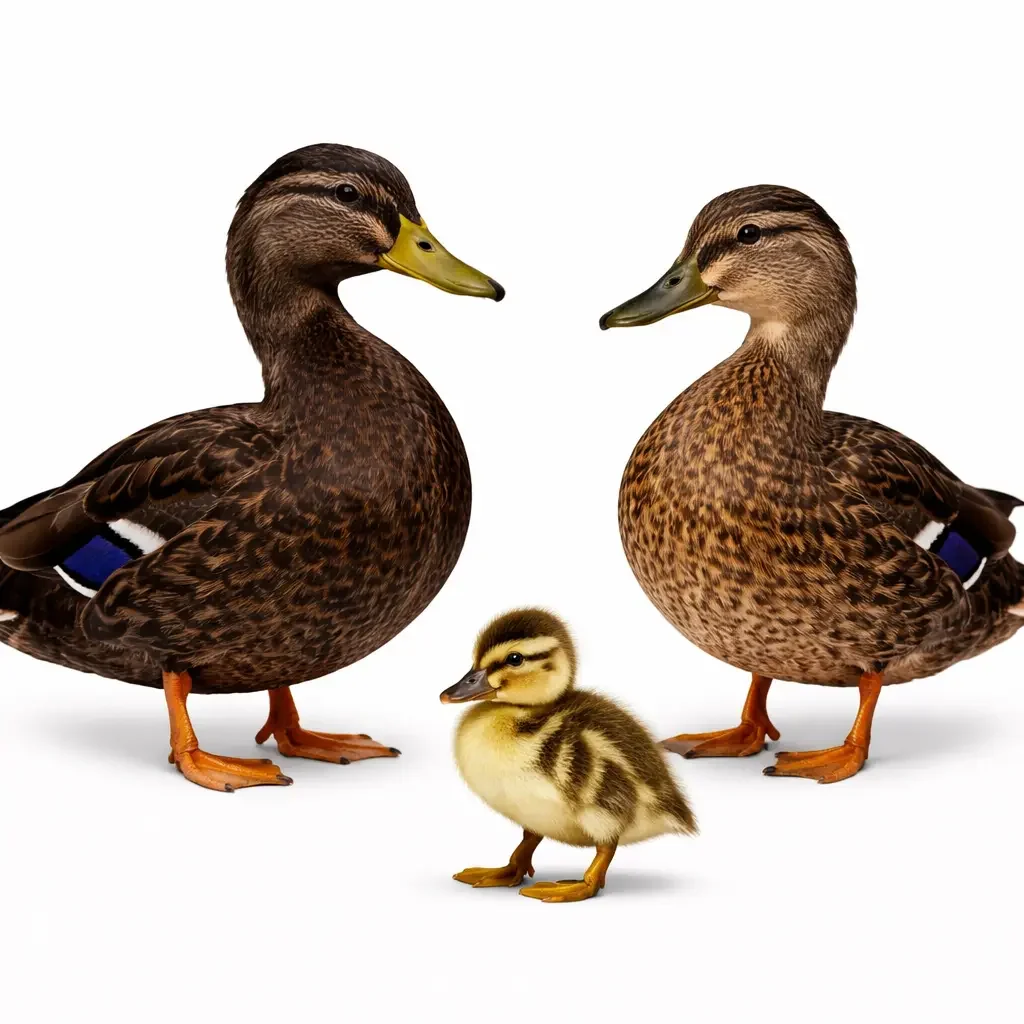
The American Black Duck is one of the most challenging and storied birds in North American waterfowl hunting. A close relative of the Mallard in genetics but worlds apart in temperament, the black duck is legendary for its wariness, its speed, and its tight association with the forested wetlands and coastal marshes of eastern North America. For Midwest hunters, it is a prize bird that appears in smaller numbers as a migrant, demanding more patience and more careful technique than most other dabblers. Its story is also one of the more compelling conservation narratives in waterfowl management, marked by decades of population decline, intensive research, and a cautious stabilization that continues to be monitored closely.
Quick Facts
Scientific Name: Anas rubripes
Class: Aves
Order: Anseriformes
Family: Anatidae
Average Weight: 2.0 to 3.5 pounds
Average Length: 21 to 23 inches
Wingspan: 34 to 37 inches
Lifespan: Up to 21 years recorded
Conservation Status: Least Concern (IUCN); population monitored closely due to long-term decline
Population Estimate: Approximately 900,000 birds (2024 Waterfowl Breeding Population Survey)
Primary Flyway: Atlantic Flyway (approximately 80 percent of U.S. harvest)
Breeding Region: Eastern Canada, Great Lakes, Adirondacks, northeastern United States
Image Section
Feature image: American Black Duck drake on open water, showing dark chocolate-brown plumage and olive-yellow billSecondary image: Black duck flushing from marsh edge, white underwings visibleThird image: Mixed flock of Black Ducks and Mallards on a northeastern wetland
Breed Overview
The American Black Duck is, in many respects, the eastern counterpart of the Mallard. Genetically the two species are nearly identical, and they hybridize freely wherever their ranges overlap, which is a persistent concern for researchers tracking the long-term integrity of the black duck gene pool. Despite this close relationship, the two birds behave quite differently in the field. The black duck is consistently described by hunters and biologists alike as significantly warier, faster-flushing, and more difficult to decoy than the Mallard. This reputation is well earned and is part of what gives the species its status as a prestige bird among serious eastern waterfowlers.
Plumage in both sexes is a deep, rich chocolate-brown overall, darker than a female Mallard but similar enough at a distance to cause confusion in mixed-species flocks. The head and neck are noticeably paler and grayer, finely streaked with dark brown, creating a two-toned appearance that separates the bird from a Mallard hen when viewed carefully. The bill is olive-yellow in drakes and duller olive-green in hens. The legs and feet are reddish-orange in males, olive-green to dull orange in females. In flight, the most reliable field mark is the flash of brilliant white underwings, which contrast sharply with the dark body and are visible at considerable distance. The speculum is iridescent purple-blue with a thin white border, similar to the Mallard but typically lacking the bold white borders on both sides.
Unlike most dabbling ducks, the sexes are very similar in plumage. There is no dramatic drake breeding plumage equivalent to the Mallard's green head. Males and females can be separated in hand by bill color and leg color, but in the field the distinction is subtle.
Hunting
Season and Timing
The American Black Duck is primarily an Atlantic Flyway bird. Roughly 80 percent of the total U.S. harvest occurs in the Atlantic Flyway, concentrated in coastal states from Maine south through Maryland and Virginia. The Chesapeake Bay and Delaware Bay region, particularly the marshes of the Eastern Shore of Maryland and coastal New Jersey, represents the center of black duck wintering concentration and the heart of dedicated black duck hunting culture in North America.
For Midwest hunters, black ducks are a less common encounter, appearing primarily as migrants through the Mississippi Flyway corridor, particularly along river systems and in the Great Lakes region. Illinois, Ohio, Michigan, and Indiana see the most consistent Midwest black duck activity. Hunters who encounter black ducks in the Midwest are typically doing so as an incidental addition to a Mallard-focused hunt rather than as a deliberate black duck expedition.
The daily bag limit for black ducks is two birds in most states and seasons, reflecting the population's long-term declining trend and continued monitoring. Limits are set annually and can change based on breeding population surveys. Confirming the current season's limit before hunting is essential.
Where to Hunt
Black ducks show a preference for more sheltered, wooded, and brushy wetland settings than the Mallard. In the eastern portion of their range, tidal marshes, brackish estuaries, beaver ponds, forested swamps, and boreal bogs are classic black duck habitat. They favor cover that provides concealment and escape routes, and they tend to avoid the large open marshes and agricultural edge habitat that concentrates Mallards in high numbers.
In the Midwest, migrant black ducks are most likely to appear in river backwaters, wooded floodplain sloughs, and vegetated lake edges rather than in open marsh habitat. Where beaver activity creates a network of small ponds within forested or brushy terrain, black ducks may linger during migration. They use agricultural fields less consistently than Mallards but will visit crop stubble in areas where wetland cover is adjacent.
Because black ducks frequently associate with Mallard flocks, hunters working standard Mallard habitat will occasionally encounter them as part of a mixed group. The challenge is identifying them in the flock before the shot and selecting them deliberately.
Difficulty
The American Black Duck is widely regarded as one of the most challenging ducks to hunt consistently in North America. The species has a reputation for extreme wariness that is deeply embedded in hunting culture, particularly among Atlantic Flyway hunters who have pursued black ducks across generations of increasingly pressured coastal marshes.
Black ducks flare from decoys that would bring Mallards in without hesitation. They respond poorly to aggressive calling and often circle wide before committing, giving them more opportunity to detect anything that seems wrong with a setup. The standard advice from experienced black duck hunters emphasizes fewer decoys, less calling, and tighter concealment than a typical Mallard setup requires. Hunting pressure causes black ducks to shift to nocturnal feeding patterns during the season, which further reduces daytime hunting opportunities in areas with consistent pressure.
For Midwest hunters, the occasional black duck that appears in a mixed Mallard flock may not exhibit the full degree of wariness associated with heavily pressured Atlantic Flyway birds, but the species' natural caution remains a factor and rewards hunters who pay attention to the difference.
Decoys and Calling
Black duck hunters in dedicated pursuit of the species typically run smaller, more conservative spreads than standard Mallard setups. A dozen to two dozen decoys in natural configurations is often more productive than large spreads that can appear unnatural in the wooded, intimate settings black ducks prefer. Dark-colored Mallard hen decoys serve adequately in a pinch, though black duck-specific decoys offer better visual accuracy.
Calling black ducks requires restraint. The aggressive hail calls and feeding chuckles that pull Mallards across a marsh can spook black ducks at distance. A softer, more subtle approach with longer pauses between calls is the standard technique. When birds are working and showing interest, silence is often more productive than continued calling. The general rule among experienced black duck hunters is to call less than you think you need to.
Meat Quality
American Black Ducks are excellent table fare. Their flavor depends significantly on diet, which varies between habitat types. Birds feeding in freshwater settings on aquatic vegetation, seeds, and invertebrates produce mild, clean meat comparable to a Mallard. Birds feeding heavily in coastal brackish and saltwater habitat on mollusks and crustaceans can carry a stronger, more pronounced flavor. Knowing where your birds have been feeding is useful information when planning preparation.
Best Preparations
Black ducks are large, meaty birds that hold up well to roasting, braising, and pan preparation. Whole roasted black duck is a classic presentation in Atlantic Flyway hunting culture, particularly when the birds have been feeding on aquatic vegetation and produce mild, clean meat. A simple preparation with aromatics, citrus, and high heat suits freshwater birds well. Birds with a stronger coastal flavor benefit from marinating and longer, lower-heat preparations that mellow the meat.
Breast fillets pan-seared to medium-rare over high heat with butter and herbs are a reliable approach for any black duck regardless of diet. Duck confit is another outstanding use of the species, as the larger size of the black duck relative to teal produces more substantial portions.
Because the black duck is a restricted-limit bird, most hunters treat each bird as a premium product worth preparing with care rather than as casual camp food.
Behavior and Identification
In mixed flocks with Mallards, black ducks hide in plain sight. At distance they can appear to be nothing more than female Mallards, and many are passed over by hunters who do not take a second look. The key field marks to check are the overall darkness of the body, which is a richer, deeper chocolate-brown than a Mallard hen, the paler and more distinctly gray-streaked head, and the olive-yellow bill rather than the orange-and-brown bill of a Mallard hen. In flight, the white underwing flash is the fastest and most reliable identification mark and is visible from a considerable distance in good light.
The voice of the American Black Duck is nearly identical to the Mallard, with hens producing the familiar series of descending quacks. This similarity in call contributes to the species being underidentified in mixed flocks.
Black ducks are dabbling feeders that tip up and surface-feed in shallow water. Their diet in freshwater settings runs heavily toward aquatic vegetation, seeds, invertebrates, and occasional small amphibians. In coastal settings they shift substantially toward mollusks and crustaceans. They are active both day and night and increase nocturnal feeding significantly under hunting pressure.
Hybridization with Mallards is pervasive across the species' range and has been an ongoing research subject for decades. Biologists now designate harvested birds on a spectrum from pure black duck through various hybrid grades to pure Mallard. Plumage alone is no longer considered a reliable method for distinguishing pure black ducks from hybrids in the field or hand, which has led to large-scale genetic monitoring programs. For hunters, the practical guidance is to look for the full suite of black duck characteristics rather than relying on a single plumage feature.
Climate and Range
The American Black Duck is an eastern North American species with a breeding range centered in the boreal and mixed-wood forests of eastern Canada, the Great Lakes basin, and the northeastern United States. Significant breeding populations occur in Ontario, Quebec, the Maritime Provinces, Newfoundland, and portions of New England. The Great Lakes region produces a notable share of the continental population and represents the western edge of consistent breeding activity.
Migration routes follow the Atlantic Flyway south to wintering areas along the Atlantic and Gulf coasts, with the Delaware Bay and Chesapeake Bay systems serving as the primary wintering concentration areas. Inland populations winter across the east-central United States in freshwater wetlands, river backwaters, and flooded timber settings. Some birds in the Great Lakes region remain year-round where open water persists.
The American Black Duck has experienced a long-term population decline estimated at roughly 84 percent over the sixty years following the mid-twentieth century peak. Population monitoring through the annual Waterfowl Breeding Population and Habitat Survey indicates a stabilization beginning in the 1990s, with the 2024 survey estimating approximately 900,000 birds. The two-bird daily bag limit in most states reflects ongoing caution.
Habitat loss along the Atlantic Coast, including the degradation and loss of tidal marshes, is the primary documented threat. Rising sea levels represent a long-term concern for the coastal salt marsh habitat the species depends on heavily in winter. Hybridization with Mallards continues to be studied as an additional population-level concern.
Homestead Suitability and Pond Management
American Black Ducks cannot be legally kept as pets or domestic birds. They are protected under the Migratory Bird Treaty Act.
For Midwest homesteaders, the American Black Duck is primarily a migration visitor rather than a resident breeding species. Properties in the Great Lakes states and along major river corridors of the eastern Midwest have the best prospects for attracting black ducks during spring and fall migration.
Black ducks respond to habitat that differs somewhat from standard Mallard-focused management. They favor more wooded, sheltered, and brushy settings over large open marshes. A pond with heavy adjacent cover, beaver-influenced hydrology, or a forested wetland character is more likely to attract migrating black ducks than a large open impoundment. If your property includes backwater sloughs, oxbow lakes, or wooded swamp habitat, that ground is worth monitoring for black ducks during migration.
Because of the species' restricted status and ongoing conservation concern, any black duck use of your property is worth noting and reporting to state wildlife agencies if they are conducting local monitoring or banding programs.
Pros and Cons
Pros
One of the most prestigious and sought-after ducks in eastern waterfowl hunting culture
Large, meaty bird with excellent table fare when prepared correctly
Extreme wariness makes each harvested bird a genuine achievement
Striking in the bag with distinctive dark plumage and white underwings
Closely tied to the conservation and hunting heritage of the Atlantic Flyway
Cons
Primarily an Atlantic Flyway species; Midwest hunters encounter them in limited numbers
Two-bird daily bag limit reflects ongoing population concern and reduces harvest opportunity
Extremely wary and difficult to decoy, requiring more refined technique than most dabblers
Hybridization with Mallards creates identification challenges in mixed flocks
Long-term population decline, though currently stabilized, warrants continued conservation attention
Coastal habitat dependence makes the species vulnerable to sea level rise and marsh loss
Profitability Note
Wild American Black Ducks cannot be commercially harvested or sold. All value from this species is recreational, ecological, or conservation-based. Hunting lease income on properties with documented black duck migration use in the Great Lakes and eastern Midwest can be meaningful, particularly for waterfowlers specifically seeking this species. Participation in federal and state banding programs and genetic monitoring efforts such as the DuckDNA project provides conservation value for landowners and hunters who recover banded birds or submit samples.
Comparison With Related Species
Mallard: The Mallard is the American Black Duck's closest genetic relative and the species most likely to be confused with it in the field. The two hybridize freely, share nearly identical calls, and frequently flock together. The Mallard is a more abundant, less wary, and more widely distributed bird across the Midwest. Drake Mallards are instantly recognizable by their iridescent green heads, but Mallard hens can be confused with Black Ducks at distance. The white underwing flash, darker overall coloration, and olive-yellow bill separate the Black Duck. See the Mallard guide for a full comparison.
Mottled Duck: The Mottled Duck occupies a similar ecological niche in the Gulf Coast region that the Black Duck occupies in the Northeast, serving as the local non-migratory counterpart to the Mallard in its region. Both the Black Duck and Mottled Duck face hybridization pressure from expanding Mallard populations. Neither species is a significant Midwest bird, though the Black Duck is the more likely of the two to appear in Midwest migration. See the Mottled Duck guide for a full comparison.
Gadwall: The Gadwall is another subtly plumaged dabbling duck that hunts well in similar wetland settings and carries comparable table quality. The Gadwall is far more common across the Midwest, considerably less wary, and not subject to the same restricted bag limits. At distance, both species can appear as plain brown ducks in mixed flocks, but the Gadwall's white speculum patch, visible in flight, is a reliable separation mark. See the Gadwall guide for a full comparison.
Northern Pintail: The Pintail shares the Black Duck's reputation for extreme wariness and restricted bag limits tied to population concern. Both species carry a premium status in waterfowl hunting culture, and both reward hunters who invest in refined technique over aggressive calling and large decoy spreads. The Pintail is a longer, more elegantly built bird with very different plumage. See the Northern Pintail guide for a full comparison.
Final Verdict
The American Black Duck is the duck hunter's duck in the eastern tradition of waterfowling. It is not an easy bird, not an abundant bird in the Midwest, and not one that forgives sloppy technique or overconfident setups. For hunters who encounter black ducks on Mississippi Flyway hunts through the Great Lakes corridor, it is a prize worth knowing. For those who travel to the Atlantic Flyway specifically to pursue them in tidal marsh and brackish bay settings, it represents one of the purest and most demanding experiences in North American waterfowl hunting. Its conservation story is a sobering reminder of how quickly a once-abundant species can decline, and a testament to what careful management, reduced limits, and habitat investment can accomplish.
Frequently Asked Questions
How do I tell an American Black Duck from a female Mallard? Look for the overall darkness of the body, which is a deeper chocolate-brown rather than the warmer tan-brown of a Mallard hen. The head is paler and more distinctly grayish. The bill on a Black Duck is olive-yellow, while a Mallard hen carries an orange and brown bill. In flight, the white underwing flash on a Black Duck is the fastest and most reliable field mark.
What is the bag limit for American Black Ducks? Most states set the daily bag limit at two birds. Limits are reviewed and set annually, so confirming the current season's regulations with your state wildlife agency before hunting is important.
Are American Black Ducks common in the Midwest? They are not. The species is primarily an Atlantic Flyway bird. Midwest hunters may encounter them as migrants in the Great Lakes states and along major river corridors, but they appear in much smaller numbers than in the eastern portion of their range.
Why are American Black Duck numbers lower than they used to be? The population declined roughly 84 percent from mid-twentieth century peaks. Habitat loss, particularly of eastern coastal marshes, was the primary documented cause. Hybridization with Mallards and historical overharvest contributed as well. Population stabilization has been documented since the 1990s, with current estimates around 900,000 birds.
Do American Black Ducks respond to standard Mallard calls? They share the same general vocabulary as Mallards, but standard aggressive calling often spooks black ducks. A softer, more restrained approach with fewer calls and longer pauses produces better results.
Can I keep an American Black Duck as a pet or for my homestead? No. They are federally protected under the Migratory Bird Treaty Act and cannot be kept without special federal permits.