
Mottled Duck
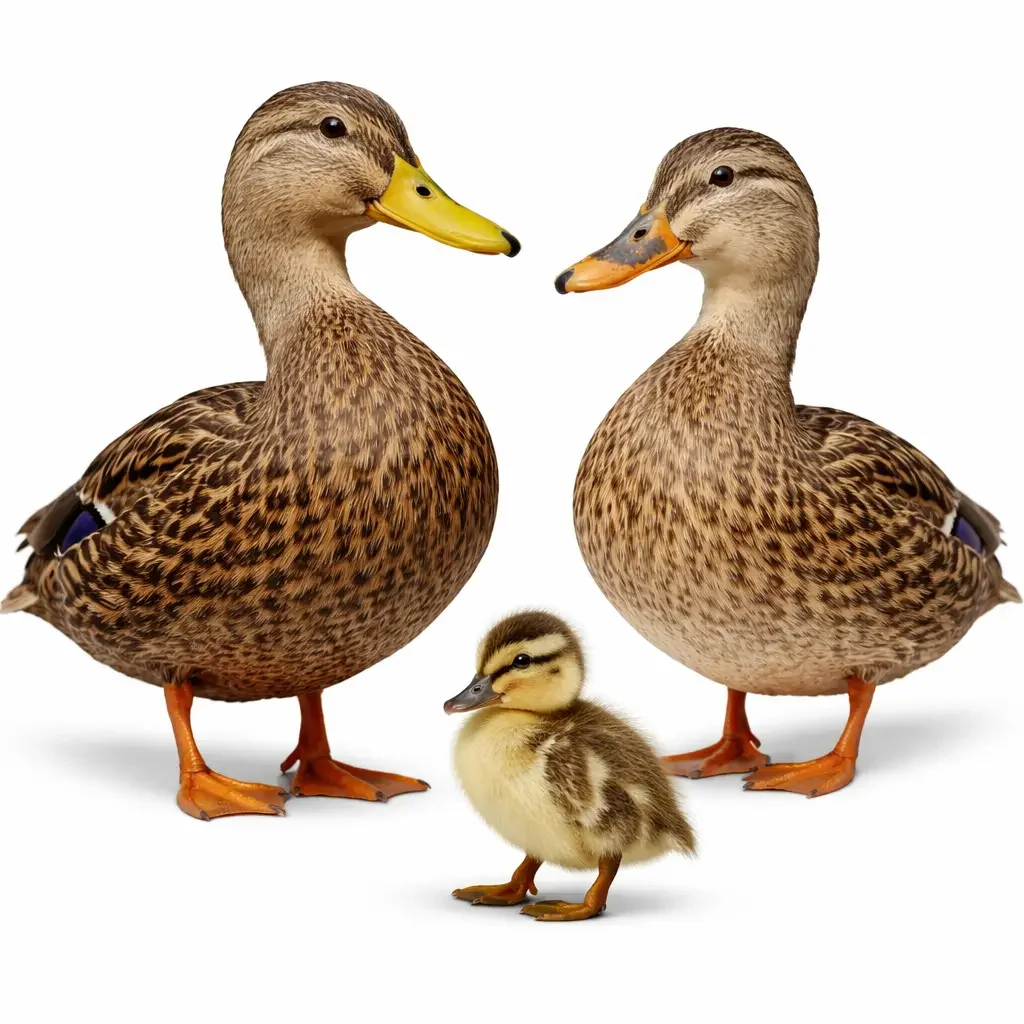
The Mottled Duck is one of North America's least known and most quietly threatened waterfowl species. It is not a bird that migrates through the Midwest, and most waterfowl hunters in the Great Plains will never encounter one in the field. However, building a complete foundation of North American waterfowl knowledge means understanding this unique Gulf Coast resident, its biology, its conservation challenges, and why it matters to the broader story of waterfowl management on the continent.
Quick Facts
Breed Type: Wild Duck
Purpose: Hunting (Gulf Coast states only), Wildlife Observation, Conservation Reference
Origin: North America, year-round resident of the Gulf Coast and Florida
Egg Production: Not applicable (wild species)
Egg Color: Buff to olive-gray, laid in ground nests in marsh vegetation
Adult Weight: Drake 1.8 to 2.9 lbs, Hen slightly lighter
Temperament: Wary and alert, travels in pairs or small groups rather than large flocks
Hardiness: Non-migratory, adapted to year-round Gulf Coast marsh and wetland conditions
Broodiness: Moderate to high, males remain with females longer than most dabbling ducks
Lifespan: Up to 13 years in the wild
Image Section
Main Image: Mottled Duck pair in shallow Gulf Coast marsh habitat, yellow-olive bill of the drake visible, 1024x1024, white or transparent background.
Breed Overview
The Mottled Duck, known scientifically as Anas fulvigula, is a medium-sized dabbling duck that occupies a unique ecological position in North American waterfowl. Unlike nearly every other duck covered in this guide series, it does not migrate. It is a year-round resident of the Gulf Coast and Florida, living its entire life within a relatively small home range of approximately 40 square miles. This non-migratory lifestyle makes it one of the most locally adapted and regionally specific waterfowl species on the continent.
There are two recognized subspecies. The Gulf Coast Mottled Duck, known as Anas fulvigula maculosa, occupies the coastal marshes, rice fields, and wetlands from northern Mexico through Louisiana, Texas, and into Alabama. The Florida Mottled Duck, Anas fulvigula fulvigula, is found in peninsular Florida and is lighter in color overall. Both subspecies were introduced to coastal South Carolina and Georgia in the 1970s and 1980s where they have since established breeding populations.
In appearance, the Mottled Duck sits precisely between a female Mallard and an American Black Duck. Both sexes share the same mottled brown plumage, darker overall than a hen Mallard but lighter than a Black Duck. The most reliable field marks are the plain, unstreaked buff throat, the bluish-green speculum without the broad white borders found on Mallard, and the bill color which is olive to yellow on males and orange with dark spotting on females. A black spot at the gape of the bill on both sexes is a useful close-range identification feature.
The species has declined approximately 72 percent since 1966, making it one of the most significantly declining resident waterfowl species in North America. The primary threats are wetland drainage, coastal marsh erosion and saltwater intrusion, urban development across its range, and critically, hybridization with feral Mallards released into its range. In Florida, an estimated 10 percent of the population now carries Mallard genetic material from released pet and farm ducks, a threat that conservationists consider potentially more damaging to the long-term survival of the species than habitat loss alone.
Geographic Range and Midwest Relevance
It must be stated clearly for Midwest readers: the Mottled Duck does not occur in the Midwest or Great Plains under normal circumstances. It is a Gulf Coast and Florida resident that has no migratory connection to the prairie and wetland systems of the Dakotas, Minnesota, Iowa, or Nebraska. Extremely rare vagrant individuals have been documented in the interior of North America, but these are exceptional occurrences rather than a regular part of the species' natural history.
For Midwest homesteaders and hunters, the Mottled Duck is relevant primarily as reference knowledge, as a species that appears in North American waterfowl regulations and identification guides, and as a reminder of the diversity of ecological niches that different duck species occupy across the continent. Anyone planning a hunting trip to the Gulf Coast states or Florida will need to know this bird for legal identification purposes given its restricted bag limit.
Hunting the Mottled Duck
Where It Is Hunted
Mottled Ducks are hunted in Florida, Louisiana, Texas, and the Gulf Coast states where they reside year-round. They are not available to hunters outside this range under normal circumstances. The species is one of the most frequently banded waterfowl along the Gulf Coast precisely because of its non-migratory nature, with approximately one in every twenty Mottled Ducks carrying a band. This high banding rate makes a banded Mottled Duck a genuinely prized harvest among Gulf Coast waterfowlers.
Season and Bag Limits
The Mottled Duck is subject to a species-specific daily bag limit of one bird in most states where it occurs. In Florida this limit is strictly enforced and the species is clearly called out in state regulations. In Texas and Louisiana it is included in the category of dusky ducks alongside Mexican Ducks, American Black Ducks, and their hybrids, with a combined daily limit of one bird. In some years Texas regulations have closed the first several days of the regular duck season to dusky duck harvest specifically to reduce the risk of misidentification when birds are in confusing plumage.
This one-bird limit reflects genuine conservation concern about the declining population. Hunters in the Gulf Coast states are expected to identify Mottled Ducks with confidence before shooting, which requires familiarity with the subtle differences between this species and female Mallards and their hybrids.
Identification Challenges
The most important identification challenge for Gulf Coast hunters is distinguishing pure Mottled Ducks from Mallard-Mottled Duck hybrids, sometimes called Muddled Ducks in Florida. Pure Mottled Ducks have a clean, unstreaked buff throat, a bluish-green speculum without white borders, and the characteristic gape spot on the bill. Any white bordering on the speculum, streaking on the throat, or green iridescence on the head of an otherwise brown duck should trigger caution and careful identification before shooting.
Difficulty of Hunting
Mottled Ducks are considered moderately challenging to hunt. They tend to travel in pairs or small groups rather than the large flocks that make other dabbling ducks easier to attract, which means decoy spreads that work well for mallards may be less effective for Mottled Ducks specifically. They are wary birds with good awareness of their surroundings, particularly late in the season after hunting pressure has educated them. Gulf Coast hunters typically use standard puddle duck setups in shallow marsh edges, rice fields, and flooded agricultural areas.
Meat Quality
Mottled Duck is generally well regarded as table fare among Gulf Coast hunters who have experience with the species. Their diet of aquatic seeds, grasses, rice, invertebrates, and crayfish produces meat with a flavor profile similar to a mallard, mild and clean with a slightly richer quality from birds feeding in rice and grain areas. Birds feeding heavily on crayfish or aquatic invertebrates in marsh environments can have a slightly stronger flavor but are still considered acceptable with proper preparation.
Standard dabbling duck preparations work well. Pan-searing to medium-rare, slow cooking in gumbo or etouffee, and braising with Cajun-influenced seasonings are traditional Gulf Coast preparations that showcase the bird's flavor. Duck and rice dishes are a natural pairing given how heavily Mottled Ducks feed in rice production areas of Louisiana and Texas.
Behavior and Identification
The Mottled Duck is one of the few North American dabbling ducks in which both sexes share similar plumage, with no dramatically different breeding plumage on the male. Both sexes are mottled brown overall, with the male distinguishable primarily by his olive to yellow bill and slightly darker overall coloration. This similarity between sexes is unusual in the dabbling duck world and is a trait shared with the closely related American Black Duck and Mexican Duck.
The species forms pair bonds earlier than most other ducks, typically by November, and pairs remain together well into the incubation period with males staying with their mates longer than in most other dabbling duck species. They are not gregarious outside the breeding season the way most dabbling ducks are, preferring to move in pairs or groups of four to six birds rather than the large flocks characteristic of mallards, teal, and pintails.
They are primarily diurnal, active between dawn and dusk, and feed by dabbling in very shallow water of six inches or less. Their foraging technique includes the typical dabbling duck tip-up posture as well as grazing on land along marsh edges.
Conservation Status and Threats
The Mottled Duck's conservation story is one of the more urgent in North American waterfowl. The 72 percent population decline since 1966 places it among the most seriously declining resident waterfowl species on the continent. The Continental Concern Score assigned by conservation organizations rates it 17 out of 20, a level that indicates serious management attention is required.
The three primary threats operating simultaneously are habitat loss, coastal marsh degradation, and Mallard hybridization. Wetland drainage and urban development have eliminated significant portions of the freshwater marsh and rice field habitat that the species depends on throughout its range. Coastal erosion and saltwater intrusion driven by sea level rise and subsidence are degrading the brackish and intermediate marshes of Louisiana and Texas where Gulf Coast birds breed. Most urgently, the widespread release of Mallards as pets and farm ducks into the species' range creates ongoing genetic dilution of wild populations through interbreeding, particularly in Florida.
Conservation actions include protecting and restoring coastal freshwater marshes, discouraging the release of Mallards in Gulf Coast and Florida wetland areas, and maintaining carefully managed hunting seasons with strict identification requirements to minimize inadvertent harvest of the species.
Homestead Suitability and Pond Management
The Mottled Duck has no direct relevance to Midwest homestead pond management. It is a Gulf Coast endemic that will not appear on prairie ponds or woodland wetlands in the central United States regardless of how the habitat is managed.
For homesteaders located in the Gulf Coast states of Texas, Louisiana, or Florida, the Mottled Duck is a potential resident species on properties with suitable shallow freshwater or brackish wetland habitat. On Gulf Coast properties, maintaining shallow freshwater marshes, rice fields, and wetland edges with abundant emergent vegetation directly supports Mottled Duck use. Avoiding the release of Mallards or Mallard-derived farm ducks anywhere near coastal wetlands is one of the most important conservation actions a Gulf Coast landowner can take to protect the purity of local Mottled Duck populations.
Pros and Cons
Pros
The Mottled Duck is a genuinely unique species with an interesting non-migratory life history unlike most North American waterfowl. For Gulf Coast hunters it offers a year-round resident bird that is one of the most frequently banded waterfowl on the continent, making a banded harvest a distinctive trophy. Meat quality is good and comparable to mallard. The species' dependence on Gulf Coast wetland ecosystems gives Gulf Coast landowners a direct conservation role through habitat management.
Cons
The species does not occur in the Midwest and has no relevance to hunters or homesteaders outside the Gulf Coast and Florida. The one-bird daily bag limit significantly restricts harvest even for hunters in its range. Identification challenges from Mallard hybridization create real legal and ethical complexity in the field. The declining population trend is concerning and may lead to further restrictions in future seasons. The species is vulnerable to sea level rise, coastal erosion, and continued habitat loss across its limited range.
Profitability Note
As a wild and federally protected migratory species the Mottled Duck cannot be commercially sold. For Gulf Coast landowners, properties with quality shallow freshwater marsh and rice field habitat that supports Mottled Duck populations can carry conservation value and, in some cases, hunting lease income where populations are healthy enough to support managed harvest. The profitability section applies fully when this guide series covers domestic duck breeds.
Comparison With Related Species
Mottled Duck vs Female Mallard
The female Mallard is the species most commonly confused with the Mottled Duck in the field. The Mottled Duck is darker overall, has a plain unstreaked buff throat rather than the streaked throat of a hen Mallard, and lacks the white borders on the speculum that the Mallard shows clearly in flight. The Mallard hen also has a more orange-heavy bill with dark markings compared to the Mottled Duck's olive-yellow or orange bill with the distinctive gape spot.
Mottled Duck vs American Black Duck
The American Black Duck is the darkest of the three related species and the easiest to separate from the Mottled Duck at a distance. The Black Duck's body is a deep chocolate brown that appears nearly black on the water, significantly darker than the Mottled Duck's lighter mottled brown plumage. The speculum of the Black Duck is purple rather than the bluish-green of the Mottled Duck. The ranges of these two species overlap minimally under normal circumstances.
Mottled Duck vs Mexican Duck
The Mexican Duck occupies the Rio Grande valley and southwestern wetlands and is the closest relative to the Mottled Duck based on molecular studies. It is slightly darker than the Mottled Duck and shares the non-migratory or minimally migratory lifestyle. The two species have limited range overlap but are sometimes encountered together in the lower Rio Grande valley of Texas.
Final Verdict
The Mottled Duck belongs in every serious waterfowler's reference knowledge even if it will never appear in a Midwest hunter's blind. It represents a fascinating example of a dabbling duck that evolved to fill a non-migratory resident niche in the Gulf Coast ecosystem, and its conservation story is an important reminder that waterfowl management challenges extend far beyond the celebrated species of the prairie flyways. For anyone planning Gulf Coast hunting trips, the ability to confidently identify this species and understand its one-bird bag limit is a genuine practical need. For everyone else, it rounds out an honest and complete picture of North American waterfowl diversity.
Frequently Asked Questions
Does the Mottled Duck ever appear in the Midwest?
Extremely rare vagrant individuals have been documented in the interior of North America but these are exceptional occurrences. Under normal circumstances the Mottled Duck does not migrate and will not be encountered in Midwest or Great Plains wetlands. It is a Gulf Coast and Florida resident species with no regular migratory connection to the prairie flyway system.
How do I identify a Mottled Duck in the field?
The key field marks are the plain, unstreaked buff throat, the bluish-green speculum without white borders, the olive to yellow bill on males or orange bill with dark spotting on females, and the black gape spot present on both sexes. The overall plumage is darker than a hen Mallard but lighter than an American Black Duck, placing it visually between those two species.
Why is the Mottled Duck bag limit only one bird?
The strict one-bird daily bag limit reflects genuine conservation concern about the species' long-term population decline. The population has fallen approximately 72 percent since 1966, driven by habitat loss, coastal marsh degradation, and hybridization with feral Mallards. Careful harvest management is considered essential to prevent further population stress while maintaining a regulated hunting season.
What is the biggest threat to Mottled Duck populations?
Mallard hybridization is considered by many biologists to be the most insidious long-term threat. Feral and farm-raised Mallards released into Gulf Coast and Florida wetlands interbreed with wild Mottled Ducks, gradually diluting the genetic integrity of the wild population. In Florida approximately 10 percent of the Mottled Duck population is estimated to carry Mallard genetic material. Coastal marsh habitat loss and urban development are also major ongoing threats.
Are Mottled Ducks good to eat?
Yes, Mottled Duck is considered good table fare by Gulf Coast hunters, comparable in quality to Mallard. Birds feeding in rice and grain areas produce particularly mild, clean meat. Standard dabbling duck preparations work well, with Cajun-influenced gumbo, etouffee, and duck-and-rice dishes being traditional and popular regional preparations.
Can Mottled Ducks be attracted to Gulf Coast homestead ponds?
Yes, for properties in Texas, Louisiana, or Florida with shallow freshwater or brackish wetland habitat. Maintaining water depths of six inches or less in some areas, preserving emergent vegetation along pond margins, and avoiding the release of any Mallards or farm ducks near the property are the most important steps. Mottled Ducks are territorial within their home range and a pair that establishes a territory on your property may use it year-round.