
Muscovy Duck
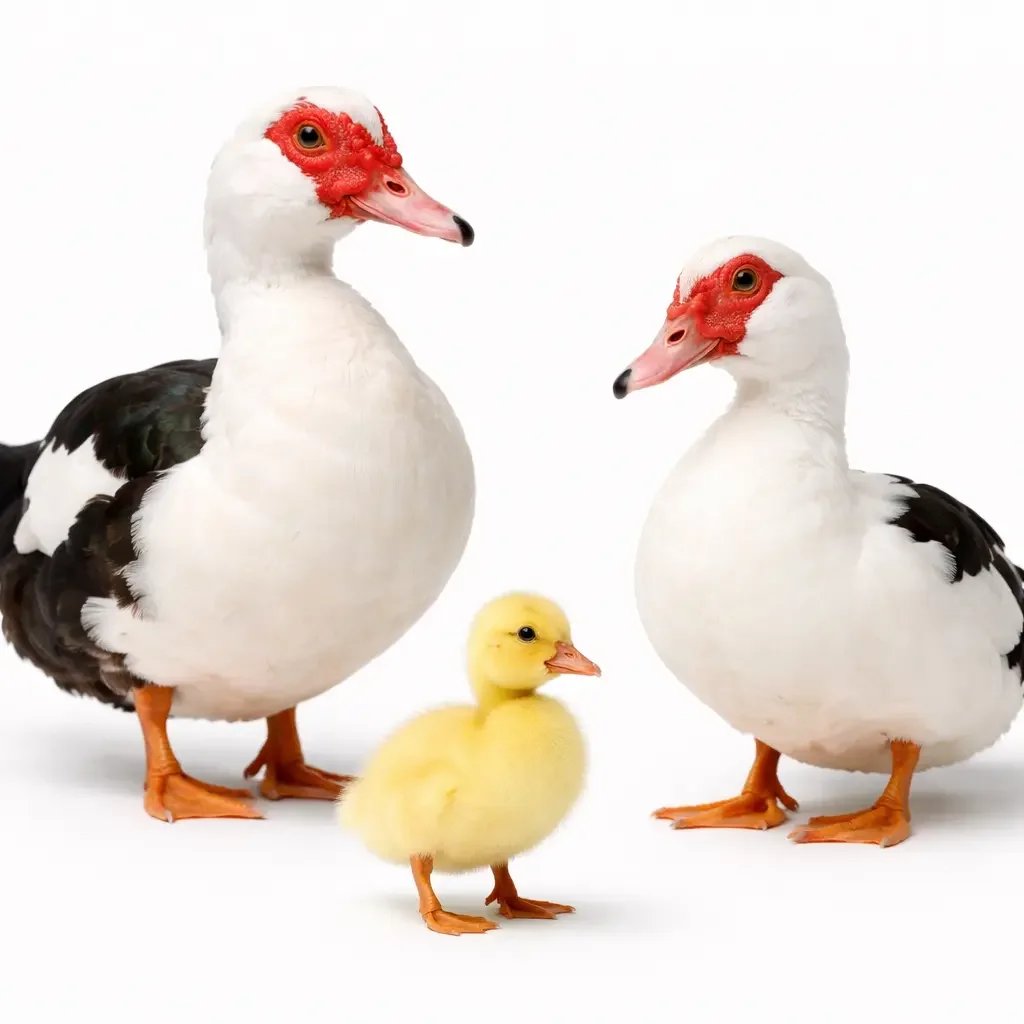
The Muscovy Duck is the most unusual domestic duck in the world, and arguably the most useful. It is not descended from the Mallard like every other domestic duck breed. It does not quack. It can fly. It hunts mice. It catches thirty times more houseflies than commercial flytraps in documented research. It produces lean, richly flavored meat that five-star restaurants in France and beyond serve under the name Barbary duck, and that many experienced cooks genuinely compare to steak rather than poultry. Its hens are among the most devoted, self-sufficient brooding mothers in all of domestic waterfowl, capable of raising two to three clutches per year without incubator support. And it does all of this while being one of the quietest domestic duck breeds in existence, making it suitable for settings where the persistent quacking of Mallard-derived breeds would create problems. The Muscovy is not the right duck for every homesteader. It is the right duck for homesteaders who want the most self-sufficient, highest-quality meat producer in the domestic duck category, and who are willing to understand a genuinely different kind of bird before they commit to it.
Quick Facts
Scientific Name: Cairina moschata (domestic); distinct from all Mallard-derived breeds
Class: Heavyweight
Weight: Drakes 10 to 15 pounds; hens 6 to 7 pounds (drakes are dramatically larger than hens, more so than any other domestic duck breed)
Egg Production: 60 to 120 eggs per year in seasonal clutches; some hens reach 150
Egg Color: Cream to white
Egg Size: Extra-large; very high albumen content relative to other duck eggs
Primary Purpose: Meat; pest control; dual purpose
Temperament: Generally calm and curious; drakes can be aggressive during breeding season; hens are devoted mothers and can be protective of ducklings
Brooding: Exceptional; one of the most reliable natural brooding breeds available; hens will set and raise two to three clutches per year
Conservation Status: Not on conservation lists; globally common in both domestic and feral populations
APA Recognition: Accepted 1874
Country of Origin: Mexico, Central America, and South America; domesticated by indigenous peoples before European contact
Incubation Period: 33 to 35 days (longer than all Mallard-derived domestic ducks at 28 days)
Lifespan: 8 to 12 years; some individuals reach 20 years in protected environments
Image Section
Feature image: Muscovy drake showing iridescent black-green plumage, red caruncles, and powerful frameSecondary image: Muscovy hen with her brood of ducklingsThird image: White Muscovy duck on pasture showing the breed's broad, powerful body
Breed Overview
The Muscovy Duck occupies a unique position in the domestic duck world. While every other domesticated duck breed, from the Pekin to the Welsh Harlequin to the Rouen, descends from the wild Mallard, the Muscovy is a separate species entirely: Cairina moschata, native to the tropical forests of Mexico, Central America, and South America. Indigenous peoples of the Americas had domesticated the Muscovy long before European contact, breeding it as a primary meat source across much of its native range. When Christopher Columbus arrived in the Americas, he encountered already-domesticated Muscovies and brought them back to Spain. From there, the breed spread across Europe, where it was valued for its lean, flavorful meat, and eventually worldwide.
The name Muscovy has no connection to Moscow or Russia despite what the name implies. The most commonly accepted explanation is that the breed was traded through England and France by a company called the Muscovy Company, also known as the Muscovite trading company, which held trade rights with Russia in the sixteenth century. The ducks were associated with the company's name through the trading networks rather than the geographic origin, and the name stuck. The breed's actual origin is entirely in the New World.
The genetic distance between the Muscovy and all Mallard-derived ducks is significant enough that when a Muscovy mates with any common domestic duck, the offspring are sterile hybrids. This cross-species hybrid is called a Moulard or Mulard duck and is deliberately produced commercially, particularly in France, for foie gras production and for the large, lean Magret duck breast prized in French cuisine. The Moulard combines the Muscovy's lean breast muscle mass with the Pekin's rapid growth rate, producing a sterile hybrid specifically for meat production that cannot reproduce. Homesteaders who want a self-sustaining meat flock must keep purebred Muscovies; Moulards are a one-generation production tool.
The wild Muscovy is a perching, cavity-nesting duck that roosts in trees and nests in tree hollows, a behavior retained in domesticated birds. Unlike all Mallard-derived domestic ducks, Muscovies have functional claws on their webbed feet that allow them to grip branches and climb into elevated nest sites. Domestic Muscovies retain the ability to fly, particularly the lighter hens, which distinguishes them from virtually all other domestic duck breeds and requires wing clipping or covered runs if confinement is necessary.
Plumage and Appearance
The Muscovy's appearance is unlike any other domestic duck. The most immediately distinctive feature is the red carunculate facial skin: warty, bumpy, bright red skin that surrounds the eyes, covers the base of the bill, and extends more or less prominently across the face depending on sex and age. Drakes develop dramatically more extensive caruncle development than hens; a mature Muscovy drake's facial caruncles can extend from the bill base across the cheeks and down part of the neck in a bold, fleshy mask. Hens carry a more subtle, masquerade-like ring of caruncle tissue around the eyes that is less immediately striking.
The body is large, broad, and powerful. Drakes are dramatically larger than hens, a degree of sexual dimorphism unusual in domestic ducks. A mature drake weighing twelve to fifteen pounds is more than twice the size of an average hen at six to seven pounds. The body carriage is roughly horizontal with a broad, flat tail held at a characteristic slight upward angle. The head is large and oval, the neck medium-length and slightly thick, and the body long and wide with substantial breast development that reflects the breed's meat production heritage.
Plumage comes in a wide range of colors including the natural wild-type black with iridescent green sheening, white, blue, black and white pied, chocolate, lavender, bronze, barred, and various combinations. White and black-and-white pied are the most common commercial colors. The iridescent black-green of the wild-type drake is one of the most striking plumage effects in domestic waterfowl when seen in good light.
Muscovies wag their tails in a manner more reminiscent of dogs than ducks, a distinctive behavioral quirk that experienced keepers describe as an expression of mood and animation. A happy, animated Muscovy wags with surprising enthusiasm.
Egg Production
Muscovy egg production is seasonal and fundamentally different in character from the continuous laying pattern of Mallard-derived breeds. Muscovy hens do not lay continuously through a season. Instead, they lay a clutch of fifteen to twenty eggs, then go broody and incubate that clutch whether or not the eggs are removed. After raising or losing the clutch, they return to laying and repeat the cycle. A productive hen cycles through two to three clutches per laying season, which runs approximately February through August in the Midwest, for a total annual production of sixty to one hundred twenty eggs per year, with particularly productive individual hens reaching one hundred fifty.
This laying pattern means Muscovies are not the correct choice for homesteaders whose primary goal is sustained maximum egg production. The Welsh Harlequin, Khaki Campbell, or Indian Runner will outlay a Muscovy by two to three times or more across the full calendar year. However, the Muscovy's eggs are notably large with a higher albumen-to-yolk ratio than most other duck eggs, making them particularly valued for baking applications where the additional egg white produces lighter, fluffier results. One Muscovy egg can substitute for two or three chicken eggs in baking recipes.
The incubation period of thirty-three to thirty-five days is seven days longer than the standard twenty-eight-day incubation of all Mallard-derived domestic ducks. This extended period is important for homesteaders who use incubators, as the standard settings and timing for common domestic duck breeds do not apply to Muscovy eggs.
Meat Quality
Muscovy meat is the premium product of the domestic duck category. It is leaner than any other domestic duck, with the meat itself described as approximately ninety-eight percent fat-free, producing a flavor profile that experienced cooks and food writers consistently compare to steak, lean ham, or veal rather than typical poultry. The breast muscle is large, dense, and deeply colored in a rich dark red rather than the pale, fatty breast of a commercial Pekin. The texture is firm rather than loose and fatty, and the flavor is intense without the gaminess associated with wild ducks.
In French cuisine, Muscovy breast meat raised to a specific production standard is marketed as Magret de Canard, a premium product commanding high prices in restaurants and retail markets worldwide. The French Moulard cross between Muscovy and Pekin is the foundation of foie gras production. European chefs and culinary professionals have worked with Muscovy meat for centuries and regard it as the superior domestic duck product. American homesteaders who raise Muscovies for direct market sales to restaurants and informed consumers access a premium product that commands prices well above commercial Pekin.
Drakes reach a live weight of ten to fifteen pounds at full maturity, providing a very substantial carcass. Processing at ten to twelve weeks provides a lean, moderate-sized bird of good eating quality. Carrying birds to full maturity at six to eight months provides a larger, more developed carcass. The slow growth relative to commercial breeds is a genuine trade-off, partially offset by the superior quality of the finished product.
Best Preparations
The Muscovy's lean, dense breast muscle responds best to preparations that account for its lack of fat: brief cooking to no more than medium results in the most tender outcome, while overcooking produces a tough, dry product the way overcooked lean beef does. Pan-searing the breast at high heat to medium-rare, resting properly, and slicing across the grain is the definitive preparation that showcases why this meat is compared to steak. Whole roasting of younger birds at moderate heat with barding or basting accommodates the lean carcass. Braising whole legs and thighs in wine or stock over extended low heat produces outstanding results by converting the dense, active muscle to tender, richly flavored braised meat. Duck confit from Muscovy legs is exceptional, as the leg meat's intensity holds up beautifully to the long, slow cooking process.
Temperament and Behavior
The Muscovy's temperament is more variable and nuanced than most Mallard-derived breeds and deserves honest characterization before homesteaders commit to the breed. Under normal, non-breeding circumstances, both sexes are generally calm, curious, and capable of developing genuine bonds with their keepers. Hens in particular are described by experienced keepers as having distinct, engaging personalities: sassy, communicative, and curious in ways that many find more characterful than standard domestic ducks.
The complicating factors are breeding season and brood protection. During breeding season, drakes compete aggressively with other males and can be rough with hens during mating. Drake Muscovies are large, powerful birds with clawed feet, strong wings, and hooked bills, and a drake in full breeding aggression toward a human or another animal is capable of causing real injury. Most experienced keepers recommend maintaining an appropriate number of drakes relative to hens and providing enough space to reduce competition-driven aggression. One drake for four to six hens is the standard recommendation.
Brooding hens are protective of their nests and ducklings and will display aggressive posturing toward perceived threats, including their keepers. This is entirely natural maternal behavior and typically resolves once the brood is raised, but it requires understanding and appropriate management during the brooding period.
The most distinctive behavioral characteristic of the Muscovy compared to all other domestic ducks is its voice. Drakes produce a low, breathy hiss rather than a quack. Hens produce a soft, musical trilling pip sound. Neither sound carries the volume or penetrating frequency of a quacking hen Mallard-derived duck. A flock of Muscovies is genuinely quiet relative to any other domestic duck breed, which makes them practical for suburban settings, properties with close neighbors, or any situation where duck noise management matters.
Fly and Pest Control
The Muscovy's pest control capability is one of its most remarkable and practically significant attributes, and one that is not fully appreciated by homesteaders unfamiliar with the breed.
A Canadian research study comparing fly control methods found that Muscovy ducks captured thirty times more houseflies than commercial flytraps, baits, or flypaper. This is not an exaggeration or anecdotal claim but a documented research finding that reflects the Muscovy's genuine and intense insect-hunting behavior. Muscovies actively hunt and eat flies, mosquitoes, mosquito larvae, maggots, cockroaches, beetles, and a wide range of other insects with an enthusiasm and effectiveness that no other common domestic duck approaches.
In practical homestead terms, a small Muscovy flock near a barn, compost area, manure pile, or other fly-breeding environment provides fly control that dramatically reduces pest pressure in those areas. Documented accounts from commercial farms report that Muscovies essentially eliminate fly populations in spaces where they have access. They also hunt and eat mice and rats in documented observations, adding rodent control to their pest management contribution.
This pest control capability contributes meaningfully to the breed's total homestead value calculation beyond the direct meat and egg income, particularly in warm-season months when fly and mosquito pressure is highest across the Midwest.
Brooding and Self-Sufficient Flock Management
The Muscovy hen is the most reliable natural brooding duck available to the homesteader, and this attribute is one of the breed's most significant practical advantages for self-sustaining meat flock management.
A Muscovy hen will cycle through two to three complete clutches per laying season, laying fifteen to twenty eggs per clutch, incubating them faithfully for thirty-three to thirty-five days, hatching the ducklings, and raising them to independence over the following weeks, all without any human assistance beyond providing food, water, and a safe nesting environment. Hens will even adopt eggs from other breeds placed in their nests and have been used successfully as surrogate broodies for Pekin eggs, Rouen eggs, and other domestic duck breeds whose broodiness has been selected out.
This self-sufficient reproductive cycle means a small Muscovy breeding flock can sustain and grow itself without incubator investment, hatching infrastructure, or artificial brooding systems beyond basic brooder heat for the first few weeks of duckling life if the hen is raising the brood in a cold environment. For homesteaders building a sustainable, low-infrastructure meat flock, this is among the most valuable practical advantages any breed offers.
Flight and Confinement
The Muscovy's flight capability is the breed's most significant management difference from other domestic ducks and must be understood before acquisition. Hens in particular are capable fliers and will routinely fly over standard fencing to access desired areas, roost in trees, and potentially leave the property if their needs are not being met or if startled by a predator. Drakes are considerably heavier and fly less readily, but younger and lighter drakes can also achieve flight.
Wing clipping is the standard management approach for homesteaders who need to confine Muscovies within a standard fenced area. Clipping one wing disrupts flight balance and prevents sustained flight without causing the bird any harm. The clipped flight feathers regrow after each annual molt, requiring the procedure to be repeated annually. Alternatively, covered runs with overhead netting eliminate the flight escape route entirely without requiring repeated wing maintenance.
The flight capability also provides the Muscovy with a meaningful predator defense advantage that fully grounded domestic ducks lack. A Muscovy that is startled by a ground predator can achieve a rooftop, tree branch, or elevated structure that places it beyond reach. Experienced Muscovy keepers report observing their birds successfully escape raccoon and dog attacks by using their flight and physical strength in combination, an outcome that would be impossible for a Pekin or Rouen of similar body size.
Climate Adaptability
The Muscovy's tropical origin creates some cold sensitivity that does not exist in Mallard-derived breeds selected for northern climates. The breed tolerates heat exceptionally well with standard water access, reflecting its native tropical range. In cold, it is hardy to approximately 10 degrees Fahrenheit with appropriate shelter from wind and access to liquid water, but it is more vulnerable to frostbite of the facial caruncles at sustained temperatures below that threshold than cold-adapted breeds. The prominent caruncle tissue on drakes is particularly susceptible to frostbite in severe Midwest winters.
Management in cold Midwest winters includes providing insulated, draft-free housing with access to unfrozen water, and monitoring drakes' caruncle tissue for frostbite signs during extended cold snaps. This requires somewhat more winter management attention than fully cold-hardy Mallard-derived breeds, but it is manageable with standard winter housing practices.
In heat, the breed's tropical heritage means it thrives in summer conditions that stress some northern breeds, requiring only shade and water access to remain comfortable and productive.
Housing and Management
Muscovies prefer elevated roosting to ground-level sleeping, reflecting their wild tree-roosting heritage. Providing elevated roost bars or platforms in the housing area produces more comfortable, less stressed birds than forcing them to sleep on the ground like other domestic ducks. Tree access on free-range properties allows natural roosting behavior that the breed clearly prefers.
Nesting areas should include elevated boxes or platforms with appropriate nesting material, as Muscovies prefer nesting above ground level when given the option. Standard ground-level nest boxes will be used but elevated alternatives are preferred.
Water access for drinking and bathing is required as for all domestic ducks. Muscovies are somewhat less water-focused than Mallard-derived breeds and do not require pond access for welfare in the same way that heavy-foraging water breeds do, though access to swimming water is enjoyed and used when available.
The drake-to-hen ratio of one drake to four to six hens reduces breeding season aggression and overbreeding stress on hens.
The Moulard Cross
The Moulard, also called Mulard, is the sterile hybrid produced by crossing a Muscovy drake with a Pekin or other common domestic duck hen. This cross is commercially significant in France and increasingly in American specialty meat production. The hybrid combines the Muscovy's large, lean breast muscle with the Pekin's rapid growth rate to produce a fast-growing, large-breasted meat bird that is the foundation of Magret de Canard production and foie gras.
Homesteaders who keep Muscovies will inevitably encounter Moulard crossings if Muscovy drakes have access to Pekin or other domestic duck hens. The Moulard offspring are sterile and cannot reproduce, grow to substantial size, and produce quality meat. They are a useful one-generation meat production outcome in a mixed flock. For sustained breeding flock management, keeping Muscovies separated from other breeds or maintaining only same-species breeding pairs is necessary.
Pros and Cons
Pros
The leanest, most flavorful, and most premium domestic duck meat available; prized by five-star restaurants worldwide as Barbary duck or Magret de Canard
The most reliable natural brooding and mothering breed in domestic ducks; two to three self-sufficient clutches per year without incubator support
Extraordinary pest control: thirty times more effective at fly capture than commercial flytraps in documented research; also hunts mice and cockroaches
The quietest domestic duck breed; no quacking from either sex
Genuinely self-sufficient in warm seasons on quality pasture; can derive a large proportion of daily nutrition from foraging
Flight capability provides meaningful predator defense advantage
Sterile Moulard crosses with Pekin produce a premium fast-growing commercial meat hybrid
Exceptional down quality for pillow and bedding use
Dramatic size difference between drake and hen allows flexible processing: harvest drakes at any weight appropriate to the market while retaining smaller hens as breeders
Cons
Not a Mallard-derived breed; requires a distinct management approach that surprises keepers expecting standard domestic duck behavior
Drakes can be aggressive toward humans and other animals during breeding season; requires management experience
Hens can be aggressive when brooding; requires respectful handling during nesting periods
Flight capability requires wing clipping or covered runs for confinement management
Cold sensitivity of facial caruncles requires extra winter monitoring in severe Midwest winters
Slow growth relative to commercial Pekin hybrids; full maturity at six to eight months for maximum carcass size
Lower egg production than most dual-purpose breeds; seasonal laying pattern unsuitable for maximum egg output goals
Not a beginner breed for most homesteaders; benefits from some prior poultry experience
Profitability
The Muscovy's profitability profile is built on premium product positioning, self-sustaining production, and multi-stream income that few other breeds can match. Muscovy breast meat sold under the Barbary duck or Magret de Canard designation commands premium prices through restaurant relationships and specialty retail, where informed buyers understand and pay for the distinction between Muscovy and commercial Pekin. The self-sufficient brooding cycle eliminates incubator and artificial brooding capital costs for meat flock maintenance. Fly control and pest management value reduces ancillary farm costs in a way that is difficult to quantify but real.
Moulard crosses sold as specialty meat to restaurant buyers represent a second revenue stream from a Muscovy breeding flock without requiring additional breeding infrastructure. Down harvest from processed Muscovies is a third, as Muscovy down is regarded as among the highest quality and most insulating of any waterfowl species.
The breed's availability from standard hatchery sources at modest cost means startup investment is low. The challenge in Muscovy profitability is building the customer relationships and market positioning that capture the premium the product deserves in a market still dominated by commercial Pekin.
Comparison With Related Breeds
Pekin Duck: The Pekin is the commercial standard and the Muscovy's direct production counterpoint. Pekin grows faster, produces more meat per unit of time, and is far more familiar to American buyers. The Muscovy produces leaner, more flavorful, more premium-priced meat, broods its own eggs without human assistance, and controls pests better than any Mallard-derived breed. For homesteaders who want self-sufficient production and premium quality over volume and speed, the Muscovy wins. For maximum commercial volume with minimum complexity, the Pekin wins.
Rouen Duck: The Rouen is the heritage meat duck with the most refined flavor among Mallard-derived breeds. Muscovy meat is universally described as superior to Rouen in leanness and distinctive flavor, though both occupy the premium end of domestic duck eating quality compared to commercial Pekin. The Rouen cannot fly, does not control pests effectively, and does not brood reliably. The Muscovy outperforms it on every production metric except ease of confinement management.
Khaki Campbell: The Khaki Campbell is the premier egg-laying domestic duck. The Muscovy produces dramatically fewer eggs per year in a seasonal pattern that is functionally incompatible with sustained egg production goals. For egg-focused homesteaders, the Campbell is the correct choice. For meat-focused homesteaders who want some egg production alongside premier meat quality, the Muscovy is competitive.
Saxony Duck: The Saxony is the closest heritage dual-purpose alternative to the Muscovy for homesteaders who want quality without the management complexity of a non-Mallard breed. The Saxony is calmer, does not fly, is more consistently broody than most Mallard-derived breeds without matching the Muscovy, and produces very good meat and solid egg numbers. For homesteaders who are not ready to manage a Muscovy's flight capability and breeding season temperament, the Saxony is the most complete alternative.
Final Verdict
The Muscovy Duck is the most remarkable domestic duck in the world, and for the right homesteader, the most useful. Its meat quality is without peer in the domestic duck category. Its self-sufficient brooding eliminates infrastructure costs that other breeds require. Its pest control capability is documented and dramatic. Its quiet voice makes it practical where other ducks are not. And its genuinely distinct character, more predator-aware, more self-sufficient, and more complex than standard domestic ducks, makes it one of the most engaging breeds to keep for homesteaders who have moved past the beginner stage and are ready to work with a bird that asks more of its keeper and delivers more in return.
Frequently Asked Questions
Is the Muscovy Duck really a duck? Genetically, yes, it is classified as a duck, but it belongs to a completely separate genus from all other domestic ducks. It is the only domestic duck not descended from the wild Mallard. When crossed with any Mallard-derived domestic duck, the offspring are sterile hybrids called Moulards or Mulards.
Do Muscovy ducks quack? No. Drakes produce a low, breathy hiss. Hens produce a soft, musical trilling or pip sound. Neither vocalization resembles a quack and neither carries the volume of standard domestic duck vocalizations.
Can Muscovy ducks fly? Yes, particularly the hens whose lighter body weight supports sustained flight. Drakes become too heavy for reliable flight at full maturity but can fly when younger. Wing clipping or covered runs are required for confinement management.
How long do Muscovy eggs take to hatch? 33 to 35 days, which is 7 days longer than the standard 28-day incubation for all Mallard-derived domestic ducks. Standard duck incubator settings and timing do not apply to Muscovy eggs.
Are Muscovy ducks aggressive? Drakes can be aggressive toward other males and humans during breeding season. Brooding hens can be protective and defensive of nests and ducklings. Outside of these contexts, both sexes are generally calm and can be quite personable with their keepers.
What is a Moulard duck? A sterile hybrid produced by crossing a Muscovy drake with a common domestic duck hen, most commonly a Pekin. Moulards grow rapidly and produce large, lean breasts used in French cuisine for Magret de Canard and in foie gras production. They cannot reproduce.