
Rouen Duck
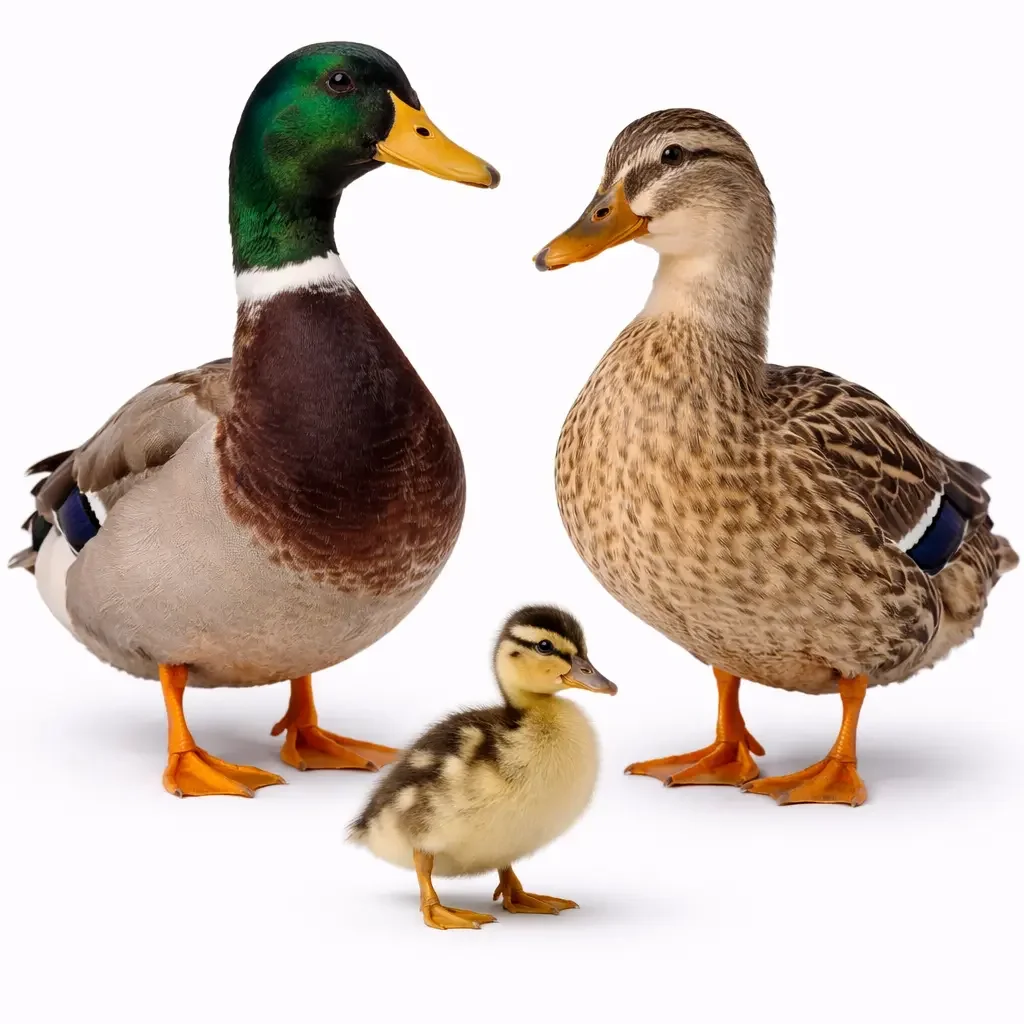
The Rouen Duck is the most visually stunning large domestic duck in the world, and one of the oldest general-purpose breeds in continuous production. A Mallard at twice the size and unable to fly more than a few feet, the Rouen brings the same stunning drake plumage that has made the wild Mallard the benchmark of waterfowl aesthetics to a breed that stays in the yard, grows to ten pounds, and produces meat with a delicate flavor that has been described since the nineteenth century as among the finest of any domestic poultry. It is not the fastest grower, not the highest egg layer, and not the most practical bird for a production-focused operation. But for the homesteader who wants a large, calm, visually magnificent duck that performs reliably at the table and earns its keep without demanding intensive management, the Rouen has centuries of evidence on its side.
Quick Facts
Class: Heavyweight
Weight: Standard drakes 9 to 10 pounds; Standard hens 8 to 9 pounds. Production/Utility drakes 6 to 7.5 pounds; hens 5 to 6 pounds
Egg Production: 35 to 125 eggs per year (Standard); 140 to 180 eggs per year (Production/Utility)
Egg Color: White; occasionally pale blue or green tinted
Egg Size: Large to extra-large
Primary Purpose: Meat; exhibition; general purpose
Temperament: Docile, calm, social, easily tamed
Brooding: Moderate; hens retain brooding instinct but Standard-type birds can crush eggs due to body weight
Conservation Status: Watch (The Livestock Conservancy)
APA Recognition: Accepted 1874; one of the oldest breeds in the American Standard
Country of Origin: France (Normandy region)
Year Developed: Before the 19th century; refined in England through the 1800s
Lifespan: 8 to 12 years
Image Section
Feature image: Rouen drake showing green head, white collar, chestnut breast, and gray bodySecondary image: Rouen hen with detailed mahogany and brown penciled plumageThird image: Rouen pair on a farm pond
Breed Overview
The Rouen Duck originates in France, almost certainly in the Normandy region, though the precise history before the nineteenth century is not fully documented. French farmers kept large Mallard-type ducks for meat production for several hundred years before the breed was given a fixed name and standard. By the early 1800s these birds were being referred to in various ways: Rhone, after a region in southwest France; Roan, referencing the mixed coloration; Rohan, after a French cardinal; and eventually Rouen, after the city in northern Normandy that became most closely associated with the breed. The name Rouen was the one that endured.
The breed reached England around 1800 and underwent a dramatic transformation through selective British breeding over the following decades. English breeders doubled the body size, deepened the keel into the boat-shaped profile that defines the Standard Rouen today, and refined the color markings into a more precise and vibrant expression of the Mallard pattern. By the time the breed arrived in the United States in 1850, brought by D.W. Lincoln of Worcester, Massachusetts, it was already the most visually refined and largest domestic duck breed in existence.
The Rouen was admitted into the American Poultry Association Standard of Perfection in 1874, making it one of the earliest duck breeds recognized by the APA and one of the longest-tenured members of the Standard. It served as the national standard for domestic meat duck production until the Pekin arrived from China in 1873, after which the Pekin's faster growth rate displaced the Rouen in commercial production. The Rouen then became primarily an exhibition and homestead breed, a role it occupies to this day.
The breed carries a Watch designation from The Livestock Conservancy, reflecting a population that requires continued support from dedicated breeders to maintain genetic diversity and breed quality.
Two Types: Standard and Production
Understanding the difference between the two Rouen types is essential before sourcing birds, as they differ meaningfully in both appearance and practical utility.
The Standard Rouen is the exhibition bird, bred to the APA specification with a massive, blocky, boat-shaped body, a deep horizontal keel that nearly touches the ground, an enormous frame at nine to ten pounds for drakes, and refined, precise Mallard-pattern markings. Standard Rouens are the birds that win at shows and represent the visual ideal of the breed. They are also slow to mature, difficult to keep clean due to the dragging keel, prone to reduced foraging activity because of their size and ground-clearing carriage, and unsuitable for hens to incubate their own eggs, as the weight of a Standard-type hen on a clutch will frequently crush the eggs. For most homesteaders, the Standard Rouen is an exhibition and ornamental bird rather than a practical working duck.
The Production or Utility Rouen is the practical homestead bird. Lighter at five to seven pounds with a more upright carriage and a less extreme keel, the Production Rouen retains the breed's beautiful Mallard-pattern coloring, docile temperament, and excellent meat quality while delivering meaningfully better foraging ability, cleaner self-maintenance, and higher egg production in the range of 140 to 180 eggs per year. Hens can go broody and incubate eggs without the crushing risk of the Standard type. For most homesteaders, the Production Rouen is the correct choice.
Plumage and Appearance
The Rouen's plumage pattern is the Mallard pattern executed in a larger, more refined, and domestically stabilized form. The colors are vivid and precise in well-bred birds and represent one of the most beautiful plumage patterns in all of domestic waterfowl.
The drake carries an iridescent green head, a clean white neck ring, a deep claret to chestnut-red breast, a gray body and back, dark ashy-brown tail feathers with black tail coverts, and bright orange legs and feet. The bill is dark yellow to olive-yellow. The wing speculum is an iridescent blue, identical in character to the Mallard's. The overall impression is a large, noble bird whose color scheme appears designed rather than accidental.
The hen is a rich mahogany brown overall with a brown crown, tan eye-stripes extending from the bill to the back of the eye, and detailed penciling across nearly every feather of the head, neck, body, and wing. This penciled texture is one of the most intricate feather patterns in domestic ducks and contributes to the hen's visual depth even compared to the more immediately striking drake. The bill is dusty orange, often with brown shading. The wing speculum is the same iridescent blue as the drake's.
Young drakes are indistinguishable from hens in coloration for the first ten to twelve weeks of life. The adult drake plumage develops gradually from week twelve through approximately week fifteen, with the green head, white collar, chestnut breast, and gray body emerging progressively during that window.
Egg Production
The Rouen is not a primary egg breed, and homesteaders who prioritize egg count as the principal metric should look to Welsh Harlequin, Khaki Campbell, or Indian Runner. The breed was developed first for meat and exhibition, and egg production reflects those priorities.
Standard Rouens produce 35 to 125 eggs per year, a wide and unreliable range that reflects the variability in individual hens and the Standard type's emphasis on body and conformation over laying performance. Production Rouens from utility lines produce a more consistent 140 to 180 eggs per year, which is solid for a heavyweight breed and sufficient to supply a family with fresh duck eggs through the laying season.
Eggs are large to extra-large and primarily white, with approximately 35 percent of Production-line hens producing pale blue or green-tinted eggs depending on bloodline. Shell quality is strong. Standard-type hens that go broody and attempt to incubate their own eggs risk crushing the clutch due to body weight, making incubator use the standard recommendation for Standard Rouens. Production hens can successfully brood and hatch ducklings naturally.
Meat Quality
The Rouen's meat quality is the crown of the breed's utility and the attribute that has sustained its reputation for more than two centuries. Dave Holderread described Rouen flesh as having a lighter flavor than other duck breeds, and the breed's Livestock Conservancy profile characterizes it as providing abundant, delicately flavored flesh that is unsurpassed for gourmet quality among domestic ducks. This lighter, more refined flavor profile compared to the richer, fattier meat of commercial Pekin is consistently noted by homesteaders and chefs who have cooked both.
The trade-off is time. Standard Rouens take six to eight months to reach full table weight, compared to six to eight weeks for a commercial Pekin hybrid. Production Rouens develop somewhat faster, but the breed is inherently slower-maturing than any commercial meat bird. Homesteaders who process at four to five months at a live weight of five to six pounds get leaner, lighter meat from a smaller carcass. Those who carry birds to full maturity get a nine to ten-pound drake with abundant flesh and a richer but still relatively delicate flavor.
The slow growth that makes the Rouen impractical for commercial production is precisely what produces the superior eating quality. The longer development timeline allows for muscle fiber development and fat distribution that fast-growing commercial breeds cannot replicate.
Best Preparations
The Rouen is one of the finest roasting ducks available to a homestead kitchen. Whole roasting at high heat, with the bird brought to room temperature before cooking and rested properly after, produces a large, beautifully browned carcass with abundant, delicately flavored meat. The flesh is rich enough to support simple seasoning with herbs, citrus, and garlic without overpowering preparation. Slow roasting at lower temperatures suits the Standard-type bird's deep-keeled, well-muscled frame particularly well. Braising Rouen leg and thigh quarters in wine, stock, or a cider-based liquid produces outstanding results. Duck confit made from Rouen legs is exceptional given the breed's slower fat development and more complex flavor than commercial duck.
Temperament and Behavior
The Rouen's temperament is one of its most consistent and enduring selling points. It is docile, calm, and comfortable around people in a way that even complete beginners find manageable. Rouens do not startle easily, do not bolt from human contact, and often become genuinely attached to their keepers, following them around the yard with evident interest.
Drakes are peaceful with one another and with people, rarely showing the aggressive guarding behavior that some duck breeds display. The occasional exception is a drake actively guarding a nesting hen, during which he may posture toward approaching humans. This is normal and temporary.
Hens are quieter than many other domestic duck breeds. Their quacking is softer and less repetitive than breeds like the Khaki Campbell or Call Duck, though they will vocalize when excited or disturbed. The overall noise level of a Rouen flock is manageable in most settings.
The breed does not truly fly. Standard Rouens are far too heavy for sustained flight and can achieve only brief, low hops. Production Rouens are also essentially flightless, capable of short distance low flaps at most. Standard perimeter fencing is sufficient for confinement, and the breed's tendency to stay close to familiar territory means they rarely test fencing boundaries.
Foraging and Pasture Performance
Production Rouens are active foragers that work pasture and garden areas efficiently for insects, slugs, snails, worms, and plant material. Their foraging energy is noticeably better than Standard Rouens, whose extreme keel development reduces ground-level mobility and encourages a more sedentary feeding pattern. Homesteaders who want working foragers should source Production-type birds.
Both types are effective pond and water feature ducks, using available water for feeding, bathing, and natural behavior in ways that complement managed water features on homestead properties. Their size and calm movement style make them compatible with most pond and pasture environments without the disruptive high-energy behavior of lighter, more excitable breeds.
The breed is susceptible to bumblefoot, a bacterial foot infection, due to the combination of heavy body weight and relatively small foot surface area. Rough, hard-packed, or rocky ground surfaces elevate risk. Soft, clean substrates including grass, straw bedding, and mud reduce it. This is a management consideration rather than a breed defect, but it deserves attention in housing and run design for heavy birds.
Climate Adaptability
The Rouen is a hardy, weather-tolerant breed that performs well across the full range of Midwest climates. Its French and English heritage includes sustained use in temperate maritime climates with cold, wet winters, and the breed handles Midwest winter conditions without difficulty when provided with appropriate shelter. In summer, shade and continuous access to cool water are the primary management requirements for a breed whose body mass means heat stress risk at sustained high temperatures.
The dense, well-developed waterproof feathering of the Rouen provides good insulation and moisture management across seasons.
Housing and Management
Standard Rouens require significant floor space given their body size. A minimum of five to six square feet of indoor floor space per bird and fifteen or more square feet of outdoor run space reflects the breed's large frame and the value of room for natural movement without crowding stress. Production Rouens are somewhat less demanding spatially but benefit from generous space allocations.
Flooring and run surface management is important for bumblefoot prevention. Soft grass, deep straw, and clean mud are preferable substrates over hard concrete, compacted earth, or gravel. Housing entrances and ramps should be wide enough for the breed's broad body and gentle enough in slope for their heavy, horizontal carriage.
Water access for swimming and bathing is strongly recommended. The Rouen's dense plumage benefits from regular immersion and the breed's natural pond orientation means it uses swimming water enthusiastically and consistently.
Pros and Cons
Pros
One of the most visually spectacular domestic duck breeds in existence; Mallard plumage in a massive, flightless body
Outstanding meat quality with a delicate, refined flavor superior to commercial Pekin
Docile, calm, and easily managed temperament suitable for beginners and families
Long APA recognition history from 1874; one of the most established heritage breeds
Does not fly; standard fencing contains the breed without difficulty
Production-type hens lay 140 to 180 eggs per year, solid for a heavyweight breed
Good foragers in Production type; useful for pest control on pasture
Pond-oriented and visually stunning on farm water features
Calm, quiet hens compared to many lightweight breeds
Cons
Slow to mature; six to eight months to full table weight, much slower than commercial meat ducks
Standard type lays only 35 to 125 eggs per year with high individual variability
Standard-type hens can crush their own eggs during incubation due to body weight
Susceptible to bumblefoot due to heavy frame on hard or rough substrates
Dark pin feathers visible in the dressed carcass, though not as pronounced as some breeds
Watch conservation status requires sourcing from dedicated breeders for best genetics
Profitability
The Rouen's commercial viability is limited in high-volume production models by its slow growth rate. It cannot compete with commercial Pekin hybrids on cost-per-pound of meat in any calculation that values time and feed efficiency. However, in direct-to-consumer and premium market contexts, the Rouen's story, appearance, and eating quality create genuine value that standard commercial production cannot replicate.
Whole dressed Rouen ducks from a homestead operation sell at significant premiums over commercial duck at farmers markets, through restaurant relationships, and in direct farm sales. Customers who understand the difference between slow-grown heritage duck and a fast-grown commercial bird will pay for the Rouen. Rouen drakes and pairs for farm ponds and ornamental water features are another consistent market, as the breed's beauty and non-flying character make it the ideal pond duck for properties that want Mallard aesthetics without the wildlife management complications. Hatching eggs and ducklings from quality Production-type Rouens sell reliably to homesteaders and backyard keepers.
Comparison With Related Breeds
Mallard: The Rouen is essentially a domesticated, flightless, doubled-in-size Mallard with the same plumage pattern. The only practical differences between a Mallard drake and a Rouen drake are body weight, flight capability, and legal status. Rouen drakes are twice the size, cannot fly, and can be kept without restriction anywhere domestic poultry are permitted. For homesteaders who want the Mallard look without the complications of keeping a federally protected migratory species, the Rouen is the only correct choice. See the Mallard guide in the wild duck section for a full comparison.
Pekin Duck: The Pekin displaced the Rouen as the dominant commercial meat duck when it arrived in 1873, growing faster, reaching table weight in six to eight weeks rather than six to eight months, and producing a larger, fattier carcass on less feed input. For commercial-scale or rapid-turnaround meat production, the Pekin wins every calculation. For quality-first homestead meat production where eating quality is the primary metric, the Rouen produces a significantly superior product.
Saxony Duck: The Saxony was developed in part from Rouen stock and shares the Rouen's large body, dual-purpose orientation, and beautiful plumage, though with a completely different color palette. The Saxony delivers better egg production and more active foraging than the Standard Rouen while sacrificing some of the Rouen's meat quality edge. For homesteaders who want heavier production from a similarly sized heritage breed, the Saxony is worth comparing directly.
Aylesbury Duck: The Aylesbury is the British equivalent of the Pekin in terms of large, white-feathered meat duck heritage, and is the Rouen's historical peer and competitor in English exhibition poultry. Both breeds were considered the elite domestic ducks of the Victorian era. The Aylesbury produces a white-skinned, clean-dressing carcass compared to the Rouen's dark-feathered, more visually complex dressed bird. Both are slow-maturing heritage breeds with outstanding eating quality and limited commercial viability in modern production contexts.
Final Verdict
The Rouen Duck is the standard against which the visual character of domestic duck-keeping has been measured for nearly two centuries. It is a breed for homesteaders who take the long view: slow growth is rewarded with superior flavor, beautiful plumage enriches daily life in the yard and on the pond, and a calm, people-oriented temperament makes the flock a genuine pleasure to manage. It is not a breed for anyone whose primary metric is production speed or egg volume. It is a breed for anyone who wants a large, stunning, delicious domestic duck with two centuries of proven homestead heritage behind it.
Frequently Asked Questions
How long do Rouen ducks take to reach table weight? Standard Rouens take six to eight months to reach full weight of nine to ten pounds. Production Rouens are somewhat faster but still considerably slower than commercial Pekin hybrids. Some homesteaders process Production Rouens at four to five months for a leaner five-pound bird.
Do Rouen ducks fly? No. Standard Rouens are far too heavy for any meaningful flight. Production Rouens can achieve brief low-level hops of a few feet at most. Standard fencing is sufficient for confinement.
Are Rouen ducks good layers? Production-type Rouens lay 140 to 180 eggs per year, which is reasonable for a heavyweight breed. Standard Rouens are highly variable at 35 to 125 eggs per year and are not recommended as primary laying birds.
What is the difference between a Rouen and a Mallard? The Rouen carries the same plumage pattern as the Mallard but is approximately twice the body weight, cannot fly, and is a fully domesticated breed. The Mallard is a federally protected wild migratory species that cannot be kept without permits. The Rouen is the homestead substitute for anyone who wants Mallard aesthetics in a legal, non-flying domestic bird.
Are Rouen ducks good for beginners? Yes, particularly Production-type Rouens. Their calm temperament, easy handling, and straightforward management requirements make them one of the more beginner-friendly large duck breeds.
Can Rouen hens incubate their own eggs? Production-type hens can go broody and hatch eggs successfully. Standard-type hens risk crushing their clutch due to excessive body weight, and incubator use is recommended for Standard Rouens.