
Northern Shoveler
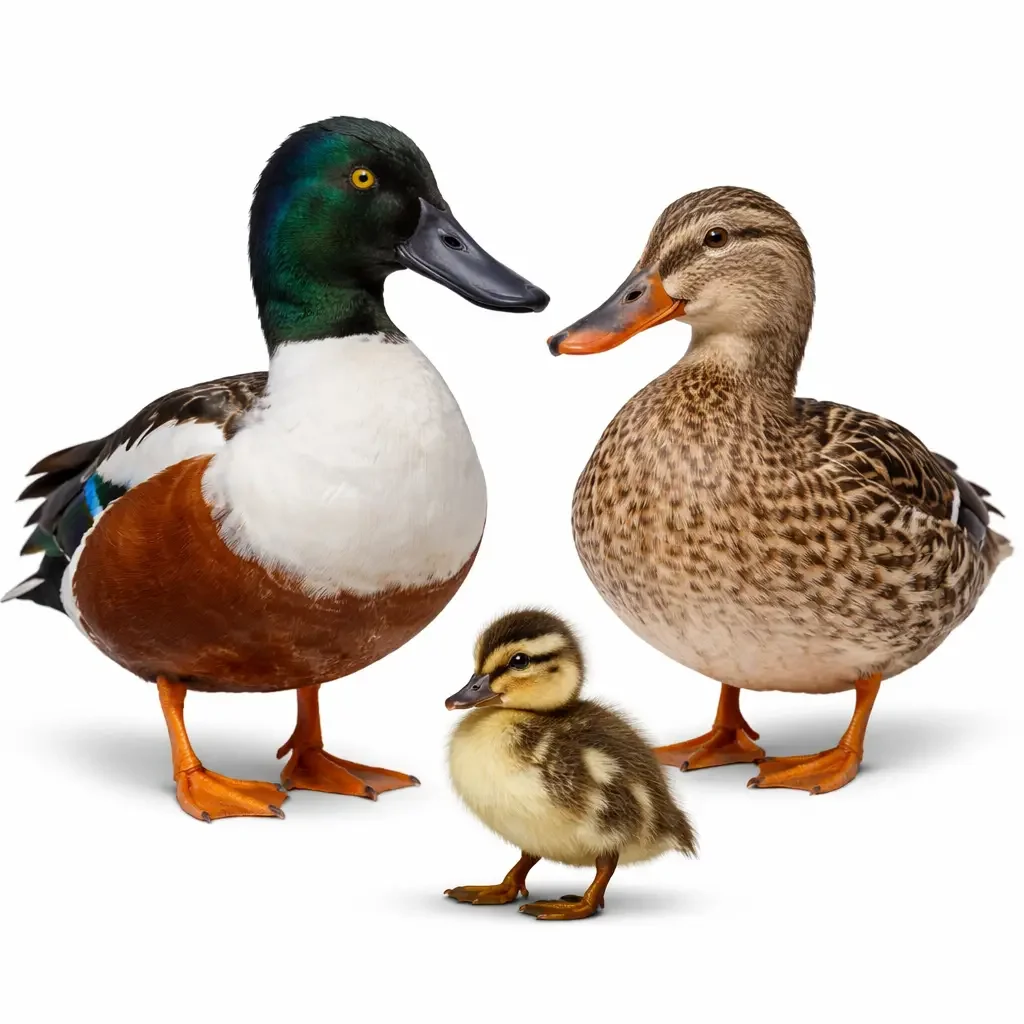
The Northern Shoveler is one of the most immediately recognizable ducks in North America, defined by a spatula-shaped bill so large and distinctive it seems almost comical at first glance. Known to hunters across the country by a colorful string of nicknames including spoonie, spoonbill, smiling mallard, and Hollywood duck, the shoveler is a dabbling duck with a widespread reputation that does not always do it justice. For Midwest homesteaders and hunters, understanding the Northern Shoveler adds real depth to your waterfowl knowledge and rounds out an honest picture of the birds moving through your region each fall.
Quick Facts
Breed Type: Wild Duck
Purpose: Hunting, Wildlife Observation, Wetland Awareness
Origin: North America, breeds across the Prairie Pothole Region and northern wetlands
Egg Production: Not applicable (wild species)
Egg Color: Pale olive-gray to greenish, laid in ground scrape nests near water
Adult Weight: 1.3 to 1.8 lbs for both sexes
Temperament: Social and approachable, decoys readily, not particularly wary
Hardiness: Highly adaptable, tolerates a wider range of water quality than most ducks
Broodiness: Moderate, female incubates independently and tends young through fledging
Lifespan: Up to 16 years in the wild, though most birds live considerably shorter lives
Image Section
Main Image: Northern Shoveler drake in full breeding plumage on shallow marsh water, large spatula bill and green head clearly visible, 1024x1024, white or transparent background.
Breed Overview
The Northern Shoveler, known scientifically as Spatula clypeata, is a medium-sized dabbling duck with a circumpolar distribution, breeding across northern North America, Europe, and Asia. In North America, the core of the breeding range lies in the Prairie Pothole Region of the Dakotas, Minnesota, and the Canadian prairie provinces, placing it squarely in the heart of Midwest waterfowl country.
The bill is the defining feature of this species and one of the most specialized tools in the waterfowl world. It is twice as wide at the tip as at the base and lined with approximately 110 fine comb-like projections called lamellae that function as a sieve, filtering tiny crustaceans, zooplankton, invertebrates, and seeds directly from the water. The shoveler uses this bill by swimming slowly forward with its head partially submerged, sweeping side to side through the surface layer of shallow water. Groups of shovelers sometimes swim in circles together, churning up food from the bottom for the whole group to filter.
The drake in full breeding plumage is genuinely handsome despite the bill's awkward proportions. He wears a dark iridescent green head, a stark white breast, rich chestnut-brown flanks, a black back, and a bold powder-blue shoulder patch that is visible on resting and flying birds alike. The green speculum separated from the blue patch by a white bar is another reliable field mark. The hen is mottled brown with a large orange-edged gray bill and the same blue shoulder patch. Both sexes have bright orange legs and feet.
The North American shoveler population is estimated at nearly 5 to 6 million birds and is considered stable and of low conservation concern. An average of approximately 450,000 to 480,000 Northern Shovelers are harvested annually across the United States, making them one of the more commonly encountered ducks in the hunter's bag despite their mixed reputation.
Hunting the Northern Shoveler
Season and Timing
Northern Shovelers fall under the general duck aggregate bag limit in Midwest states and are not subject to species-specific restrictions the way Redheads or Canvasbacks are. They count toward the standard six-duck daily limit alongside mallards, gadwalls, teal, and other dabbling ducks. Fall migration through the Midwest begins in August and continues through November, with a prolonged migration window that means shovelers can be encountered from early teal season all the way through late regular duck season.
Peak migration through the Midwest typically occurs in September and October as birds move from breeding areas in the northern prairie toward wintering grounds in the southern United States, Mexico, and Central America. California, Texas, and Arkansas consistently lead the nation in Northern Shoveler harvest, but significant numbers move through the Midwest flyway each fall and are encountered regularly by hunters pursuing mixed bags of puddle ducks.
Where to Hunt
Northern Shovelers are shallow-water dabbling ducks that favor the same marsh edges, moist soil impoundments, flooded fields, and shallow prairie wetlands used by mallards, gadwalls, and teal. They are particularly drawn to muddy-bottomed, shallow water rich in invertebrate life. One distinctive characteristic is their willingness to use stagnant, murky, or lower-quality water that other ducks tend to avoid, which reflects the efficiency of their filtration feeding system.
In the Midwest, look for shovelers in shallow cattail marshes, flooded agricultural fields, moist soil units on wildlife management areas, and any shallow pond or slough with a muddy bottom and abundant aquatic invertebrate life. They regularly associate with other puddle ducks and are often encountered as part of a mixed bag rather than as a targeted species.
Difficulty of Hunting
Northern Shovelers are considered one of the easiest ducks to decoy and among the least wary of all North American waterfowl. They approach decoy spreads readily, sometimes returning multiple times after being shot at, which has earned them an unflattering reputation among hunters who see wariness as part of the sporting challenge. Their willingness to finish in decoys has saved many slow hunts when other birds are not cooperating.
In flight they are surprisingly capable. Despite the front-heavy appearance from the large bill, shovelers are fast and agile, often flying in tight small flocks of five to ten birds that swerve, dive, and circle with considerable speed. They can flush nearly vertically off the water similar to teal rather than requiring the long running takeoff of diving ducks. Crossing shots on fast-moving shovelers require appropriate lead and are more challenging than their easy-decoying reputation might suggest.
Decoys and Calling
A standard puddle duck decoy spread works well for shovelers. They regularly associate with mallards, gadwalls, and teal and respond to the same setups used for those species. There is no need for shoveler-specific decoys. Mallard calls produce consistent results and a hen mallard call is all most hunters need to draw shovelers in alongside other dabbling ducks. Adding a few teal-sized decoys to the spread can increase realism given the shoveler's association with those species during migration.
Meat Quality
The Northern Shoveler has one of the most polarized reputations for table fare of any North American duck. Hunters are sharply divided, with opinions ranging from comparable to wigeon or gadwall all the way to barely edible. The honest answer is that meat quality varies significantly depending on what the birds have been eating and where they have been feeding.
The root of the shoveler's table reputation lies in its diet. Their filter-feeding system is highly efficient at concentrating whatever is in the water column, including aquatic invertebrates, crustaceans, and zooplankton. Birds feeding in clean freshwater environments with good aquatic plant and seed availability can produce mild, acceptable meat comparable to other dabbling ducks. Birds feeding heavily in stagnant, murky, or invertebrate-heavy environments can have a noticeably muddy or off flavor.
Birds encountered in the Midwest during fall migration feeding in flooded grain fields, clean prairie wetlands, and wild rice environments tend to produce the best table results. Most experienced hunters who have eaten shovelers from agricultural settings describe them as comparable to gadwall or wigeon and perfectly acceptable in the right preparation.
Best Preparations
Strong overnight marinades using citrus, red wine, soy sauce, or vinegar help significantly regardless of where the bird was feeding. Duck fajitas, gumbo, or stew preparations that incorporate bold flavors and slow cooking methods produce reliable results. Duck paté made with shoveler breast meat is a preparation that consistently impresses skeptics. Grinding the breast meat for duck sausage or summer sausage blended with pork is a practical and popular option for birds of uncertain flavor. Avoid simple pan-searing without prior marinating, as this preparation is the most likely to expose any off flavors in the meat.
Behavior and Identification
The Northern Shoveler's bill makes it unmistakable in hand and nearly unmistakable in the field at any reasonable distance. The large, spatula-shaped bill is clearly visible even in flight, giving the bird a front-heavy, slightly hunched silhouette that is distinctive once learned. The powder-blue shoulder patch flashes clearly on both sexes in flight, similar to blue-winged and cinnamon teal, though the shoveler is noticeably larger than either of those species.
Early in the hunting season, male shovelers are often still in eclipse plumage and can appear very similar to hens. The mottled brown drake in eclipse plumage paired with an orange-edged bill and blue shoulder patch resembles a large cinnamon or blue-winged teal hen at a distance, which is worth being aware of for accurate identification. By late October most drakes are moving into full breeding plumage and are readily identified.
The species is more territorial during the breeding season than most other dabbling ducks, and pair bonds are maintained longer than in most waterfowl species, with males staying with females through part of the incubation period. During migration and winter they are social and gregarious, often forming mixed flocks with teal, gadwall, and pintail.
Climate and Range
The Northern Shoveler breeds across a broad arc of the northern hemisphere from Alaska across Canada through the Prairie Pothole Region and extending east to the Great Lakes. The Prairie Pothole states of the Dakotas, Minnesota, and Nebraska represent the core of the breeding range in the United States. Birds begin fall migration in August, with the main movement through the Midwest occurring in September and October.
Wintering birds concentrate in California, the Gulf Coast states, and Mexico, though significant numbers winter across the southern United States wherever shallow freshwater wetlands are available. The species also has a substantial Eurasian population that winters in southern Europe, Africa, India, and Southeast Asia.
Homestead Suitability and Pond Management
For Midwest homesteaders, the Northern Shoveler is a realistic bird to attract to your property during fall migration. Their preference for shallow, muddy-bottomed water with abundant invertebrate life means that a homestead pond with productive margins and some turbidity from natural biological activity can draw migrating shovelers alongside mallards, teal, and gadwall.
They are not birds that require large open water and are well suited to small to medium ponds, sloughs, and moist soil areas. Their willingness to use lower-quality water that other ducks avoid means they will turn up on ponds that might not attract more selective species.
Attracting Shovelers to Your Property
Maintaining shallow water areas of less than two feet in depth with muddy bottoms supports the invertebrate communities that shovelers filter-feed on. Allowing natural aquatic vegetation to establish around pond margins creates habitat that supports both the invertebrate food base and other duck species simultaneously. Minimizing disturbance during September and October gives migrating birds the undisturbed rest and feeding time they need to stop and linger on your property. Any shallow pond or flooded low area that holds water through early winter is worth watching for shovelers during migration.
Pros and Cons
Pros
The Northern Shoveler is one of the most distinctive and biologically fascinating waterfowl species in North America, with a specialized bill unlike anything else in the dabbling duck world. They decoy readily and reliably, making them a valuable addition to any slow day in the marsh when other birds are not cooperating. They are abundant, with a stable continental population in the millions. Their willingness to use lower-quality shallow water means they can be attracted to a wider range of homestead pond types than more selective species. Drake shovelers in full breeding plumage are genuinely beautiful birds that add visual variety to the mixed bag.
Cons
Meat quality is genuinely variable and can be poor depending on diet and local habitat, which is an honest limitation hunters should know going in. Their willingness to decoy repeatedly after being shot at reduces the sporting challenge compared to warier species. The front-heavy appearance and bill size put some hunters off pursuing them intentionally. Early season identification of eclipse-plumage drakes requires attention to avoid misidentifying them as other species. They are not considered a primary target species by most serious Midwest duck hunters.
Profitability Note
As a wild and federally protected migratory species, Northern Shovelers cannot be commercially sold. From a homestead perspective they hold no direct economic value beyond the personal food value of harvested birds, which varies considerably based on preparation and local diet. Their presence on your property during migration is a positive indicator of shallow wetland quality and productive invertebrate communities, which benefits a broader suite of more commercially interesting species including mallards, teal, and gadwall. The profitability section applies fully when this guide series covers domestic duck breeds.
Comparison With Related Species
Northern Shoveler vs Mallard
The Mallard is the most abundant and widely hunted dabbling duck in North America and the species shovelers most commonly associate with during migration. The mallard is a significantly better table duck in most circumstances due to its more plant and grain-based diet. Hen shovelers in eclipse and early season drakes are occasionally misidentified as mallard hens, making bill shape the most reliable close-range distinguishing feature.
Northern Shoveler vs Blue-winged Teal
Blue-winged Teal are smaller dabbling ducks that share the blue shoulder patch and similar shallow-water marsh habitat with shovelers during migration. Teal are considerably faster, earlier migrants, and are widely regarded as the finest-tasting dabbling duck in North America. The shoveler is noticeably larger with the distinctive large bill, separating the two species clearly at any reasonable distance.
Northern Shoveler vs Gadwall
The Gadwall is a similarly sized dabbling duck that shares marsh habitat with shovelers during migration and is considered superior table fare. Gadwalls are more selective in their habitat preferences and less willing to use the low-quality water that shovelers readily exploit. The gadwall's subtle gray and brown plumage contrasts with the shoveler's bold green, white, and chestnut drake coloration.
Final Verdict
The Northern Shoveler deserves more respect than it typically receives in most hunting camps. Its biology is genuinely fascinating, its bill an engineering marvel of evolution, and its willingness to decoy makes it a reliable contributor to mixed-bag hunts when other species are not cooperating. For Midwest homesteaders, it is a bird that will show up on reasonably managed shallow ponds during fall migration and adds real diversity to the waterfowl picture. The table quality debate is real, but birds from clean freshwater environments properly prepared are perfectly acceptable, and strong preparations like gumbo, fajitas, or ground sausage make the most of what the spoonie has to offer.
This species is most valuable for hunters building a complete understanding of Midwest waterfowl, for homesteaders managing shallow wetland habitat, and for anyone who wants to appreciate the full range of ducks that move through the region each fall rather than focusing only on the most prestigious species.
Frequently Asked Questions
Are Northern Shovelers good to eat?
Table quality varies significantly with diet and habitat. Birds feeding in clean freshwater environments with seeds and aquatic plants can be comparable to gadwall or wigeon and are perfectly acceptable with proper preparation. Birds feeding heavily in stagnant or invertebrate-rich water can have a muddy, off flavor. Strong marinades, slow cooking, gumbo, or ground sausage preparations work best and can make even less desirable birds into a decent meal.
Why do hunters call them spoonbills?
The nickname comes from the large, spoon or spatula-shaped bill that is the species' most unmistakable feature. Other common names include spoonie, smiling mallard, and Hollywood duck. The formal common name of Northern Shoveler also references the bill, comparing it to a garden shovel rather than a kitchen spoon.
When do Northern Shovelers migrate through the Midwest?
Fall migration begins in August and runs through November, with peak movement through the Midwest typically occurring in September and October. They have one of the more prolonged migration windows of any dabbling duck, meaning hunters can encounter them from early teal season all the way through the regular duck season.
Do Northern Shovelers decoy easily?
Yes, Northern Shovelers are among the most willing duck species to approach and finish in a decoy spread. Standard puddle duck setups with mallard or mixed dabbler decoys and hen mallard calls are all that is needed. Their tendency to return after being shot at has made them both a lifesaver on slow days and a source of good-natured ridicule from hunters who prize wariness as part of the sporting challenge.
Can I attract Northern Shovelers to my homestead pond?
Yes, particularly if your pond has shallow margins with muddy bottoms and active invertebrate life. Shovelers are less selective about water quality than most dabbling ducks and will use smaller, shallower, and murkier ponds that other species avoid. Minimizing disturbance during September and October migration gives the best chance of birds stopping to feed and rest.
How do I identify a Northern Shoveler in flight?
The large, spatula-shaped bill is visible even at distance and gives the bird a front-heavy, slightly hunched silhouette in flight. Both sexes show a bold powder-blue shoulder patch and green speculum separated by a white bar, similar to blue-winged teal but on a noticeably larger bird. The combination of bill shape and blue shoulder patch makes the shoveler identifiable at a glance once you know what to look for.