
Silver Appleyard
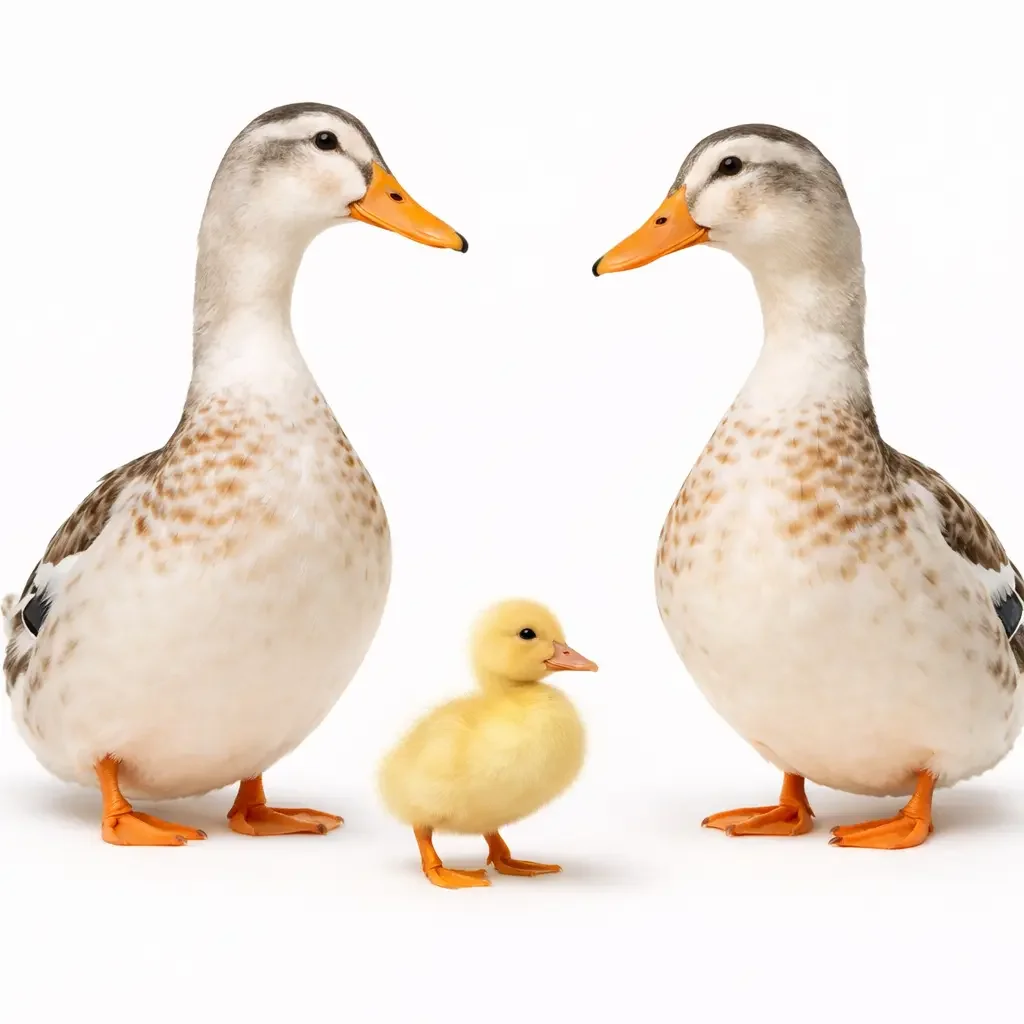
The Silver Appleyard Duck is the closest thing the domestic duck world has to a perfect all-around breed. Developed in 1930s England by poultry breeder and writer Reginald Appleyard with the explicit goal of combining beauty, size, abundant large white eggs, and a deep wide breast in a single bird, the Silver Appleyard succeeds on every count. It is the best laying duck in the heavyweight class, one of the most active foragers among large breeds, a respectable broody with decent maternal instincts, a fine-flavored lean meat duck, and arguably the most visually striking dual-purpose breed in existence. The Livestock Conservancy classifies it as Threatened in the United States, making it both one of the most rewarding and one of the most conservation-significant breeds a Midwest homesteader can choose.
The Silver Appleyard also comes in a Miniature form, a separate development with its own distinct history, genetics, and management profile. Both versions are covered in this guide.
Quick Facts: Silver Appleyard (Large)
Class: Heavyweight
Weight: Drakes 8 to 10 pounds; hens 7 to 8 pounds
Egg Production: 220 to 265 large white eggs per year (Livestock Conservancy); up to 270 reported by some sources
Egg Color: White
Egg Size: Large to extra-large, 2.5 to 3.7 oz
Primary Purpose: Dual purpose; meat, eggs, exhibition, decoration
Temperament: Calm, docile, friendly; active forager; good with children
Brooding: Moderate; hens sometimes go broody and will incubate; not as reliable as Muscovy but better than most heavyweight breeds
Conservation Status: Threatened (The Livestock Conservancy)
APA Recognition: 1998 (large); admitted to Standard of Perfection heavy duck class
British Poultry Standard Recognition: 1982
Country of Origin: Suffolk, England
Year Developed: 1930s
Lifespan: 4 to 12 years; typically 8 to 10 with good care
Quick Facts: Miniature Silver Appleyard
Class: Bantam
Weight: Drakes approximately 3 pounds; hens approximately 2.5 pounds
Egg Production: 60 to 160 white eggs per year; some strains reach 160 if eggs are collected regularly
Egg Color: White
Primary Purpose: Exhibition, ornamental; eggs secondary
Temperament: Calm, tames easily, good maternal instincts; hens are diligent mothers
Brooding: Good; hens are reliable broodies with strong maternal instincts
Conservation Status: Not separately listed; rare in North America
BWA Recognition: 1997 (Miniature Silver Appleyard); Reginald Appleyard's original bantam was renamed the Silver Bantam in the UK
Country of Origin: Gloucestershire, England (Tom Bartlett's Miniature); Suffolk, England (Reginald Appleyard's original bantam, now called Silver Bantam)
Year Developed: 1980s (Tom Bartlett's Miniature)
Image Section
Feature image: Silver Appleyard drake showing the distinctive greenish-black head with silver flecks, chestnut breast, and blocky heavyweight bodySecondary image: Silver Appleyard hen showing creamy white and buff plumage with blue wing stripeThird image: Silver Appleyard pair on a farm pond showing the breed's attractive proportions and alert, upright carriageFourth image: Miniature Silver Appleyard pair showing the smaller scale of the bantam version with comparable coloring
Breed Overview: Silver Appleyard (Large)
Reginald Appleyard was a respected poultry writer and breeder based at Priory Waterfowl Farm near Ixworth in Suffolk, England, and also the creator of the Ixworth chicken breed. In the 1930s he set out to develop what he described in a 1940s farm brochure as a breed combining beauty, size, lots of big white eggs, and a deep long wide breast. His method was to cross existing heavyweight breeds, drawing on Rouen, Pekin, and Aylesbury genetics to combine their respective strengths into a new composite type with a distinctive silver-laced plumage unlike any of its parent breeds.
Appleyard succeeded. By the time his wartime brochure circulated, his birds had won prizes at the Dairy Show in London and at Bethnal Green, and his ducklings were reaching six and a half pounds dressed weight at nine weeks. He died before submitting a formal breed standard to any poultry association, but the 1947 painting of a Silver Appleyard pair by animal artist Ernest George Wippell became an important visual reference that guided later standardization efforts.
After World War II, interest in duck breeds in Britain declined broadly and the Silver Appleyard nearly disappeared. Tom Bartlett of Folly Farm in Gloucestershire, who maintained 130 breeds of poultry for public display, was largely responsible for recreating and popularizing the breed from the 1970s onward by sourcing birds with desired traits from markets and selectively breeding back toward Wippell's painting as a standard. The British Waterfowl Association accepted the breed in 1982. The Silver Appleyard reached North America in the 1960s and became publicly available in 1984, with admission to the American Poultry Association's Standard of Perfection in 1998. Dave Holderread's Holderread Waterfowl Preservation Center in Oregon was the primary source of quality Silver Appleyard breeding stock in the United States for decades and is frequently cited by American homesteaders as the benchmark for the breed.
Plumage and Appearance
The Silver Appleyard's appearance is its most immediately arresting attribute. The plumage pattern is essentially a silvered Mallard: the same basic color distribution of the wild Mallard, but with pigmentation reduced on the face and body by the action of restricted and light genes, producing an effect where the drake's rich colors are brightened and silvered rather than the Mallard's deep, saturated tones.
The drake's head and neck are greenish-black with distinctive silver flecks above the eyes and on the throat, transitioning through a silver-white neck ring to a chestnut-brown chest with silver flecks. The flanks are silver-white with fine light brown vermiculation, the back is brownish-gray with silver frosting, and the wings carry a blue speculum stripe. The bill is greenish-yellow with a black tip. The overall effect is colorful, bright, and elegant.
The hen is more subdued but still attractive: predominantly white and buff with brown and fawn markings, a blue wing stripe, an orange bill with a black tip, and orange legs and feet. Her face shows a fine brown line through the eye that is a required exhibition feature. Both sexes have brown eyes.
Body type is blocky, broad, and compact with the carriage varying from 15 to 25 degrees above horizontal, distinctly more upright than the near-horizontal Aylesbury or Rouen but less erect than the Indian Runner. The Livestock Conservancy describes the conformation as blocky, and this is the accurate characterization: a well-built Silver Appleyard should look alert, solid, and well-muscled without appearing top-heavy.
A known management issue with the breed is undersizing. Many Silver Appleyards offered by hatcheries and small breeders fall short of the eight to ten pound drake weight that the standard calls for. The Livestock Conservancy specifically advises selecting robust, active, strong-legged birds with good egg production records, avoiding both undersized birds and excessively large individuals that struggle to forage, mate, and lay. The APA similarly notes that drakes that grow too large can lose the ability to breed naturally.
Egg Production
The Silver Appleyard's egg production is its most remarkable dual-purpose attribute. Averaging 220 to 265 large white eggs per year according to The Livestock Conservancy, the Silver Appleyard is the best laying duck in the heavyweight class, outperforming the Saxony, the Rouen, the Aylesbury, the Pekin, and every other large meat-oriented breed in sustained annual production.
This production level approaches the output of dedicated laying breeds like the Khaki Campbell and Indian Runner while maintaining the body weight and meat quality of a heavyweight, which is the exact achievement Reginald Appleyard was aiming for when he created the breed. It is the best available answer for homesteaders who want meaningful egg volume from a breed that also delivers a substantial meat bird.
Hens typically begin laying at around six months of age. The Silver Appleyard retains a moderate degree of broodiness that most dual-purpose and exhibition duck breeds have lost through selection, and hens will sometimes incubate their own clutches and raise their own ducklings. Broodiness is not guaranteed and is not as consistent as the Muscovy or bantam breeds, but it is meaningfully more present in the Silver Appleyard than in the Pekin, Rouen, or Aylesbury. Incubation runs 26 to 29 days, consistent with other Mallard-derived breeds.
Meat Quality
The Silver Appleyard reaches approximately six and a half pounds dressed weight at nine weeks, making it a fast-maturing heavyweight that compares favorably to any heritage meat duck. The meat is lean and flavorful, with less fat than the Pekin, and the breast development is wide and deep in accordance with Appleyard's founding goal. Gourmet and direct-to-consumer buyers have shown consistent interest in Silver Appleyard duck as a premium heritage alternative to commercial Pekin.
The breed's skin color is white, shared with the Aylesbury and Pekin and preferred by premium market buyers who find it cleaner and more appealing than the Muscovy's or Rouen's darker-feathered carcass presentation.
Best Preparations
The lean, flavorful Silver Appleyard breast suits pan-searing to medium doneness with simple herb and citrus accompaniments. Whole roasting at moderate to high temperature brings out the breed's mild, clean flavor with good fat rendering. The lean meat also suits braising preparations where the lower fat content benefits from added moisture and slow cooking. Duck confit made from Silver Appleyard legs, though lower in subcutaneous fat than a Pekin, produces a distinct, clean-flavored result that rewards the heritage approach.
Temperament and Behavior
The Silver Appleyard is calm, docile, and friendly with regular handling from young. The breed is quiet relative to lighter, more excitable duck breeds, though hens retain the standard duck quack and can be vocal when alarmed or during laying. Drakes, as with all Mallard-derived breeds, have a softer, raspier call. The breed's calm temperament makes it suitable for families, good with children, and comfortable in mixed flock management.
The Silver Appleyard's foraging activity is one of its defining practical attributes. Dave Holderread identifies Silver Appleyards as among the most active foragers of the heavyweight breeds, alongside the Saxony, and homesteaders consistently report that well-fed Silver Appleyards range productively across pasture, ponds, and gardens in search of insects, slugs, aquatic plants, and other forage. Active foraging both supplements the feed budget and provides the exercise that helps prevent the obesity-related health problems that affect more sedentary heavyweight breeds. The Livestock Conservancy notes they tend to stay close to home if well fed, which is an important practical feature for open-range management on a Midwest homestead without high-containment fencing.
Climate Adaptability
The Silver Appleyard handles the full range of Midwest climate conditions well. Developed in the temperate maritime conditions of Suffolk, England, the breed manages cold winters with appropriate shelter, wind protection, and access to unfrozen water. Active foraging behavior continues in mild winter conditions. Summer heat at sustained high temperatures requires shade, cool water access, and attention to body condition, as heavyweight breeds generally carry more heat stress risk than lighter, more active types.
Housing and Management
Standard heavyweight duck housing applies: four to six square feet of indoor floor space per bird, fifteen or more square feet of outdoor run or pasture access, and low-entry housing that accommodates the breed's moderate horizontal carriage without requiring high-step entry. Access to swimming water improves fertility in breeding flocks and contributes to the breed's daily welfare and feather condition. The APA specifically recommends sufficiently deep swimming water for breeding management.
Size selection is the most important ongoing management discipline for this breed. The tendency toward undersizing in commercially available Silver Appleyards means homesteaders building a breeding flock should prioritize birds that clearly meet the heavyweight standard's weight requirements while still moving freely and foraging actively. The Livestock Conservancy's guidance to select robust, active, strong-legged birds with good production records is the practical standard for maintaining breed quality in a working homestead flock.
Breed Overview: Miniature Silver Appleyard
The Miniature Silver Appleyard has a more complex origin story than the name suggests, and the distinction between versions matters for American buyers.
Reginald Appleyard himself created a bantam version of his Silver Appleyard in the 1940s by crossing a White Call drake with a small Khaki Campbell hen. This original Appleyard bantam did not carry the same color genetics as the large Silver Appleyard, expressing dusky and harlequin genes rather than the restricted and light genes of the large breed, and producing plumage that more closely resembled the Abacot Ranger than the Silver Appleyard. In the UK, this breed was eventually renamed the Silver Bantam to distinguish it from the true Miniature.
Tom Bartlett of Folly Farm, who had also been instrumental in reviving the large Silver Appleyard, developed a new Miniature Silver Appleyard in the 1980s that correctly replicated the color genetics of the large breed. This version was first shown at the British Waterfowl Association Champion Waterfowl Exhibition in 1987 and was standardized by the BWA in 1997. It is approximately one third the weight of the large breed.
In North America, the naming situation remains unsettled. The birds sold by American sources including Holderread Farm and Duck Creek Farm as Miniature Silver Appleyard are most likely descended from Reginald Appleyard's original bantam, which carries different genetics and plumage than Tom Bartlett's true Miniature. The true Bartlett Miniature is not yet standardized in the United States, and the American birds may carry the dusky and harlequin gene expression of the Silver Bantam lineage rather than the restricted and light gene expression of the large breed.
For practical homestead purposes, the Miniature Silver Appleyard in America is a small, attractive bantam duck weighing approximately two and a half to three pounds with good maternal instincts, reasonable egg production of 60 to 160 white eggs per year depending on strain and management, and calm temperament that tames readily. One identifying feature of both the large and miniature breeds is the Mohawk stripe on the head of ducklings; the British Waterfowl Association notes that its absence indicates the bird is not genetically an Appleyard.
The Miniature is used primarily for exhibition and ornamental purposes and suits smaller homesteads, urban and suburban duck keeping, and situations where a full heavyweight flock is not practical. The hens are diligent mothers and the breed is among the best layers of the bantam duck class.
Pros and Cons
Pros
Best egg production of any heavyweight duck breed: 220 to 265 large white eggs per year in the large version
Superior dual-purpose utility combining meaningful egg volume with genuine meat quality at nine weeks
Most active forager among the heavyweight breeds alongside the Saxony; reduces feed costs and keeps birds healthy
Moderate broodiness retained; hens sometimes raise their own ducklings, a rare trait in large duck breeds
White skin on the dressed carcass: preferred by premium buyers
Visually the most striking dual-purpose breed available; drake plumage is exceptional
APA-recognized heritage breed with Threatened conservation status; keeping quality birds contributes to breed survival
Calm, docile, family-friendly temperament; well-suited to open-range management
Miniature version available for smaller homesteads and urban settings
Cons
Threatened conservation status; quality breeding stock requires research and sourcing effort
Hatchery and commodity birds are frequently undersized; size verification is essential when sourcing
Broodiness is moderate but not reliable; incubator backup is advisable
Requires size selection management in breeding to maintain standard weight
Large version is not a dedicated egg breed; Khaki Campbell and Indian Runner significantly outperform it in pure laying volume
Miniature naming in the US is genetically inconsistent with UK standardized Miniature; buyers should be aware of lineage distinctions
Profitability
The Silver Appleyard's dual-purpose credentials make it one of the most commercially flexible heritage duck breeds. Whole dressed birds to direct-to-consumer buyers, farmers markets, and heritage-focused restaurants command premium prices. Hatching eggs and ducklings from quality, APA-standard-sized breeding stock are in consistent demand given the breed's Threatened status and the difficulty of sourcing birds that genuinely meet the heavyweight standard. The breed's exceptional egg production for its class also supports egg sales to customers who pay premium prices for heritage duck eggs.
The foraging capability reduces feed costs compared to more sedentary heavyweight breeds, improving margin at the homestead scale. The combination of high egg production, strong meat quality, active foraging, and genuine conservation significance makes the Silver Appleyard one of the most well-rounded profitability cases in the domestic duck directory.
Comparison With Related Breeds
Saxony Duck: The Saxony is the Silver Appleyard's closest functional counterpart: also a dual-purpose heavyweight from Europe, also with Threatened conservation status, also an active forager with good meat quality and above-average egg production for its class. The Livestock Conservancy places Saxony egg production at 190 to 240 per year versus 220 to 265 for the Silver Appleyard, giving the Appleyard a modest egg production edge. The Saxony's warm buff and brown coloring is beautiful in a different way; the Silver Appleyard's silver-laced plumage is more complex and more immediately striking. Both are excellent choices and complement each other well in a mixed flock.
Pekin Duck: The Pekin is the dominant commercial white duck and the most widely available breed in North America. It grows faster than the Silver Appleyard to comparable dressed weight and is more widely sourced, but its egg production is lower, its meat flavor is milder to the point of blandness compared to heritage breeds, and it has no meaningful conservation significance. The Silver Appleyard offers a more rewarding homestead experience at comparable productive utility.
Rouen Duck: The Rouen's Mallard-like plumage makes visual comparison with the Silver Appleyard natural, but the breeds differ significantly in practice. The Rouen is heavier at maturity but grows much more slowly, typically taking four to six months to reach table weight compared to the Silver Appleyard's nine weeks. Rouen egg production is lower. The Silver Appleyard is the more practical dual-purpose choice; the Rouen is more specifically a slow-growing heritage meat bird for patient producers targeting the gourmet market.
Aylesbury Duck: England's other celebrated heritage meat duck, the Aylesbury offers the finest meat quality of any domestic duck breed but in a Critical-status, difficult-to-source package with limited egg production and poor broodiness. The Silver Appleyard is the easier, more productive, more available choice for most homesteaders. The Aylesbury is for dedicated heritage meat producers and conservation breeders specifically committed to that breed's preservation.
Final Verdict
The Silver Appleyard is what Reginald Appleyard intended it to be: the best all-around large domestic duck available. No other heavyweight breed matches its combination of egg production, meat quality, foraging activity, visual beauty, and moderate maternal instincts in a single package. For Midwest homesteaders who want a heritage breed that earns its place at every function of a productive duck flock while being stunning to look at and pleasant to manage, the Silver Appleyard is the answer. Finding correctly sized, well-bred birds takes effort given the breed's conservation status and the prevalence of undersized hatchery stock, but the reward of a genuine quality Silver Appleyard flock is as close to a perfect homestead duck as the domestic duck directory contains.
Frequently Asked Questions
How many eggs do Silver Appleyard ducks lay? The Livestock Conservancy documents average production at 220 to 265 large white eggs per year, making the Silver Appleyard the best laying duck in the heavyweight class. Some well-managed flocks approach 270 eggs annually.
Are Silver Appleyard ducks good meat birds? Yes. They reach approximately six and a half pounds dressed at nine weeks, with lean, flavorful meat and a well-developed wide breast. Meat quality is consistently described as superior to commercial Pekin.
Do Silver Appleyard ducks go broody? Sometimes. The breed retains moderate broodiness that most large duck breeds have lost, and hens will occasionally incubate their own clutches and raise ducklings. It is not as reliable as the Muscovy or bantam breeds, so incubator backup is advisable.
What is the difference between the large Silver Appleyard and the Miniature? The large Silver Appleyard weighs eight to ten pounds (drake) and is a dual-purpose meat and egg bird. The Miniature weighs approximately three pounds (drake) and is used primarily for exhibition and ornamental purposes with secondary egg production of 60 to 160 eggs per year. Their color genetics also differ: the large breed carries restricted and light genes; the American Miniature likely carries dusky and harlequin genes from Reginald Appleyard's original bantam lineage.
How do I identify a quality Silver Appleyard? Key indicators are correct size (drakes 8 to 10 pounds, hens 7 to 8 pounds), blocky and compact body conformation, the distinctive greenish-black and silver-flecked head on drakes, active foraging behavior, and strong-legged movement. Hatchery birds are frequently undersized; prioritize birds from breeders who select for standard weight.
Are Silver Appleyards good foragers? Yes. Dave Holderread identifies them as among the most active foragers of all heavyweight duck breeds, alongside the Saxony. They will supplement their feed meaningfully on pasture, around ponds, and in gardens if given space to range.