
Can You Raise Wild Turkeys from Eggs?
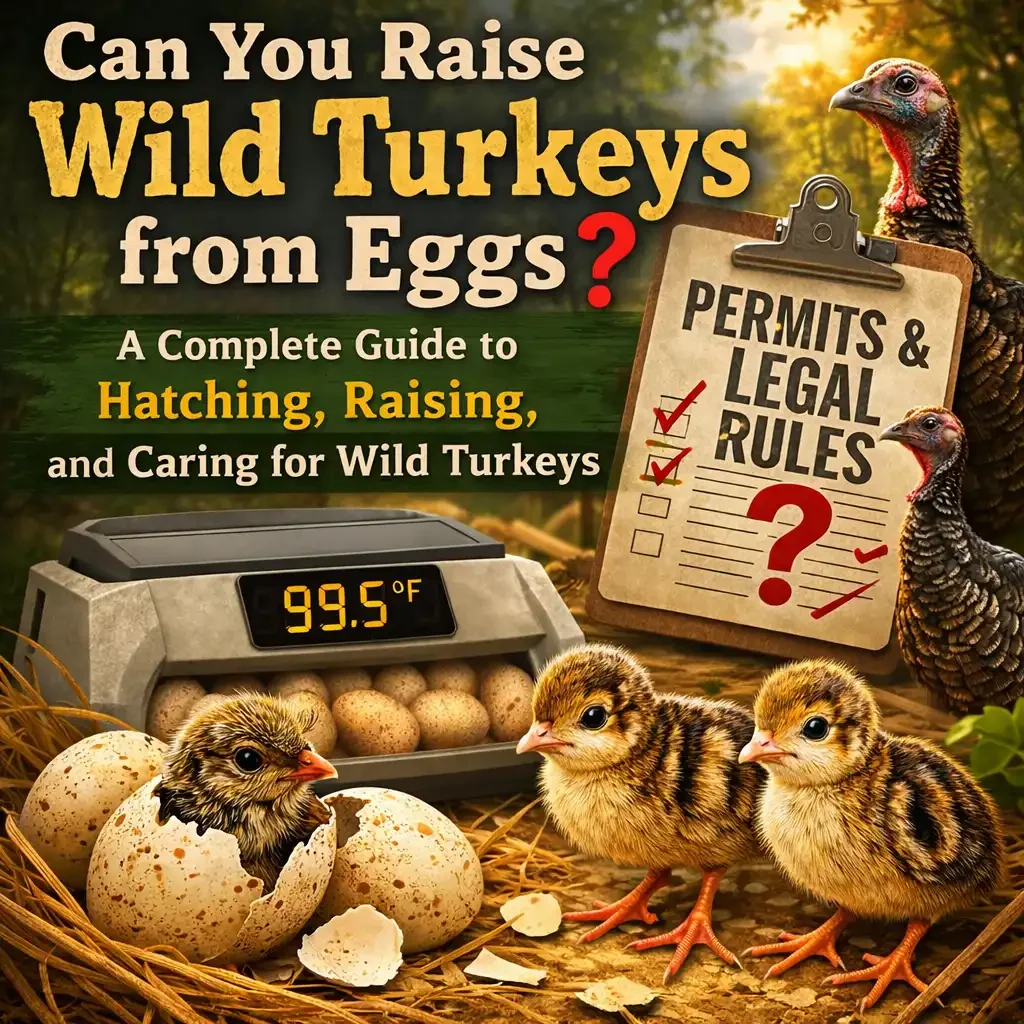
A Complete Guide to Hatching, Raising, and Caring for Wild Turkeys
The wild turkey (Meleagris gallopavo) is one of North America's most iconic birds, a creature of the forest, the field, and the American table. Whether you've stumbled across an abandoned nest in the woods, rescued an orphaned egg, or simply want to understand the challenge of raising these majestic birds from the very beginning, you've likely asked yourself: is it even possible to raise wild turkeys from eggs?
The short answer is yes, but it's not simple, not always legal, and not for the faint of heart. Wild turkeys are fundamentally different from their domestic cousins, and raising them from eggs requires careful preparation, a deep respect for their wild nature, and a clear plan for what comes next.
In this guide, we'll walk you through everything you need to know: the legal landscape, the biology of wild turkey eggs, incubation techniques, brooder care, feeding, and the unique challenges of raising birds that are, at heart, meant to be wild.
First Things First: Is It Legal?
Before you even think about picking up a wild turkey egg, you need to understand the legal framework. In the United States, wild turkeys are protected under state wildlife laws, and in some contexts federal regulations may apply as well. Collecting wild turkey eggs without a permit is illegal in most states and can result in significant fines or criminal charges.
The rules vary significantly by state. In some states, it is permissible to possess wild turkey eggs or birds if you have obtained them legally, for example, through a licensed wildlife rehabilitator or a state-issued permit. In other states, possession of wild turkeys in any form is prohibited without special authorization.
If you've found an abandoned nest or eggs you believe are in distress, the right first call is always to your state's wildlife agency or a licensed wildlife rehabilitator. They can assess the situation and advise on the best course of action, which may or may not involve human intervention.
For those looking to raise wild turkeys for legitimate purposes, such as wildlife rehabilitation, educational programs, or permitted wildlife breeding operations, obtaining the right permits is essential. The paperwork can be time-consuming, but it protects both you and the birds.
Understanding Wild Turkey Eggs
Wild turkey eggs are larger than most people expect, roughly the size of a large chicken egg, but more elongated and often speckled with tan or buff-brown spots on a pale background. A typical wild turkey clutch consists of 10 to 14 eggs, although clutches of up to 18 have been documented.
The hen lays one egg per day, usually in the morning, until the clutch is complete. Incubation begins only after the last egg is laid, a biological adaptation that ensures all the eggs hatch at roughly the same time, so the entire brood can leave the nest together.
The incubation period for wild turkeys is approximately 28 days. The hen incubates the eggs alone, and she is remarkably dedicated, spending up to 99% of the day on the nest during the final days before hatching. She turns the eggs regularly, maintains humidity through her body, and will abandon the nest only under significant predator pressure.
Understanding this natural process is key to replicating it artificially. The hen provides a consistent temperature (around 99-100°F), a relatively stable humidity level (around 50-55% for most of incubation, rising to 65-75% in the final days), and daily egg turning. Your job, if you're attempting artificial incubation, is to mimic all of these conditions as closely as possible.
Setting Up Your Incubator
A quality incubator is the single most important piece of equipment for hatching wild turkey eggs. Forced-air incubators, those with fans to circulate air, are preferred because they maintain more consistent temperatures throughout the egg chamber. Still-air incubators can work, but they require more careful monitoring and eggs should be placed with their larger end slightly elevated.
Temperature
For a forced-air incubator, maintain a consistent temperature of 99.5°F (37.5°C) throughout incubation. For still-air incubators, the temperature at the top of the eggs should be approximately 101-102°F. Even small fluctuations, more than a degree or two sustained over time, can affect hatch rates and chick viability.
Humidity
Humidity management is often where first-time hatchers go wrong. For the first 25 days, maintain relative humidity at approximately 50-55%. In the final three days (called the "lockdown" period), increase humidity to 65-75% to help the poults pip and emerge from the shell. A digital hygrometer placed inside the incubator is a worthwhile investment.
Egg Turning
Eggs must be turned at least three times per day, ideally five to seven times, during the first 25 days. Most modern incubators include automatic turning mechanisms, which are strongly recommended. Turning prevents the developing embryo from sticking to the shell membrane and ensures even heat distribution. Eggs should not be turned during the final three days before hatching.
Candling
Candling, holding an egg up to a bright light in a dark room to observe the developing embryo, allows you to check on the progress of each egg. At around day 7-10, you should see a visible network of blood vessels and, if conditions are good, a moving embryo. Infertile eggs will appear clear, while eggs with dead embryos may show a "blood ring" or dark mass. Remove infertile or clearly dead eggs promptly to prevent them from contaminating the incubator with bacteria.
The Hatch: What to Expect
Around day 25, you should move the eggs to a hatcher, or simply stop turning them and increase the humidity in your incubator. This is called lockdown. The poults will begin "pipping", making a small hole in the shell, typically around day 27 or 28. Once a poult begins pipping, it may take 12 to 24 hours to fully emerge. Do not be tempted to help unless the chick has been visibly struggling for more than 24 hours.
Helping a poult out of its shell prematurely, a process called "assisting", is risky. The act of hatching itself helps strengthen the chick's muscles and completes the absorption of the yolk sac. Interfering too early can result in a weak chick that struggles to survive. If you must assist, do so only by very gently moistening and removing small pieces of shell from around the pip hole, never pulling the chick out.
Once hatched, leave the poults in the incubator for 12-24 hours until they are dry and fluffy. They don't need food or water during this period, they are still absorbing nutrients from the yolk sac. Once they're dry and active, it's time to move them to the brooder.
Setting Up the Brooder
Wild turkey poults are notoriously fragile in their first few weeks of life. In the wild, the mortality rate for young poults in their first month can exceed 50-70%, predation, weather, and disease all take a heavy toll. In captivity, you're trying to eliminate those risks while providing an environment that supports healthy development.
Temperature
Start the brooder temperature at 95-100°F directly under the heat source during the first week, and reduce by approximately 5°F each week until the poults are fully feathered (around 6-8 weeks). The best way to judge if temperature is right is to watch the poults:
• Huddled directly under the heat lamp: too cold
• Spread out evenly: just right
• Pressed against the edges away from the heat: too warm
Bedding
Use non-slip bedding such as paper towels or burlap for the first week, this helps poults get traction as they learn to walk and prevents splayed leg. After the first week, you can transition to pine shavings. Avoid cedar shavings, which can release oils harmful to young birds. Keep the brooder clean and dry; wet bedding is one of the primary causes of illness in young poults.
Space
Wild turkey poults are active and curious from day one. Provide at least one square foot of brooder space per bird in the first two weeks, expanding to two to three square feet per bird by week four. Overcrowding leads to stress, pecking, and disease. As the birds grow and feather out, they'll need access to outdoor space, more on that in a moment.
Feeding Wild Turkey Poults
Nutrition is where many people run into trouble. Wild turkey poults have different nutritional requirements than domestic chickens, and feeding them the wrong diet can lead to developmental problems, including a condition called "stargazing", a neurological symptom often linked to niacin deficiency.
For the first 8-10 weeks, feed poults a high-protein game bird starter crumble with at least 28-30% protein. Medicated chick starter (designed for chickens) is not ideal, it typically contains coccidiostats at levels appropriate for chickens but may be insufficient for turkeys, and the protein content is often too low. Look specifically for turkey or game bird starter.
In addition to commercial feed, wild turkey poults benefit enormously from live insects, particularly small crickets, mealworms, and grasshoppers. In the wild, poults eat enormous quantities of insects in their first few weeks, insects provide not just protein but vital nutrients and help stimulate foraging instincts. Offering live or dried insects from day one encourages natural behavior and significantly improves growth rates.
Fresh, clean water must always be available, but use shallow water containers or add marbles/pebbles to prevent poults from falling in and becoming chilled. Wet poults chill rapidly and die quickly in the first week of life. Change water daily to prevent bacterial contamination.
As the birds mature (after about 8-10 weeks), you can transition to a grower ration with slightly lower protein (around 20-24%), and begin introducing leafy greens, berries, and access to natural foraging areas where they can find insects, seeds, and plant material on their own.
Health Concerns and Common Problems
Wild turkey poults are susceptible to several diseases and health issues that can decimate a flock quickly if not addressed. The most important of these are:
Blackhead Disease (Histomoniasis)
This is the most serious disease threat for turkeys of any age. Caused by the protozoan Histomonas meleagridis, blackhead attacks the liver and intestines and is almost always fatal in turkeys. The disease is transmitted through the eggs of the cecal worm Heterakis gallinarum, which can persist in soil for years. Crucially, never house turkeys on ground where chickens have been kept, chickens are carriers and can transmit the disease to turkeys. There is currently no approved treatment in the United States for blackhead in turkeys; prevention through hygiene and strict separation from chickens is essential.
Coccidiosis
Coccidia are intestinal parasites that can cause severe illness and death in young poults. Symptoms include bloody droppings, lethargy, and loss of appetite. Keeping the brooder clean and dry is the best prevention. If coccidiosis is suspected, a veterinarian can prescribe appropriate treatment.
Pneumonia and Respiratory Infections
Drafts, dampness, and rapid temperature changes can predispose young poults to respiratory infections. Maintain consistent brooder temperatures and ensure the space is draft-free. Any poult showing labored breathing, discharge from the nostrils, or unusual lethargy should be isolated and evaluated by a vet.
Imprinting
This isn't a disease, but it's a critical issue for wild turkeys raised in captivity. Wild turkey poults imprint on the first large moving creature they see after hatching, normally their mother, but in captivity, often a human. Imprinted wild turkeys can become dangerously bold around people, may attack humans (especially during mating season), and lose the fear of predators that keeps them alive in the wild. If the goal is eventual release, minimize human contact as much as possible and use a turkey-shaped puppet for feeding and handling whenever possible.
Moving Outdoors and Transitioning to the Wild
By 6-8 weeks of age, wild turkey poults will be largely feathered and ready to begin spending time outdoors during warm, dry weather. A secure outdoor pen, often called a "grow-out pen", allows the birds to begin foraging naturally while still being protected from predators.
The pen should have a covered area for shelter, a secure perimeter that prevents digging under (either with hardware cloth apron or buried wire), and protection from overhead predators such as hawks. Wild turkeys are naturally nervous and alert, and providing cover, brush piles, low shrubs, wooden shelters, helps them feel secure and develop appropriate predator-avoidance behaviors.
If the ultimate goal is releasing the birds into the wild, this should ideally be coordinated with your state wildlife agency. Successful wild turkey releases require birds that have not been heavily imprinted on humans, that are physically robust and disease-free, and that are being released into suitable habitat with an established wild turkey population. Releasing poorly prepared birds into the wild is rarely successful and can sometimes introduce disease into wild populations.
For those keeping wild turkeys in a permitted captive setting, whether for educational purposes, wildlife rehabilitation, or as part of a licensed breeding program, the grow-out pen can become a permanent home. Wild turkeys in captivity have been known to live 10-12 years or more, though several years of age is more typical in wild populations.
The Big Picture: Should You Do It?
Raising wild turkeys from eggs is a challenging, time-consuming, and legally complex undertaking. It is not something to be entered into lightly, and in most circumstances, wild turkey eggs and young birds are best left in the hands of licensed wildlife rehabilitators and professionals who have the training, facilities, and permits to give these birds the best possible chance.
That said, for those with the right permits, facilities, and commitment, there is something profoundly rewarding about watching a wild turkey poult emerge from the shell, grow from a tiny, vulnerable creature into a strong, wary, magnificent bird. Wild turkeys are intelligent, behaviorally complex animals with rich social lives. They are endlessly fascinating to observe, and caring for them, even temporarily, offers a window into the wild that few people get to experience.
If you're serious about this pursuit, start by contacting your state wildlife agency. Get the permits you need, connect with experienced wildlife rehabilitators who can mentor you, and invest in proper equipment before the eggs ever arrive. The wild turkey deserves nothing less than our very best effort, and your journey with these remarkable birds will be all the richer for the care you put into preparation.
Final Thoughts
Wild turkeys are one of America's great conservation success stories. Once nearly hunted to extinction, they now number in the millions and have been restored to nearly every corner of their historic range, thanks to decades of careful management, regulated hunting, and the work of wildlife agencies and organizations like the National Wild Turkey Federation.
Whether your interest in raising wild turkeys from eggs stems from a conservation mission, an educational goal, or a deep personal connection to the natural world, approach the task with humility, patience, and respect for these birds' wild nature. They are not chickens. They are not pets. They are wild animals, and everything about how you raise them should honor that fact.
Done right, raising wild turkeys from eggs is one of the most remarkable experiences in backyard wildlife care. Done poorly, it can lead to birds that are neither truly wild nor suited to captivity. Give them the best start you can, and then, if circumstances allow, give them back to the wild where they belong.
Quick Reference: Wild Turkey Egg Incubation at a Glance
• Incubation period: 28 days
• Temperature (forced-air): 99.5°F (37.5°C)
• Humidity (days 1-25): 50-55%
• Humidity (lockdown, days 26-28): 65-75%
• Egg turning: 3-7 times per day (stop at day 25)
• Brooder temp (week 1): 95-100°F under heat source
• Starter feed protein: 28-30% game bird crumble
• Never house with chickens, blackhead disease risk
THE TURKEY BREED LIBRARY
Wild turkeys are the ancestor of every domestic turkey breed. The 13 breeds covered on Simitian Nest span a wide range of sizes, temperaments, and homestead uses, from the tiny Beltsville Small White to heritage breeds with deep roots in American farm history. Each guide follows the same standard: breed origin, physical characteristics, temperament, production traits, foraging ability, and an honest accounting of what each breed is and is not well suited for.
Here is every breed in the library:
A small, practical heritage breed developed by the USDA in the 1930s as a more manageable alternative to large commercial turkeys. Excellent for small homesteads with limited space. Calm temperament and good forager.
One of the oldest and most striking heritage breeds, with iridescent black plumage and a long history in European and American farming. Hardy, active, and well suited to pasture-based systems.
A classic American heritage breed developed in Kentucky, prized for rich flavor, attractive reddish-brown plumage, and an active foraging temperament. One of the most popular heritage breeds for small farm and homestead production.
The most historically significant American turkey breed, developed from crosses between domestic European turkeys and wild turkeys. Strong foragers, excellent flavor, and a deep connection to American agricultural heritage.
A rare and beautiful heritage breed with warm chocolate-brown plumage that nearly disappeared during the commercial turkey era. Now experiencing a well-deserved revival among heritage breed enthusiasts.
A soft buff-colored heritage breed with roots in New Jersey and a calm, docile temperament that makes it one of the more manageable heritage breeds for new turkey keepers. Critically rare and worth knowing.
A visually distinctive breed with pale silver-gray plumage produced by a dilution gene. Increasingly sought after for both homestead production and ornamental interest in heritage poultry collections.
The smallest turkey breed available, developed at the University of Massachusetts as a true miniature turkey for small families and limited-space homesteads. Calm, friendly, and surprisingly productive for their size.
One of the oldest American heritage breeds, developed in Rhode Island from crosses between domestic and wild turkeys. Known for calm temperament, excellent mothering instincts, and outstanding flavor. A cornerstone of American heritage turkey history.
A striking ornamental and utility breed with bold white and black patterned plumage. Smaller than most heritage breeds and known for exceptional foraging ability, active temperament, and strong survival instincts.
A rare and beautiful breed with slate-gray plumage produced by a unique gene expression. One of the most visually distinctive heritage turkeys available and a breed with significant conservation value.
A naturally mating bronze-type turkey selected for vigor, foraging ability, and the bronze coloring that defined American turkey production for generations. An excellent choice for pasture-based homestead systems.
One of the oldest white turkey breeds in America, with roots tracing to 17th century Dutch and English imports. Distinguished from commercial broad-breasted whites by its naturally mating ability, active temperament, and genuine heritage status.
What Comes Next
13 guides. One wild turkey foundation post. Every breed guide researched and written to the same standard as everything else on this site. The Turkey section is now one of the most comprehensive heritage turkey libraries I know of for the homestead audience, and I am genuinely proud of how it has come together.